Biblical Examples of Great Fathers
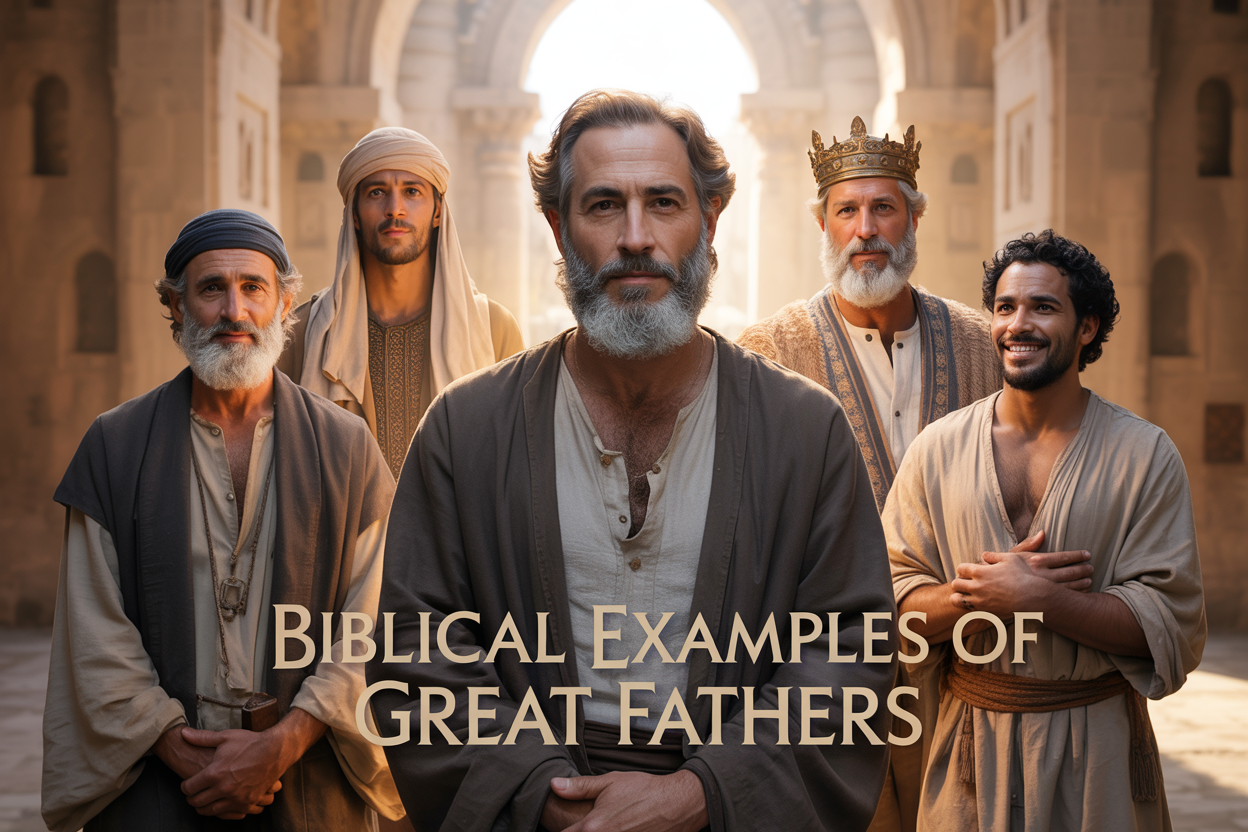
Biblical Examples of Great Fathers: Timeless Lessons for Modern Dads
The Bible tells powerful stories of biblical fathers who faced real challenges while raising their families. These faithful fathers in the Bible offer practical wisdom for Christian fathers today who want to lead their families well.
Whether you're a new dad, a seasoned father, or someone looking to understand godly father figures better, these biblical parenting examples provide clear guidance. You'll discover how these men handled everything from family conflicts to major life changes with faith and wisdom.
We'll explore how Abraham became the father of faith by trusting God's promises even when circumstances looked impossible. You'll also learn from Joseph, the biblical father who protected his family and chose forgiveness over revenge. We'll examine Job's story as a patient father who stayed faithful during unimaginable suffering, and see how King David balanced his roles as both a leader and a loving dad.
Finally, we'll look at the prodigal son's father - one of the most moving examples of unconditional love and grace in all of Scripture. These Bible stories about fathers show us that great parenting isn't about being perfect, but about pointing our children toward God's love and truth.
Abraham: The Father of Faith Who Trusted God's Promises

Demonstrated Unwavering Obedience Despite Impossible Circumstances
Abraham stands out among biblical fathers as someone who said yes to God even when it made absolutely no sense. When God told him to pack up and leave everything he knew at age 75, Abraham didn't ask for a detailed map or timeline. He simply trusted and went. This faithful father from the Bible showed his children what real faith looks like through his actions, not just his words.
The most striking example came when God asked Abraham to sacrifice Isaac - the very son God had promised would carry on his legacy. Picture the internal wrestling match Abraham must have faced. Yet he prepared for the journey, knowing God's character even when he couldn't understand God's plan. This moment reveals why Abraham earned the title father of faith - he trusted God's promises even when circumstances screamed otherwise.
Taught His Children to Walk in Righteousness and Justice
Abraham understood that being a great father meant more than providing food and shelter. Genesis 18:19 shows God's confidence in Abraham's parenting: "For I have chosen him, so that he will direct his children and his household after him to keep the way of the LORD by doing what is right and just."
Abraham didn't just tell his children about God's ways - he modeled them daily. When tensions arose between Sarah and Hagar, Abraham navigated family conflict with wisdom. When disputes emerged with neighboring peoples, he chose peace over profit. His children watched him negotiate fairly, show hospitality to strangers, and intercede for others. These biblical parenting examples demonstrate that character formation happens through consistent daily choices rather than dramatic moments.
Left a Spiritual Legacy That Impacted Generations
The impact of Abraham's faithful parenting echoes throughout Scripture. God repeatedly identifies himself as "the God of Abraham, Isaac, and Jacob," showing how one man's faith shaped multiple generations. Abraham's influence didn't stop with his immediate family - entire nations trace their spiritual heritage back to his example.
This biblical father understood that legacy isn't about accumulating wealth or building monuments. Abraham's true inheritance was the faith he passed down. Isaac learned to trust God's provision. Jacob, despite his flaws, clung to God's promises. Joseph drew strength from his great-grandfather's example during years of slavery and imprisonment. Abraham's commitment to walking with God created ripple effects that continue today.
Showed Sacrificial Love Through Willingness to Surrender His Son
Abraham's willingness to offer Isaac reveals the depth of sacrificial love that marks truly great fathers in the Bible. This wasn't about blind religious fanaticism - Abraham knew God's character and trusted that somehow, someway, God would honor his promises about Isaac's future.
The journey to Mount Moriah must have been agonizing. Abraham carried the fire, Isaac carried the wood, and both carried questions they couldn't voice. When Isaac asked about the sacrifice, Abraham's response - "God himself will provide the lamb" - shows a father protecting his child's heart while wrestling with impossible obedience. Abraham's raised hand holding the knife demonstrates love willing to surrender what matters most, trusting God's goodness even in the darkness.
This godly father figure teaches modern dads that sacrificial love sometimes means releasing our grip on our children's futures, trusting God's plans over our own protective instincts.
Joseph: The Protective Provider Who Forgave and Restored
Protected his family during times of severe famine
When devastating famine struck Egypt and surrounding regions, Joseph stepped into his role as a protective provider with remarkable wisdom and preparation. As Pharaoh's second-in-command, he had interpreted the dreams that warned of seven years of abundance followed by seven years of severe famine. Rather than simply enjoying his position of power, Joseph used his authority to implement a comprehensive storage system that would save countless lives.
His protective instincts extended beyond Egypt's borders to his own family in Canaan. When his brothers came seeking grain, Joseph recognized them immediately but chose to test their character before revealing his identity. This wasn't cruelty—it was the careful discernment of a father figure ensuring his family's spiritual and emotional readiness for reconciliation. Joseph's actions demonstrate how biblical fathers must sometimes make difficult decisions that serve their family's long-term welfare rather than their immediate comfort.
The way Joseph managed the crisis shows us that being a protective provider means thinking ahead, making sacrifices, and using whatever resources God provides for the benefit of others. He didn't hoard wealth or power for himself but channeled everything toward preserving life during desperate times.
Chose forgiveness over revenge toward his brothers
Joseph's choice to forgive represents one of the most powerful examples of grace in Scripture. His brothers had sold him into slavery, lied to their father about his death, and caused Jacob years of grief. Joseph had every human right to seek revenge when he held their lives in his hands. Instead, he chose the path that great fathers in the Bible consistently take—forgiveness that leads to restoration.
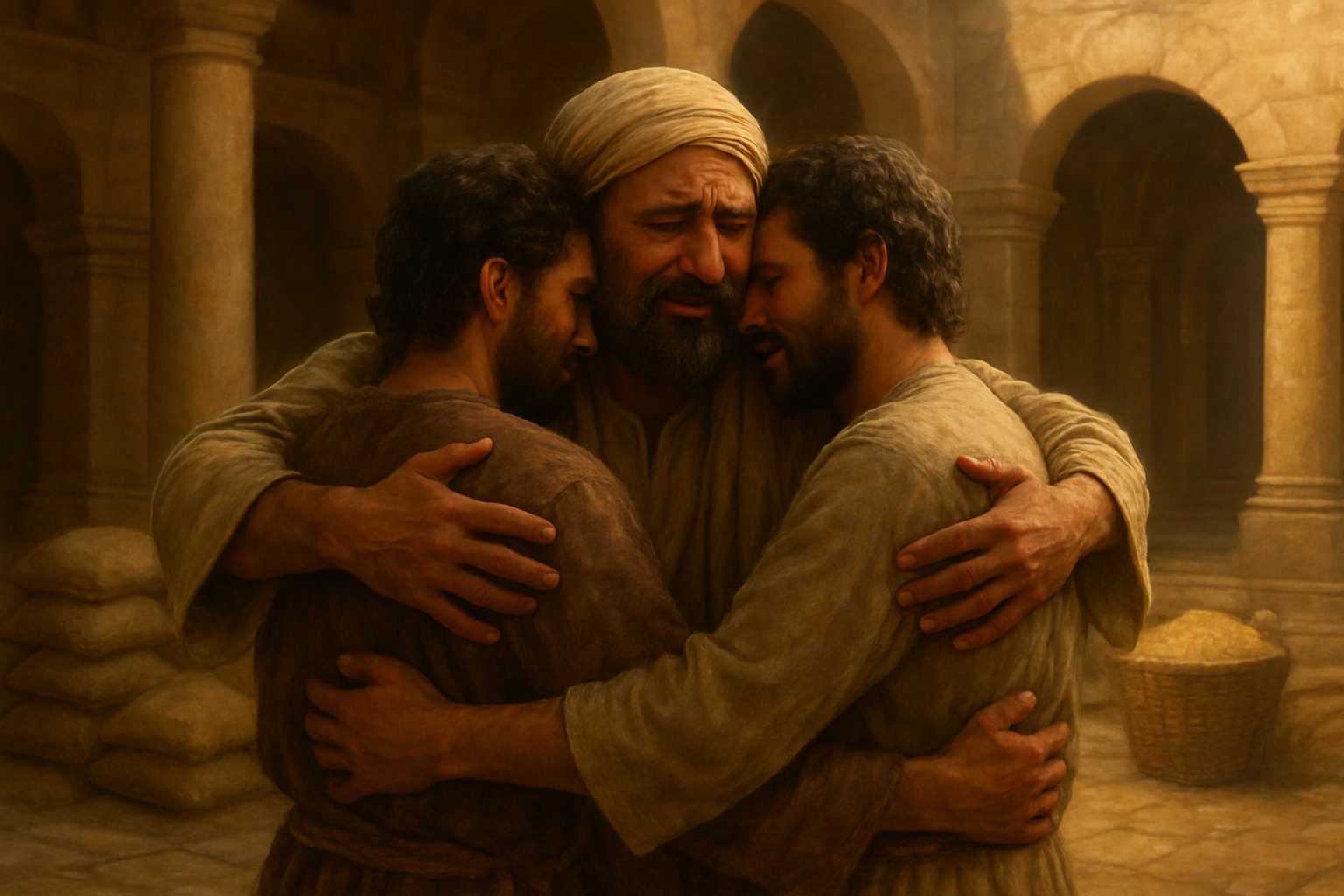
When Joseph finally revealed his identity, he told his brothers not to be distressed about selling him because God had used their actions for good. This wasn't denial or minimizing their wrongdoing—Joseph acknowledged the pain while choosing to see God's sovereign plan. His tears during this reunion show that forgiveness doesn't mean the absence of hurt, but the presence of love that chooses healing over hatred.
This pattern of forgiveness became a family legacy. Joseph taught his brothers and their children that family bonds are worth preserving, even when trust has been broken. His response created space for genuine repentance and allowed relationships to be rebuilt on stronger foundations.
Used his position of power to benefit others
Power reveals character, and Joseph's use of authority showcases the heart of a godly father figure. Rather than leveraging his position for personal gain, he consistently channeled his influence toward serving others. During the famine, he didn't exploit desperate people but managed resources fairly and compassionately.
Joseph's leadership style balanced justice with mercy. He required payment for grain but also showed flexibility when people ran out of money, allowing them to trade livestock and eventually work the land as tenant farmers rather than face starvation. This approach preserved both dignity and life, demonstrating how faithful fathers Bible stories teach us to use influence responsibly.
His administrative skills created systems that outlasted the crisis, benefiting future generations. Joseph understood that true leadership means building something bigger than yourself—a principle that applies whether you're leading a nation or a household.
Maintained integrity in leadership and personal relationships
Throughout his journey from slave to ruler, Joseph never compromised his character. When Potiphar's wife attempted to seduce him, he refused, saying he couldn't sin against God or betray Potiphar's trust. Even when this integrity led to false accusations and imprisonment, Joseph maintained his moral standards.
This consistency between his public and private life made Joseph trustworthy in all his relationships. Pharaoh trusted him with the kingdom, his family trusted him with their lives, and God trusted him with extraordinary responsibility. Biblical parenting examples like Joseph show us that integrity isn't situational—it's a character trait that governs every interaction.
Joseph's example teaches fathers that their character in small moments shapes their children's understanding of trustworthiness, leadership, and faith. His life demonstrates that maintaining integrity, even when it costs us, ultimately leads to greater influence and deeper relationships than any shortcut ever could.
Job: The Patient Father Who Endured Through Suffering
Consistently prayed and interceded for his children
Job's dedication to praying for his children stands as one of the most beautiful examples of faithful fathers in the Bible. Every morning, this devoted father would rise early to offer burnt offerings for each of his seven sons and three daughters. He didn't wait for special occasions or crises to remember them in prayer - this was his daily routine, his spiritual discipline as a biblical father.
What makes Job's intercession so remarkable is his proactive approach. He would offer sacrifices "just in case" his children had sinned or "cursed God in their hearts." Job understood that even unspoken thoughts and attitudes could separate his children from their Creator. His prayers weren't reactive responses to visible problems but preventive measures born from deep love and spiritual wisdom.
This pattern of consistent intercession reveals Job's heart as a father. He recognized that his role extended beyond providing food, shelter, and education. Job knew that his children's spiritual well-being was his primary responsibility, and he took that calling seriously. His example shows how godly father figures understand the power of prayer in shaping their children's destinies.
Maintained faith and character during devastating loss
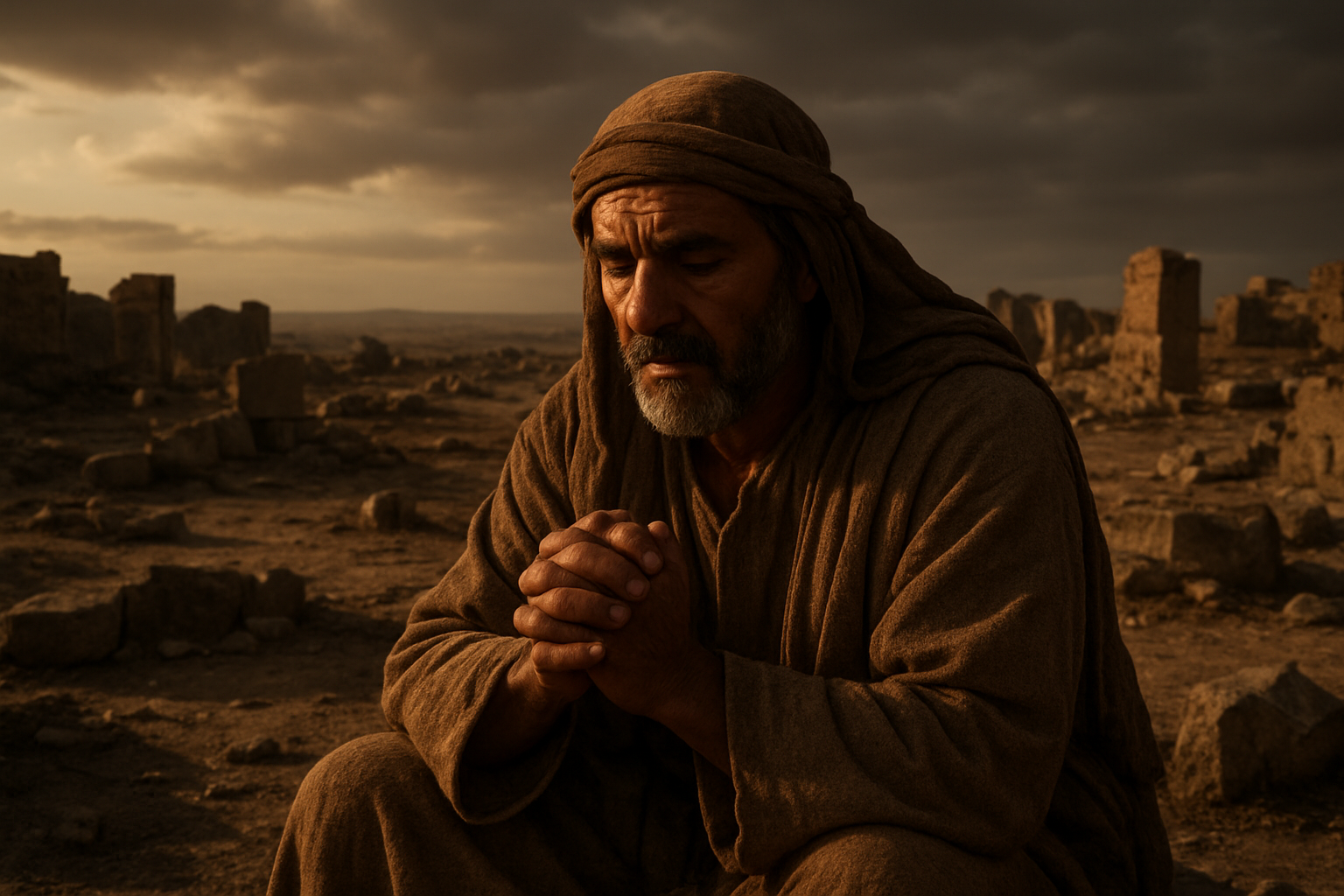
When Satan struck Job's family, taking the lives of all ten children in a single day, Job's response defied human logic. Instead of cursing God or abandoning his faith, he fell to the ground in worship, declaring, "The Lord gave and the Lord has taken away; may the name of the Lord be praised." This wasn't stoic indifference - Job grieved deeply. But his grief didn't destroy his trust in God's character.
Job's ability to maintain his integrity during such overwhelming loss demonstrates the kind of patient father who becomes a pillar of strength for those around him. Even when his wife urged him to "curse God and die," Job refused to compromise his values or blame God for his circumstances. His unwavering character during this trial shows how great fathers anchor their responses in eternal truths rather than temporary emotions.
The Bible stories about fathers rarely showcase perfect men, but they do reveal fathers who choose faithfulness over convenience. Job's example teaches us that authentic fatherhood sometimes requires maintaining hope when everything seems hopeless, trusting God's goodness even when circumstances suggest otherwise.
Taught resilience through personal example of perseverance
Job's greatest teaching tool wasn't his words but his life. Though his children had already died when most of his suffering occurred, the way he handled adversity created a legacy that would impact future generations. His friends and community witnessed a man who refused to abandon his principles despite losing everything he held dear.
The book of Job reveals a father who understood that resilience isn't about avoiding pain but about responding to it with faith. When boils covered his body and he sat among the ashes scraping his sores, Job continued to seek God's face. His persistence through physical agony, emotional devastation, and social isolation demonstrates how biblical fathers model endurance for their families.
Job's restoration at the end of his story - receiving double what he had lost, including ten new children - validates his perseverance. His example shows that faithful fathers plant seeds of hope even in the darkest seasons, trusting that God can bring beauty from ashes. This biblical parenting approach teaches children that setbacks aren't final verdicts but opportunities for God to display His faithfulness in new ways.
David: The Shepherd King Who Balanced Leadership and Love
Demonstrated Courage and Protection for His Family
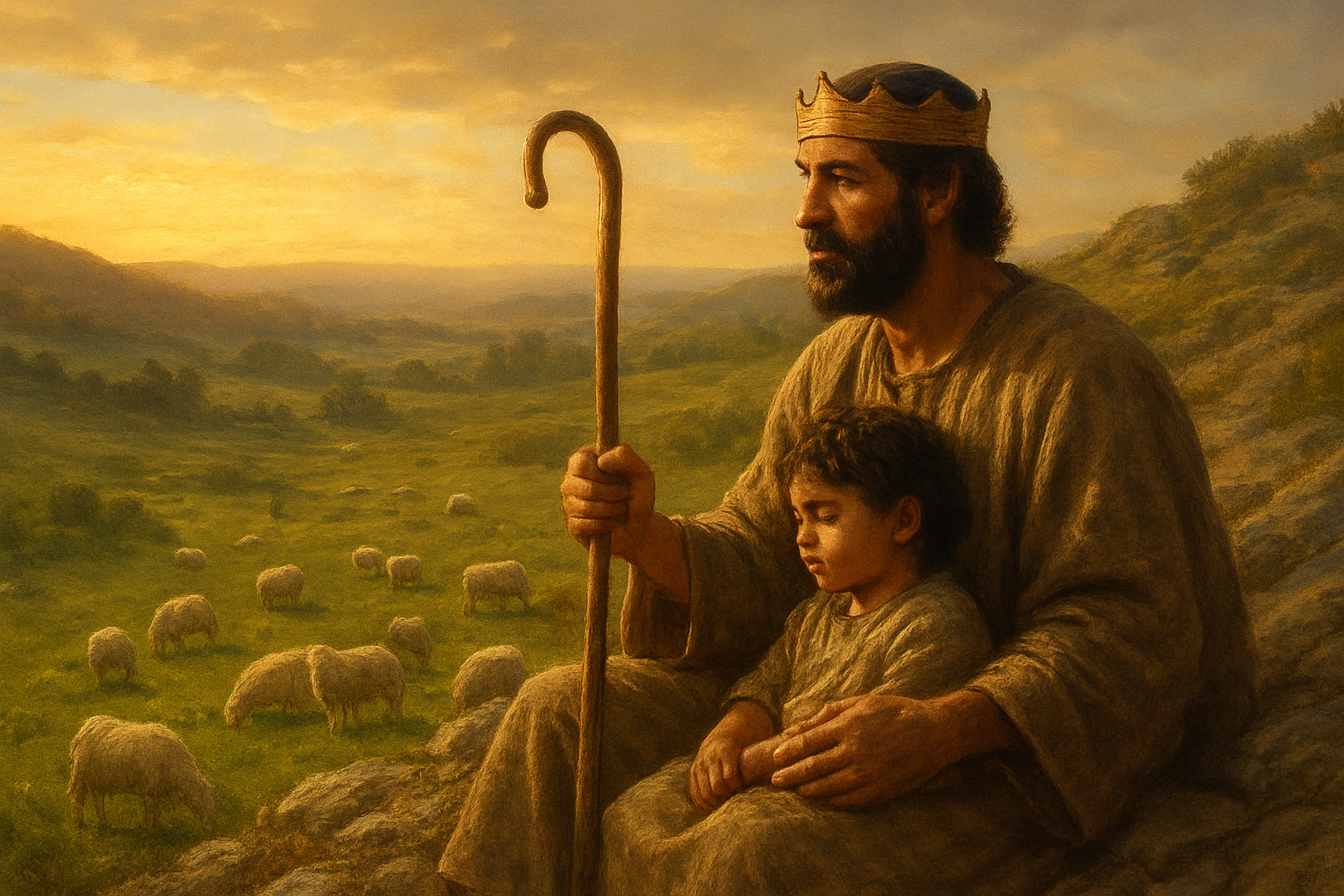
King David's protective instincts ran deep, shaped by years of defending sheep against lions and bears as a young shepherd. This fierce courage translated into how he protected his family and nation. When Goliath threatened Israel, David stepped up not just as a warrior, but as someone who understood that protecting others required personal sacrifice. His willingness to face impossible odds showed his children what real bravery looks like - not the absence of fear, but action despite it.
David's military victories weren't just about expanding territory; they were about creating a secure environment where his family could thrive. He established Jerusalem as a safe haven and built structures that would protect future generations. Even when facing internal threats like Absalom's rebellion, David chose restraint over revenge, showing that true strength sometimes means holding back rather than striking out.
Expressed Deep Love Through Poetry and Worship
The Psalms reveal David's tender heart as a father and worship leader. Many of his songs express deep emotional connections and gratitude that his children witnessed firsthand. Psalm 23, where he describes God as a shepherd, likely drew from his own experiences caring for sheep and wanting to care for his family with the same devotion.
David didn't compartmentalize his faith - he brought worship into daily family life. His dancing before the ark showed his children that expressing joy and reverence for God was natural and beautiful. Through music and poetry, he taught them that emotions have a place in spiritual life and that vulnerability can be a strength rather than weakness.
Showed Humility by Acknowledging and Repenting of Mistakes
David's response to Nathan's confrontation about Bathsheba stands as one of the most powerful examples of paternal humility in Scripture. Instead of making excuses or using his royal position to deflect blame, David immediately confessed his wrongdoing. This taught his children that even leaders make mistakes and that true greatness comes from owning those mistakes.
His public repentance in Psalm 51 became a model for his household. David showed that saying "I was wrong" doesn't diminish authority - it actually strengthens it. When parents admit their failures and seek forgiveness, they give their children permission to be human and to grow from their own mistakes.
Prepared the Next Generation for Successful Leadership
David invested heavily in Solomon's preparation for kingship, sharing hard-earned wisdom about leadership, justice, and dependence on God. His final words to Solomon in 1 Kings 2:2-4 weren't just political advice - they were a father's heartfelt guidance about living with integrity and purpose.
He understood that good parenting means working yourself out of a job. David didn't try to hold onto power or make his children dependent on him. Instead, he equipped them with tools, wisdom, and spiritual foundations they would need to succeed on their own. This biblical father figure recognized that his role was to launch his children into their own destinies, not to keep them under his wing forever.
The Prodigal Son's Father: The Model of Unconditional Love and Grace

Watched Patiently for His Wayward Son's Return
The prodigal son father demonstrates one of the most powerful examples of patient love in scripture. While his younger son squandered his inheritance in a distant land, this godly father figure didn't abandon hope or close his heart. He continued his daily routine, yet his eyes constantly searched the horizon for any sign of his boy coming home.
This biblical father's patience wasn't passive resignation—it was active hope paired with unwavering faith. He could have declared his son dead to him or written him off completely. Instead, he maintained an open door policy in his heart, believing that love would eventually draw his child back. This patience teaches modern fathers that some battles are won not through confrontation but through consistent, loving presence.
Extended Forgiveness Without Conditions or Requirements
When the wayward son finally returned, expecting to be treated as a servant, his father's response shocked everyone. There were no lectures, no probationary periods, and no lists of conditions to earn back his place in the family. The moment the father saw his son approaching, he ran to embrace him—a remarkable act for a dignified man of his status in that culture.
This biblical parenting example shows that true forgiveness mirrors God's grace toward us. The father didn't demand explanations, apologies, or promises of future good behavior before restoring his son. His forgiveness was immediate, complete, and unconditional. This teaches fathers today that restoration should be our goal, not punishment or proving a point.
Celebrated Restoration Over Holding Grudges
Instead of harboring resentment, this remarkable father chose celebration. He ordered the finest robe, a ring, and sandals for his son—symbols of full restoration to family status. The fatted calf was killed, music played, and dancing began. This wasn't just forgiveness; it was joyful restoration that announced to the entire household and community that his son was fully welcomed back.
This response reveals the heart of authentic fatherhood. Great fathers in the Bible understood that restoration creates stronger bonds than punishment ever could. The celebration wasn't about overlooking sin but about rejoicing in redemption. Modern Christian fathers can learn that marking moments of reconciliation with joy helps heal wounds and rebuild relationships.
Treated Both Sons with Equal Love and Fairness
The older son's angry response to his brother's warm welcome reveals another dimension of this father's character. When confronted by his elder son's jealousy and hurt feelings, the father didn't dismiss his concerns or tell him to "get over it." Instead, he gently reminded him, "Son, you are always with me, and everything I have is yours."
This biblical father showed that loving one child doesn't mean loving another less. He acknowledged the older son's faithful service while still celebrating the younger son's return. His approach demonstrates that faithful fathers Bible stories teach us about balanced love—not keeping score of good deeds or playing favorites, but treating each child as uniquely valuable while maintaining consistent principles of grace and truth.

These remarkable fathers from the Bible show us what godly parenting really looks like. Abraham's unwavering trust in God's plan, Joseph's protective nature and forgiveness, Job's patience during unimaginable hardship, David's ability to lead while still showing love, and the prodigal son's father with his boundless grace - they all paint a picture of fatherhood that goes beyond just providing for physical needs. Each man faced unique challenges but stayed committed to their families and their faith.
Today's fathers can learn so much from these examples. You don't have to be perfect to be a great dad - even David made serious mistakes, but his heart remained devoted to God and his children. The key is showing up consistently, trusting God with your family's future, offering forgiveness when your kids mess up, and loving them no matter what. Take inspiration from these biblical fathers and ask God to help you become the dad your children need. Your faithfulness today will leave a legacy that lasts for generations.


Comments
Post a Comment