Women in the Bible Who Were Mothers
.png)
Motherhood comes with incredible joys and deep challenges, and the women in the Bible who were mothers faced both with remarkable faith. These biblical mothers offer timeless examples of courage, wisdom, and trust that speak directly to today's Christian moms.
This guide is perfect for mothers seeking biblical inspiration, women's ministry leaders planning studies, and anyone wanting to understand biblical motherhood lessons through real stories. You'll discover how these women of faith in Bible times navigated everything from impossible promises to life-threatening dangers.
We'll explore faithful mothers in scripture like Sarah and Hannah, who waited years for God's promises to unfold. You'll also meet protective mothers Bible stories celebrate, including Jochebed and the mother of Moses, who risked everything to save their children. Finally, we'll examine how these mothers who shaped leaders like Samuel's mother Hannah and Timothy's mother Eunice left lasting legacies through their faith and wisdom.
Each story reveals biblical parenting wisdom that modern mothers can apply today, showing how faith, courage, and trust in God's plan can transform both our families and our world.
Faithful Mothers Who Trusted God's Promises

Sarah's Journey from Barrenness to Motherhood at Age 90
Sarah's story shows how faithful mothers in scripture held onto God's promises despite impossible circumstances. For decades, Sarah lived with the heartbreak of infertility while carrying the weight of God's promise that she and Abraham would become parents of many nations. When God first made this covenant, Sarah was already past typical childbearing years, yet she waited.
At age 90, Sarah laughed when angels told Abraham she would conceive within a year. Her laughter wasn't mocking—it was the natural response of someone who had hoped and waited for so long. Yet when Isaac arrived, her laughter transformed into pure joy. Sarah named her son Isaac, meaning "laughter," turning her story of waiting into a testimony of God's faithfulness.
Sarah's journey teaches modern mothers that God's timing rarely matches our expectations. Her willingness to trust divine promises, even when they seemed impossible, demonstrates the kind of faith that moves mountains and opens wombs.
Hannah's Persistent Prayer and Dedication of Samuel
Hannah's story reveals how prayer becomes a mother's most powerful tool. Year after year, Hannah endured the pain of childlessness while her husband's other wife, Peninnah, taunted her relentlessly. During their annual temple visits, Hannah poured out her heart to God with such intensity that the priest Eli thought she was drunk.
Her prayer wasn't just asking for a child—it was surrendering that future child back to God's service. Hannah promised that if God gave her a son, she would dedicate him to temple service for life. This wasn't desperation bargaining; it was a mother's heart aligning with God's purposes.
When Samuel was born, Hannah kept her promise. After weaning him around age three, she brought Samuel to live permanently at the temple. Her sacrifice enabled Samuel to become one of Israel's greatest prophets and judges. Hannah's example shows that biblical mothers understood their children belonged to God first, and their role was to steward these precious lives according to divine purposes.
Elizabeth's Miraculous Conception in Her Old Age
Elizabeth's pregnancy at an advanced age paralleled Sarah's miracle, but with a unique twist—her son John would prepare the way for the Messiah. Both Elizabeth and her husband Zechariah were described as righteous before God, walking blamelessly in all His commandments. Their faithfulness throughout decades of childlessness positioned them to receive this extraordinary blessing.
When the angel Gabriel announced Elizabeth's pregnancy, Zechariah doubted and was struck mute until John's birth. Elizabeth, however, immediately embraced God's plan. During her pregnancy, she became the first person to recognize Jesus's divine nature when Mary visited and John leaped in her womb.
Elizabeth's response to Mary reveals her humble heart: "Blessed is she who believed that the Lord would fulfill his promises to her!" This greeting shows how women of faith in Bible times supported each other through God's miraculous works, celebrating rather than envying each other's blessings.
Mary's Courageous Yes to God's Unexpected Plan
Mary's story represents perhaps the most challenging call any mother has ever received. As a young virgin, probably in her teens, Mary faced an angel's announcement that would forever change her life. Carrying a child outside marriage could have meant social disgrace, broken engagement, or even death by stoning under Jewish law.
Yet Mary's response wasn't fear or negotiation—it was surrender. "Let it be unto me according to your word" reveals a heart completely yielded to God's will, regardless of personal cost. Mary understood that being chosen as the mother of the Messiah was both the highest honor and greatest sacrifice any woman could make.
Throughout Jesus's ministry, Mary watched her son face rejection, persecution, and ultimately crucifixion. At the cross, she witnessed the brutal death of the child she had carried, nursed, and raised. Her faithfulness from the annunciation to the resurrection demonstrates that biblical motherhood requires both receiving God's gifts with joy and releasing them according to His purposes.
These women in the Bible who trusted God's promises created a legacy that continues inspiring mothers today. Their stories prove that divine faithfulness often works through feminine faith, patience, and sacrifice.
Protective Mothers Who Saved Their Children
Jochebed's Creative Plan to Save Moses from Death
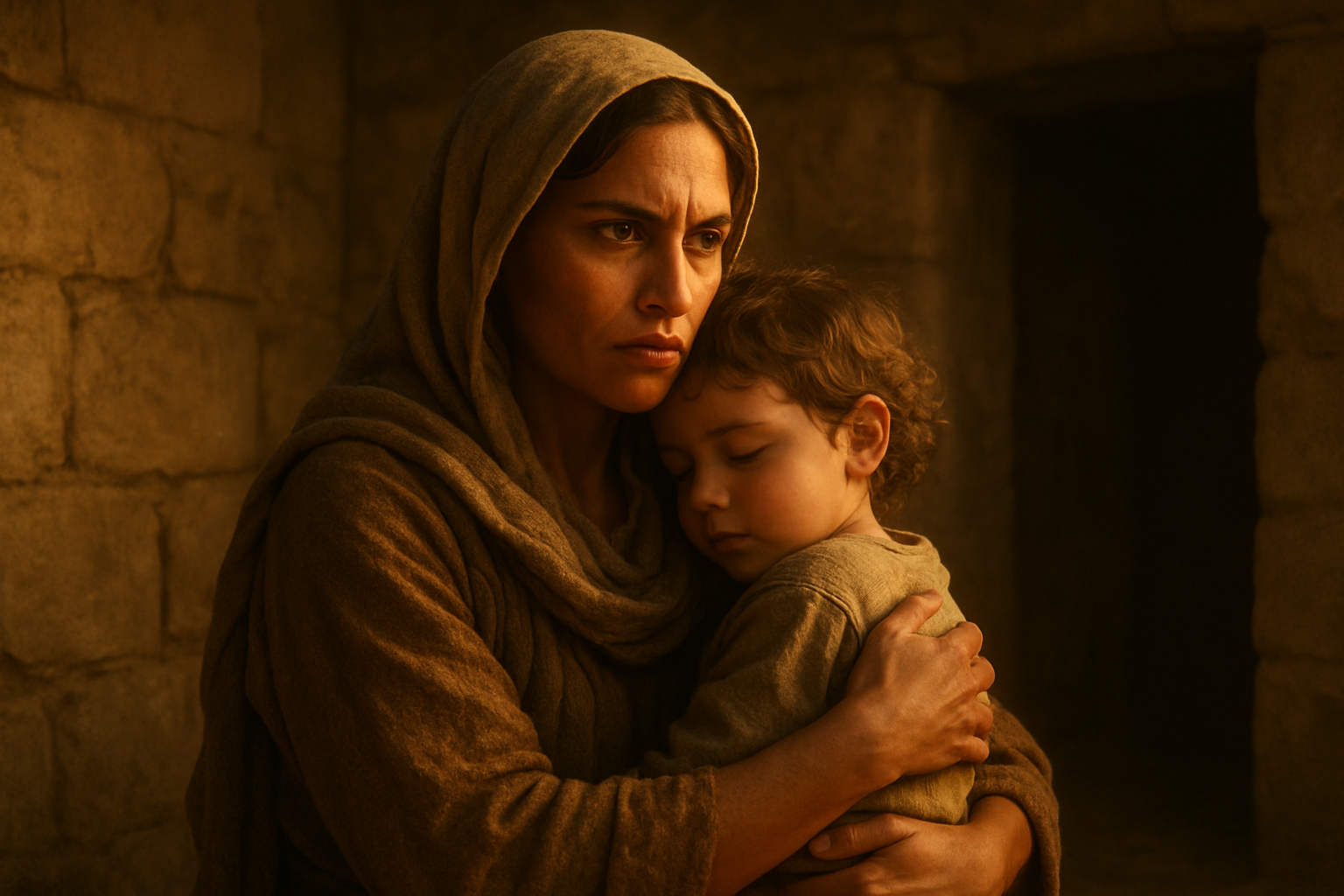
When Pharaoh ordered the death of all Hebrew baby boys, Moses' mother Jochebed refused to accept defeat. This courageous woman took incredible risks to protect her son, showing us what protective mothers Bible stories teach about maternal love and faith. Jochebed hid Moses for three months before crafting a brilliant plan that would save his life.
She wove a waterproof basket from papyrus reeds and placed her baby inside, setting it among the reeds along the Nile River. This wasn't random desperation - Jochebed carefully positioned the basket where Pharaoh's daughter would find it during her daily bath. She even stationed Moses' sister Miriam nearby to watch and intervene if needed.
The plan worked perfectly. Pharaoh's daughter discovered the crying baby and felt compassion for him. When Miriam appeared and offered to find a Hebrew nurse, the princess agreed. Jochebed ended up being paid to nurse her own son in Pharaoh's household, keeping him safe while he grew strong enough to eventually lead Israel out of Egypt.
Jochebed's story shows how women in the Bible combined faith with practical action. She didn't just pray and wait - she created a solution that protected Moses while trusting God to work through her efforts.
Rahab's Bold Actions to Secure Her Family's Safety
Rahab faced an impossible choice when Israeli spies arrived in Jericho. As a prostitute living in the city walls, she risked everything to protect these strangers and secure her family's survival. Her quick thinking and bold actions saved not only the spies but her entire household.
When the king's men came searching for the Israeli spies, Rahab hid them on her roof under stalks of flax. She boldly lied to the soldiers, telling them the men had already left the city. This wasn't just clever deception - it was a calculated risk based on her growing faith in Israel's God.
Rahab had heard stories of how God delivered the Israelites from Egypt and gave them victory over other kings. She recognized divine power when she saw it and made a strategic decision to align herself with God's people. In exchange for protecting the spies, she negotiated safety for her parents, siblings, and their families.
Her scarlet cord hanging from the window became the sign that saved her household when Jericho fell. Rahab's protective instincts extended beyond just her children to her entire family network. She understood that sometimes biblical mothers must make difficult choices to ensure their loved ones' survival, even when those choices go against cultural expectations.
The Wise Woman's Quick Thinking to Save Her Baby from Solomon's Court
The famous story of two women claiming the same baby before King Solomon reveals the fierce protective instincts of true motherhood. When Solomon suggested cutting the living child in half to settle the dispute, the real mother immediately spoke up to save her son's life.
"Please, my lord, give her the living baby!" she cried. "Don't kill him!" Her willingness to give up her child rather than see him harmed proved her genuine maternal love. The impostor, who had accidentally smothered her own baby, agreed to Solomon's proposal, revealing her deception.
This unnamed woman's quick thinking saved her baby's life. She understood that losing custody was better than losing her child forever. Her split-second decision showed the depth of maternal sacrifice that defines true biblical motherhood lessons. She prioritized her son's welfare over her own desires to keep him.
Solomon immediately recognized the real mother through her protective response. The wisdom he displayed came partly from understanding how genuine mothers will always choose their children's safety over their own interests. This story teaches us that mothers who shaped leaders often remain unnamed in history, but their protective love creates the foundation for future greatness.
The woman's courage to speak up in the king's court also demonstrates how far mothers will go to protect their children, even challenging powerful authorities when necessary.
Mothers Who Shaped Future Leaders and Kings
Bathsheba's Influence in Securing Solomon's Throne
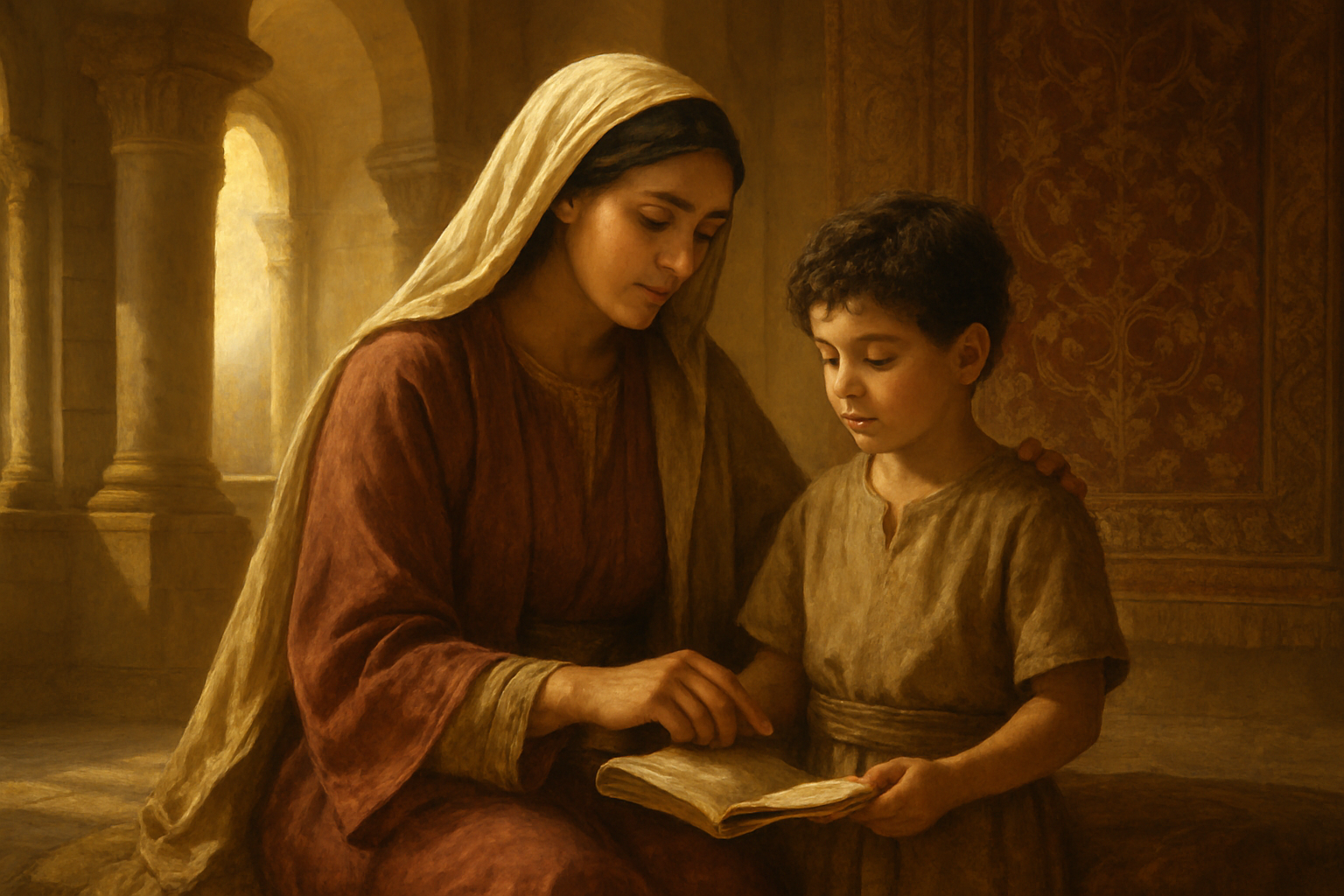
Bathsheba demonstrated remarkable political wisdom and maternal determination when she secured her son Solomon's position as David's successor. After David's health declined, Bathsheba acted swiftly when Adonijah attempted to claim the throne. She approached King David directly, reminding him of his promise that Solomon would inherit the kingdom. Her strategic timing and diplomatic approach proved crucial in preventing a potential civil war.
Working alongside the prophet Nathan, Bathsheba presented a united front that convinced David to immediately crown Solomon as king. Her influence extended beyond this pivotal moment - she continued advising Solomon throughout his early reign. The respect Solomon showed his mother, even bowing before her and providing a throne at his right hand, reveals the significant role she played in shaping his character and leadership style.
Bathsheba's story shows how biblical mothers could wield considerable influence in royal courts while protecting their children's futures. Her actions required courage, timing, and deep understanding of palace politics.
Eunice's Role in Timothy's Spiritual Foundation
Timothy's mother Eunice created one of the most powerful examples of biblical motherhood lessons through her commitment to spiritual education. The apostle Paul specifically praised her "sincere faith" and credited her with Timothy's deep knowledge of Scripture from childhood. Living in a mixed-faith household with a Greek husband, Eunice faced unique challenges in raising a son who would become a key leader in the early church.
Paul's letters reveal that Eunice taught Timothy the Hebrew Scriptures despite cultural pressures and potential family conflict. Her dedication to his spiritual education prepared him for his later ministry alongside Paul. Timothy became one of Paul's most trusted companions, leading churches in Ephesus and other important centers of early Christianity.
Eunice's influence demonstrates how women of faith in Bible times could shape future spiritual leaders even within challenging family dynamics. Her example shows that consistent, loving instruction in God's word creates lasting impact across generations.
Lois's Legacy of Faith Passed Through Generations
Grandmother Lois represents the multi-generational influence that women in the Bible could have on their families. Paul mentions her alongside Eunice when describing the "genuine faith" that lived first in Lois, then in Eunice, and finally in Timothy. This three-generation chain of faith illustrates how spiritual legacy passes from grandmother to mother to child.
Lois likely played a crucial role in Timothy's early religious education, working alongside Eunice to instill biblical principles. In ancient Jewish culture, grandmothers often served as primary teachers of religious traditions and stories. Her faithful example created a foundation that supported both her daughter's and grandson's spiritual development.
The mention of Lois in Paul's writings shows how biblical parenting wisdom often spans generations, with each faithful woman building upon the foundation laid by those before her.
Rebekah's Strategic Guidance for Jacob's Destiny
Rebekah's story reveals complex layers of maternal guidance that ultimately fulfilled God's prophecy about her twin sons. When God told her that "the older will serve the younger," she understood Jacob's divine calling before anyone else recognized it. Years later, when Isaac planned to bless Esau, Rebekah developed a plan to ensure Jacob received the blessing meant for him according to God's word.
Her actions required considerable risk and creative thinking. She coached Jacob through an elaborate deception, prepared the meal, and even took responsibility for any potential curse. While her methods remain controversial, Rebekah's determination to see God's plan fulfilled demonstrates her deep faith in divine promises.
Rebekah's guidance shaped Jacob into the father of the twelve tribes of Israel. Her strategic thinking and willingness to act on her convictions show how mothers who shaped leaders sometimes made difficult decisions to protect their children's destinies. Her story illustrates the complex balance between human action and divine sovereignty in fulfilling God's purposes.
Mothers Who Overcame Tragedy and Loss
Naomi's Resilience After Losing Husband and Sons
Naomi's story stands as one of the most heartbreaking yet inspiring examples of maternal resilience in scripture. When famine struck Bethlehem, she and her husband Elimelech moved to Moab with their two sons. What seemed like a temporary relocation turned into a devastating series of losses that would test her faith to its core.
First, her husband died, leaving her widowed in a foreign land. Then both of her sons died, taking with them not only her children but also her hope for grandchildren and the continuation of her family line. In ancient times, this represented complete social and economic ruin for a woman. Naomi had lost everything that defined her identity and security.
The depth of her grief becomes clear when she tells the women of Bethlehem to call her Mara, meaning "bitter," because "the Almighty has made my life very bitter." Yet even in her darkest moments, Naomi demonstrated remarkable strength. She made the difficult decision to return to Bethlehem, showing courage to start over despite her advanced age and circumstances.
Her relationship with Ruth reveals another dimension of her character. Even while grieving, she tried to release her daughters-in-law from obligation to her, wanting them to find new husbands and happiness. This selfless act, born from love rather than bitterness, shows how some biblical mothers maintained their nurturing hearts even through unimaginable loss.
Tamar's Determination to Continue Her Family Line
Tamar's story reveals the extraordinary lengths one woman went to preserve her family's legacy when traditional systems failed her. As Judah's daughter-in-law, she married his eldest son Er, who died before giving her children. According to levirate marriage customs, she then married Onan, who also died without providing her with offspring.
When Judah failed to give her his third son Shelah as promised, Tamar found herself trapped in a devastating situation. She was neither truly married nor free to remarry, essentially condemned to childless widowhood. Rather than accepting this fate quietly, she took bold action that would scandalize her community but ultimately secure her place in biblical history.
Disguising herself as a prostitute, she conceived twins with Judah himself. When her pregnancy was discovered and she faced death by burning, she revealed the truth through Judah's own seal and staff. Her courage in that moment—risking everything to expose the father—saved not only her life but also her children's future.
Tamar's determination paid off in ways she couldn't have imagined. Her twin sons Perez and Zerah became part of the lineage leading to King David and ultimately to Jesus Christ. Her story shows how women in the Bible sometimes had to work outside conventional boundaries to fulfill their calling as mothers and preserve God's greater plan.
The Widow of Zarephath's Faith During Extreme Hardship
The unnamed widow of Zarephath represents countless mothers who face impossible choices during times of crisis. When Elijah arrived at her door requesting food, she was preparing what she believed would be her final meal for herself and her son before they died of starvation.
Her situation was desperate beyond imagination. The severe drought had lasted years, depleting all food sources. As a widow with a young son, she had no male provider and limited options for survival. The jar of flour contained just enough for one small cake, and the jug held only a little oil. After this meal, she expected death to follow quickly.
Yet when Elijah asked for bread, she didn't turn him away despite her own desperate need. Her willingness to share her last bit of food with a stranger demonstrates remarkable faith and generosity. She chose to trust God's prophet even when it seemed to guarantee her child's death.
God honored her faith through an incredible miracle. The flour jar never emptied, and the oil jug never ran dry throughout the remainder of the famine. But her testing wasn't over—when her son later became ill and died, she faced every mother's worst nightmare. Again, her faith was rewarded when Elijah raised the boy back to life.
Her story illustrates how faithful mothers in scripture sometimes found themselves in situations where only divine intervention could save their families. She trusted God when human logic said otherwise, becoming an example of maternal faith that transcends circumstances.
Lessons Modern Mothers Can Learn from Biblical Examples
Building Unshakeable Faith in Difficult Circumstances
Biblical mothers faced incredible challenges that would shake anyone's faith. Sarah waited decades for a child, experiencing disappointment month after month. Hannah endured years of heartbreak and public humiliation while desperately wanting a baby. Yet these women of faith in the Bible showed us what it means to hold onto God's promises when everything seems impossible.
Modern mothers can learn from their example by choosing to trust God even when circumstances look bleak. When facing financial struggles, health concerns, or family problems, remember that God sees your situation and has not forgotten you. Like these faithful mothers in scripture, we can choose to believe God's character remains constant even when our circumstances change.
Building this kind of faith happens through daily choices. Prayer becomes your lifeline, not just a ritual. Reading God's promises gives you strength to face another day. Surrounding yourself with other believers who encourage your faith makes all the difference when doubt creeps in.
Balancing Protection with Trust in God's Plan
Every mother struggles with the balance between protecting her children and trusting God with their future. Biblical mothers like Jochebed faced this tension in dramatic ways. She literally had to let go of baby Moses and trust God to protect him when her own protection wasn't enough.
This biblical motherhood lesson speaks directly to modern parenting challenges. We want to shield our children from every hurt, every disappointment, every danger. Yet overprotecting them can actually harm their growth and development. These protective mothers in the Bible show us how to be wise guardians while still allowing God to work in our children's lives.
The key lies in discerning when to step in and when to step back. Teaching your children to pray about their problems gives them tools they'll need when you're not around. Showing them how to make good decisions prepares them for independence. Trusting God with their future doesn't mean being careless with their present safety.
Creating Lasting Spiritual Impact on Future Generations
The mothers who shaped leaders in scripture understood something powerful: their influence would ripple through generations. Lois and Eunice poured biblical truth into young Timothy, creating a legacy that blessed countless people through his ministry. Hannah's dedication to God influenced Samuel, who became one of Israel's greatest prophets.
Your daily choices as a mother create spiritual deposits in your children's hearts. Reading Bible stories at bedtime plants seeds of faith. Praying together during difficult times teaches them where to turn for help. Living out your faith authentically shows them that following God is real and practical, not just Sunday morning talk.
These biblical parenting wisdom examples remind us that spiritual impact happens in ordinary moments. When you choose forgiveness over anger, your children learn grace. When you trust God during financial stress, they see what real faith looks like. When you serve others despite your busy schedule, they understand that love requires action.
Your influence doesn't end with your children either. The faith you instill in them gets passed down to their children and their children's children. Like these women in the Bible, you're part of a spiritual inheritance that reaches far beyond what you can see.
Finding Strength and Purpose Through Life's Challenges
Biblical mothers faced tragedies that would break most people's spirits. Naomi lost her husband and both sons. The widow of Zarephath watched her child die. Yet these women found ways to keep going, discovering strength they didn't know they had.
Life brings unexpected challenges to every mother. Serious illness, job loss, relationship problems, children who make poor choices - these trials test your faith and your resolve. The mother examples from scripture show us that God doesn't promise to remove every difficulty, but He does promise to walk through them with us.
Finding purpose in pain becomes possible when you remember that your struggles can help other people. Your story of overcoming becomes encouragement for someone else facing similar battles. Your faith during dark times shows your children that God is trustworthy even when life isn't fair.
These Christian motherhood guidance examples teach us to look for God's presence in our pain. Sometimes He provides miraculous solutions. Sometimes He gives us strength to endure. Always He uses our difficulties to shape us into the women and mothers He wants us to become.
The biblical mothers we read about weren't superhuman. They were ordinary women facing extraordinary circumstances with an extraordinary God. Their stories give us hope that we too can be faithful, protective, influential, and strong through whatever life brings our way.
The mothers in the Bible show us what real strength looks like. From Hannah's patient faith to Jochebed's brave protection of Moses, these women faced impossible situations with courage and trust in God. They didn't just survive tough times - they raised children who changed the world. Sarah, Rebekah, and Bathsheba all played crucial roles in shaping leaders who would impact entire nations.
What stands out most is how these mothers handled both joy and heartbreak with grace. They teach us that being a mom isn't about being perfect - it's about showing up with love, faith, and determination. Whether you're dealing with infertility, protecting your kids from danger, or watching them struggle, these biblical women remind us that God sees every mother's heart. Take comfort in their stories and let their examples guide you as you pour love and wisdom into the next generation.


Comments
Post a Comment