Respecting and Honoring Mothers (Exodus 20:12)
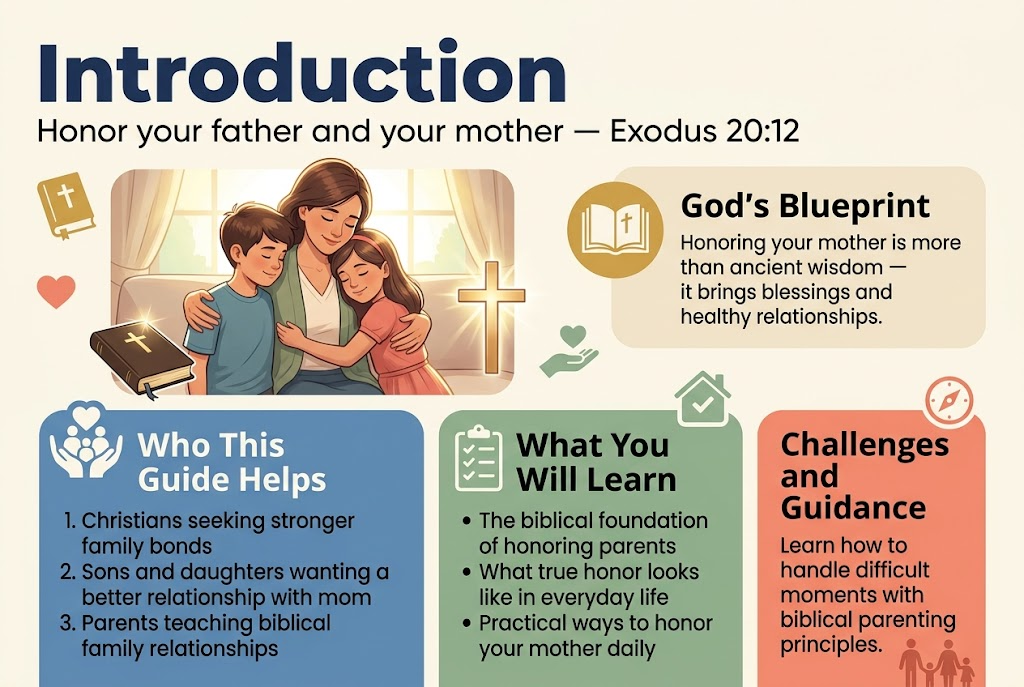
The Fifth Commandment in Exodus 20:12 gives us one of the most foundational principles for family life: "Honor your father and your mother." This command to honor your mother isn't just ancient wisdom—it's God's blueprint for healthy relationships that brings real blessings to our lives.
If you're a Christian seeking to strengthen your family bonds, a son or daughter wanting to improve your relationship with your mom, or a parent teaching biblical family relationships to your children, this guide will help you understand what biblical honor really means and how to live it out.
We'll explore the deep biblical foundation behind honoring parents in the Bible and uncover what true honor looks like in everyday situations. You'll discover practical ways to honor your mother daily, from simple acts of respect to meaningful gestures that show genuine care. We'll also tackle the real challenges that can make honoring mothers difficult and how biblical parenting principles can guide us through those tough moments.
Understanding the Biblical Foundation of the Fifth Commandment
Examining the Original Hebrew Text and Cultural Context
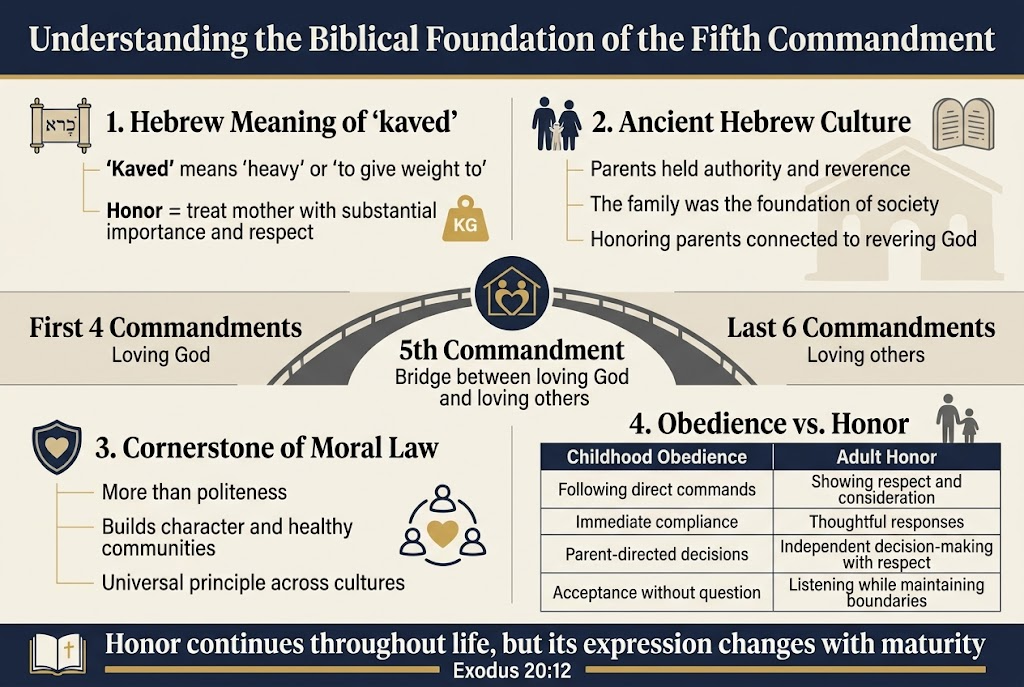
The Fifth Commandment in Exodus 20:12 carries profound weight when we dig into its original Hebrew language. The word "honor" comes from the Hebrew term "kaved," which literally means "to be heavy" or "to give weight to." This powerful imagery suggests that honoring your mother means treating her with substantial importance and respect, not as a lightweight obligation.
In ancient Hebrew culture, parents held positions of tremendous authority and reverence. The family structure served as the foundation of society, and children understood that their parents represented God's authority in their lives. When God commanded people to honor your mother and father, He wasn't making a suggestion - He was establishing a fundamental principle for healthy communities.
The cultural context reveals something fascinating: this commandment appears in the section dealing with our relationship to God, not just human relationships. This placement shows that honoring parents in the Bible connects directly to how we relate to our heavenly Father. Ancient Israelites recognized that learning to respect earthly parents prepared them to properly reverence God.
Recognizing Honoring Parents as a Cornerstone of God's Moral Law
The Fifth Commandment stands as the bridge between the first four commandments about loving God and the final six about loving others. This strategic positioning reveals God's wisdom in biblical family relationships. When children learn to honor their parents, they develop the character foundation needed for all other relationships.
Biblical honor meaning goes far deeper than simple politeness or occasional gifts. It involves recognizing the inherent dignity and worth of our mothers, regardless of their imperfections. This commandment appears universal across cultures because God embedded this principle into the fabric of human society.
The placement of this commandment among the Ten Commandments shows its critical importance. God didn't list it as an afterthought or minor suggestion. Instead, He positioned it as essential moral law that shapes character and builds healthy communities. When we honor your mother daily, we participate in God's design for human flourishing.
Distinguishing Between Obedience and Honor in Adult Relationships
Many adults struggle with understanding the difference between obedience and honor when it comes to their mothers. Christian parenting principles teach us that children should obey their parents, but adult relationships require a different approach. Adult children honor their mothers without necessarily obeying every request or demand.
Honor your mother as an adult means treating her with respect, kindness, and consideration. It involves listening to her wisdom, caring for her needs, and speaking about her with dignity. However, it doesn't mean abandoning your own family responsibilities or compromising your convictions to please her.
| Childhood Obedience | Adult Honor |
|---|---|
| Following direct commands | Showing respect and consideration |
| Immediate compliance | Thoughtful responses |
| Parent-directed decisions | Independent decision-making with respect |
| Acceptance without question | Listening while maintaining boundaries |
Respecting mothers scripture teaches us that honor continues throughout our lives, but its expression changes as we mature. Adult honor might mean setting loving boundaries, making decisions that disappoint our mothers while still treating them with dignity, or caring for aging parents even when it's challenging.
The wisdom of Exodus 20:12 recognizes that healthy adult relationships require this balance. We can disagree with our mothers while still honoring them. We can make independent choices while still showing them the respect and care this commandment requires.
Discovering the Profound Meaning of Biblical Honor
Learning what honor truly means in Scripture
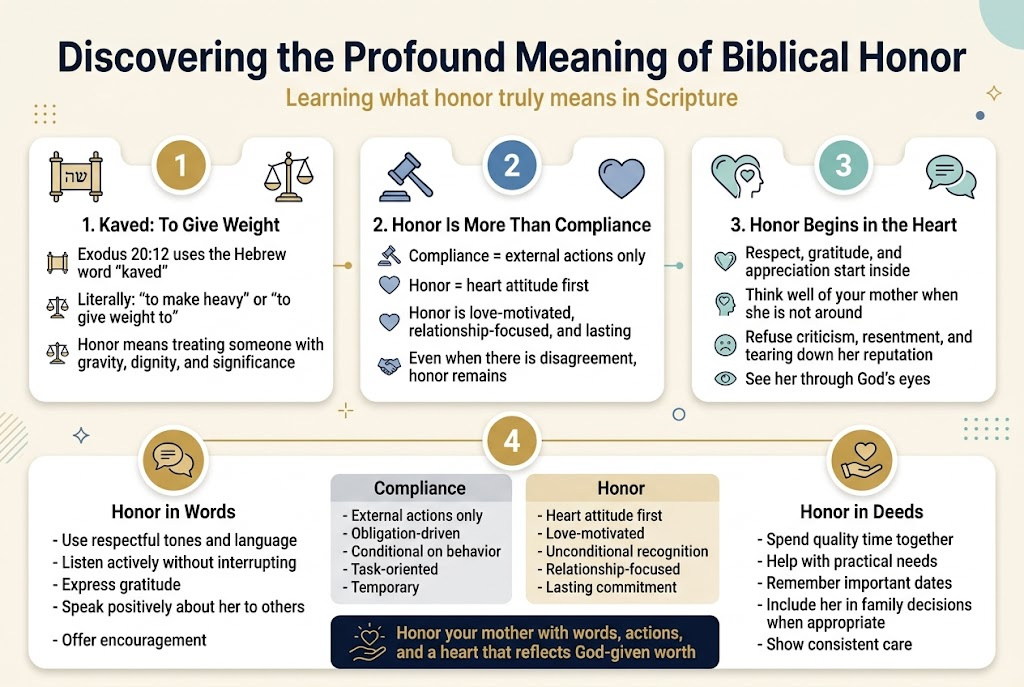
The Hebrew word for honor in Exodus 20:12 is "kaved," which carries a weight far deeper than our modern understanding suggests. This word literally means "to make heavy" or "to give weight to," painting a picture of treating someone with the gravity and significance they deserve. When the Bible speaks of honoring your mother, it's not asking for superficial politeness or occasional acts of kindness. Instead, it calls for recognizing the inherent value and dignity of the person who gave you life.
Biblical honor encompasses reverence, respect, and recognition of someone's position and worth. Think of how people approach a judge in a courtroom – there's an automatic acknowledgment of authority and position that shapes their behavior and attitude. Similarly, honoring your mother means acknowledging her God-given role in your life and treating her with the corresponding respect.
The scriptural concept of honor also includes the idea of making someone's reputation "weighty" or significant. When you honor your mother, you're actively contributing to her dignity and standing, both in private and public settings. This goes beyond mere politeness to encompass a lifestyle of genuine respect and appreciation.
Understanding how honor differs from mere compliance
Many people confuse honoring parents with simple obedience or compliance, but these concepts operate on entirely different levels. Compliance focuses on external actions – doing what you're told, following rules, or meeting expectations. Honor, however, starts with internal attitudes and flows outward into authentic behavior.
You can comply with your mother's wishes while harboring resentment, frustration, or disrespect in your heart. You might visit regularly, send gifts, or help with tasks while maintaining an attitude of obligation rather than genuine care. This kind of behavior fulfills the letter of the law but misses the spirit completely.
Biblical honor requires a heart transformation that views your mother through God's eyes. It means recognizing her value regardless of her imperfections, mistakes, or current circumstances. Honor persists even when disagreement exists, because it's rooted in who she is rather than what she does or doesn't do.
| Compliance | Honor |
|---|---|
| External actions only | Heart attitude first |
| Obligation-driven | Love-motivated |
| Conditional on behavior | Unconditional recognition |
| Task-oriented | Relationship-focused |
| Temporary | Lasting commitment |
Recognizing honor as an attitude of the heart
True biblical honor begins in the depths of your heart, not in your outward actions. Jesus emphasized this principle repeatedly, pointing out that external religious practices mean nothing without corresponding heart attitudes. The same applies to honoring your mother – it must start with genuine respect, gratitude, and appreciation flowing from within.
This heart-centered honor shapes how you think about your mother when she's not around. Do your private thoughts reflect respect and appreciation, or do they drift toward criticism and frustration? Honor guards your mind against harboring resentment or dwelling on past hurts. It chooses to focus on the positive aspects of your relationship and your mother's character.
The attitude of honor also influences how you speak about your mother to others. A heart that truly honors doesn't participate in conversations that tear down or criticize, even when others might be doing so. Instead, it looks for opportunities to speak positively and defend your mother's reputation.
This internal transformation doesn't happen overnight. It requires intentional cultivation through prayer, reflection on Scripture, and choosing to see your mother as God sees her – a beloved daughter created in His image with inherent worth and dignity.
Applying honor in both word and deed
Biblical honor manifests itself in both speech and action, creating a complete picture of respect and reverence. Your words carry tremendous power to either build up or tear down, and honoring your mother means using that power constructively. This includes speaking to her with kindness and patience, even during difficult conversations or disagreements.
Practical ways to honor through words include:
-
Using respectful tones and language
-
Listening actively without interrupting
-
Expressing gratitude for specific things she's done
-
Speaking positively about her to others
-
Offering encouragement during challenging times
-
Asking for her wisdom and input on decisions
Actions that demonstrate biblical honor go beyond mere duty to express genuine care and appreciation. These might include spending quality time together, helping with practical needs, remembering important dates and events, or including her in family decisions when appropriate.
The key is consistency between your words and actions. Honor isn't a performance you put on for special occasions; it's a way of life that treats your mother with dignity in both small daily interactions and significant life moments. This authentic approach to honoring parents reflects the heart of the Fifth Commandment and opens the door to experiencing the blessings God promises to those who follow this command.
Identifying Practical Ways to Honor Your Mother Daily
Expressing genuine gratitude for her sacrifices and love
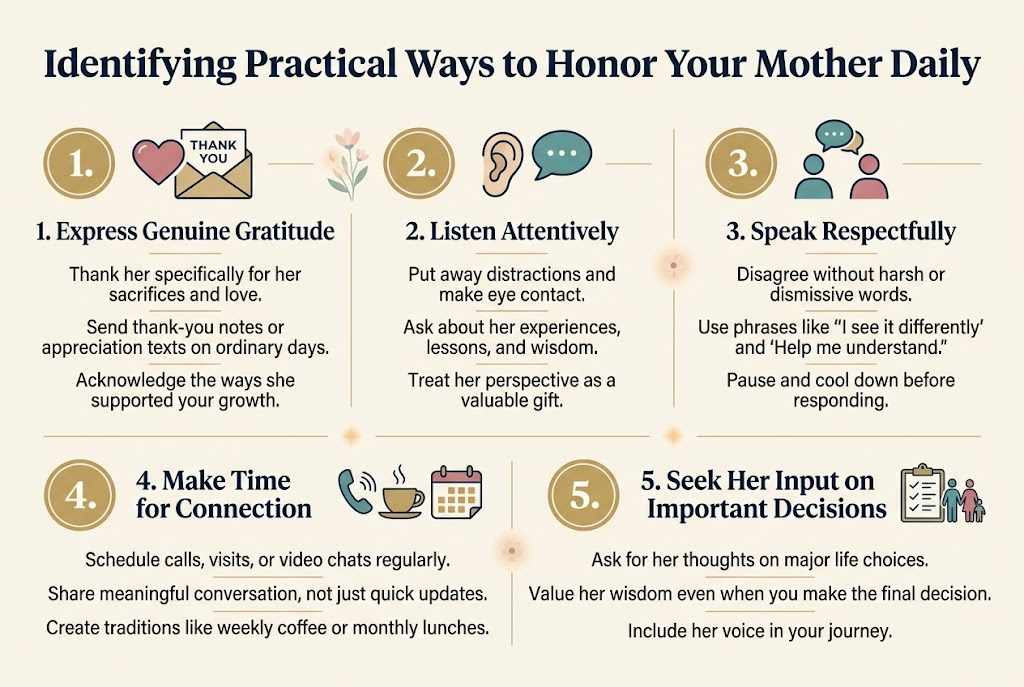
Your mother likely made countless sacrifices throughout your life that you may never fully know about. She gave up sleep during your infant years, invested her time and energy in your growth, and probably put many of her own dreams on hold to support yours. Honor your mother by acknowledging these sacrifices with heartfelt gratitude. Tell her specifically what you appreciate about her efforts. Instead of a generic "thanks for everything," try saying something like "Thank you for always making sure I had what I needed, even when money was tight" or "I'm grateful for how you encouraged me to pursue my goals, even when they seemed impossible."
Write thank-you notes on random days, not just holidays. Text her appreciation messages when something reminds you of her kindness. These simple acts of recognition fulfill the Fifth Commandment in meaningful ways and demonstrate that you truly value her contributions to your life.
Listening attentively to her wisdom and experiences
Your mother has lived through experiences you haven't encountered yet. She's navigated challenges, made mistakes, learned valuable lessons, and gained wisdom that could benefit you tremendously. Honoring parents in the Bible includes recognizing their accumulated knowledge and life experience as valuable gifts.
When she shares stories or offers advice, resist the urge to dismiss her words because they come from a different generation. Put away your phone, make eye contact, and really listen. Ask follow-up questions about her experiences. What was it like when she was your age? How did she handle difficult situations? What would she do differently if she could go back?
Sometimes her advice might not directly apply to your current circumstances, but the underlying principles often remain relevant. Even when you don't plan to follow her specific suggestions, listening respectfully shows that you value her perspective and care about her thoughts.
Speaking respectfully even during disagreements
Disagreements between mothers and adult children are natural and inevitable. You've grown into your own person with your own opinions, values, and approaches to life. Biblical family relationships don't require you to agree on everything, but they do call for respectful communication even when tensions arise.
How to honor your mother daily includes watching your tone of voice, choosing your words carefully, and avoiding harsh or dismissive language. You can disagree without being disagreeable. Instead of saying "That's ridiculous" or "You don't understand," try phrases like "I see it differently" or "Help me understand your perspective better."
Remember that respect doesn't mean becoming a doormat or avoiding important conversations. You can stand firm in your convictions while still treating her with the dignity she deserves. Taking time to cool down before responding to emotionally charged situations often leads to more productive discussions.
Making time for meaningful connection and communication
In our busy world, it's easy to let days or even weeks pass without meaningful contact with your mother. Christian parenting principles emphasize the importance of maintaining strong family bonds throughout life, not just during childhood.
Schedule regular phone calls, visits, or video chats that go beyond quick check-ins about logistics. Ask about her day, her interests, her concerns, and her dreams. Share what's happening in your life beyond the basic updates. Create traditions together like weekly coffee dates, monthly lunches, or seasonal activities you both enjoy.
Quality matters more than quantity. A focused 30-minute conversation where you're both fully present beats hours of distracted interaction. Turn off distractions, engage in activities she enjoys, and create space for deeper connection. These intentional moments of togetherness strengthen your relationship and demonstrate that she remains a priority in your life.
Seeking her input on important life decisions
While you're ultimately responsible for your own choices as an adult, seeking your mother's input on significant decisions shows respect for her wisdom and includes her in your life journey. Biblical honor meaning encompasses valuing someone's counsel and perspective, even when you maintain the final say in your decisions.
Before making major career moves, relationship choices, financial decisions, or other important life changes, consider asking for her thoughts. You might discover insights you hadn't considered or gain confidence in directions you were already contemplating. Even when you ultimately choose a different path than she might recommend, the act of seeking her input communicates that you value her opinion and want her to be part of your decision-making process.
This doesn't mean giving her veto power over your choices, but rather including her voice in your considerations. She knows you well, cares about your wellbeing, and brings a different perspective that could prove valuable as you navigate life's important crossroads.
Overcoming Common Challenges in Mother Relationships
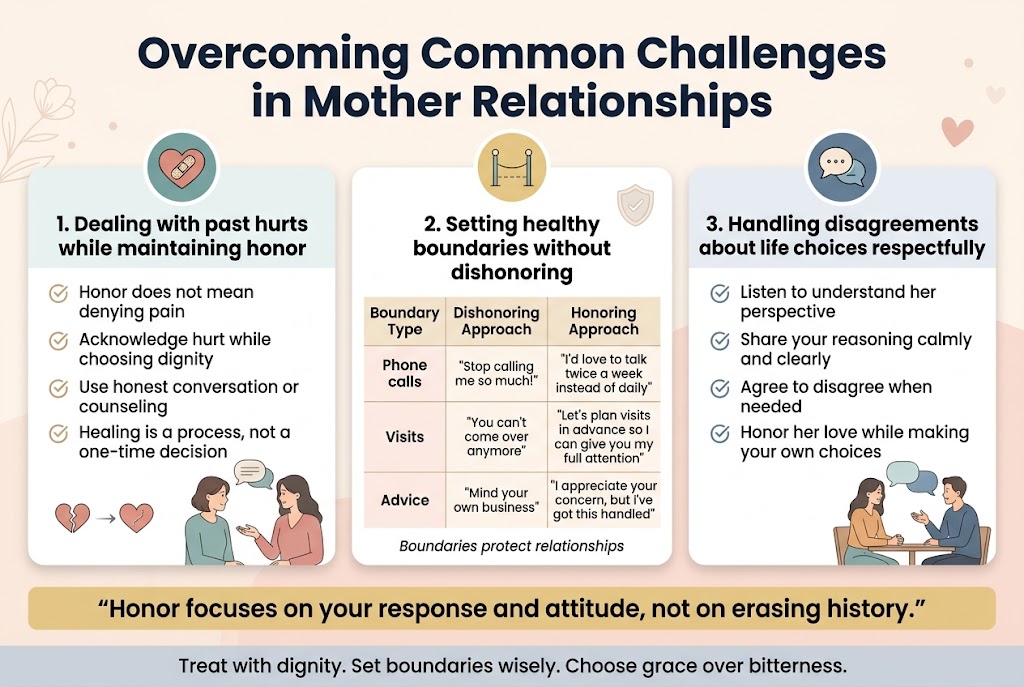
Dealing with past hurts while maintaining honor
Past wounds from your mother don't disappear just because Exodus 20:12 commands us to honor our parents. Many people struggle with this tension - how do you honor your mother when she's caused real pain in your life? The key is understanding that honoring doesn't mean pretending the hurt never happened or excusing harmful behavior.
Biblical honor focuses on your response and attitude, not on erasing history. You can acknowledge past hurts while choosing to treat your mother with dignity and respect moving forward. This might mean having honest conversations about what happened, seeking counseling together, or simply deciding not to let bitterness control your interactions.
Joseph provides a powerful example in Genesis. Despite his brothers' betrayal, he chose forgiveness and honored his family when they were reunited. He didn't minimize their wrongdoing, but he chose to respond with grace rather than revenge.
Remember that healing takes time. Honoring your mother while dealing with past hurts is a process, not a one-time decision. Some days will be harder than others, and that's completely normal.
Setting healthy boundaries without dishonoring
Boundaries aren't walls - they're guidelines that help relationships function better. You can absolutely set limits with your mother while still maintaining the biblical principle of honor. Healthy boundaries actually protect relationships rather than damage them.
Start by identifying what specific behaviors or situations drain you emotionally or create conflict. Maybe your mother calls constantly during work hours, gives unsolicited advice about your marriage, or makes critical comments about your appearance. These are areas where gentle but firm boundaries can help.
When setting boundaries, focus on your needs rather than attacking her character. Instead of saying "You're too controlling," try "I need some space to make my own decisions about this." The tone and approach matter just as much as the boundary itself.
| Boundary Type | Dishonoring Approach | Honoring Approach |
|---|---|---|
| Phone calls | "Stop calling me so much!" | "I'd love to talk twice a week instead of daily" |
| Visits | "You can't come over anymore" | "Let's plan visits in advance so I can give you my full attention" |
| Advice | "Mind your own business" | "I appreciate your concern, but I've got this handled" |
Handling disagreements about life choices respectfully
Your mother raised you with certain expectations, and when your choices don't align with hers, tension often follows. Whether it's career decisions, relationship choices, parenting styles, or lifestyle changes, disagreements are normal in any close relationship.
The goal isn't to avoid all conflict - it's to navigate disagreements in ways that preserve dignity and maintain connection. Start by really listening to understand her perspective, even if you don't agree with it. Often, her concerns come from love and worry rather than a desire to control.
Express your own viewpoint calmly and clearly without becoming defensive. Share your reasoning and values, helping her understand how you arrived at your decisions. You might say something like, "I know this isn't what you would choose, but here's why this path makes sense for me right now."
Sometimes agreeing to disagree is the most loving option. You can acknowledge that you see things differently while still respecting each other as adults. This doesn't mean backing down from important convictions - it means choosing your battles wisely and focusing on maintaining the relationship rather than winning arguments.
Remember that your mother's opinions come from decades of life experience and deep care for your wellbeing. Even when you disagree, you can honor that love and concern while still making your own choices as an adult.
Experiencing the Promised Blessings of Honoring Parents
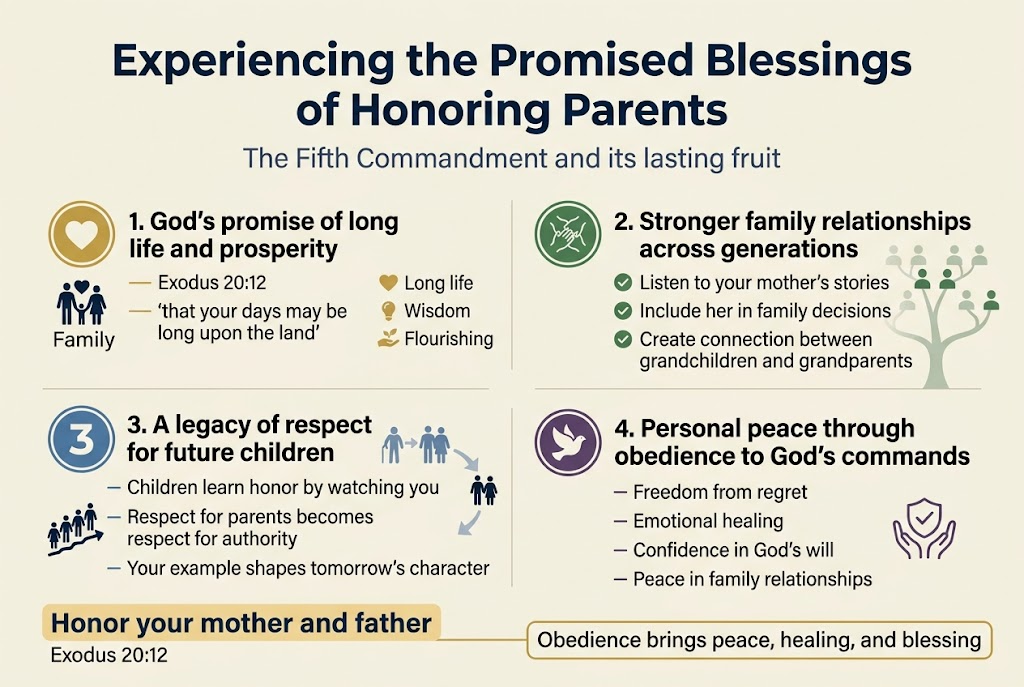
Receiving God's promise of long life and prosperity
The Fifth Commandment comes with something unique - it's the only commandment that includes a specific promise. When God commands us to honor your mother and father, He doesn't leave us wondering what's in it for us. The promise is clear: "that your days may be long upon the land which the Lord your God is giving you" (Exodus 20:12).
This isn't some mystical guarantee that honoring parents will automatically add decades to your life. Rather, it speaks to God's design for a flourishing society built on respect and wisdom transfer between generations. When we embrace biblical honor meaning, we tap into principles that naturally lead to better decision-making, stronger relationships, and healthier life patterns.
Prosperity in biblical terms goes beyond financial success. It encompasses emotional well-being, spiritual growth, and the peace that comes from living in alignment with God's design. Those who practice honoring parents in the Bible often find themselves making wiser choices because they've learned to value the counsel and experience of those who've walked before them.
Building stronger family relationships across generations
Honoring your mother creates a ripple effect that strengthens the entire family structure. When you model respect and care for your parents, you're building bridges between generations rather than walls. This approach to biblical family relationships breaks cycles of dysfunction and creates new patterns of love and respect.
Your children watch how you treat your mother. They're learning what it means to honor and respect authority, and more importantly, they're seeing what their future relationship with you might look like. When you prioritize your mother's well-being and show genuine care for her wisdom and experience, you're teaching your children that family relationships have lasting value.
This generational strength doesn't happen overnight. It requires consistent effort to:
-
Listen to your mother's stories and perspectives
-
Include her in family decisions when appropriate
-
Create opportunities for grandchildren to connect with grandparents
-
Address conflicts with respect rather than avoidance
-
Celebrate your mother's contributions to the family
Creating a legacy of respect for future children
The way you honor your mother daily becomes the blueprint your children will follow in their relationships with you and others. You're not just following the Fifth Commandment - you're establishing a family culture that will influence generations to come.
Children who grow up seeing their parents honor grandparents develop a natural understanding of respect for authority and wisdom. They learn that aging doesn't diminish a person's value and that everyone deserves dignity regardless of their current circumstances or capabilities.
This legacy extends beyond family relationships. Children who learn to honor their mothers typically show greater respect for teachers, coaches, employers, and other authority figures throughout their lives. The Christian parenting principles embedded in the Fifth Commandment create character traits that serve children well in every area of life.
Your commitment to honoring your mother today shapes your children's character tomorrow. When they face their own challenges in caring for aging parents decades from now, they'll draw on the example you've set.
Finding personal peace through obedience to God's commands
There's something deeply satisfying about aligning your actions with God's design. When you actively work to honor your mother according to Exodus 20:12, you experience the peace that comes from obedience. This isn't about earning God's love through good works - it's about experiencing the natural benefits of living within God's framework.
Many people carry guilt and regret about their relationships with their mothers. Whether it's words spoken in anger, years of distance, or simply taking her for granted, these burdens weigh heavily on the heart. Choosing to honor your mother provides a path toward healing these wounds and finding emotional freedom.
The peace that comes from honoring parents includes:
-
Freedom from regret about missed opportunities
-
Confidence that you're living according to God's will
-
Emotional healing in previously strained relationships
-
Clarity about your role in the family structure
-
Satisfaction from giving back to someone who gave so much to you
This obedience doesn't require perfection. Your mother may have flaws, and your relationship may have complicated history. But choosing to honor her within appropriate boundaries brings peace to your own heart and opens doors for God to work in both your lives.
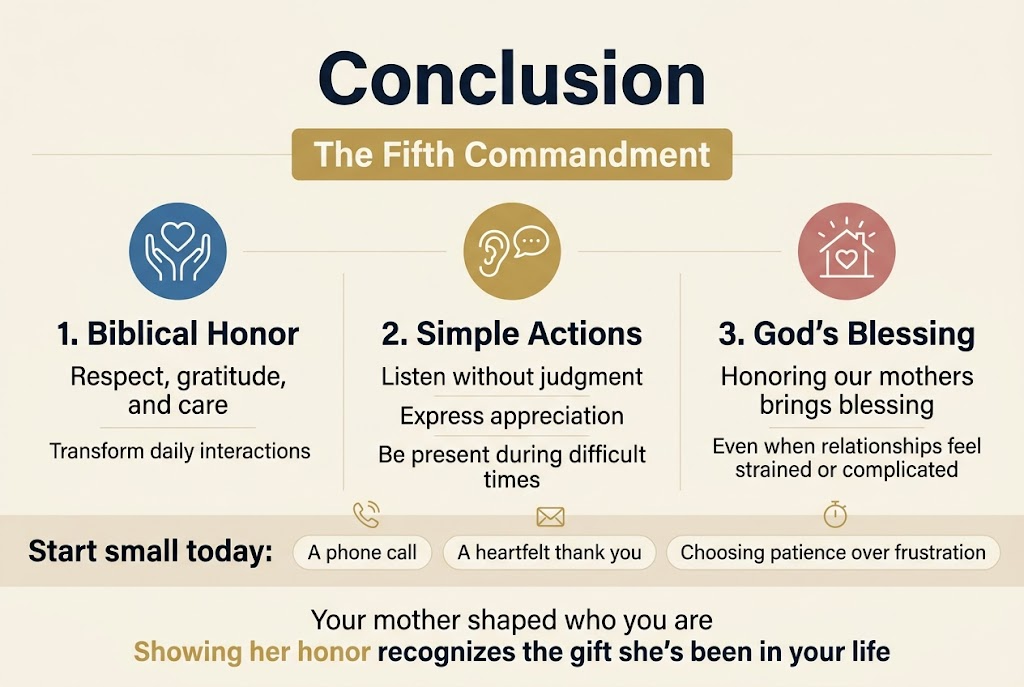
The Fifth Commandment gives us a clear blueprint for building stronger relationships with our mothers and experiencing God's blessings in our lives. When we truly understand what biblical honor means—showing respect, gratitude, and care—we can transform our daily interactions and create deeper connections. Simple actions like listening without judgment, expressing appreciation, and being present during difficult times can make all the difference.
Even when relationships feel strained or complicated, God's promise remains the same: honoring our mothers brings blessing into our lives. Start small today with a phone call, a heartfelt thank you, or simply choosing patience over frustration. Your mother shaped who you are, and showing her honor isn't just following a commandment—it's recognizing the gift she's been in your life.


Comments
Post a Comment