Praying Through Infertility as a Christian Woman
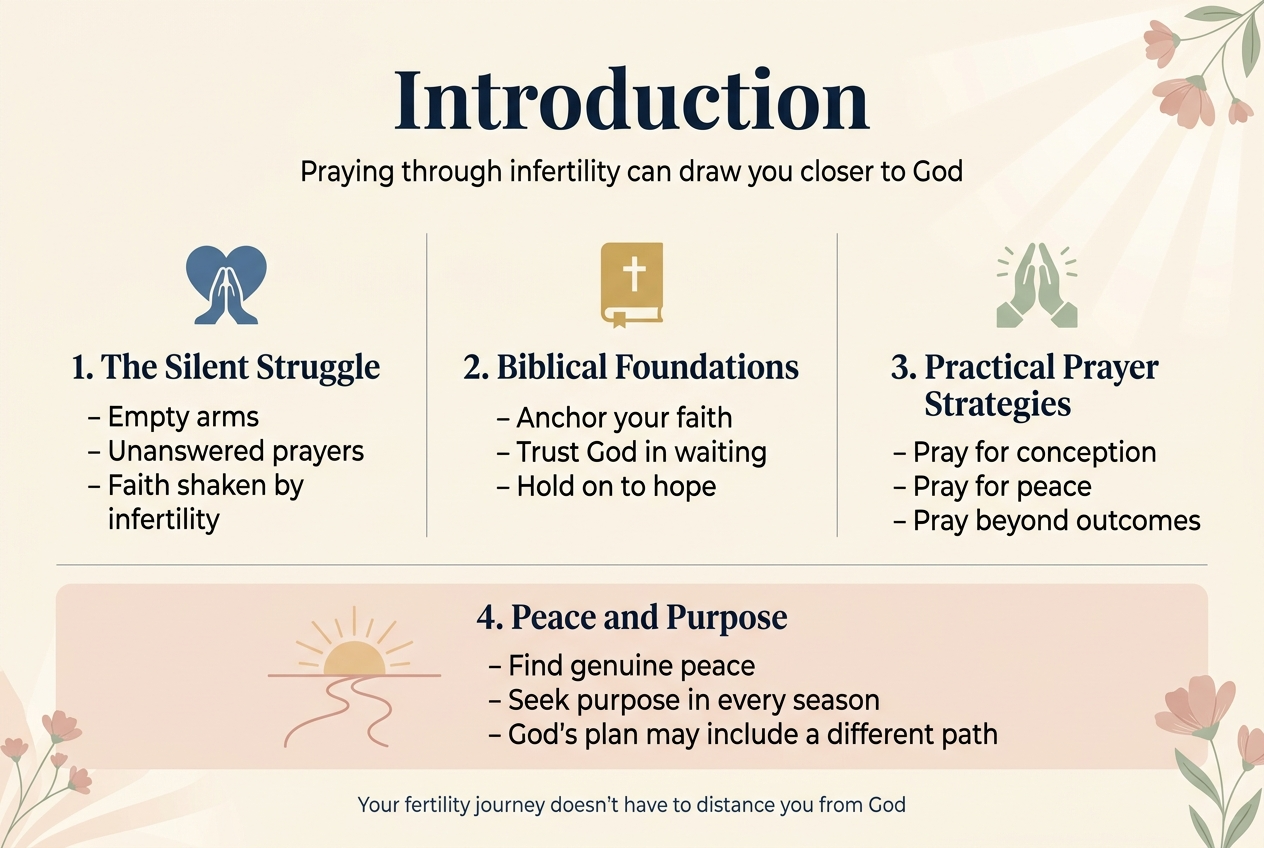
Infertility can feel like a silent battle that shakes your faith to its core. If you're a Christian woman walking through fertility struggles, you know the ache of empty arms and the confusion of unanswered prayers.
This guide is for women who want to deepen their relationship with God while navigating the emotional rollercoaster of trying to conceive. You'll discover how praying through infertility can transform your journey, even when the outcome remains uncertain.
We'll explore biblical foundations that anchor your faith during this season and share practical prayer strategies for conception that go beyond simply asking for a baby. You'll also learn how to find genuine peace and purpose, whether God's plan includes biological children or leads you down a different path entirely.
Your fertility journey doesn't have to distance you from God—it can actually draw you closer to His heart.
Understanding God's Heart for Your Fertility Journey
Recognizing God's Sovereignty in Family Planning
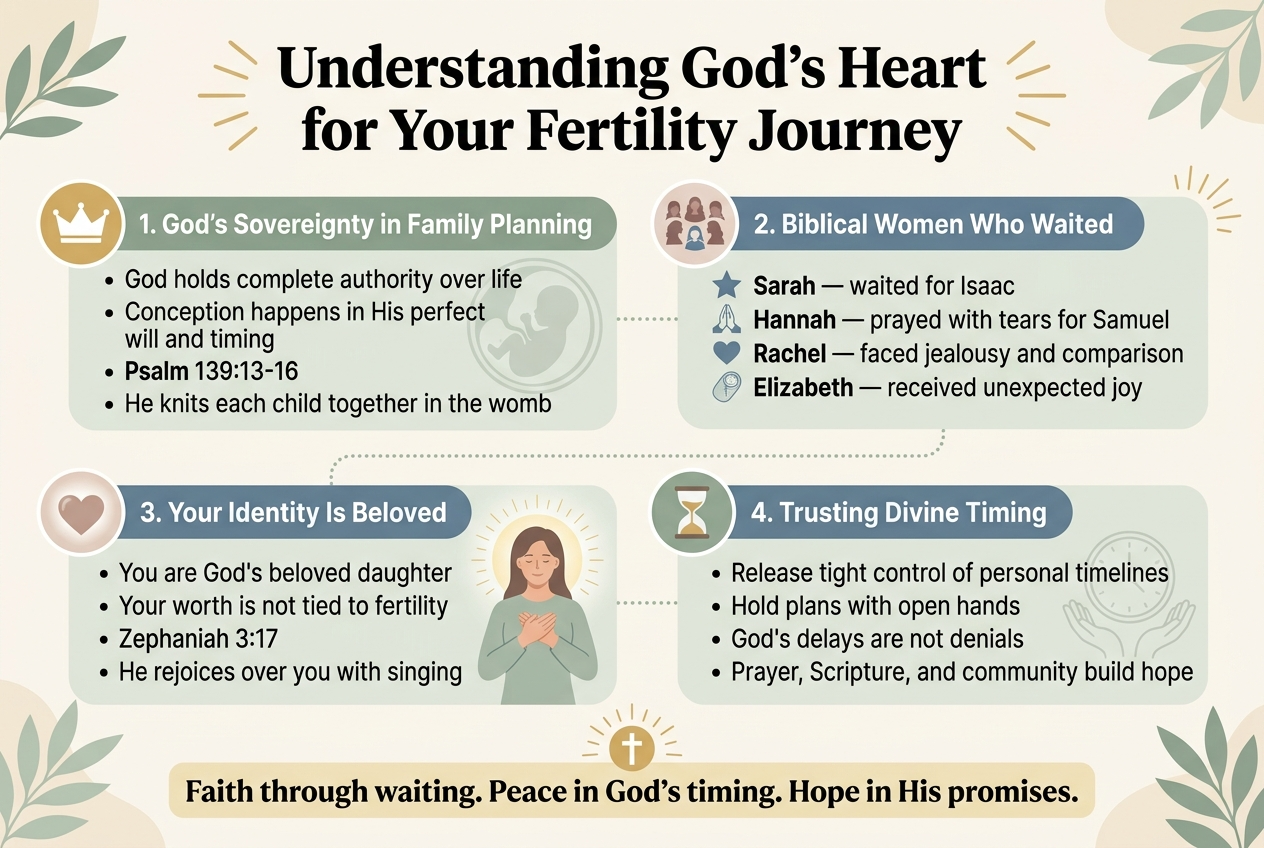
God holds complete authority over the creation of life, and this truth can bring both comfort and challenge during your fertility journey. His sovereignty means that every conception happens according to His perfect will and timing, not according to our carefully planned schedules or deepest desires. While this might feel difficult to accept when you're longing for a child, remembering that the same God who formed you in your mother's womb is actively involved in your story can provide profound peace.
Scripture reminds us in Psalm 139:13-16 that God knits each child together in the womb and knows their days before they come to be. This divine orchestration extends to your journey as well. When praying through infertility, you can rest in knowing that God sees your heart's desire and hasn't forgotten you. His sovereignty doesn't mean He's withholding good gifts from you—rather, it means He's working all things together for your ultimate good, even when the path looks different than you imagined.
Finding Comfort in Biblical Examples of Infertile Women
The Bible doesn't shy away from stories of women who struggled with infertility, offering us powerful examples of faith during seasons of waiting. Sarah waited decades before Isaac's birth, experiencing the full range of emotions from doubt to laughter at God's promise. Hannah poured out her heart at the temple year after year, and her desperate prayers for Samuel show us that God welcomes our raw, honest emotions about our fertility struggles.
Rachel's jealousy of her sister Leah's fertility gives voice to the comparison trap many women fall into today. Elizabeth, already advanced in years, experienced the joy of unexpected pregnancy with John the Baptist. These women weren't superhuman—they wrestled with disappointment, questioned God's timing, and sometimes took matters into their own hands. Yet God remained faithful to each of them, weaving their stories into His greater plan of redemption.
Their experiences validate your own emotions while demonstrating that God can work powerfully through seasons of waiting. When you feel isolated in your Christian infertility journey, remember that you're walking a path many faithful women have traveled before you.
Embracing Your Identity as God's Beloved Daughter
Your worth and identity aren't tied to your ability to conceive or carry children. Before you were ever a wife hoping to become a mother, you were God's beloved daughter—chosen, treasured, and delighted in. This fundamental truth becomes an anchor when fertility challenges threaten to define your sense of self-worth.
God's love for you remains constant whether you're celebrating a positive pregnancy test or mourning another negative result. Your relationship with Him doesn't depend on your reproductive success. In Zephaniah 3:17, we read that He rejoices over you with singing—not because of what you can produce, but because of who you are to Him.
During difficult moments in your faith and fertility struggles, return to this bedrock truth. Speak it over yourself daily: "I am God's beloved daughter, fearfully and wonderfully made, with a purpose that extends beyond motherhood." This identity doesn't diminish your desire for children—it simply ensures that your longing doesn't become your master.
Trusting Divine Timing Over Personal Timelines
Our culture pushes us to believe we can control and schedule every aspect of life, including pregnancy. But trusting God through fertility challenges means releasing our tight grip on personal timelines and surrendering to His perfect timing. This doesn't mean becoming passive or avoiding medical care—it means holding our plans with open hands.
God's timing often conflicts with our biological clocks, financial readiness, or social expectations. You might have imagined having children by a certain age or spacing them in specific intervals. When reality doesn't match these expectations, spiritual support for trying to conceive becomes essential. Prayer helps align your heart with God's rhythm rather than forcing Him to match yours.
Consider how many biblical promises were fulfilled after long seasons of waiting. Abraham and Sarah, Hannah, Elizabeth—their stories remind us that God's delays aren't necessarily denials. His timeline accounts for factors we can't see, and His perfect timing ensures the best possible outcome for His kingdom and your family.
Finding hope in infertility means choosing to trust that God's timing is better than yours, even when waiting feels unbearable. This trust grows through prayer, Scripture study, and community with others who understand your journey.
Biblical Foundations for Prayer During Infertility
Learning from Hannah's persistent prayer life
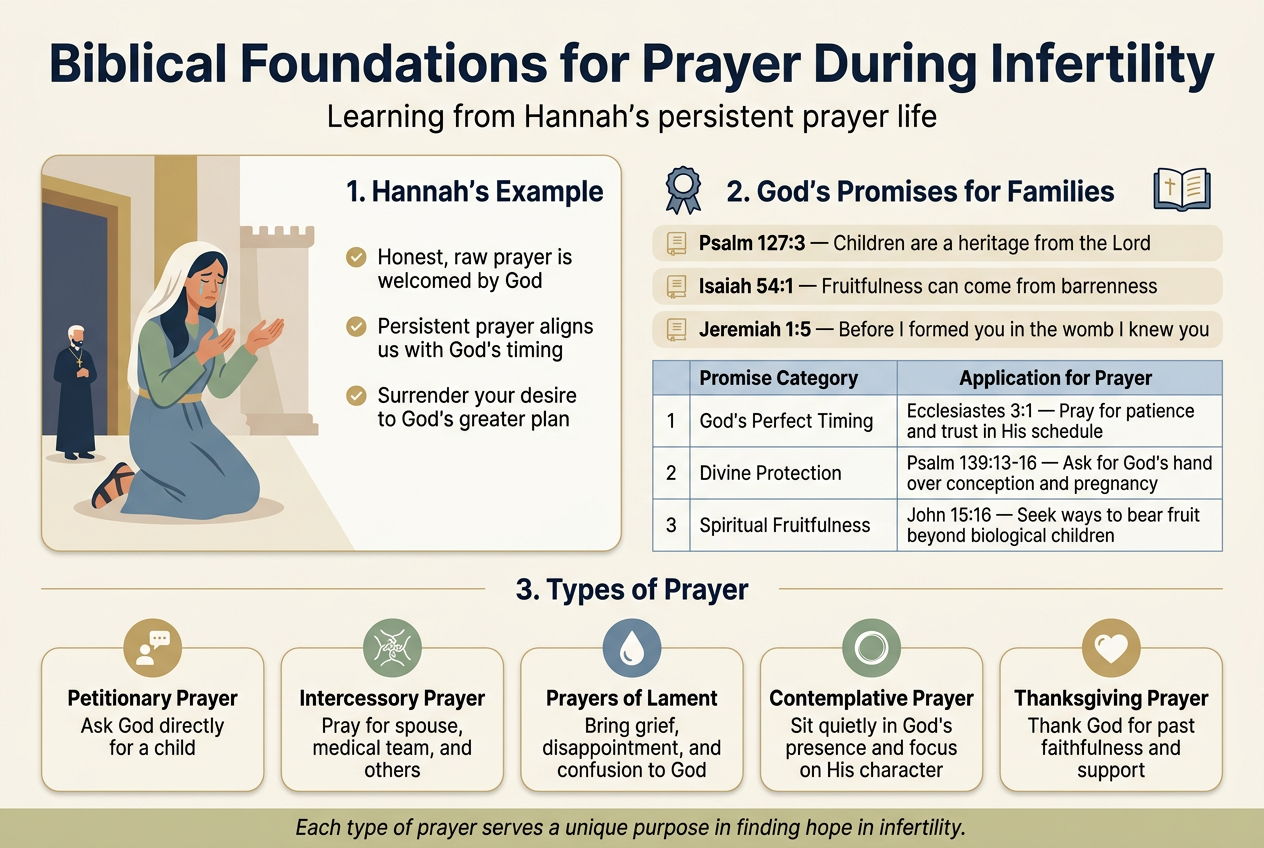
Hannah's story in 1 Samuel provides a beautiful blueprint for Christian infertility prayers during the most challenging seasons of waiting. Her journey shows us that honest, raw prayer is not only acceptable to God—it's welcomed.
Hannah didn't hide her anguish from the Lord. She poured out her heart so intensely that Eli the priest initially thought she was drunk. This teaches us that praying through infertility doesn't require polished words or perfect composure. God desires authentic communication from our hearts, even when our faith and fertility struggles feel overwhelming.
Her persistence stands out remarkably. Hannah returned to the temple year after year, never giving up despite repeated disappointment. She understood that persistent prayer isn't about wearing God down, but about aligning our hearts with His timing and purposes. When facing your own fertility challenges, Hannah's example encourages us to keep bringing our deepest longings before God's throne.
Hannah's vow to dedicate Samuel to God's service reveals another crucial element: surrendering our desires to God's greater plan. She prayed not just for a child, but for God's will to be accomplished through her situation. This perspective transforms our prayers from demanding answers to seeking God's heart for our circumstances.
Claiming God's promises about children and family
Scripture overflows with promises about God's heart for families and His desire to bless His children. These biblical encouragements for infertility can anchor your prayer life when emotions threaten to overwhelm your faith.
Psalm 127:3 declares that children are "a heritage from the Lord, the fruit of the womb a reward." While this verse celebrates the gift of children, it also reminds us that every good gift comes from God's hand in His perfect timing. When trusting God through fertility challenges, this promise assures us that He sees our longing for children and values family deeply.
Isaiah 54:1 speaks prophetically to the barren woman: "Sing, O barren woman, you who never bore a child; burst into song, shout for joy, you who were never in labor; because more are the children of the desolate woman than of her who has a husband." This passage reveals God's heart to bring fruitfulness from seasons of barrenness, whether through biological children, adoption, or spiritual legacy.
Jeremiah 1:5 reminds us that God knows every child before conception: "Before I formed you in the womb I knew you." This promise can comfort those walking through a Christian woman infertility journey, knowing that if God has a child planned for your family, He has already prepared that precious life.
| Promise Category | Scripture Reference | Application for Prayer |
|---|---|---|
| God's Perfect Timing | Ecclesiastes 3:1 | Pray for patience and trust in His schedule |
| Divine Protection | Psalm 139:13-16 | Ask for God's hand over conception and pregnancy |
| Spiritual Fruitfulness | John 15:16 | Seek ways to bear fruit beyond biological children |
Understanding different types of prayer for your situation
Different seasons of your fertility journey call for different types of prayer. Understanding these prayer strategies for conception helps you communicate effectively with God through every circumstance.
Petitionary Prayer forms the foundation of most fertility-related prayers. This involves directly asking God for the desire of your heart—a child. These prayers should be specific, heartfelt, and honest. Don't hesitate to tell God exactly what you're hoping for and when you're hoping to receive it.
Intercessory Prayer expands your focus beyond your own situation. Pray for your spouse, medical team, other couples facing infertility, and even for the child you hope to conceive. This type of prayer often brings surprising peace and perspective to your own journey.
Prayers of Lament give voice to grief, disappointment, and confusion. The Psalms model this beautifully, showing us that we can express frustration and sadness to God without losing faith. These prayers help process the complex emotions that accompany fertility struggles.
Contemplative Prayer involves quietly sitting in God's presence without specific requests. During these times, focus on His character, love, and faithfulness rather than your circumstances. This prayer type often brings the spiritual support for trying to conceive that sustains you through difficult days.
Thanksgiving Prayer might feel challenging during infertility, but expressing gratitude for God's past faithfulness, your spouse, medical advances, and supportive community can shift your perspective powerfully. Even thanking God for lessons learned through this journey can transform your prayer life.
Each type of prayer serves a unique purpose in finding hope in infertility while maintaining a vibrant relationship with God throughout your journey.
Overcoming Spiritual Struggles and Doubt
Addressing feelings of abandonment by God
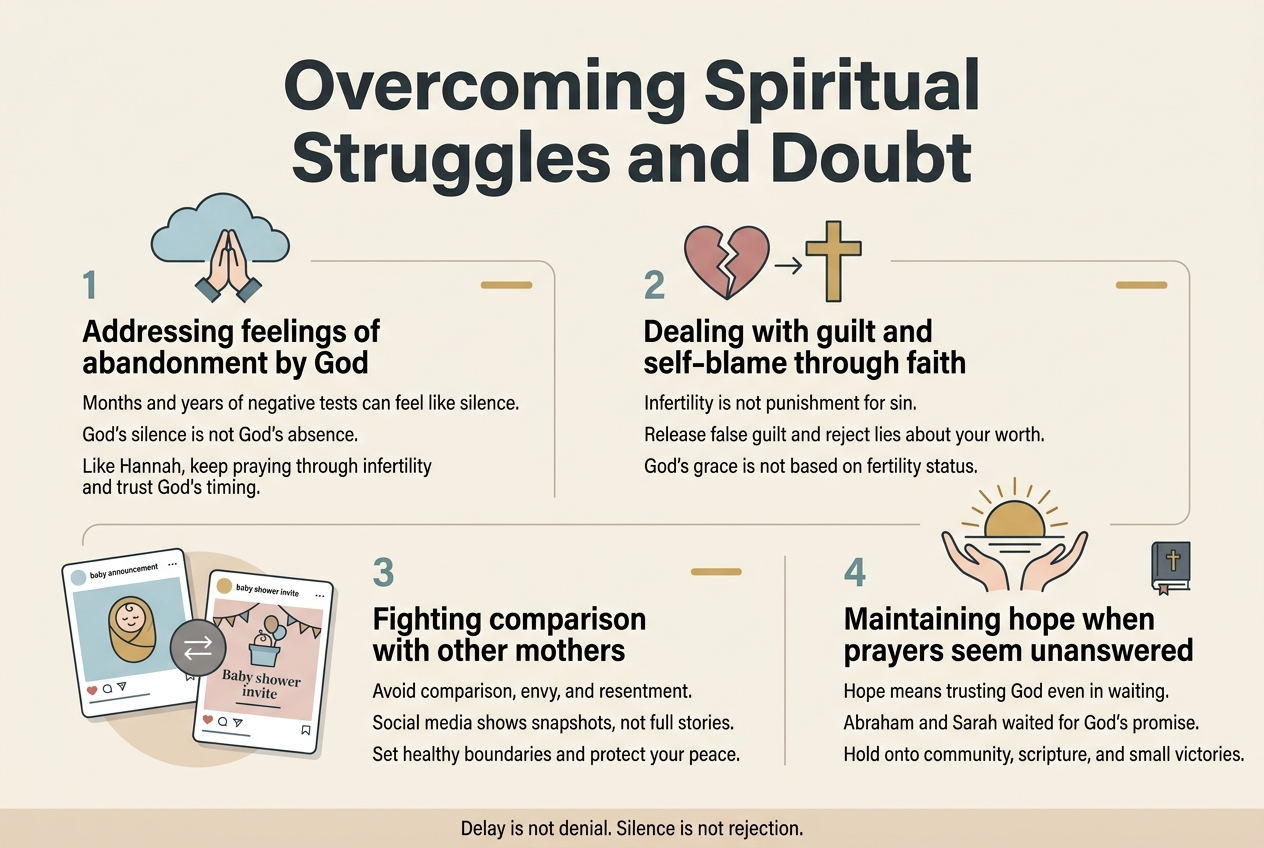
When months turn into years of negative pregnancy tests, it's natural to wonder if God has forgotten about your deepest desires. The silence can feel deafening, especially when you've poured your heart out in countless Christian infertility prayers. Many women on this journey describe feeling spiritually isolated, questioning whether their faith matters if God seems distant during their fertility struggles.
Scripture reminds us that God's silence doesn't equal absence. Hannah, who struggled with infertility for years, felt the weight of God's seeming silence yet continued to believe in His goodness. Her story shows us that praying through infertility requires holding onto truth even when emotions suggest otherwise.
Remember that God's timeline rarely matches our own. His delay isn't denial, and His silence isn't rejection. Sometimes He's preparing something greater than we can imagine, or working on our hearts in ways that conception alone couldn't accomplish. The same God who numbers every hair on your head is intimately aware of your longing for a child.
Dealing with guilt and self-blame through faith
Self-blame becomes a heavy burden during fertility struggles. You might find yourself analyzing every decision, wondering if past choices somehow caused this trial. Perhaps you question whether you're being punished for previous mistakes or if your faith isn't strong enough to "earn" a baby.
The enemy loves to whisper lies about your worth and God's love during vulnerable seasons. Combat these thoughts with biblical truth: infertility isn't punishment for sin, and children aren't rewards for good behavior. Jesus clearly addressed this mindset when His disciples asked if a man's blindness was caused by his sin or his parents' sin. Christ's response? Neither.
Faith and fertility struggles intersect in complex ways, but guilt shouldn't be part of that equation. God's grace covers every mistake, and His love for you isn't conditional on your ability to conceive. Release yourself from the burden of false guilt and rest in the truth that you're beloved regardless of your fertility status.
Fighting comparison with other mothers
Social media makes avoiding comparison nearly impossible. Every pregnancy announcement feels like salt in an open wound, and baby shower invitations can trigger unexpected grief. Watching others seemingly conceive effortlessly while your Christian woman infertility journey continues can breed resentment and envy.
Comparison steals joy and distorts perspective. Remember that you're only seeing snapshots of others' lives, not their complete stories. That woman who got pregnant immediately might have faced other significant trials you know nothing about. God has a unique plan for each family, and comparing your chapter three to someone else's chapter twenty will always leave you feeling inadequate.
Create healthy boundaries around triggering content. It's okay to temporarily unfollow accounts that consistently cause pain, or to skip certain events during particularly difficult seasons. Protecting your emotional and spiritual health isn't selfish—it's wisdom.
Maintaining hope when prayers seem unanswered
The hardest part of trusting God through fertility challenges often comes when hope feels foolish. After years of prayers that seem to bounce off the ceiling, maintaining faith requires intentional effort. Hope doesn't mean denying reality or forcing positivity; it means choosing to believe God is good even when circumstances suggest otherwise.
Biblical encouragement reminds us that hope deferred makes the heart sick, but it doesn't say hope is wrong. Abraham and Sarah waited decades for their promised child, and their story encourages us that God's promises, though sometimes delayed, are never forgotten.
Cultivate hope through community, scripture, and celebrating small victories. Surround yourself with people who can hold hope for you when yours feels fragile. Focus on God's faithfulness in other areas of your life as evidence of His continued goodness. Sometimes hope looks like getting up each morning and choosing to trust again, even when you don't feel it.
Practical Prayer Strategies for Infertility
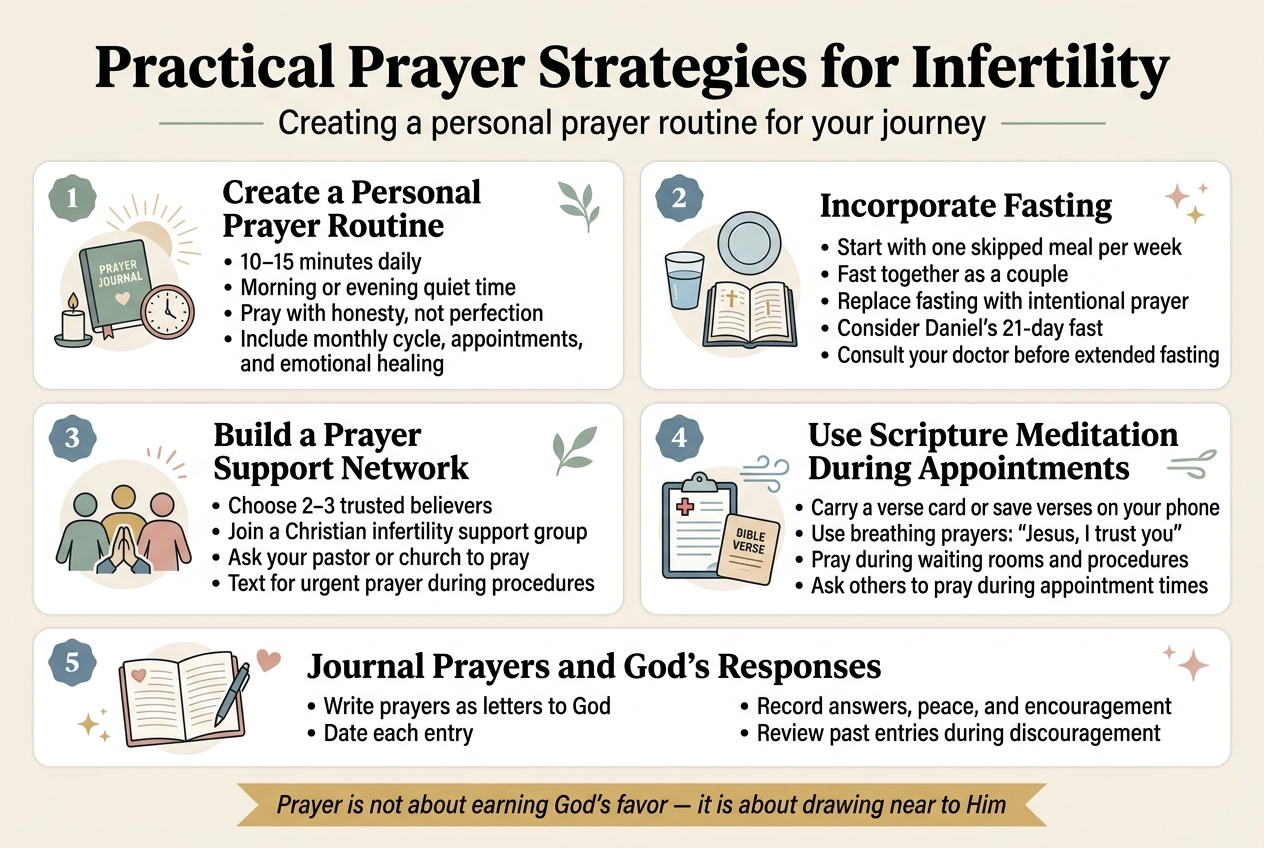
Creating a personal prayer routine for your journey
Establishing a consistent prayer routine creates sacred space in your daily life for connecting with God about your fertility struggles. Start small with just 10-15 minutes each morning or evening, finding a quiet spot where you won't be interrupted. Many Christian women find early morning prayer particularly powerful before the demands of the day begin.
Consider creating a prayer journal specifically for your fertility journey where you can write out your fears, hopes, and requests. This becomes a tangible record of your conversations with God. Include specific prayers for your monthly cycle, upcoming appointments, and emotional healing. Don't feel pressured to pray "perfectly" – raw honesty resonates more with God than polished words.
Some women benefit from praying at specific times related to their cycle, such as during ovulation or while waiting for test results. This transforms anxious moments into opportunities for deeper faith. Remember that prayer isn't just asking for a baby – it's also listening for God's voice, expressing gratitude for His presence, and surrendering your timeline to His perfect plan.
Incorporating fasting as spiritual discipline
Fasting amplifies your prayers and demonstrates serious commitment to seeking God's will in your fertility journey. This ancient biblical practice helps quiet distractions and creates spiritual hunger that draws you closer to the Lord. Consider starting with shorter fasts like skipping one meal per week while dedicating that time to prayer.
Some couples choose to fast together on specific days, such as the day before medical procedures or during particularly difficult seasons. Others fast from social media or other activities that trigger comparison and anxiety around pregnancy announcements. The key is replacing whatever you're fasting from with intentional prayer time.
Daniel's 21-day fast offers a longer-term option where you eliminate certain foods while focusing on prayer and scripture reading. This works especially well when facing major decisions about fertility treatments or when needing clarity about God's direction. Always consult your doctor before extended fasting, particularly if you're taking fertility medications.
Remember that fasting isn't about earning God's favor or forcing His hand – it's about positioning your heart to hear from Him more clearly and demonstrating that your relationship with Him matters more than any earthly desire, even the deep longing for children.
Building a prayer support network with trusted believers
Infertility can feel incredibly isolating, making a strong prayer support network essential for your spiritual and emotional wellbeing. Identify 2-3 trusted Christian friends or family members who can pray consistently for your journey. Choose people who understand the sensitivity of your situation and won't offer unsolicited advice or share your private struggles without permission.
Consider joining a Christian infertility support group where members understand the unique challenges of trusting God through fertility struggles. Many churches offer small groups specifically for couples facing infertility, providing both practical support and spiritual encouragement. Online Christian communities can also offer 24/7 prayer support when you need immediate encouragement.
Ask your pastor or church leadership to pray for you regularly, even if you don't share specific details. Many couples find comfort in knowing their church family is lifting them up, especially during medical procedures or particularly difficult months. Some churches offer prayer teams that commit to praying for specific needs over extended periods.
Don't hesitate to ask for prayer when you need it most. Send a simple text asking for urgent prayer during procedures, difficult conversations with doctors, or when facing pregnancy announcements from friends. Your prayer warriors want to support you – they just need to know how and when their prayers are most needed.
Using scripture meditation during medical appointments
Transform stressful medical appointments into opportunities for spiritual growth through scripture meditation. Before each appointment, choose one or two verses that speak peace and hope over your situation. Write them on small cards you can carry or save them on your phone for easy access.
Psalm 139:13-16 reminds you that God knew you before birth and has plans for your life. Isaiah 41:10 offers courage during fearful moments. Jeremiah 29:11 provides hope that God's plans are good, even when you can't see the bigger picture. These verses become anchors for your soul during overwhelming medical discussions.
Practice breathing prayers while waiting in medical offices. Simple phrases like "Jesus, I trust you" or "God is with me" can calm anxiety and center your thoughts on Him rather than test results or treatment options. Some women find comfort in silently singing worship songs during procedures, focusing their minds on God's goodness rather than physical discomfort.
Consider asking your prayer support team to pray specifically during appointment times. Knowing others are interceding while you're receiving medical care provides supernatural peace and confidence. Many women report feeling tangible peace during difficult procedures when they know believers are praying simultaneously.
Journaling prayers and God's responses
Prayer journaling creates a powerful record of God's faithfulness throughout your fertility journey. Write out your prayers as letters to God, expressing your deepest fears, hopes, and questions without holding back. This practice helps clarify your thoughts and emotions while creating space for honest dialogue with your Creator.
Date each entry so you can track patterns in your spiritual journey and see how God answers prayers over time. Sometimes His responses come through scripture passages that speak directly to your situation, wise counsel from trusted friends, or unexpected peace during difficult seasons. Recording these moments helps you recognize His voice and builds faith for future challenges.
Don't limit your journaling to requests – include worship, gratitude, and observations about how you're growing spiritually. Write down encouraging words from others, meaningful sermon points, and insights gained through scripture reading. This creates a comprehensive record of God's work in your life beyond just fertility concerns.
Review previous entries regularly, especially during discouraging seasons. Seeing how God has provided comfort, guidance, and strength in the past encourages faith for present struggles. Many women discover that their prayer journals become treasured keepsakes, documenting not just their fertility journey but their deeper relationship with Christ developed through this challenging season.
Finding Peace and Purpose Beyond Conception
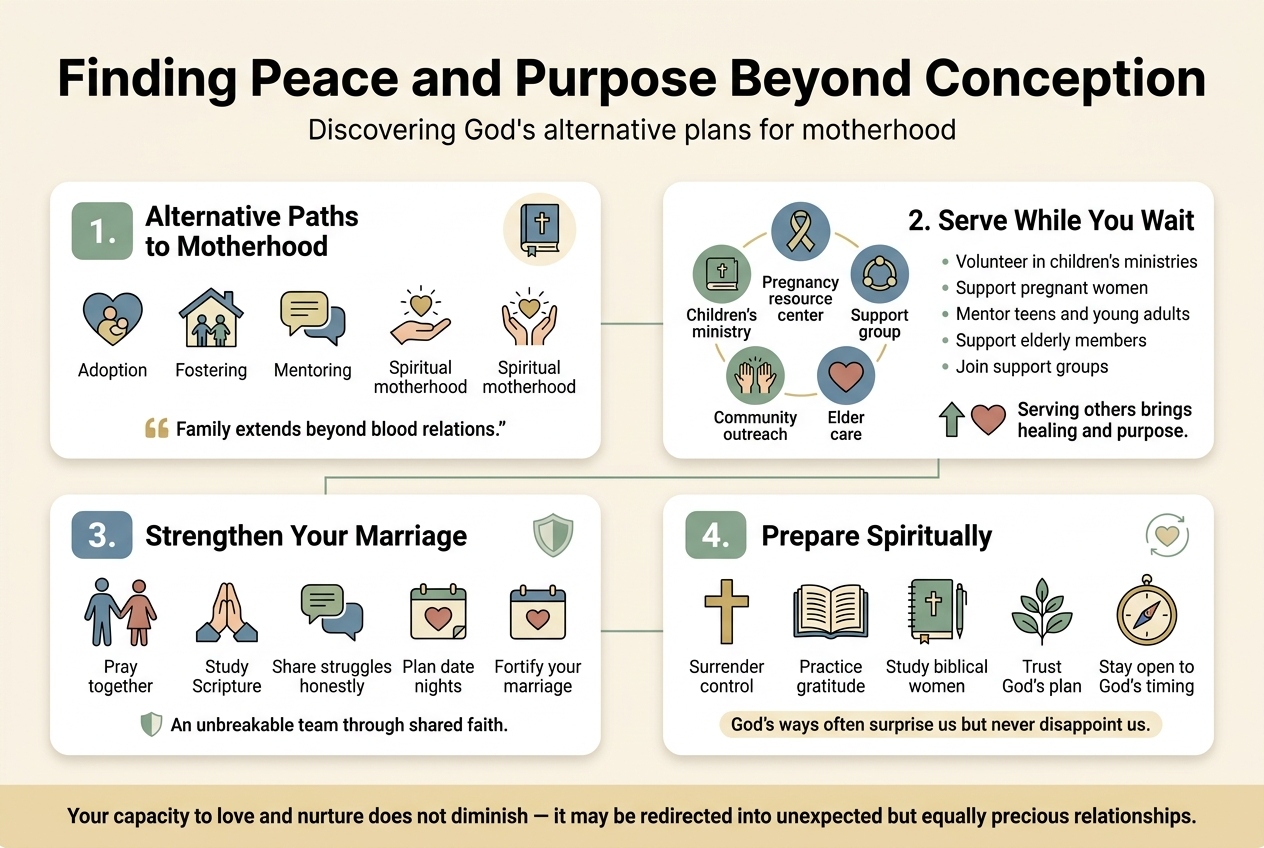
Discovering God's alternative plans for motherhood
When biological motherhood doesn't unfold as expected, God often reveals beautiful alternative paths that can be equally fulfilling. Adoption, fostering, mentoring, and spiritual motherhood offer meaningful ways to pour love into the next generation. Many women find that their struggles with infertility prepare them uniquely for these roles, creating deeper empathy and understanding for children who need extra care.
Consider the biblical example of Naomi mentoring Ruth, or how Jesus himself was raised by an adoptive father in Joseph. Scripture shows us that family extends far beyond blood relations. God may be preparing your heart for a specific child through adoption, or calling you to be a spiritual mother to young women in your church community. Some couples discover their purpose in supporting other families going through fertility challenges, becoming advocates or counselors for those walking similar paths.
The key is staying open to how God might want to use your maternal heart differently than you originally envisioned. Your capacity to love and nurture doesn't diminish because pregnancy hasn't occurred - it simply may be redirected toward unexpected but equally precious relationships.
Serving others while waiting for your miracle
Active service transforms waiting periods from passive endurance into purposeful preparation. When you channel your energy into helping others, you often discover renewed strength and perspective for your own journey. Volunteering in children's ministries, supporting pregnant women, or helping families in need can provide outlets for your nurturing instincts while making a tangible difference.
Many women find that serving in areas related to their struggle brings unexpected healing. Supporting other couples through infertility journeys creates community and reduces isolation. Teaching Sunday school or babysitting for overwhelmed parents allows you to experience joy with children without the constant reminder of what's missing from your own life.
Service also shifts focus from what you lack to what you can give. This perspective change is powerful for mental health and spiritual growth. Consider these opportunities:
-
Volunteering at pregnancy resource centers
-
Mentoring teenagers or young adults
-
Supporting elderly members of your congregation
-
Participating in community outreach programs
-
Joining or leading support groups for women facing similar challenges
When you actively love others, you're practicing the same qualities that make excellent mothers while trusting God's timing for your own family.
Strengthening your marriage through shared faith
Infertility can either divide couples or forge them into an unbreakable team. When both partners commit to trusting God through fertility challenges, their marriage often emerges stronger than before. Regular prayer together, studying Scripture about God's faithfulness, and supporting each other through emotional ups and downs creates intimate bonds that many couples never experience.
Use this season to invest deeply in your relationship. Plan regular date nights that don't revolve around conception timelines. Pray together specifically about your marriage, not just about pregnancy. Share your individual struggles and fears honestly, creating safe space for vulnerability. Many couples discover that learning to support each other through this trial prepares them beautifully for parenting challenges ahead.
Consider attending marriage retreats or counseling together, not because your relationship is broken, but because you want to fortify it. Develop traditions and memories that celebrate your identity as a couple, independent of potential children. When you eventually become parents - whether biologically or through other means - you'll have a rock-solid foundation built through weathering storms together.
Preparing spiritually for whatever outcome God provides
Spiritual preparation involves surrendering control while maintaining hope. This delicate balance requires daily recommitment to trusting God's plan for childlessness or parenthood, whichever He provides. Regular Bible study, particularly focusing on God's character and faithfulness throughout Scripture, builds confidence that His plans are good even when they differ from yours.
Develop spiritual practices that anchor you during emotional storms. Create prayer lists that include thanksgiving alongside requests. Study biblical women who faced various forms of waiting - Sarah, Hannah, Elizabeth, and even Mary, who had to trust God's unusual plan for her motherhood. Their stories remind us that God's ways often surprise us but never disappoint us.
Practice gratitude daily for your current blessings while maintaining appropriate hope for the future. This isn't about suppressing desires for children but about finding contentment in God himself rather than in specific outcomes. Join Bible studies focused on God's sovereignty or read books by other Christian women who've walked similar paths.
Remember that spiritual preparation includes practical steps like financial planning, relationship building, and personal growth. Whether God provides children or calls you to a different path, these investments serve you well. The goal isn't to become resigned to childlessness but to become genuinely open to whatever beautiful plan God has designed specifically for your life.
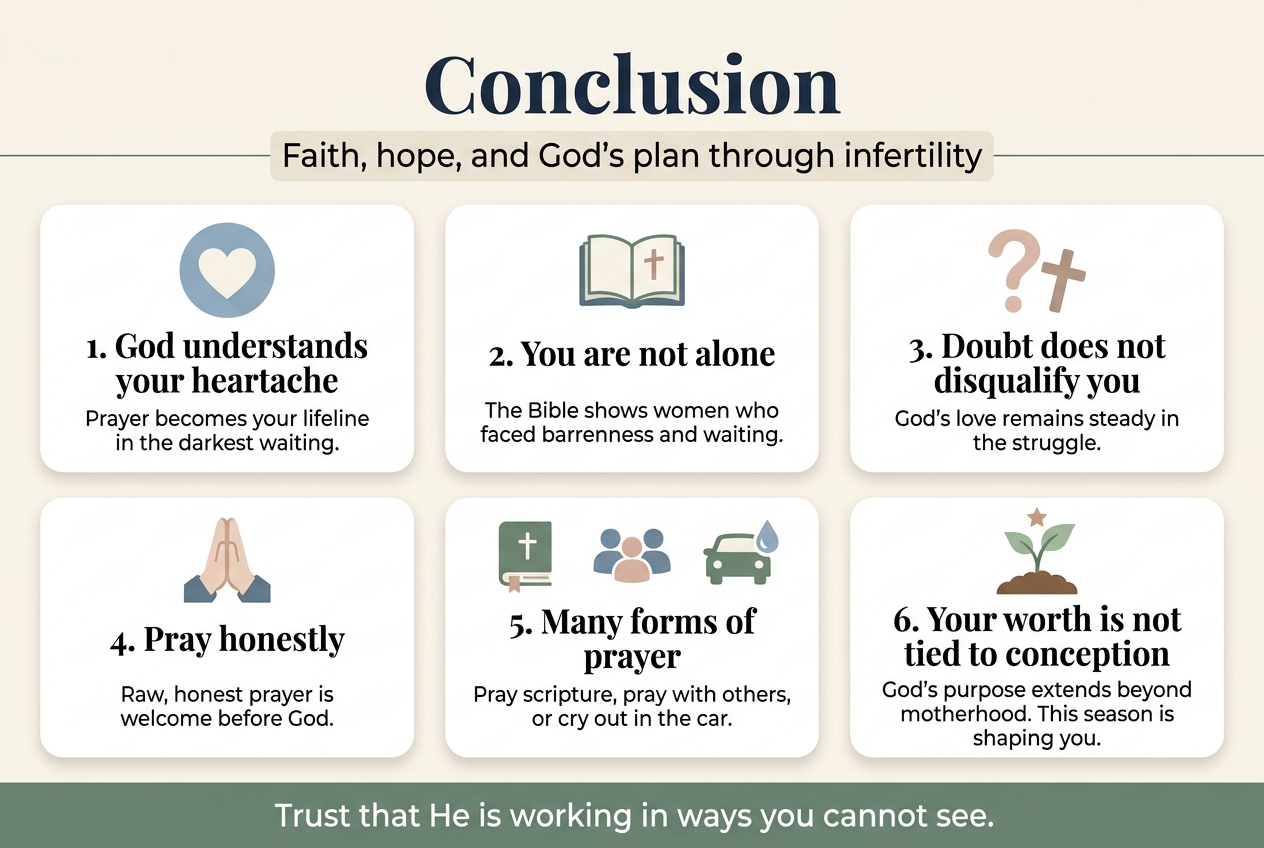
Walking through infertility as a Christian woman means grappling with deep questions about faith, hope, and God's plan for your life. You've learned that God understands your heartache and that prayer becomes your lifeline during the darkest moments of waiting. The Bible offers countless examples of women who struggled with barrenness, reminding you that you're not alone in this journey, and that doubt doesn't disqualify you from God's love.
Your prayer life doesn't have to follow a perfect formula – it can be raw, honest, and filled with every emotion you're experiencing. Whether you're praying specific scriptures, joining with others for support, or simply crying out to God in your car, each moment of connection matters. Remember that your worth isn't tied to your ability to conceive, and God's purpose for your life extends far beyond motherhood. Trust that He's working in ways you can't see, and that this season – however long it lasts – is shaping you into exactly who He created you to be.


Comments
Post a Comment