Jochebed: A Mother Who Trusted God in Difficult Times
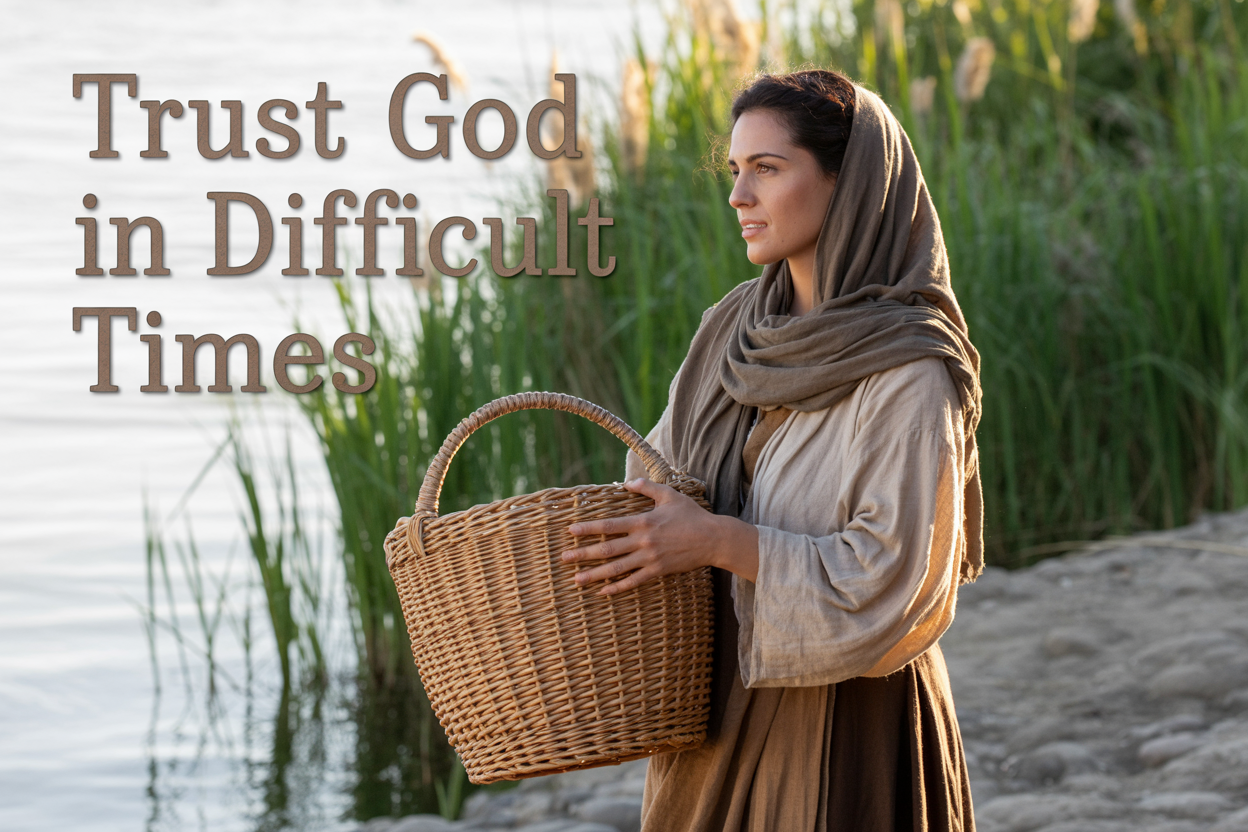
Jochebed: A Mother Who Trusted God in Difficult Times
Every mother faces moments when fear threatens to overwhelm faith. Jochebed, a biblical mother living under Pharaoh's deadly decree, shows us what it looks like to trust God when everything seems lost. Her story speaks directly to mothers facing overwhelming circumstances today—whether you're dealing with family crises, health scares, financial struggles, or simply feeling like you're failing your children.
This biblical women of faith didn't just sit back and hope for the best. Jochebed combined deep faith in difficult times with practical action, creating a powerful example of how divine providence in motherhood works through both prayer and planning. Her faith story teaches us that trusting God doesn't mean being passive—it means moving forward with courage even when the path ahead looks impossible.
We'll explore how Jochebed's bold act of faith involved both strategic thinking and complete surrender to God's plan. You'll discover the incredible power of a mother's prayer and how God worked behind the scenes to protect Moses. Most importantly, we'll uncover practical biblical parenting lessons that help modern mothers build unshakeable trust during life's darkest seasons.
If you're a mom who needs encouragement to keep believing when circumstances feel hopeless, Jochebed's example will strengthen your faith and remind you that God sees your struggles and has a plan you can't yet see.
Understanding Jochebed's Historical Context and Challenges
The Oppression of Israelites Under Pharaoh's Rule
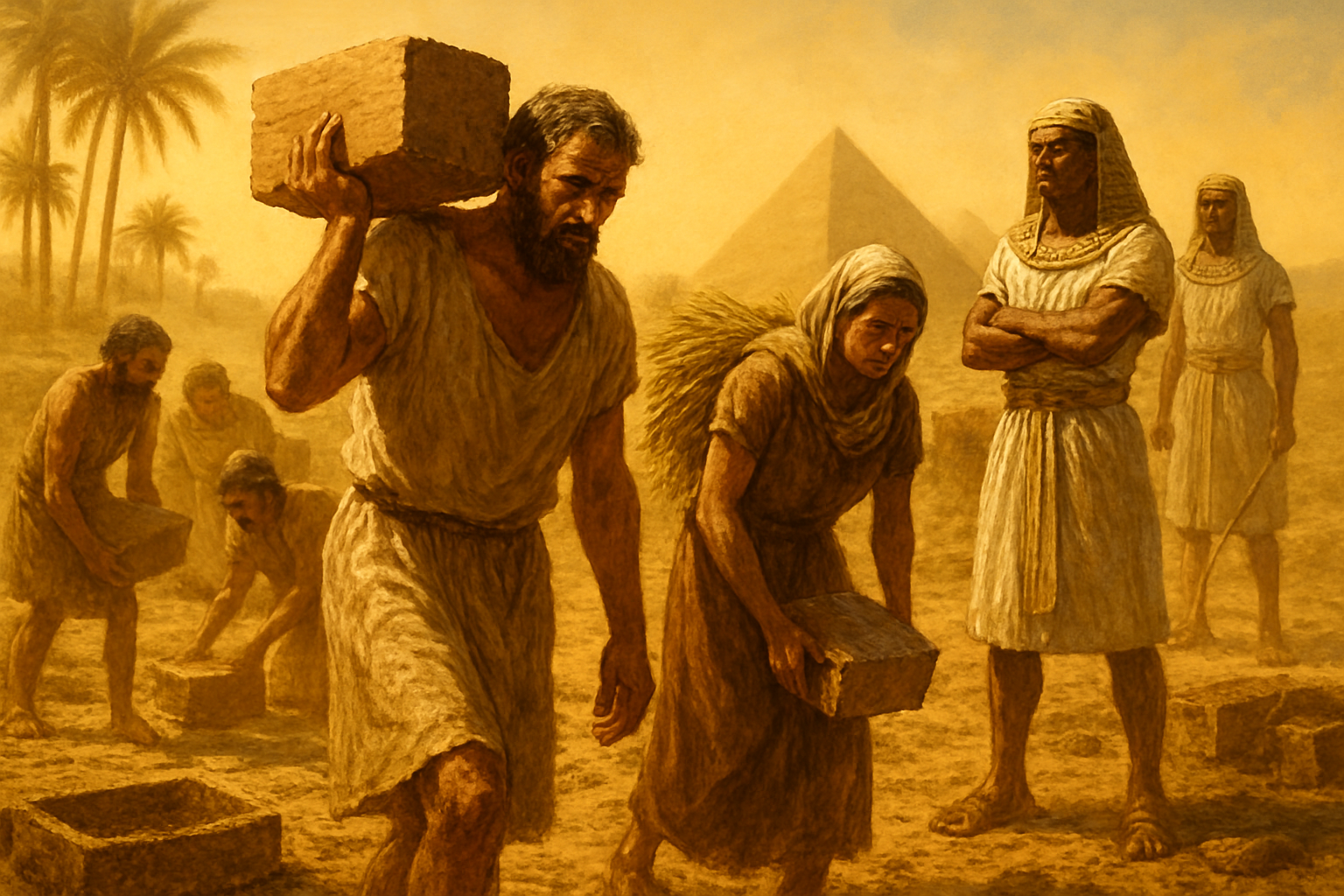
The story of Jochebed biblical mother unfolds during one of the darkest periods in Israelite history. Egypt had transformed from a place of refuge during Joseph's time into a house of bondage. The new Pharaoh, who "knew not Joseph," saw the rapidly growing Hebrew population as a national security threat rather than a blessing.
Egyptian taskmasters subjected the Israelites to brutal forced labor, making their lives bitter with hard service in mortar, brick, and field work. Families were torn apart as fathers and sons were forced into backbreaking construction projects, building treasure cities for Pharaoh's empire. The very people who had once been honored guests were now treated as expendable slaves.
This oppressive system created an atmosphere of desperation and fear that touched every Hebrew household. Mothers trusting God found themselves raising children in a world where their people's identity, faith, and future seemed under constant assault.
Pharaoh's Decree to Kill Hebrew Male Babies
When forced labor failed to control the Hebrew population growth, Pharaoh escalated his genocidal campaign with a chilling decree: every newborn Hebrew boy must be thrown into the Nile River. This wasn't simply population control—it was systematic ethnic cleansing designed to eliminate the future leadership and strength of Israel.
The royal edict transformed pregnancy from a time of joy into a period of terror for Hebrew families. Midwives were commanded to become instruments of infanticide, though brave women like Shiphrah and Puah chose to fear God rather than Pharaoh.
Imagine the anguish of Hebrew mothers who carried sons, knowing that discovery meant death for their precious babies. The Nile, which had once symbolized life and provision for Egypt, became a watery grave for Hebrew children.
The Impossible Choice Between Obedience to God and Government
Jochebed faced the ultimate test of faith in difficult times—a direct conflict between God's command to preserve life and the government's demand to destroy it. This wasn't a theoretical theological debate but a life-or-death decision that would determine her son's fate.
Religious conviction clashed with political pressure in the most personal way possible. Every Hebrew parent wrestled with this impossible choice:
-
Obey the government and sacrifice their children to maintain personal safety
-
Follow God's commands to protect innocent life and risk execution for treason
-
Find creative alternatives that honored both divine law and protected their families
Jochebed chose to obey God rather than men, demonstrating that biblical women of faith understand that some principles transcend political authority. Her decision revealed a foundational truth: when human law contradicts divine law, believers must choose God's way regardless of consequences.
How Desperate Circumstances Can Strengthen Faith
Paradoxically, the extreme persecution that threatened to destroy Hebrew families actually deepened their dependence on God. When human solutions prove inadequate, people often discover supernatural resources they never knew existed.
Jochebed's desperate situation stripped away any illusion of self-sufficiency. She couldn't negotiate with Pharaoh, bribe the officials, or flee to safety. Her only hope lay in trusting that the God of Abraham, Isaac, and Jacob would honor her faith and protect her child.
This crisis revealed several ways desperate circumstances can strengthen faith:
| Challenge | Faith Response |
|---|---|
| No human solutions available | Increased prayer and dependence on God |
| Life-threatening circumstances | Clarity about what truly matters |
| Forced to act quickly | Trust in divine guidance over human wisdom |
| No safety net | Complete reliance on God's provision |
Biblical parenting lessons from Jochebed's story show that sometimes our greatest struggles become the catalyst for our most profound spiritual growth. When everything seems lost, mothers discover that God specializes in impossible situations and delights in showing His power through the weakness of those who trust Him completely.
Jochebed's Bold Act of Faith and Strategic Planning
Hiding Moses for three months despite enormous risk
When Jochebed gave birth to Moses, she faced an impossible choice. The Egyptian decree demanded that all Hebrew baby boys be killed immediately, yet this biblical mother couldn't bring herself to surrender her child. For three months, she kept Moses hidden in her home, knowing that discovery meant certain death for both mother and child.
This period of hiding required extraordinary courage and planning. Every cry, every sound from the baby could have alerted Egyptian authorities or Hebrew informants seeking favor with their oppressors. Jochebed had to maintain absolute secrecy while caring for an infant, likely managing her household duties and other children as if nothing had changed. The stress must have been overwhelming, yet she persevered through faith in difficult times.
Her decision to hide Moses wasn't just maternal instinct—it was an act of civil disobedience rooted in deep trust that God had a purpose for her child's life. She recognized something special about Moses from the beginning, as Scripture notes he was "beautiful in God's sight."
Crafting the waterproof basket with careful attention to detail
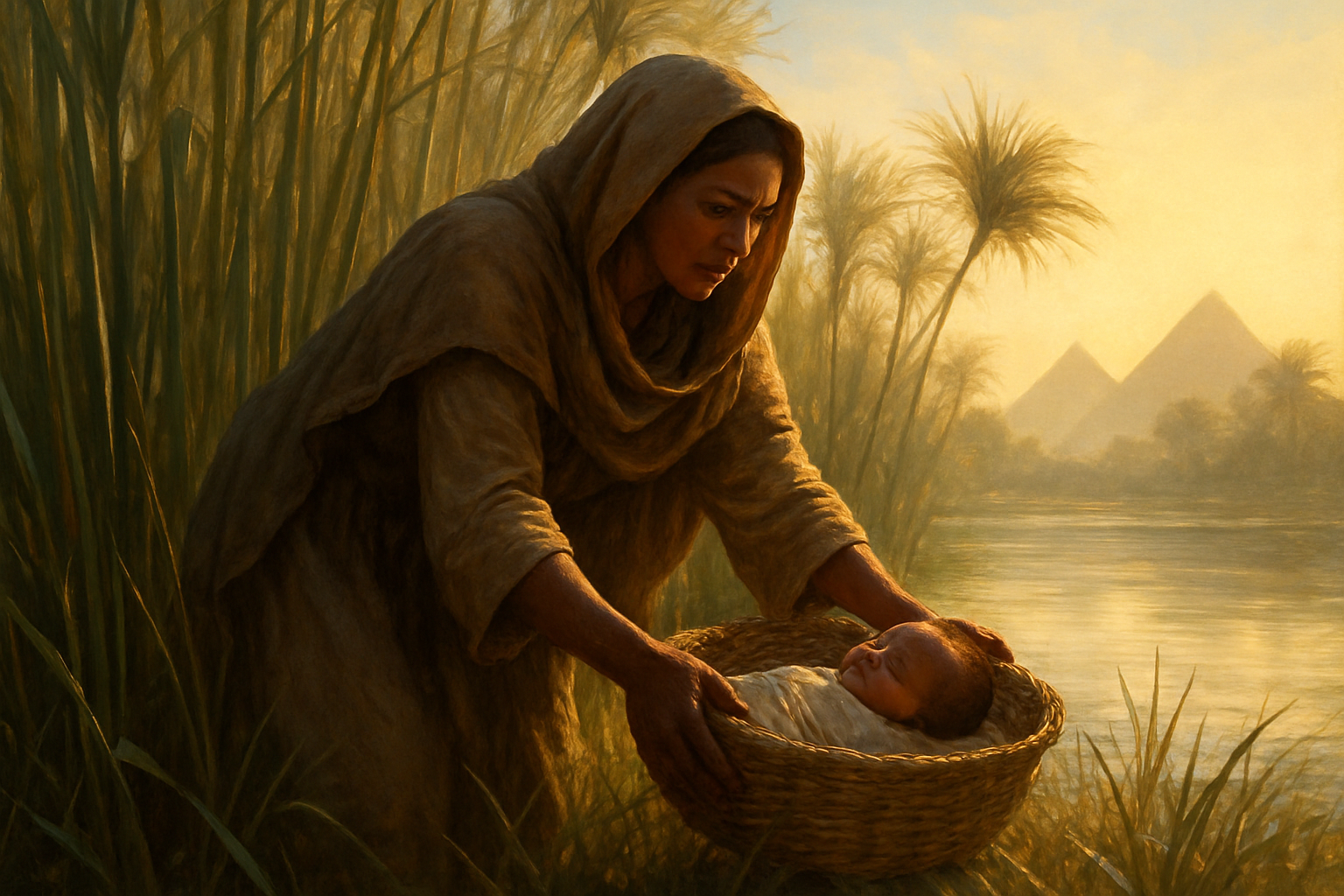
When hiding Moses at home became impossible, Jochebed didn't panic or make hasty decisions. Instead, she carefully crafted a papyrus basket, coating it with tar and pitch to make it completely waterproof. This wasn't a desperate last-minute effort but a thoughtfully planned rescue mission.
The materials she chose reveal her practical wisdom. Papyrus was readily available along the Nile and lightweight enough to float. The tar and pitch created a waterproof seal that would protect her precious cargo from the river's waters. Every detail mattered—the basket had to be sturdy enough to withstand the current yet gentle enough not to harm a three-month-old baby.
Her craftsmanship reflected her character as a biblical woman of faith who combined trust in God with practical action. She didn't simply pray and hope for the best; she prepared meticulously while believing God would honor her efforts. This balance of faith and works demonstrates how trusting God doesn't mean abandoning common sense or careful planning.
Positioning the basket strategically in the Nile River
Jochebed's choice of location wasn't random. She placed the basket among the reeds at the riverbank, in an area where Pharaoh's daughter was known to bathe. This strategic positioning reveals her understanding of Egyptian customs and royal routines.
The reeds provided natural camouflage while keeping the basket stable and preventing it from floating downstream. The location was accessible enough for discovery by the right person but hidden enough to avoid detection by soldiers or other threats. Jochebed had clearly observed and studied the area, timing her action when conditions were optimal.
She also positioned her daughter Miriam nearby to watch what would happen. This wasn't abandonment—it was a carefully orchestrated plan with multiple contingencies. Jochebed understood that divine providence often works through human preparation and wise positioning.
Trusting God's protection while taking practical action
What makes Jochebed's story so powerful for modern mothers facing overwhelming circumstances is how she balanced complete dependence on God with practical responsibility. She didn't use faith as an excuse for inaction, nor did she rely solely on her own abilities while ignoring God's sovereignty.
Her approach teaches us that trusting God when everything seems lost doesn't mean becoming passive. She took every reasonable precaution while ultimately surrendering the outcome to God's will. This biblical mother understood that faith without works is dead, but works without faith are futile.
The mother's prayer power that sustained Jochebed through this ordeal reminds us that God honors both our trust and our efforts. She prayed while she planned, trusted while she acted, and believed while she let go. Her example shows modern parents how to navigate impossible situations with both wisdom and faith, demonstrating that true biblical parenting lessons often involve this delicate balance of trusting God completely while doing everything humanly possible to protect and provide for our children.
The Power of a Mother's Prayer and Divine Providence
Surrendering Control While Maintaining Hope
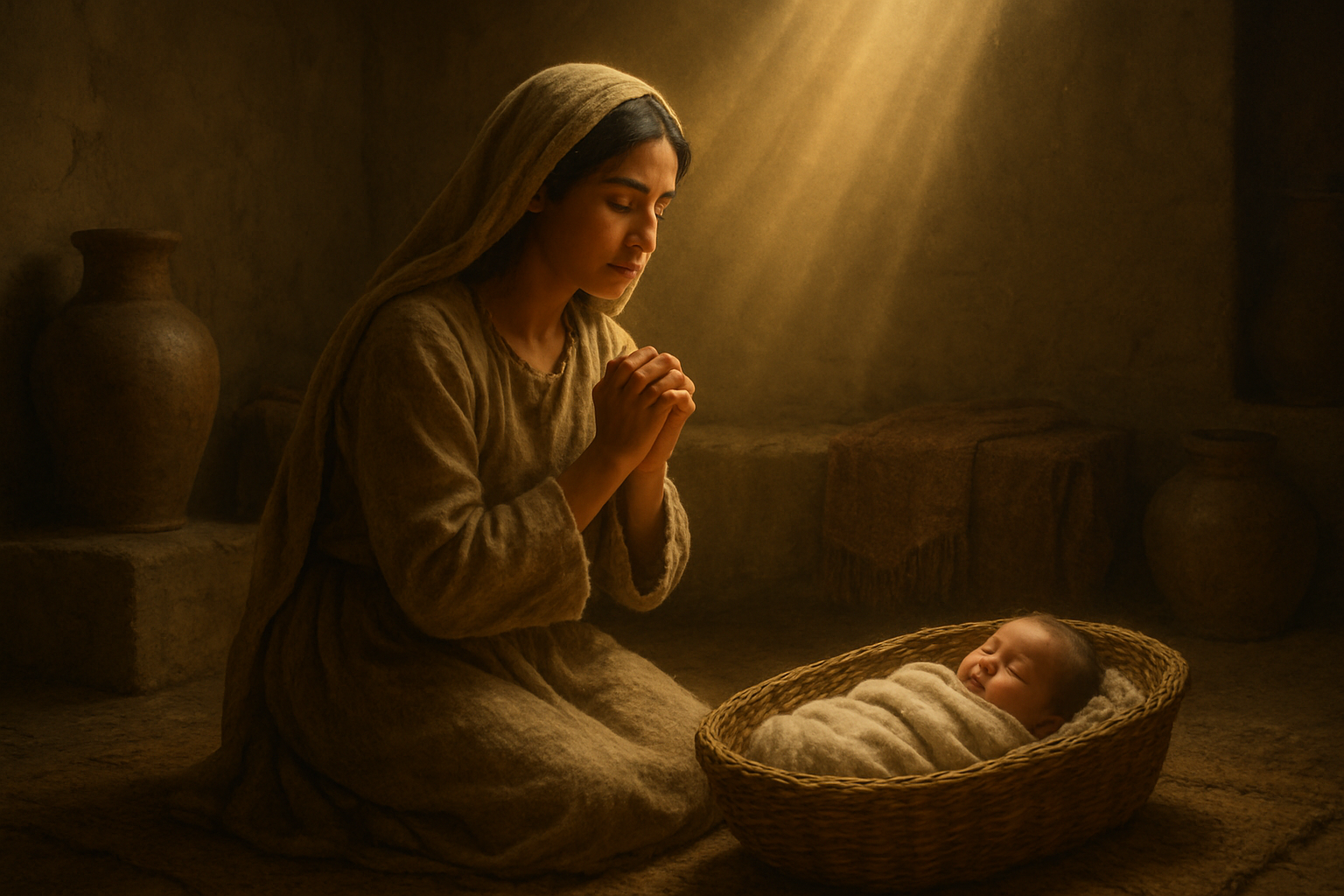
Jochebed faced an impossible choice that every mother dreads – letting go of her child while holding onto faith. For three months, she had hidden baby Moses, but the risks were escalating daily. The moment came when she had to make the hardest decision of her life: place her precious son in a basket on the dangerous Nile River.
This act represents the profound tension between surrendering control and maintaining hope. Jochebed couldn't protect Moses through her own strength anymore, yet she refused to give up on God's promises. She crafted that waterproof basket with meticulous care, choosing the location strategically, and positioned Miriam as a watchful guardian. Every detail showed her active participation in trusting God while releasing her grip on outcomes she couldn't control.
Trusting God when everything seems lost doesn't mean becoming passive. Jochebed demonstrated that faith in difficult times involves both surrender and strategic action. She prayed while she planned, trusted while she took practical steps, and hoped while she let go.
How God Orchestrated Pharaoh's Daughter's Discovery
Divine providence worked through seemingly ordinary circumstances to accomplish extraordinary purposes. Pharaoh's daughter arrived at the river at precisely the right moment – not too early when the basket might have drifted away, not too late when other dangers could have threatened Moses.
The princess's compassionate heart was already prepared to respond with mercy rather than following her father's cruel decree. God had been working in her life, cultivating empathy that would override political loyalty. When she heard the baby's cry, her maternal instincts awakened, and she chose love over law.
The timing was flawless. The royal entourage provided protection, the princess had authority to override the death sentence, and her position in the palace offered Moses the best possible upbringing. What appeared to be a chance encounter was actually divine providence in motherhood unfolding exactly as planned.
Miriam's Wise Intervention at the Perfect Moment
Young Miriam played a crucial role in this divine orchestration. Her courage and wisdom shine through as she approached the princess with a simple yet brilliant suggestion: "Should I find a Hebrew woman to nurse the baby for you?"
Miriam's timing was perfect. She didn't rush forward immediately, which might have seemed suspicious. Instead, she waited until the princess had committed to saving Moses, until the royal heart was fully engaged with protecting this child. Only then did she step forward with her helpful offer.
Her words were carefully chosen. She didn't reveal any family connection or seem overly eager. The suggestion appeared practical and beneficial to the princess, who needed someone to care for the infant properly. Miriam's intervention demonstrates how God uses even children in His plans when they act with faith and wisdom.
Jochebed Being Chosen as Moses' Nurse
The most stunning turn in this story comes when Jochebed – the very mother who had to give up her son – was chosen to nurse and care for him. God didn't just save Moses; He restored the mother-child relationship in a way that provided legal protection and royal provision.
As Moses' official nurse, Jochebed received payment from Pharaoh's treasury for raising her own son. She gained legitimate access to him during his crucial early years, when foundational values and identity are formed. During this time, she could teach Moses about his Hebrew heritage, about the God of Abraham, Isaac, and Jacob, and about his true calling.
This arrangement allowed Moses to grow up with one foot in the palace and one foot in his people's suffering. He learned Egyptian education and leadership while maintaining connection to Hebrew faith and identity. The power of a mother's prayer was answered beyond what Jochebed could have imagined when she placed that basket on the water.
God's provision exceeded her hopes. She asked for Moses' survival; God gave her Moses' return, legal protection, financial support, and the opportunity to shape the future deliverer of Israel during his most impressionable years.
Lessons for Modern Mothers Facing Overwhelming Circumstances
Balancing Faith with Practical Wisdom in Crisis Situations
Modern mothers facing overwhelming circumstances can learn from Jochebed's remarkable ability to blend unwavering faith with strategic thinking. When Pharaoh's decree threatened her son's life, she didn't just pray and wait passively. Instead, she combined her trust in God with clever planning—hiding Moses, crafting a waterproof basket, and positioning it strategically where Pharaoh's daughter would find him.
This teaches us that faith doesn't mean abandoning common sense. When your teenager is struggling with addiction, trusting God includes seeking professional help, setting boundaries, and researching treatment options. When financial pressures mount, prayer works alongside budgeting, job searching, and seeking wise counsel. Jochebed shows us that spiritual trust and practical action work together beautifully.
Biblical mothers like Jochebed demonstrate that wisdom means using every resource available while depending on God's guidance. She didn't view her careful planning as lack of faith—it was faith in action. Today's mothers can embrace this same balance, knowing that God often works through our thoughtful efforts and preparation.
Finding Courage to Protect Your Children Against All Odds
Jochebed's courage came from something deeper than maternal instinct—it flowed from her certainty that God had a purpose for her child. Even when the odds seemed impossible, she refused to surrender to fear or despair. Her story reminds us that divine providence in motherhood often requires mothers to take brave stands against overwhelming forces.
Your courage might look different than Jochebed's. Maybe you're fighting for your child's education in a failing school system, advocating for a special needs child, or standing firm against peer pressure that threatens your family's values. Like Jochebed, you may need to take calculated risks to protect what matters most.
The Jochebed faith story teaches us that courage isn't the absence of fear—it's acting in faith despite the fear. When you feel outnumbered, outspent, or overpowered, remember that one mother guided by God can change everything. Your willingness to step out in faith, even when you can't see the full picture, creates space for miracles to happen.
Recognizing God's Hand in Seemingly Impossible Circumstances
Jochebed placed her baby in the Nile—the very river where Hebrew boys were supposed to die—and watched God transform it into the path of salvation. This teaches us to watch for God's fingerprints in the most unlikely places. Sometimes what looks like the end of hope becomes the beginning of breakthrough.
Mothers trusting God learn to see beyond surface circumstances. When doors slam shut, God might be redirecting the path. When resources run low, provision often comes from unexpected sources. When relationships fracture, healing can emerge stronger than before. Jochebed couldn't have predicted that Pharaoh's daughter would become Moses' protector, but she trusted God with the outcome.
Look for patterns in your own story. How has God used difficulties to build character in your children? How have closed doors led to better opportunities? Biblical parenting lessons from Jochebed remind us that God's timing and methods often surprise us, but His faithfulness remains constant. Your current impossible situation might be tomorrow's testimony of God's goodness.
Building Unshakeable Trust When Everything Seems Lost
Choosing Faith Over Fear in Life-Threatening Situations
When Jochebed faced the impossible choice between certain death for her newborn son or releasing him to an uncertain fate, she demonstrated how trusting God when everything seems lost requires active courage rather than passive resignation. Her decision to craft a waterproof basket and place baby Moses among the reeds wasn't reckless abandonment—it was calculated faith in action.
Fear whispers that we must control every outcome, but faith in difficult times teaches us to take the steps we can while surrendering what lies beyond our reach. Jochebed's story shows that choosing faith doesn't eliminate fear; it means acting despite fear's presence. She felt the terror of potentially losing her child, yet she moved forward with her plan because she trusted God's character more than her circumstances.
Modern mothers facing overwhelming circumstances can learn from Jochebed's example. Whether dealing with a child's serious illness, financial crisis, or family breakdown, the choice remains the same: will we be paralyzed by fear or empowered by faith? Faith doesn't promise easy answers, but it provides the strength to take the next right step.
Learning to Let Go While Continuing to Pray
The most challenging aspect of Jochebed's faith story wasn't the initial act of placing Moses in the basket—it was the daily choice to release control while maintaining hope. She couldn't follow the basket down the Nile or control who might find her son. Yet she continued to pray, demonstrating that letting go doesn't mean giving up.
This delicate balance between release and intercession challenges every parent. We can't helicopter our way into God's business, yet we can't abandon our responsibility to pray. Jochebed shows us that surrender isn't defeat; it's strategic partnership with the Almighty.
Prayer during seasons of release looks different than desperate pleading. It becomes communion with God about His purposes rather than frantic attempts to change His mind. Biblical mothers like Jochebed teach us that our prayers matter deeply, but the outcomes belong to God's wisdom and timing.
Understanding That God's Timing Is Always Perfect
Jochebed's three-month window of hiding Moses seemed impossibly short, yet it was precisely the timing needed for Pharaoh's daughter to be at the river when the basket appeared. God's orchestration of events reveals that His timing operates on a level far beyond human comprehension.
When we're desperate for immediate answers, waiting feels like abandonment. But divine providence in motherhood often works through what appears to be delays or detours. Jochebed couldn't see that her son would be raised in Pharaoh's household, receiving the education and position necessary for leading Israel out of Egypt decades later.
God's perfect timing isn't always our preferred timing. Sometimes He moves mountains overnight; other times He allows us to walk through valleys for years. Jochebed's experience reminds us that trusting God's timing means believing His perspective encompasses elements we cannot see.
Discovering Strength You Never Knew You Possessed
Desperation has a way of revealing hidden reserves of courage and creativity. Before facing the crisis of Moses' birth, Jochebed might never have imagined herself capable of such bold action. Crisis became the catalyst for discovering mothers trusting God can accomplish extraordinary things through ordinary faith.
The strength Jochebed discovered wasn't self-generated confidence—it was God-sourced courage that emerged through dependence on Him. She found she could craft waterproof baskets, position her daughter Miriam as a lookout, and even speak boldly to Pharaoh's daughter when the moment required it.
Every mother facing impossible circumstances possesses more strength than she realizes. Like Jochebed, we often discover our capacity for faith-filled action only when pushed beyond our comfort zones. The biblical women of faith remind us that God's strength is perfected in our weakness, transforming ordinary mothers into extraordinary vessels of His purposes.

Jochebed's story shows us that even when life feels impossible, faith can lead to extraordinary outcomes. She faced the unthinkable choice between following Pharaoh's deadly decree or protecting her newborn son, yet she chose to trust God with a plan that seemed crazy on paper. Her strategic thinking paired with unwavering faith saved not just Moses, but eventually an entire nation. This mother's courage reminds us that our biggest challenges often become the stage for God's greatest miracles.
Every mother today can draw strength from Jochebed's example when facing their own overwhelming moments. Whether you're dealing with financial stress, health concerns, or difficult family situations, remember that God sees your struggles and has a plan even when you can't see it. Start with prayer, make wise decisions with the resources you have, and trust that your faithful actions today might be shaping tomorrow's breakthrough. Sometimes the most powerful thing a mother can do is simply refuse to give up, knowing that God is working behind the scenes of every impossible situation.


Comments
Post a Comment