Elizabeth: Faithful Motherhood in Waiting
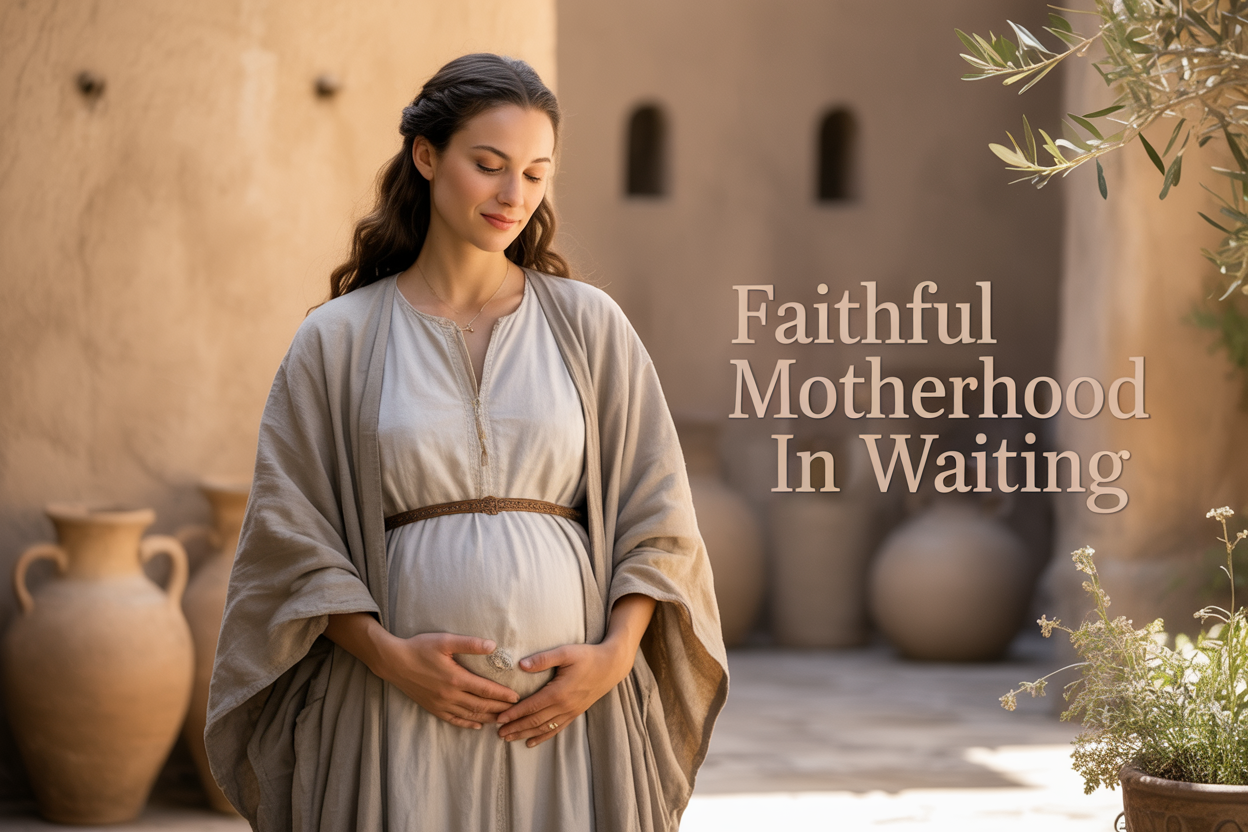
Elizabeth's story speaks directly to women navigating infertility and faith, mothers questioning God's timing, and anyone learning to trust during life's waiting seasons. Her journey from barrenness to bearing John the Baptist offers profound lessons about faithful motherhood that remain relevant today.
This biblical motherhood example is perfect for women struggling with infertility, mothers feeling isolated in their waiting, and those supporting friends through difficult seasons. Elizabeth's experience shows how a barren woman's faith can flourish even when circumstances seem impossible.
We'll explore how Elizabeth maintained trust despite years of social shame and advanced age. You'll discover how she recognized God's voice when her miracle pregnancy finally came. We'll also examine her unique role in supporting Mary while carrying her own miracle, and how she embraced raising a prophet child with divine purpose.
Elizabeth's faithful motherhood during her long wait demonstrates that God's timing often differs from our own, but His plans remain perfect for those who trust Him.
Elizabeth's Journey Through Barrenness and Social Shame

Understanding the Cultural Burden of Childlessness in Ancient Times
In Elizabeth's world, a woman's worth was deeply tied to her ability to bear children, especially sons. Childlessness wasn't just a personal heartbreak—it was a public mark of shame that followed women wherever they went. Society viewed barrenness as a sign of divine displeasure, creating an unbearable burden for faithful women like Elizabeth.
The Elizabeth Bible story reveals how devastating this cultural pressure could be. Women without children faced whispered conversations, pitying glances, and sometimes outright rejection from their communities. They were excluded from certain religious ceremonies and social gatherings centered around families. Even well-meaning relatives would offer unsolicited advice or suggest that perhaps God was punishing them for some hidden sin.
Elizabeth lived in a time when your value as a woman was measured by the children at your table and the legacy you could pass down. Without offspring, women were seen as incomplete, unfulfilled, and somehow deficient in their most fundamental purpose. This cultural weight made Elizabeth's decades of infertility not just emotionally painful, but socially isolating.
The pressure extended beyond personal identity to family honor. Childless wives brought shame to their husband's lineage, threatening family names and inheritances. Elizabeth carried this dual burden—her own grief and the weight of disappointing her husband Zechariah's priestly heritage.
Choosing Faith Over Bitterness During Years of Disappointment
Elizabeth's response to decades of disappointment demonstrates remarkable spiritual maturity. While many women in her position turned bitter or blamed God, she chose a different path. The biblical account describes her as "righteous before God," showing that her faithfulness never wavered despite years of unanswered prayers.
Each month brought fresh disappointment, yet Elizabeth refused to let cynicism poison her heart. She watched younger women in her community marry and quickly bear children while she remained empty-handed. Friends and family members welcomed grandchildren while Elizabeth's arms stayed empty. Still, she clung to her faith.
This choice required daily surrender. Elizabeth had to release her timeline, her expectations, and her understanding of how God should work in her life. She could have become angry with Zechariah, resentful toward other mothers, or bitter toward God himself. Instead, she chose to trust that God's plan, though hidden, was still good.
Her faith during waiting serves as a powerful example for modern women struggling with infertility and faith. Elizabeth shows us that faithfulness doesn't mean pretending disappointment doesn't hurt—it means choosing trust even when trust feels impossible.
Maintaining Dignity While Facing Community Judgment
Elizabeth's grace under pressure reveals her inner strength and character. While others whispered about her barrenness, she carried herself with quiet dignity. She didn't lash out at thoughtless comments or retreat into complete isolation. Instead, she found ways to remain engaged in her community while protecting her heart.
The temptation to defend herself or explain her situation must have been overwhelming. People likely asked invasive questions, offered unwanted advice, or made assumptions about her spiritual life. Yet Elizabeth chose not to let others' ignorance diminish her sense of worth.
She understood something profound: her identity came from God, not from public opinion. This perspective allowed her to interact with her community without desperation for their approval. She could attend gatherings, participate in religious observances, and maintain friendships without constantly defending her circumstances.
Elizabeth's dignity also protected her marriage. She didn't blame Zechariah for their childlessness or demand that he defend her publicly. Their unity remained strong because she refused to let external pressure create internal division.
Finding Purpose Beyond Motherhood During the Waiting Season
During her long season of waiting, Elizabeth discovered that her life had meaning beyond potential motherhood. She supported Zechariah's priestly duties, served in her community, and cultivated her relationship with God. These pursuits weren't consolation prizes—they were genuine callings that prepared her for the miracle to come.
Elizabeth used her waiting years to develop spiritual depth and emotional resilience. She became the kind of woman who could recognize an angel's voice and accept an impossible promise. Her childless years weren't wasted time—they were preparation for raising a prophet.
She also learned to minister to others facing similar struggles. Elizabeth likely comforted other barren women, offering hope without false promises. Her own journey through disappointment equipped her to provide genuine empathy and practical support to those walking similar paths.
When Mary arrived at her door, pregnant and probably frightened, Elizabeth was ready to offer wisdom, encouragement, and sanctuary. Her decades of faithful waiting had transformed her into exactly the mentor Mary needed. Elizabeth's purpose during her barren years was being refined into something beautiful and necessary for God's larger plan.
Her story reminds us that God doesn't waste our waiting seasons. Even when we can't see the bigger picture, our faithfulness during difficult times prepares us for the roles we're meant to fill when our miracle finally arrives.
Trusting God's Timing Despite Advanced Age

Embracing Hope When Circumstances Seem Impossible
Elizabeth's story teaches us that hope doesn't always match our circumstances. At an age when most women had long accepted their childlessness as permanent, Elizabeth continued believing in God's goodness. Her faith wasn't naive optimism—it was grounded in her understanding of God's character and His ability to work beyond natural limitations.
The Elizabeth Bible story shows us that infertility and faith can coexist. She didn't let her barren womb define her worth or limit her expectations of what God could do. When the angel appeared to Zacharias with news of their coming son, Elizabeth had already spent decades nurturing hope in her heart. Her response reveals a woman who had been spiritually prepared for God's unexpected timing.
Signs of impossible circumstances that require supernatural hope:
-
Physical limitations that seem final
-
Situations that have persisted for years without change
-
Dreams that appear to have expired with time
-
Social expectations that pressure you to "move on"
Elizabeth understood that God's timeline operates differently from human understanding. Her decades of waiting weren't wasted years—they were preparation for the extraordinary calling that lay ahead.
Learning to Surrender Personal Timelines to Divine Purpose
Trusting God during waiting means releasing our grip on how we think our lives should unfold. Elizabeth had to surrender her young woman's dreams of motherhood and embrace God's plan for her to become a mother in her golden years. This surrender isn't passive resignation—it's active trust that God's timing serves His greater purpose.
Biblical motherhood often requires this kind of surrender. Elizabeth's pregnancy wasn't just about her personal fulfillment; it was part of God's redemptive plan for humanity. Her son John would prepare the way for Jesus Christ. Sometimes our personal timelines must bow to divine purpose, and Elizabeth shows us how to navigate this tension with grace.
Ways to surrender personal timelines:
-
Pray for God's will over your own preferences
-
Find purpose in your current season while waiting
-
Support others who are walking similar paths
-
Trust that God's delays aren't denials
Elizabeth's example reminds us that faithful motherhood sometimes means mothering in God's timing, not ours. Her story encourages women facing their own seasons of waiting to remain open to how God might surprise them.
Discovering Strength in God's Promises During Prolonged Waiting
The strength to endure prolonged waiting comes from anchoring ourselves in God's promises rather than our circumstances. Elizabeth had likely memorized and meditated on scriptures about God's faithfulness to His people. When her miracle pregnancy finally arrived, she was spiritually equipped to handle both the joy and the responsibility.
God's timing teaches us patience while building our character. Elizabeth's decades of waiting prepared her to raise a prophet child with the wisdom and maturity that only comes through life experience. Her prolonged season of barrenness became the foundation for extraordinary faithfulness when her miracle finally arrived.
Sources of strength during prolonged waiting:
-
Daily meditation on God's faithfulness in Scripture
-
Fellowship with others who understand your journey
-
Serving God's purposes in your current circumstances
-
Celebrating small evidences of God's goodness
Elizabeth discovered that waiting on God's timing doesn't mean passive inactivity. She continued serving, loving, and believing throughout her years of childlessness. When her time finally came, she was ready—not bitter, not broken, but beautifully prepared for the miracle that would change her life and impact history.
Her story reminds us that trusting God's timing despite advanced age or difficult circumstances isn't just about receiving what we want—it's about becoming who God needs us to be for the purposes He has planned.
Recognizing God's Voice Through Angelic Visitation

Responding with Faith When God Breaks His Silence
After years of unanswered prayers and deafening silence from heaven, Elizabeth's encounter with Gabriel represents one of the most profound moments in her faith journey. When God finally spoke, it wasn't through a gentle whisper or gradual revelation - it came through an angelic messenger bearing impossible news. Elizabeth's response teaches us about maintaining spiritual sensitivity even during seasons of divine quiet.
The angel's announcement didn't catch Elizabeth completely off guard because she had remained spiritually attuned despite her barrenness. Her faithful devotion to God throughout her childless years positioned her heart to recognize authentic divine communication. This spiritual preparedness becomes crucial for any woman walking through infertility and faith challenges, as God's breakthrough often comes suddenly after long periods of waiting.
Processing Miraculous News with Wisdom and Discernment
Elizabeth's reaction to Gabriel's message reveals mature spiritual wisdom. She didn't dismiss the announcement as fantasy, nor did she immediately share it with everyone around her. Instead, she processed this miraculous news with careful consideration, understanding that divine interventions require thoughtful response rather than impulsive reactions.
Her months of seclusion after conceiving demonstrate healthy spiritual boundaries. Elizabeth recognized that some of God's works need protection and privacy during their early stages. This wisdom applies to modern women experiencing their own miracle moments - whether answered prayers about children, relationships, or other deeply personal matters. Sometimes God's gifts need nurturing in secret before public celebration.
The biblical account shows Elizabeth's balanced approach to miraculous news: believing fully while acting wisely. She didn't let skepticism poison her faith, yet she didn't let excitement override prudence.
Choosing Belief Over Doubt When Facing the Impossible
Elizabeth's immediate acceptance of Gabriel's message stands in stark contrast to Zechariah's questioning response. While her husband demanded signs and proof, Elizabeth embraced belief despite her advanced age making pregnancy humanly impossible. This choice reveals the depth of her spiritual maturity and trust in God's character.
Her faith didn't ignore reality - she knew her physical limitations. Instead, she chose to believe that God's promises transcend human limitations. This distinction matters greatly for women facing their own impossible situations. Faith doesn't require ignoring facts; it requires believing that God can work beyond natural constraints.
Elizabeth's belief also demonstrates the power of sustained faith during long waiting periods. Years of trusting God through barrenness had strengthened her spiritual muscles, preparing her for this ultimate test of faith. Her immediate acceptance shows how faithful motherhood sometimes begins with choosing belief over biological impossibilities.
Accepting God's Plan Even When It Defies Human Logic
Perhaps most remarkably, Elizabeth embraced God's plan without demanding to understand all the details. She didn't negotiate with God about timing, circumstances, or the challenges of pregnancy at her age. This unconditional acceptance reflects deep spiritual surrender that many struggle to achieve.
Her willingness to carry a child destined for extraordinary purpose - John the Baptist - shows Elizabeth understood her role in God's larger story. She accepted that faithful motherhood might involve raising a prophet child rather than enjoying typical family experiences. This perspective transforms how we view our own unexpected paths to motherhood or parenting.
Elizabeth's story within the broader Elizabeth Bible story reveals how God often chooses unconventional methods to accomplish His purposes. Her acceptance teaches modern women to remain open to God's surprising plans, even when they challenge our expectations about timing, methods, or outcomes in our journey toward biblical motherhood.
Supporting Others While Carrying Your Own Miracle
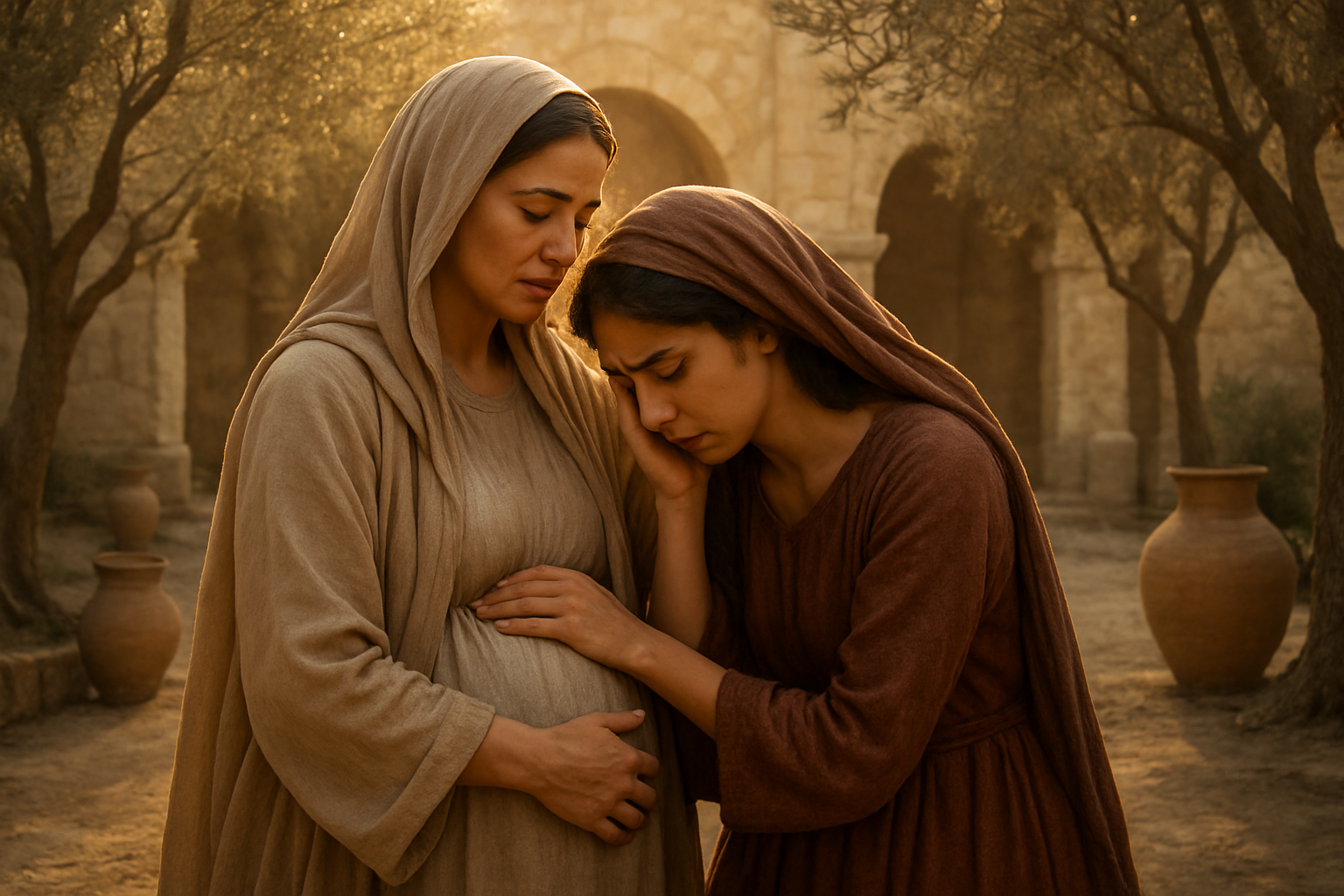
Welcoming Mary with joy despite personal circumstances
Elizabeth's response to Mary's arrival shows remarkable grace. Picture this: Elizabeth is six months pregnant after decades of waiting, finally experiencing her own miracle. Yet when her young cousin appears at her door, Elizabeth doesn't make it about herself. Instead, she bursts into joyful proclamation, declaring Mary blessed and celebrating the child Mary carries.
The biblical motherhood example here is profound. Elizabeth could have felt overshadowed or compared her situation to Mary's. After all, Mary received an even more miraculous announcement. But Elizabeth demonstrates how supporting others while waiting transforms into supporting others while receiving. Her baby John literally leaped for joy in her womb, and Elizabeth followed that lead with wholehearted celebration.
This response reveals Elizabeth's deep spiritual maturity. She recognized that God's blessings aren't limited or competitive. Mary's miracle didn't diminish Elizabeth's own answered prayers. Instead, both women were part of God's larger redemptive story unfolding.
Offering encouragement to younger women in their calling
Elizabeth becomes a mentor figure to Mary during a crucial time. Mary was young, unmarried, and carrying a child under extraordinary circumstances. She needed someone who understood divine intervention and could offer wisdom without judgment.
Elizabeth's encouragement went beyond mere congratulations. She validated Mary's faith journey, saying "Blessed is she who believed that the Lord would fulfill his promises to her." These words came from someone who had walked a long path of trusting God during waiting and knew the challenges of believing God's promises when circumstances seemed impossible.
The age difference between the women created a beautiful dynamic. Elizabeth had lived through decades of infertility and faith struggles, giving her credibility to speak into Mary's situation. She could offer perspective that only comes from years of learning to trust God's timing. Her words carried weight because they came from lived experience.
Mary stayed with Elizabeth for three months, suggesting their relationship provided ongoing support during early pregnancy. Elizabeth created space for Mary to process her calling without facing immediate social scrutiny from their hometown communities.
Creating safe spaces for sharing divine encounters
Both women had experienced angelic visitations that others might question or dismiss. Elizabeth understood the surreal nature of receiving direct messages from God through supernatural encounters. This shared experience created an immediate bond and understanding between them.
Elizabeth's home became a sanctuary where supernatural experiences could be discussed openly. In a culture where claiming divine visitation could bring skepticism or worse, having someone believe and affirm these encounters was invaluable. Elizabeth didn't question Mary's story or demand proof - she simply believed and celebrated.
The Elizabeth Bible story shows how important it is to have people in our lives who understand spiritual experiences. Elizabeth had processed her own angelic encounter with Zechariah's experience, so she knew how overwhelming and isolating such experiences could feel. She offered Mary what she herself had needed - someone who believed without reservation.
This safe space allowed both women to strengthen their faith through shared testimony. They could encourage each other when doubt crept in or when the reality of their situations felt overwhelming.
Demonstrating selfless love during personal breakthrough
Elizabeth's selflessness shines brightest during her own moment of triumph. After waiting decades for a child, she could have been entirely focused on her own pregnancy journey. Instead, she poured energy into supporting Mary's needs and celebrating her calling.
This demonstrates mature faithful motherhood that looks beyond personal circumstances to see how God is working in others' lives. Elizabeth's breakthrough didn't make her self-absorbed; it made her more generous. She understood that receiving God's blessings creates responsibility to bless others.
Her selfless love extended to practical care. Hosting a pregnant teenager for three months during her own pregnancy required sacrifice and intentionality. Elizabeth chose to prioritize relationship and ministry over personal comfort or convenience.
The timing makes Elizabeth's generosity even more remarkable. Those final months of pregnancy after years of barrenness should have been entirely about her own experience. Yet she shared that sacred time with Mary, demonstrating love that puts others' needs alongside our own.
Building community through mutual spiritual support
Elizabeth and Mary created a model of mutual spiritual support that transcends age, circumstance, and social position. Their relationship shows how women can strengthen each other's faith journeys through authentic connection and shared spiritual experiences.
Their support was genuinely mutual. While Elizabeth offered wisdom and safe harbor, Mary brought fresh joy and confirmation of God's continued miraculous work. Both women needed what the other offered - Elizabeth needed reminder that God's miracles weren't limited to her situation, while Mary needed someone who understood supernatural intervention.
This community building extended beyond their immediate relationship. Both women were raising prophet child figures who would impact countless others. Their partnership during pregnancy established a foundation for ongoing ministry collaboration between their families.
The biblical motherhood example they set shows how spiritual community strengthens individual callings. Neither woman had to walk her journey alone. They created space for vulnerability, celebration, doubt, and faith to coexist. Their relationship demonstrates that spiritual community isn't about having everything figured out together - it's about supporting each other through the beautiful, terrifying, wonderful experience of following God's call.
Raising a Prophet While Embracing Divine Purpose

Nurturing John's Unique Calling from Birth
Elizabeth understood from the moment of conception that her son carried extraordinary purpose. The angel's words to Zechariah revealed John would be filled with the Holy Spirit even before birth, setting him apart as a nazarite dedicated to God. This meant Elizabeth needed to approach motherhood differently than other women. She couldn't raise John like any ordinary child - his destiny required intentional preparation.
From his earliest days, Elizabeth likely created an environment that honored John's sacred calling. She would have been mindful of his diet, ensuring he followed nazarite restrictions, never touching wine or strong drink. More importantly, she cultivated spiritual sensitivity in their home, teaching John to recognize God's voice and respond to divine promptings.
Key elements of nurturing a prophet child:
-
Creating sacred space for prayer and worship
-
Teaching discernment between God's voice and worldly influences
-
Modeling faithful obedience in daily decisions
-
Encouraging spiritual disciplines from a young age
-
Protecting against worldly distractions that could derail calling
Protecting Your Child's Destiny Through Faithful Parenting
Elizabeth faced the challenge of raising a prophet child while protecting him from forces that could undermine his calling. Biblical motherhood required her to be both nurturing and fiercely protective of John's spiritual development. She couldn't allow social pressures or family expectations to overshadow God's plan for her son.
This protection went beyond physical safety. Elizabeth had to guard John's heart and mind, ensuring he understood his identity came from God rather than human approval. She likely faced criticism from relatives who didn't understand why John seemed so different from other children - more serious, more spiritually minded, less interested in typical childhood pursuits.
Protective strategies Elizabeth employed:
-
Limiting exposure to corrupting influences
-
Surrounding John with godly mentors and teachers
-
Reinforcing his identity as God's chosen messenger
-
Teaching him to find strength in solitude and prayer
-
Preparing him for rejection and misunderstanding
Elizabeth's faithful parenting meant saying no to good things that weren't part of God's best plan for John. This required wisdom to distinguish between protecting his calling and overprotecting him from necessary character-building experiences.
Preparing for Sacrificial Love as Your Child Serves God's Plan
Elizabeth knew that raising a prophet meant preparing for heartbreak. Prophets throughout history faced persecution, rejection, and often violent deaths. Her miracle pregnancy came with the sobering reality that John's life would be marked by sacrifice and suffering for the sake of righteousness.
This aspect of faithful motherhood demanded Elizabeth develop a different kind of love - one that could release rather than cling, trust rather than control. She had to love John enough to let him fulfill his dangerous calling, knowing it would likely cost him his life. The Bible shows us this tension when John boldly confronted Herod's sin, leading to his imprisonment and execution.
Preparing for sacrificial love involves:
-
Surrendering control over your child's safety
-
Teaching them that obedience to God transcends personal comfort
-
Developing trust in God's sovereignty over outcomes
-
Finding peace in eternal perspective versus temporary concerns
-
Building your child's courage for difficult assignments
Elizabeth's example shows us that true maternal love sometimes means stepping back and allowing God to use our children in ways that break our hearts but advance His kingdom.
Finding Joy in Your Child's Success Beyond Personal Dreams
Elizabeth experienced the unique joy of watching her son fulfill his divine purpose, even when it looked nothing like traditional success. John became a wild prophet in the wilderness, eating locusts and honey, wearing camel hair clothing, and preaching messages that made people uncomfortable. Yet Elizabeth could celebrate because she understood true success meant obedience to calling, not worldly achievement.
When John baptized Jesus and declared, "He must increase, but I must decrease," Elizabeth witnessed the culmination of faithful motherhood. Her son willingly stepped aside for someone greater, demonstrating the humility and wisdom she had instilled in him from childhood. This moment represented victory, not defeat.
Finding joy in divine success requires:
-
Redefining success through biblical lens rather than cultural standards
-
Celebrating character development over achievements
-
Taking pride in your child's obedience to God's voice
-
Finding fulfillment in their impact on others' spiritual lives
-
Trusting that God's approval matters more than public recognition
Elizabeth's story encourages mothers to invest in their children's spiritual formation with confidence that God will honor faithful parenting, even when the outcome looks different from what we initially imagined or hoped for our children's lives.

Elizabeth's story shows us that God's timing doesn't always match our expectations, but it's always perfect. Her decades of waiting through barrenness taught her patience and deepened her faith in ways that prepared her for the incredible role she'd play in God's plan. When the angel finally brought news of her miracle pregnancy, she was ready to trust completely, even when it seemed impossible at her age.
What makes Elizabeth truly remarkable is how she supported Mary during her own pregnancy, celebrating someone else's blessing while carrying her own miracle. She raised John the Baptist knowing he was destined for something greater than ordinary life, and she embraced that divine purpose with grace. Elizabeth's journey reminds us that our seasons of waiting aren't wasted time - they're preparation for the amazing things God has in store. Trust His timing, support others in their journeys, and stay open to the miraculous ways He wants to use your life.


Comments
Post a Comment