Dealing with Anxiety as a Christian Mom
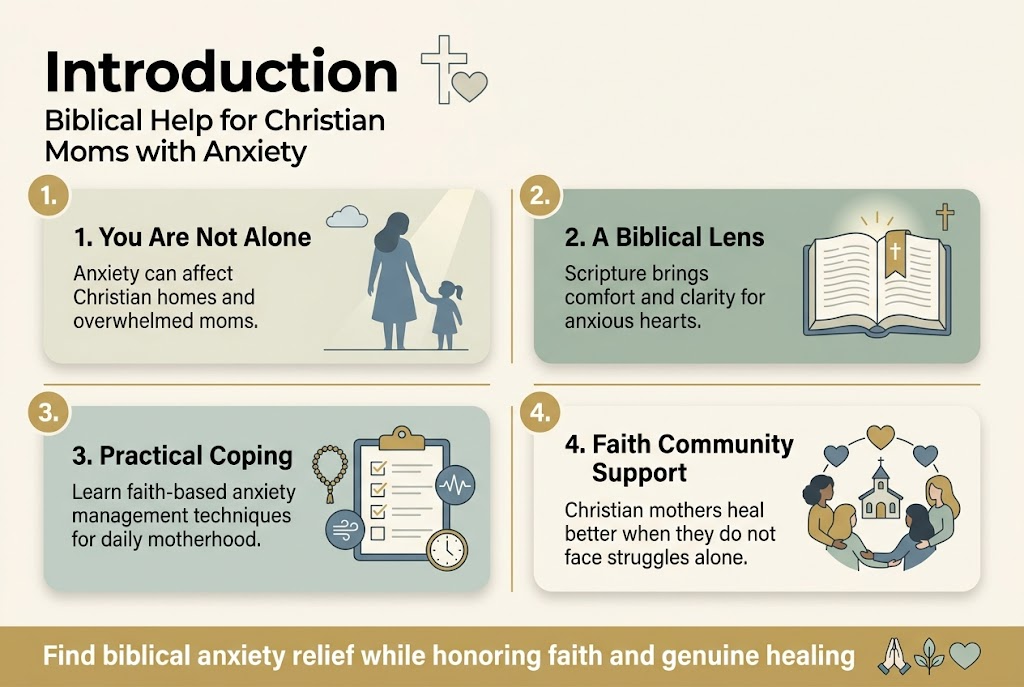
Anxiety doesn't skip over Christian homes, and if you're a mom feeling overwhelmed while trying to balance faith and family life, you're not alone. Many Christian mothers struggle with worry, stress, and anxious thoughts while wondering how their faith should shape their response to these very real challenges.
This guide is specifically written for Christian moms who want to address their anxiety through a biblical perspective while still taking practical steps toward healing. You'll discover how Scripture speaks directly to anxious hearts and learn faith-based anxiety management techniques that actually work in the chaos of daily motherhood.
We'll explore how to view your anxiety through a biblical lens that brings both comfort and clarity, then dive into practical Christian anxiety coping strategies you can use when worry strikes. You'll also learn how to build meaningful connections within your faith community for ongoing support, because Christian mothers mental health improves significantly when we don't face our struggles alone.
Whether you're dealing with everyday Christian parenting stress or more persistent anxious thoughts, this resource will help you find biblical anxiety relief while honoring both your faith and your need for genuine healing.
Understanding Anxiety Through a Biblical Lens
Recognize anxiety as a common human experience addressed in Scripture
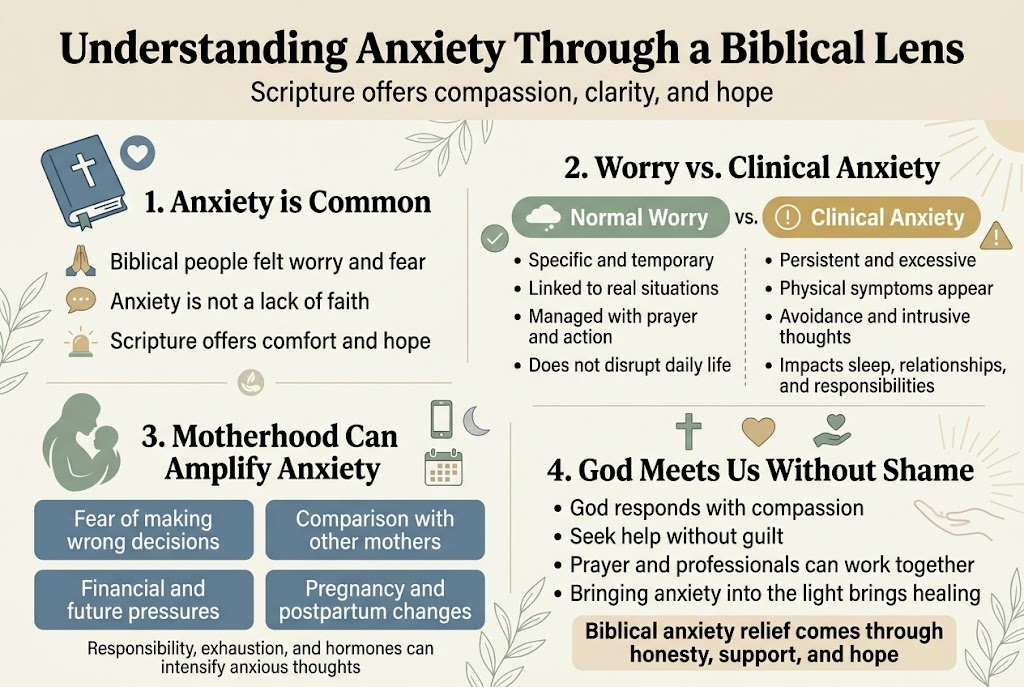
Scripture doesn't shy away from human struggles with worry and fear. Throughout the Bible, we see faithful people wrestling with anxious thoughts - from King David's honest cries in the Psalms to Martha's frantic worry about hosting Jesus. These stories remind us that experiencing anxiety doesn't reflect a lack of faith or spiritual maturity.
Jesus himself acknowledged our tendency toward worry when he spoke about not being anxious about tomorrow in Matthew 6:25-34. He didn't dismiss these concerns as silly but offered practical wisdom about where to place our focus. The apostle Paul wrote about his own anxiety for the churches in 2 Corinthians 11:28, showing that even spiritual leaders faced mental and emotional burdens.
When we view Christian mom anxiety through this biblical perspective, we see that God understands our human condition completely. The Bible offers over 300 verses about fear and worry, demonstrating how common these experiences are. Rather than condemning anxiety, Scripture provides comfort, guidance, and hope for those who struggle.
Distinguish between normal worry and clinical anxiety disorders
Every mom experiences moments of concern about her children's safety, development, or future. This natural protective instinct becomes problematic when worry transforms into persistent, overwhelming fear that interferes with daily functioning. Understanding this distinction helps Christian mothers seek appropriate help without guilt.
Normal worry tends to be:
-
Specific and temporary
-
Related to actual situations
-
Manageable with prayer and practical action
-
Doesn't significantly impact sleep, appetite, or relationships
Clinical anxiety disorders involve:
-
Persistent, excessive worry lasting months
-
Physical symptoms like racing heart or difficulty breathing
-
Avoidance of normal activities
-
Intrusive thoughts that feel uncontrollable
-
Significant impact on family relationships and daily responsibilities
Faith based anxiety management includes recognizing when professional help complements spiritual practices. God works through doctors, therapists, and medical treatments just as he works through prayer and community support. Many Christian mothers find that addressing anxiety disorders medically actually enhances their spiritual life by removing barriers to peace and connection with God.
Identify how motherhood amplifies existing anxious thoughts
Motherhood brings unique pressures that can intensify anxiety, especially for women who already struggle with anxious tendencies. The weight of responsibility for another person's wellbeing, combined with sleep deprivation and hormonal changes, creates a perfect storm for Christian parenting stress.
Common triggers include:
-
Fear of making wrong decisions that could harm your child
-
Comparison with other mothers on social media or in person
-
Overwhelming information about parenting "best practices"
-
Financial pressures and planning for your family's future
-
Balancing personal identity with your role as a mother
The desire to be a "good Christian mom" can add extra pressure. You might worry about raising children who love God while also wanting them to be happy and successful in the world. These competing concerns can create internal conflict and amplify anxious thoughts about everything from discipline approaches to educational choices.
Pregnancy and postpartum periods bring additional challenges as hormonal fluctuations can trigger or worsen anxiety symptoms. Many Christian mothers struggle silently, believing they should feel only joy and gratitude during these seasons.
Embrace God's compassion for your struggles without shame
Shame often accompanies anxiety, particularly in faith communities where there's pressure to "trust God" and "not worry." This shame can prevent mothers from seeking help or being honest about their struggles. However, God's response to our anxiety is compassion, not condemnation.
Jesus demonstrated incredible gentleness with people who struggled. He didn't rebuke the woman with the bleeding disorder for her fear or criticize Thomas for his doubts. Instead, he met them with understanding and provided what they needed. This same compassion extends to Christian mothers mental health challenges today.
God sees your anxious thoughts as opportunities for deeper relationship, not failures of faith. Psalm 139 reminds us that he knows our thoughts before we think them and loves us completely. When anxiety strikes, you can approach God honestly, knowing he already understands your struggle and wants to help.
Many Christian mothers find freedom in understanding that mental health struggles are not spiritual deficiencies. Just as you wouldn't feel shame about treating diabetes or a broken bone, anxiety disorders deserve proper care and attention. God often works through medical professionals, counselors, and medication to bring healing and peace.
Biblical anxiety relief comes not from denying our struggles but from bringing them into the light of God's love. When we stop hiding our anxiety and start talking about it - with God, trusted friends, and professionals when needed - we often find that shame loses its power and healing begins.
Practical Faith-Based Strategies for Managing Daily Anxiety
![Create a full-bleed clean professional infographic illustration in a 3:2 aspect ratio, with a wide horizontal layout and no poster frame. Use a soft calming palette of light cream, pale blue, muted sage, and warm beige with navy text accents. Modern sans-serif fonts, bold title at the top, clear section headers, simple flat icons, and organized multi-column blocks.
TOP HEADER:
Large bold title centered across the top: “Practical Faith-Based Strategies for Managing Daily Anxiety”
Small subtitle beneath in lighter text: “4 Christian habits to calm worry and renew peace”
MAIN CONTENT: four wide horizontal sections arranged in a 2x2 grid with numbered circles and distinct icons.
SECTION 1, top left:
Heading: “1. Develop a consistent prayer routine”
Icon: a small praying hands icon beside a soft blue circle.
Include three short steps in a checklist:
- “Acknowledge God’s presence”
- “Confess your anxiety”
- “Ask for His peace”
Small quote callout in a rounded box:
“Lord, You are here with me. I’m feeling overwhelmed about [specific concern]. Please calm my heart and help me trust Your plan.”
Small visual accents: prayer cards, a phone with a muted notification symbol, and a tiny clock/alarm icon.
Tiny footer line: “Morning and evening prayer boundaries”
SECTION 2, top right:
Heading: “2. Memorize Scripture verses”
Icon: an open Bible with a star and bookmark.
Add a short line: “Philippians 4:6–7 • Isaiah 41:10 • Psalm 56:3”
Include a 5-item bullet list:
- “Read aloud five times each morning”
- “Write it by hand”
- “Set it to a tune”
- “Recite while doing chores”
- “Share it with your children”
Visual elements: sticky notes on a mirror, coffee maker, and car dashboard.
SECTION 3, bottom left:
Heading: “3. Create boundaries to protect energy”
Icon: a shield with a heart inside.
Include 4 short bullets:
- “Say no without guilt”
- “Limit news and social media”
- “Create phone-free family times”
- “Choose 2 or 3 priorities each day”
Add a small visual: a phone with a crossed-out scroll symbol, a dinner table, and a simple calendar checklist.
Include a small bold phrase: “Boundaries are essential, not selfish”
SECTION 4, bottom right:
Heading: “4. Practice gratitude journaling”
Icon: an open notebook with a small heart and sparkle.
Include 4 short bullets:
- “Write 3 things you’re thankful for each night”
- “Notice how God showed up”
- “Review past entries when anxiety rises”
- “Share one blessing at family dinner”
Add a tiny visual of a pen, bedside notebook, and a family dinner scene with small blessing speech bubble.
Include a small quote box:
“warm coffee this morning”
“my child’s laugh during play time”
BOTTOM STRIP:
A thin wide banner across the bottom with a simple upward arrow and text: “Shift from worry to peace, one faithful habit at a time”
Design details:
Use clean spacing, strong hierarchy, rounded section cards, subtle shadowing, navy headings, teal highlights, and simple line icons. Ensure all text is legible, balanced, and placed within the wide horizontal infographic layout.](https://gravitywrite.sgp1.digitaloceanspaces.com/blog/img_3389896_2026_04_13_20_10_16.jpg)
Develop a consistent prayer routine for anxious moments
When anxiety strikes, having a go-to prayer routine can anchor your heart in God's peace. Start by creating a simple three-step prayer pattern you can use anywhere: acknowledge God's presence, confess your anxiety, and ask for His peace. For example, "Lord, You are here with me. I'm feeling overwhelmed about [specific concern]. Please calm my heart and help me trust Your plan."
Keep prayer cards in your purse, car, and kitchen with short, powerful prayers written out. When anxious thoughts flood your mind, reach for these cards instead of scrolling through your phone. Some Christian mothers find it helpful to set prayer alarms throughout the day - gentle reminders to pause and connect with God before anxiety builds up.
Consider establishing morning and evening prayer boundaries around your anxiety. Start each day surrendering your worries to God, and end each evening releasing the day's stress through prayer. This biblical anxiety relief practice creates bookends of peace around your daily challenges.
Memorize Scripture verses that combat fearful thoughts
Scripture memorization transforms your mind's default responses to anxiety. When you hide God's Word in your heart, it becomes readily available during moments of panic or worry. Start with verses that specifically address fear and anxiety, such as Philippians 4:6-7, Isaiah 41:10, or Psalm 56:3.
Create a verse-a-week challenge for yourself. Write the chosen verse on sticky notes and place them where you'll see them frequently - your bathroom mirror, coffee maker, or car dashboard. Repeat the verse during routine activities like folding laundry or washing dishes. This faith-based anxiety management technique rewires your brain to respond with truth instead of fear.
Effective Scripture Memorization Methods:
-
Read the verse aloud five times each morning
-
Write it out by hand during quiet time
-
Set it to a simple tune or rhythm
-
Practice reciting it while doing household tasks
-
Share it with your children as you learn it together
Create boundaries to protect your mental and emotional energy
Boundaries aren't selfish - they're essential for Christian parenting without burning out. Learn to say no to commitments that drain your emotional reserves without guilt. God calls us to be wise stewards of our energy, and protecting your mental health enables you to serve your family better.
Establish digital boundaries by limiting news consumption and social media scrolling, especially during vulnerable times. Create phone-free zones during family meals and before bedtime. When other moms share their struggles, offer support without absorbing their anxiety as your own.
Set realistic expectations for yourself daily. You don't need to be the mom who bakes homemade bread, volunteers for every school event, and maintains a Pinterest-perfect home. Choose two or three priorities each day and release the pressure to do everything perfectly. This Christian anxiety coping strategy helps prevent overwhelm before it starts.
Practice gratitude journaling to shift focus from problems to blessings
Gratitude journaling rewrites your brain's tendency to focus on problems and redirects it toward God's faithfulness. Keep a simple notebook by your bedside and write down three things you're thankful for each night. Include specific details about how God showed up in your day, even in small ways.
When anxiety about your children's futures creeps in, flip to previous journal entries and remember how God has provided before. This practice builds your faith muscle and provides tangible evidence of God's goodness during difficult seasons. Many Christian mothers find that gratitude journaling becomes their favorite form of prayer, creating intimate conversations with God about His daily gifts.
Make gratitude journaling a family activity by having each child share one blessing from their day during dinner. This teaches your children healthy coping skills while reinforcing positive thinking patterns in your own mind. Start with simple entries like "warm coffee this morning" or "my child's laugh during play time" and watch your perspective gradually shift from scarcity to abundance.
Building a Strong Support Network Within Your Faith Community
Connect with other Christian moms facing similar challenges
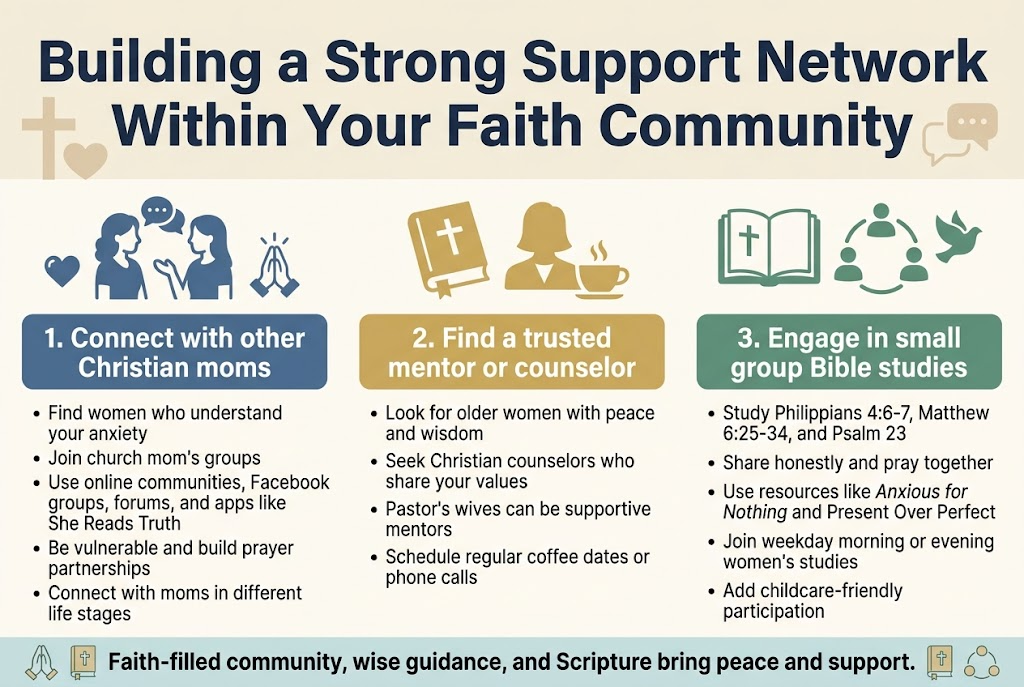
Finding other Christian mothers who understand your struggles with anxiety can be life-changing. These connections create a safe space where you can share your fears without judgment and receive encouragement rooted in faith. Many churches have mom's groups that meet weekly or monthly, providing natural opportunities to build these relationships.
Consider joining online communities specifically designed for Christian moms dealing with anxiety. Facebook groups, forums, and apps like She Reads Truth often have active communities where mothers share prayer requests, biblical encouragement, and practical advice for managing daily stress. These digital spaces can be especially helpful when you can't physically attend in-person gatherings.
Don't hesitate to be vulnerable about your struggles. When you open up about your anxiety, you'll often discover that other moms are experiencing similar challenges. This transparency builds deeper friendships and creates accountability partnerships where you can pray for each other regularly.
Look for moms in different life stages too. Connecting with mothers who have older children can provide perspective and hope, while relationships with moms in similar situations offer immediate understanding and support.
Find a trusted mentor or counselor who shares your values
Having a mentor who understands both your faith and mental health challenges provides invaluable guidance. Look for older women in your church who demonstrate peace and wisdom in their own lives. These mentors don't need to be professional counselors - sometimes the most helpful guidance comes from women who've walked similar paths and found their strength in Christ.
When seeking professional help, consider Christian counselors who integrate biblical principles with evidence-based therapeutic approaches. Many licensed therapists understand how faith intersects with mental health and can help you develop coping strategies that align with your beliefs. Organizations like the American Association of Christian Counselors can help you find qualified professionals in your area.
Pastor's wives often have experience supporting women through various life challenges and may serve as excellent mentors. They understand the unique pressures of living out your faith while managing family responsibilities and personal struggles.
Schedule regular coffee dates or phone calls with your mentor. Consistency in these relationships builds trust and allows for deeper conversations about both spiritual growth and anxiety management.
Engage in small group Bible studies focused on peace and trust
Joining Bible studies that specifically address anxiety, peace, and trusting God can transform your perspective on worry. Look for studies that explore passages like Philippians 4:6-7, Matthew 6:25-34, and Psalm 23. These focused discussions help you apply scripture directly to your anxious thoughts and daily struggles.
Small group environments encourage honest sharing and collective prayer. When group members share their own battles with worry and how God has shown up in their lives, you gain practical examples of faith in action. These stories become anchors during your own difficult moments.
Consider starting your own Bible study if one doesn't exist. Choose resources like "Anxious for Nothing" by Max Lucado or "Present Over Perfect" by Shauna Niequist. Leading a study group creates accountability for your own spiritual growth while serving other Christian mothers facing similar challenges.
Many churches offer women's Bible studies during weekday mornings, making them accessible for stay-at-home moms. Some congregations also provide childcare during these sessions, removing a common barrier to participation. Evening studies work well for working mothers who need flexible scheduling options.
Regular scripture meditation within your group setting reinforces biblical truths about God's care and provision, gradually replacing anxious thoughts with faith-filled perspectives.
Teaching Your Children Healthy Coping Skills Through Faith
Model Calm Responses During Stressful Family Situations
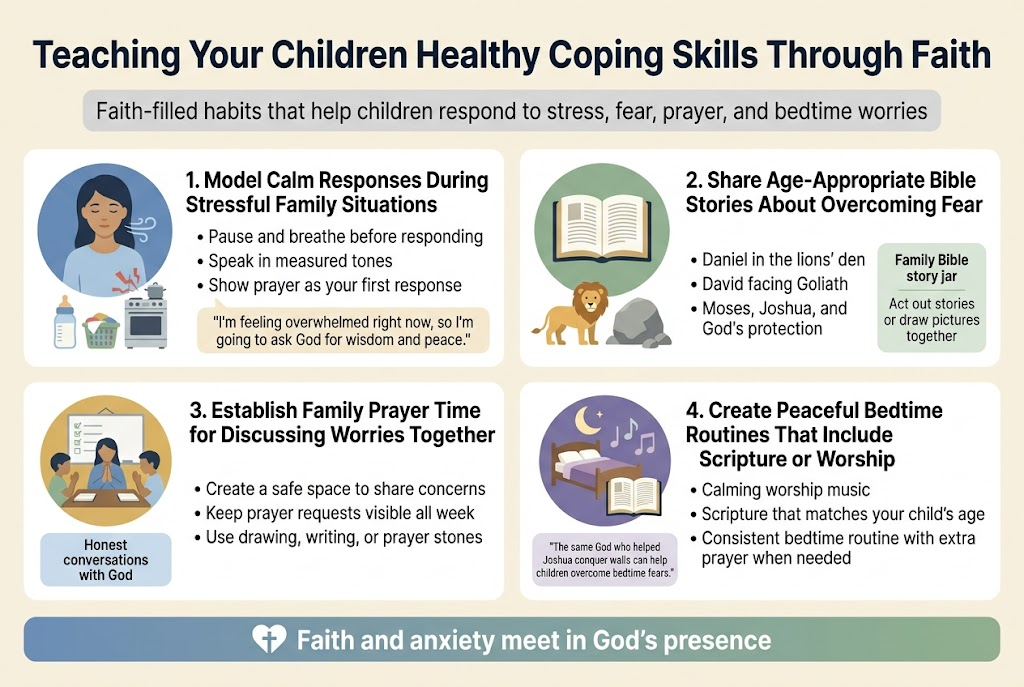
Your children watch everything you do, especially during tough moments. When the washing machine breaks down, the baby won't stop crying, and dinner is burning on the stove, your reaction becomes their blueprint for handling stress. Take a deep breath before responding to chaos. Speak in measured tones rather than raising your voice. Show them that prayer can be your first response, not your last resort.
When anxiety creeps into your family situations, pause and say something like, "I'm feeling overwhelmed right now, so I'm going to ask God for wisdom and peace." This faith based anxiety management approach teaches your children that turning to God isn't just for bedtime prayers—it's for real-life moments when everything feels out of control.
Your calm doesn't need to be perfect. Children learn more from watching you handle mistakes with grace than from seeing you never struggle at all. When you do lose your cool, apologize and show them how to seek forgiveness and start fresh. This Christian parenting stress management demonstrates that even moms need God's help to stay peaceful.
Share Age-Appropriate Bible Stories About Overcoming Fear
Scripture overflows with stories of ordinary people facing extraordinary fears with God's help. For toddlers and preschoolers, focus on simple narratives like Daniel in the lions' den or David facing Goliath. These stories show that God protects His people even when things look scary.
Elementary-age children can dive deeper into stories like Moses at the Red Sea or Joshua before the walls of Jericho. Discuss how these biblical heroes felt afraid but chose to trust God anyway. Help your children connect these ancient stories to their modern worries about school presentations, new friendships, or family changes.
Biblical anxiety relief comes alive when children see themselves in these stories. Create a family Bible story jar filled with fear-conquering tales. When someone feels anxious, draw out a story and read it together. This practice builds their spiritual foundation while giving them concrete examples of God's faithfulness during frightening times.
Consider acting out these stories or drawing pictures together. Physical engagement helps children remember the lessons when they face their own scary moments. Make it clear that the same God who helped Joshua conquer walls can help them overcome their bedtime fears or first-day-of-school jitters.
Establish Family Prayer Time for Discussing Worries Together
Create a safe space where everyone can share their concerns without judgment. Start with a simple routine—perhaps during dinner or before bedtime—where family members can voice what's weighing on their hearts. This prayer for anxious mothers extends to include the whole family's emotional well-being.
Teach your children that prayer isn't just about asking for things; it's about having honest conversations with God. Show them they can tell God about their fears of thunderstorms, friendship drama, or upcoming tests. When you share your own appropriate worries—like concerns about family finances or decisions—you model vulnerability and trust in God's provision.
Keep prayer requests visible throughout the week. Write them on a whiteboard or in a family journal, then celebrate together when you see God's answers. This Christian anxiety coping strategies approach builds faith as children witness God's involvement in daily life.
Make prayer interactive for different ages. Young children might draw their prayers, while older kids can write them down. Some families use prayer stones or other tactile elements to help restless children focus during prayer time.
Create Peaceful Bedtime Routines That Include Scripture or Worship
Nighttime often brings the biggest worries for both moms and children. Dark rooms and quiet moments can amplify fears that seemed manageable during busy daylight hours. Design bedtime routines that fill these vulnerable moments with God's peace and truth.
Start with calming worship music during the bedtime routine. Choose songs that focus on God's protection and love rather than upbeat praise songs that might energize rather than soothe. Let children pick favorite worship songs that speak to their hearts about God's care for them.
Scripture reading should match your child's developmental stage. Very young children benefit from picture Bibles with simple verses about God's love. Older children can read longer passages about God's protection, like Psalm 91 or Matthew 6:25-34. Christian mothers mental health improves when the whole family ends each day rooted in God's promises rather than drowning in tomorrow's uncertainties.
Consider creating personalized Bible verses for each child's room—verses that speak directly to their specific fears or personality. A anxious child might benefit from Isaiah 41:10 on their wall, while a perfectionist might need Philippians 4:6-7 as a daily reminder.
Make the routine consistent but flexible enough to address specific worries that arise. Some nights might call for extra prayer time or an additional Bible story. The goal is creating an atmosphere where faith and anxiety meet in God's presence, allowing His peace to replace fear as children drift off to sleep.
Knowing When to Seek Professional Help as a Believer
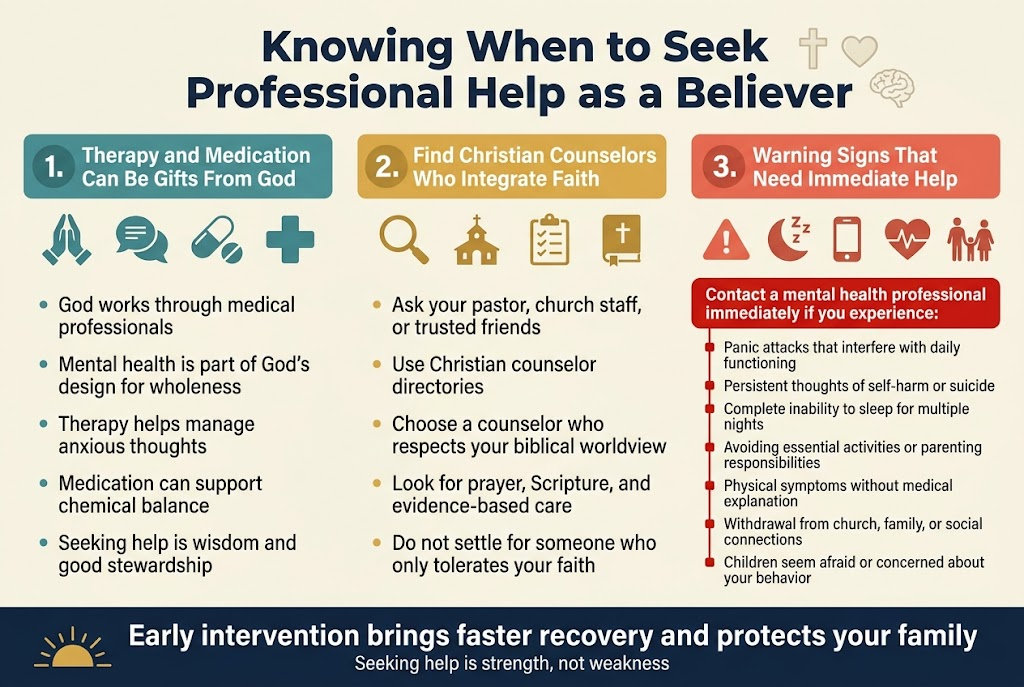
Understand that therapy and medication can be gifts from God
Many Christian moms struggle with guilt when considering professional help for their Christian mom anxiety, believing they should rely solely on prayer and faith. This mindset creates unnecessary barriers to healing and recovery. God works through medical professionals, therapists, and medications just as He works through doctors who treat physical ailments.
The Bible doesn't distinguish between physical and mental health - both are part of God's design for wholeness. When Jesus healed people, He addressed their complete well-being, not just spiritual concerns. Seeking professional help demonstrates wisdom and good stewardship of the mind and body God has given you.
Mental health professionals possess training and expertise that complement your faith journey. Therapy provides tools for managing anxious thoughts, while medication can restore chemical imbalances that contribute to anxiety disorders. These resources don't replace your relationship with God - they support your ability to serve Him more effectively as a mother and believer.
Consider how you wouldn't hesitate to seek medical care for a broken bone or infection. Your mental health deserves the same attention and care. Professional treatment can actually strengthen your faith by removing barriers that prevent you from experiencing God's peace and joy fully.
Find Christian counselors who integrate faith with mental health treatment
Locating the right therapist makes a significant difference in your healing journey. Christian counselors understand the unique challenges faced by believers struggling with anxiety and can address both psychological and spiritual aspects of your experience. They won't dismiss your faith or suggest it's the root of your problems.
Start your search by asking for referrals from your pastor, church staff, or trusted friends who've received Christian counseling. Many churches maintain lists of recommended mental health professionals who share your values and beliefs. Online directories like the American Association of Christian Counselors can help you find qualified professionals in your area.
During initial consultations, ask potential counselors about their approach to integrating faith and therapy. Quality Christian counselors will:
-
Respect and incorporate your biblical worldview
-
Use Scripture alongside evidence-based treatment methods
-
Pray with you during sessions if you're comfortable
-
Help you identify lies anxiety tells and counter them with biblical truth
-
Support your existing spiritual practices while introducing new coping strategies
Don't settle for someone who merely tolerates your faith. You deserve a counselor who celebrates your relationship with God and helps you grow spiritually while addressing your Christian mothers mental health concerns.
Recognize warning signs that require immediate professional intervention
Some anxiety symptoms require urgent professional attention, regardless of your faith background. Recognizing these warning signs protects both you and your family from potentially dangerous situations.
Contact a mental health professional immediately if you experience:
-
Panic attacks that interfere with daily functioning - frequent episodes that prevent you from caring for your children or completing basic tasks
-
Persistent thoughts of self-harm or suicide - any ideation about hurting yourself requires immediate intervention
-
Complete inability to sleep for multiple nights - severe insomnia that leaves you unable to function safely
-
Avoiding essential activities - refusing to leave home, drive, or engage in necessary parenting responsibilities
-
Physical symptoms without medical explanation - chest pain, difficulty breathing, or severe headaches that doctors can't attribute to physical causes
Additional red flags include withdrawal from all social connections, including your church community, or feeling completely hopeless despite prayer and faith-based anxiety management efforts. If your children express concern about your behavior or seem afraid of your reactions, professional help becomes essential.
Remember that seeking emergency mental health care demonstrates strength, not weakness. You're taking responsibility for your well-being and your family's safety. God expects us to use wisdom and available resources - professional intervention often represents His provision for healing during crisis moments.
Don't wait for symptoms to become unbearable. Early intervention typically leads to faster recovery and prevents more serious complications from developing.
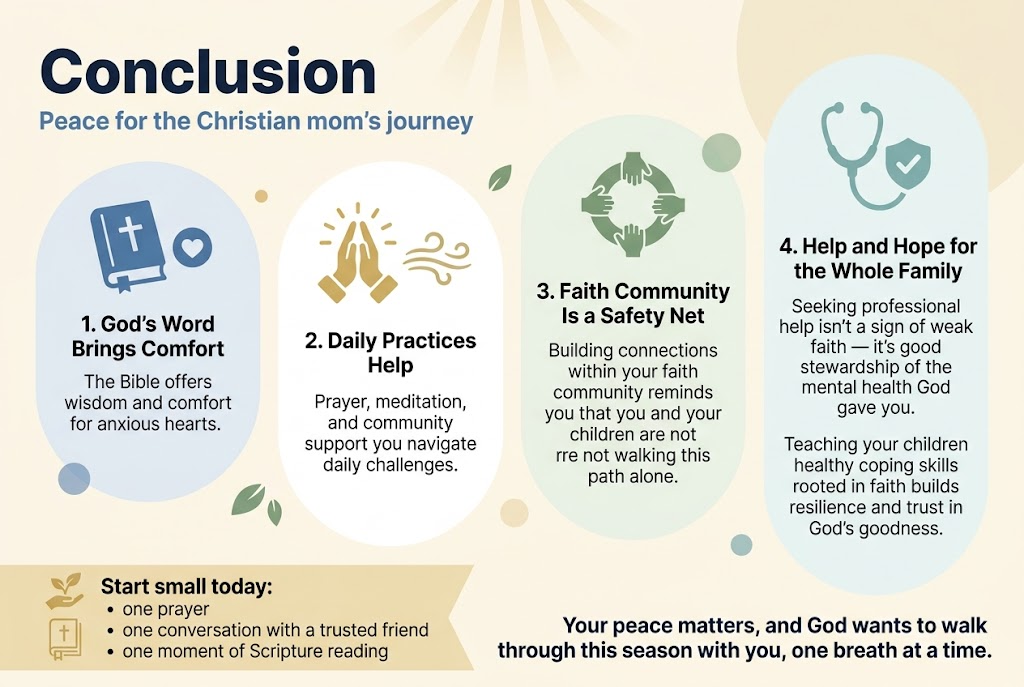
As a Christian mom, anxiety doesn't have to define your journey or steal your peace. The Bible offers wisdom and comfort for anxious hearts, while practical strategies like prayer, meditation, and community support can help you navigate daily challenges. Building connections within your faith community creates a safety net for both you and your children, reminding you that you're not walking this path alone.
Remember that seeking professional help isn't a sign of weak faith – it's actually good stewardship of the mental health God gave you. Teaching your children healthy coping skills rooted in faith sets them up for a lifetime of resilience and trust in God's goodness. Start small today with one prayer, one conversation with a trusted friend, or one moment of Scripture reading. Your peace matters, and God wants to walk through this season with you, one breath at a time.


Comments
Post a Comment