The Significance of Good Friday to Christians
Good Friday holds deep meaning for Christians worldwide as the day Jesus Christ was crucified, making it one of the most significant events in Christian faith. This guide is designed for anyone curious about Good Friday significance—whether you're exploring Christianity for the first time, deepening your own faith, or simply wanting to understand what Good Friday means to Christians around you.
Christ's crucifixion importance goes far beyond a historical event. It represents the cornerstone of Christian beliefs Good Friday centers on: that Jesus willingly died to bridge the gap between humanity and God. This sacrifice forms the foundation of Christian theology and shapes how believers understand forgiveness, love, and redemption.
We'll explore the historical backdrop that led to Jesus' crucifixion and examine the theological foundation of Christ's sacrifice that Christians believe changed everything. You'll also discover how Good Friday traditions and observances help believers commemorate this pivotal moment, and learn about the spiritual impact this day continues to have on Christian living today.
Understanding the Historical Context of Good Friday
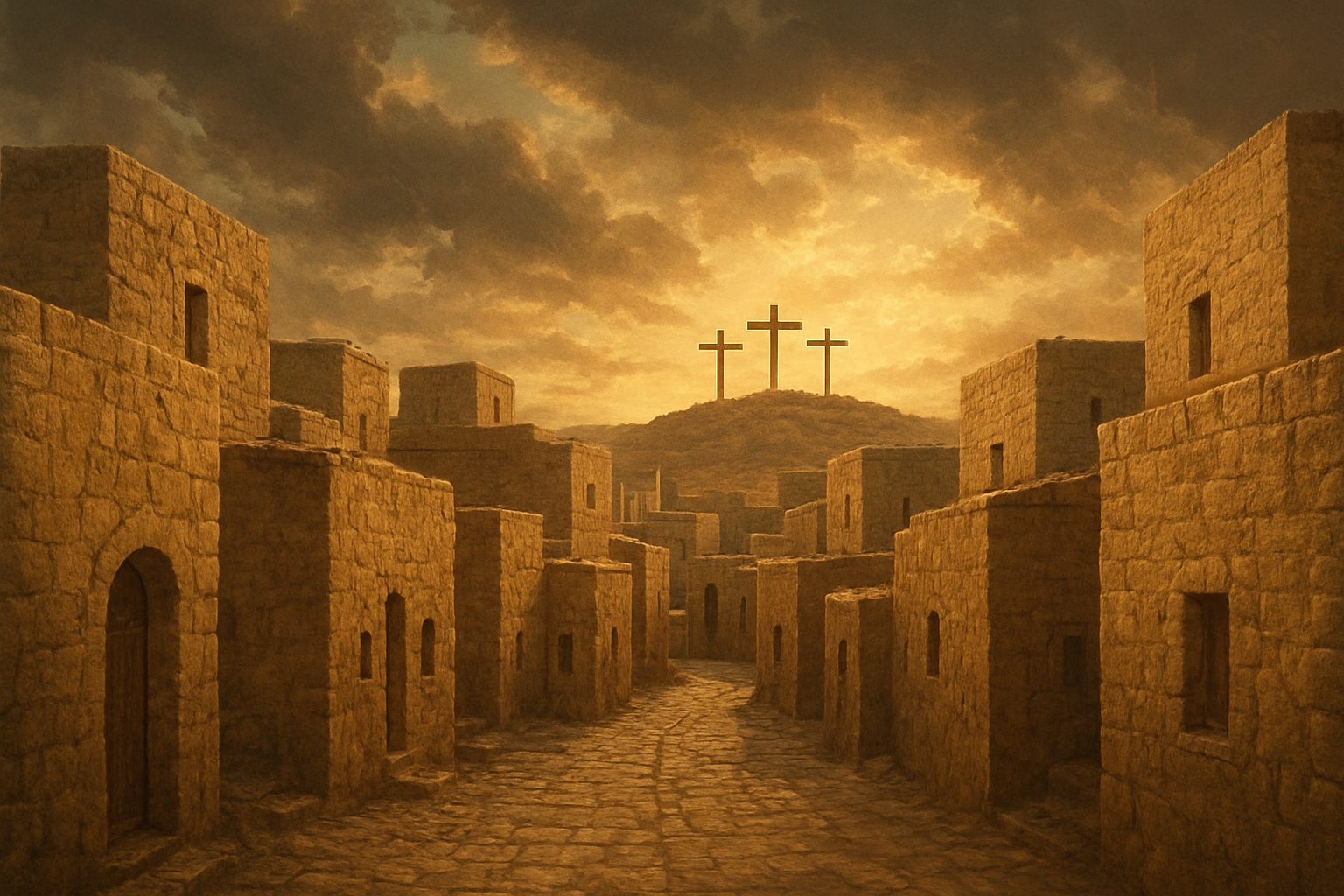
The Events Leading to Jesus Christ's Crucifixion
The week leading up to Christ's crucifixion unfolded with dramatic intensity that would forever change human history. Jesus entered Jerusalem during Passover week, riding on a donkey while crowds shouted "Hosanna" and laid palm branches in his path. This triumphant entry quickly turned controversial as Jesus cleansed the temple, overturning the tables of money changers and driving out merchants who had turned sacred space into a marketplace.
The religious authorities became increasingly alarmed by Jesus's growing influence and bold teachings that challenged their authority. The final catalyst came during the Last Supper, where Judas Iscariot agreed to betray Jesus for thirty pieces of silver. That same evening, Jesus was arrested in the Garden of Gethsemane after an agonizing prayer session where he wrestled with his impending sacrifice.
The trials began immediately - first before the Jewish Sanhedrin, where Jesus was accused of blasphemy for claiming to be the Son of God. The religious leaders then brought him to Pontius Pilate, knowing they needed Roman approval for execution. When Pilate discovered Jesus was from Galilee, he sent him to Herod Antipas, who was visiting Jerusalem. Herod mocked Jesus and sent him back to Pilate, who ultimately succumbed to crowd pressure and ordered the crucifixion despite finding no fault in Jesus.
The Political and Religious Tensions of First-Century Jerusalem
First-century Jerusalem simmered with explosive tensions that created the perfect storm for Christ's crucifixion. The city was under Roman occupation, creating a complex web of competing interests and simmering resentment. Jewish religious leaders walked a precarious tightrope, needing to maintain their authority while avoiding actions that might provoke harsh Roman retaliation.
The Passover season intensified these pressures dramatically. Hundreds of thousands of Jewish pilgrims flooded into Jerusalem, transforming the city into a powder keg of religious fervor and nationalist sentiment. Roman authorities stationed additional troops in the city, knowing that religious festivals often sparked uprisings. Any figure who attracted large crowds or spoke about kingdoms posed a potential threat to the delicate balance of power.
Religious factions added another layer of complexity. The Pharisees, Sadducees, and other groups held different views on collaboration with Rome and interpretation of Jewish law. The Sadducees, who controlled the temple, had the most to lose if their arrangement with Rome was disrupted. They viewed Jesus as a dangerous revolutionary whose teachings about a new covenant threatened both their religious authority and their political survival.
Economic factors also played a crucial role. The temple economy relied heavily on the sacrificial system and currency exchange that Jesus disrupted. His actions directly challenged not just religious practices but the financial foundation that supported the religious establishment and their cooperation with Roman rule.
The Role of Pontius Pilate and Jewish Religious Leaders
Pontius Pilate emerges from the crucifixion accounts as a complex figure caught between political expediency and personal conviction. As Roman governor, his primary concern was maintaining order and preventing any uprising that might threaten his position or bring imperial displeasure. Historical records describe Pilate as harsh and uncompromising, yet the Gospel accounts show him reluctant to execute Jesus, finding no legal basis for the charges.
The Jewish religious leaders orchestrated a carefully planned strategy to eliminate what they saw as the Jesus threat. The Sanhedrin, led by High Priest Caiaphas, concluded that Jesus must die to preserve the nation. Their reasoning was brutally practical - better for one man to die than for the entire nation to suffer Roman wrath. They knew that charges of blasphemy wouldn't interest Pilate, so they reframed their accusations around sedition and treason, claiming Jesus opposed paying taxes to Caesar and declared himself a king.
The interaction between Pilate and the religious leaders reveals the intricate dance of first-century politics. The religious authorities needed Roman approval for execution, while Pilate needed their cooperation to maintain stability. When Pilate offered to release Jesus during the customary Passover amnesty, the religious leaders had already prepared the crowd to demand Barabbas instead.
The religious leaders' manipulation of the crowd demonstrates their understanding of mob psychology and political theater. They transformed a population that had welcomed Jesus days earlier into a frenzied group demanding his death. This shift shows both the volatile nature of public opinion and the powerful influence these leaders wielded over ordinary people through their religious authority and political connections.
The Theological Foundation of Christ's Sacrifice

The Concept of Atonement for Humanity's Sins
The crucifixion represents Christianity's central answer to humanity's fundamental problem: the separation between a holy God and sinful people. Christ's crucifixion importance lies in bridging this gap through the theological concept of atonement, which literally means "at-one-ment" or reconciliation.
Christians believe that sin creates a debt that humans cannot pay on their own. The penalty for sin, according to biblical teaching, is spiritual death and eternal separation from God. Christ's death on Good Friday serves as the payment for this debt, satisfying divine justice while demonstrating divine mercy. This substitutionary sacrifice means Jesus took upon himself the punishment that rightfully belonged to all humanity.
The atonement works through several key mechanisms that theologians have identified throughout church history:
-
Substitution: Jesus died in place of sinners
-
Satisfaction: His death satisfied God's justice requirements
-
Redemption: His sacrifice purchased freedom from sin's bondage
-
Propitiation: His blood turned away God's wrath against sin
Fulfillment of Old Testament Prophecies and Symbolism
The Good Friday significance becomes even more profound when viewed through the lens of Old Testament prophecies and sacrificial systems. Christians see Jesus' crucifixion as the culmination of centuries of prophetic preparation and symbolic foreshadowing.
Isaiah 53 stands as perhaps the most striking prophetic description of Christ's suffering, written approximately 700 years before the crucifixion. The passage describes a suffering servant who "was pierced for our transgressions" and "crushed for our iniquities." The detailed parallels between this prophecy and the events of Good Friday strengthen Christian conviction about the divine orchestration of salvation.
The Old Testament sacrificial system also provides rich symbolism that Christians believe finds its ultimate fulfillment in Christ's death:
| Old Testament Symbol | Fulfillment in Christ |
|---|---|
| Passover Lamb | Jesus as the Lamb of God |
| Day of Atonement | Christ's once-for-all sacrifice |
| Temple Curtain | Barrier between God and humanity torn |
| High Priest | Jesus as eternal High Priest |
The Significance of Jesus as the Perfect Sacrifice
Christian sacrifice theology emphasizes that Jesus represented the only adequate sacrifice for sin because of his unique qualifications. Unlike the repeated animal sacrifices of the Old Testament, which could only temporarily cover sin, Christ's sacrifice accomplished permanent redemption.
Jesus qualified as the perfect sacrifice through several essential characteristics:
His sinlessness made him the unblemished offering that God required. As both fully God and fully human, he possessed the moral perfection necessary to bear the sins of others without being contaminated by his own guilt.
His divine nature gave infinite value to his sacrifice. While human beings could die for their own sins, only someone with divine nature could bear the collective weight of all humanity's sin. The God-man could accomplish what no mere human could achieve.
His voluntary submission demonstrated that this sacrifice was not imposed upon an unwilling victim but freely chosen. Jesus willingly laid down his life, making his death a genuine sacrifice rather than mere execution.
God's Love Demonstrated Through Ultimate Sacrifice
The crucifixion reveals the depths of divine love in ways that resonate powerfully with Christian believers. Good Friday meaning Christianity encompasses this demonstration of sacrificial love that goes beyond human comprehension.
God's love appears most clearly in the willingness to sacrifice what was most precious—his own Son—for the sake of rebellious humanity. This wasn't a distant, detached rescue operation but a deeply personal act of self-giving love. The Father didn't spare his beloved Son but gave him up for people who were still enemies.
The cross also demonstrates love's costliness. True love doesn't minimize problems or pretend that reconciliation can happen without addressing real wrongs. Instead, God's love faced the full reality of human sin and absorbed its consequences. The suffering of Good Friday shows that forgiveness came at an enormous price, making it both freely given and incredibly valuable.
This ultimate sacrifice transforms how Christians understand both God's character and human worth. If God was willing to pay such a price for human redemption, it reveals both the severity of sin and the incredible value God places on each person. The Jesus death significance lies not just in what it accomplished but in what it reveals about divine love that stops at nothing to restore broken relationships.
Core Christian Beliefs Centered on Good Friday

Salvation through Christ's death on the cross
The heart of Christian faith rests on the belief that Jesus Christ's death on the cross serves as the ultimate sacrifice for humanity's sins. Christians understand that all people have fallen short of God's perfect standard, creating a separation that no human effort can bridge. Christ's crucifixion represents God's solution to this problem - offering His own son as payment for the sins of the world.
This concept of substitutionary atonement means Jesus took upon himself the punishment that humanity deserved. The cross becomes the meeting point where God's justice and mercy intersect perfectly. Christians believe that through faith in Christ's sacrifice, individuals receive forgiveness and are declared righteous before God, despite their imperfections.
The Good Friday significance lies in this transformative exchange - Christ's perfect life traded for human brokenness, His death bringing spiritual life to believers. This isn't merely a theological concept but a personal reality that changes how Christians view their relationship with God and their eternal destiny.
Reconciliation between God and humanity
Before Christ's sacrifice, sin created an insurmountable barrier between holy God and fallen humanity. The crucifixion removes this barrier, making peace possible between Creator and creation. Christians see Good Friday as the day when God initiated the ultimate act of reconciliation, not waiting for humanity to make the first move.
This reconciliation works both ways - God's wrath against sin is satisfied through Christ's sacrifice, while humans receive the opportunity to be restored to right relationship with their Creator. The cross demonstrates that God desires relationship with humanity enough to pay the highest possible price.
Christians believe this reconciliation isn't automatic but requires personal acceptance of Christ's sacrifice. The death on Good Friday makes reconciliation available to all, but each person must choose to accept this gift of restored relationship with God.
Victory over sin and death
Good Friday represents the moment when Christ engaged in spiritual warfare against sin and death itself. Though the cross appeared to be defeat, Christians understand it as the decisive victory over the forces that enslaved humanity. Christ's death broke the power of sin to permanently separate people from God.
The crucifixion also conquered death's finality. While physical death remains part of human experience, Christ's sacrifice removed death's ultimate sting - eternal separation from God. Christians believe that through Christ's death, they receive the promise that death is not the end but a transition to eternal life.
This victory gives believers confidence to face both daily struggles with sin and the reality of mortality. The cross provides assurance that neither sin's guilt nor death's threat can ultimately separate them from God's love and eternal purposes.
The path to eternal life for believers
Christ's crucifixion opens the way to eternal life that was previously closed to humanity. Christians believe that eternal life isn't just endless existence but a quality of life characterized by unbroken fellowship with God. This eternal life begins the moment someone accepts Christ's sacrifice and continues forever.
The cross makes eternal life possible by removing the sin barrier that would otherwise exclude people from God's presence. Through Christ's death, believers receive not only forgiveness but also the righteousness needed to stand in God's presence for eternity.
This path to eternal life through Good Friday gives Christians hope that transcends earthly circumstances. Death becomes a doorway rather than a dead end, and present sufferings pale in comparison to the eternal glory that awaits those who trust in Christ's sacrifice.
Good Friday Observances and Traditions
Church services and practices
Churches worldwide transform their worship services during Good Friday to reflect the solemnity of Christ's crucifixion. Many denominations hold special Good Friday services at 3 PM, marking the traditional hour of Jesus's death on the cross. These services often feature scripture readings from the Passion narratives, creating a chronological journey through Christ's final hours.
The Stations of the Cross represents one of the most significant Good Friday traditions and observances. Participants move through fourteen stations, each depicting a moment from Jesus's path to crucifixion. This devotional practice allows Christians to walk alongside Christ in his suffering, deepening their understanding of the sacrifice made for humanity's redemption.
Many churches remove all decorations and cover crosses with black cloth, creating a stark atmosphere that reflects the gravity of the day. Some traditions include the dramatic removal of all items from the altar, symbolizing Christ's abandonment and death. Communion services may be suspended or modified, with some churches offering only bread without wine to represent the broken body of Christ.
Special liturgical elements like the reading of the Passion according to John's Gospel, singing of sorrowful hymns such as "Were You There When They Crucified My Lord," and periods of silence help congregants enter into the emotional and spiritual weight of Christ's sacrifice.
Fasting and prayer customs
Fasting on Good Friday serves as both a spiritual discipline and a way to participate in Christ's suffering. Many Christians abstain from meat, following Catholic tradition, while others choose complete fasting from sunrise to sunset. This physical denial mirrors the spiritual hunger for righteousness and creates space for deeper prayer and reflection.
Prayer practices intensify during Good Friday, with many believers dedicating extended time to intercession and contemplation. Some Christians pray the Seven Last Words of Christ, meditating on each phrase Jesus spoke from the cross. Others engage in prolonged periods of silent prayer, allowing the magnitude of God's love to penetrate their hearts.
Different denominations observe varying fasting customs:
-
Catholic tradition: Abstaining from meat and eating only one full meal
-
Orthodox practice: Strict fasting from all animal products
-
Protestant approach: Personal choices ranging from specific foods to entertainment
-
Anglican custom: Simple meals and increased charitable giving
Prayer groups often gather for extended sessions, sometimes lasting three hours to mirror Christ's time on the cross. These gatherings focus on prayers of gratitude, repentance, and intercession for those who don't know Christ's love.
Reflection and meditation on Christ's suffering
Personal meditation becomes central to Good Friday spiritual impact as Christians contemplate the physical and emotional agony Christ endured. Many believers spend time visualizing the crucifixion scene, not from morbid curiosity, but to grasp the depth of love demonstrated through such sacrifice.
Reading and meditating on Psalm 22, which Jesus quoted on the cross, offers profound insights into his experience. Christians often journal their thoughts and prayers, processing how Christ's death significance applies to their personal relationship with God.
Contemplative practices include:
-
Visual meditation: Using artwork depicting the crucifixion
-
Scripture meditation: Focusing on Passion narratives from all four Gospels
-
Musical reflection: Listening to sacred music like Bach's "St. Matthew Passion"
-
Nature walks: Seeking quiet spaces for uninterrupted contemplation
Many Christians use Good Friday for examining their own lives, acknowledging how sin necessitated Christ's sacrifice. This honest self-reflection often leads to renewed commitment and deeper appreciation for God's grace.
The day provides opportunity to consider the global impact of Christ's death, praying for persecuted Christians worldwide and those who haven't heard the Gospel message. This broadens personal reflection into worldwide concern and missionary passion.
The Transformational Impact on Christian Living
Embracing Sacrificial Love in Daily Relationships
Christ's example on the cross shows us what true love looks like - putting others before ourselves, even when it costs us something. This transforms how Christians approach their relationships, from marriage and parenting to friendships and interactions with strangers.
When we grasp the depth of Jesus's sacrifice, petty arguments with our spouse suddenly seem less important. We start asking ourselves, "How can I serve my partner today?" rather than "What's in it for me?" Parents find strength to sacrifice their own comfort for their children's wellbeing, remembering that Christ gave His life for them.
The cross teaches us to:
-
Listen more than we speak in conflicts
-
Forgive quickly because we've been forgiven
-
Give generously of our time, resources, and energy
-
Show patience with difficult people
-
Put others' needs ahead of our own comfort
This kind of love isn't natural - it comes from understanding what Christ did for us. When someone cuts us off in traffic or a coworker takes credit for our work, we remember that Jesus died for that person too. The Good Friday significance becomes real in these everyday moments when we choose love over revenge, service over selfishness.
Finding Hope and Comfort During Personal Struggles
Life hits hard sometimes. Job loss, health crises, broken relationships, and unexpected tragedies can leave us feeling abandoned and hopeless. But Good Friday offers Christians a unique perspective on suffering - we serve a God who understands pain firsthand.
Jesus didn't live in a bubble of divine protection. He experienced rejection, betrayal, physical agony, and the feeling of being forsaken. When we're walking through our darkest valleys, we can look to the cross and know we're not alone. Our Savior has been there too.
Christians find comfort in several truths from Good Friday:
-
God uses suffering for good purposes - even the worst day in history led to salvation
-
Pain is temporary - Friday's crucifixion led to Sunday's resurrection
-
We're never abandoned - if God was with Jesus in death, He's with us in our struggles
-
Our struggles have meaning - they can deepen our faith and help us comfort others
During cancer treatments, job searches, or grieving losses, believers often say the cross becomes more precious to them. They understand in new ways what Christ endured and find strength they didn't know they had. The crucifixion and resurrection meaning becomes deeply personal when we need hope most.
Developing Gratitude for God's Grace and Mercy
Good Friday shatters any sense of entitlement Christians might have. Standing at the foot of the cross, we realize we deserved what Jesus received - separation from God because of our sin. Instead, He took our place and we received His righteousness. This creates an overwhelming sense of gratitude that changes everything.
Grateful Christians complain less and appreciate more. They see every blessing - from morning coffee to loving families - as undeserved gifts. This gratitude isn't just a nice feeling; it reshapes how believers live daily life.
Areas where gratitude transforms Christian living:
| Before Understanding Grace | After Grasping God's Mercy |
|---|---|
| Taking blessings for granted | Recognizing every gift as unearned |
| Complaining about circumstances | Finding reasons to be thankful |
| Demanding rights | Amazed by privileges |
| Comparing with others | Grateful for personal journey |
When we truly understand that we deserved death but received life, deserved condemnation but received acceptance, deserved rejection but received adoption - how can we not be grateful? This gratitude makes Christians some of the most content people on earth, not because they have everything they want, but because they have everything they need in Christ.
Strengthening Faith Through Understanding Christ's Sacrifice
The more Christians study and reflect on what happened on Good Friday, the stronger their faith becomes. This isn't blind faith - it's faith built on the solid foundation of understanding God's character and His incredible love for humanity.
When doubts creep in (and they do for most believers), the cross provides anchoring truth. If God loved us enough to sacrifice His Son, can we trust Him with our daily concerns? If Jesus willingly endured crucifixion for our sake, will He abandon us now? The Christian sacrifice theology answers these questions with a resounding "No."
How Good Friday strengthens faith:
-
Proves God's love is real - actions speak louder than words
-
Demonstrates God's power - death couldn't hold Jesus
-
Shows God keeps His promises - centuries of prophecy fulfilled
-
Reveals God's justice and mercy - sin was punished, sinners were saved
-
Confirms God's involvement - He didn't stay distant but entered our pain
Understanding Christ's sacrifice also helps Christians make sense of unanswered prayers and difficult circumstances. If God allowed His own Son to suffer for a greater purpose, maybe our current struggles serve a purpose too. This doesn't make pain pleasant, but it makes it bearable and meaningful.
The Good Friday spiritual impact grows deeper with time and study. New believers might focus on the forgiveness aspect, while mature Christians often find themselves amazed by the planning, the prophecies, and the perfect timing of God's redemptive plan. Each Easter season brings fresh insights into the crucifixion's significance, strengthening faith for another year of following Christ.

Good Friday stands as the cornerstone of Christian faith, marking the day Jesus Christ sacrificed his life on the cross for humanity's redemption. This profound act of love continues to shape how believers understand salvation, forgiveness, and their relationship with God. From the historical events in Jerusalem to the deep theological truths they represent, Good Friday reminds Christians that their faith is built on the ultimate sacrifice made out of divine love.
The traditions and observances surrounding this holy day help believers connect with the gravity of Christ's suffering while celebrating the hope it brings. Whether through solemn church services, personal reflection, or acts of service to others, Good Friday calls Christians to live differently. It challenges them to embrace forgiveness, show compassion, and find meaning in their own struggles by remembering the cross where love triumphed over death.


Comments
Post a Comment