The Significance of the Empty Tomb
.png)
The Significance of the Empty Tomb: Why This Ancient Event Still Matters Today
The empty tomb significance goes far beyond a single moment in history—it represents the cornerstone of Christian faith and continues to spark debate among scholars, believers, and skeptics alike. This examination is written for anyone seeking to understand the resurrection evidence and its lasting impact, whether you're exploring Christianity for the first time, strengthening existing beliefs, or simply curious about one of history's most discussed events.
The empty tomb biblical account offers more than just a religious story. Archaeological discoveries, historical documentation, and the dramatic transformation of Jesus' followers provide compelling reasons to take this event seriously. We'll examine the historical proof of Jesus resurrection through multiple lenses, exploring how ancient sources and modern scholarship intersect.
You'll discover how the disciples transformation after resurrection created a movement that changed the world, why alternative theories empty tomb consistently fail to explain the available evidence, and what the theological implications resurrection hold for understanding life, death, and human purpose. Finally, we'll explore how these ancient truths translate into practical meaning for today's believers and seekers.
Historical Evidence Supporting the Empty Tomb Account
Multiple Independent Gospel Testimonies Confirm the Discovery
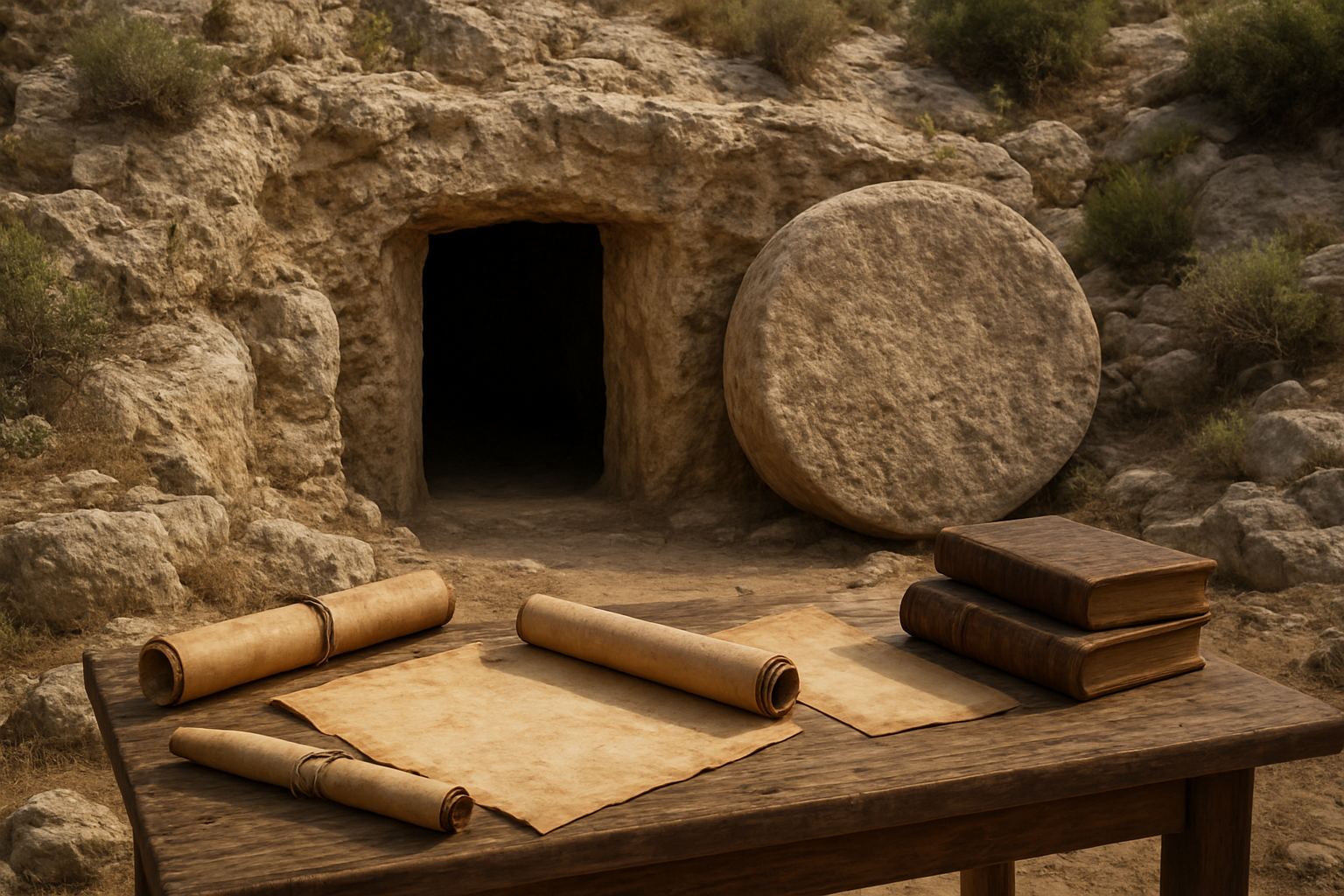
The empty tomb significance becomes clear when examining the Gospel accounts, which show remarkable consistency despite being written by different authors for different audiences. Matthew, Mark, Luke, and John all record the discovery of the empty grave, with women being the first witnesses in each account. This detail actually strengthens the historical proof of Jesus resurrection because women's testimony held little legal weight in first-century Jewish culture. If the writers wanted to fabricate a story, they would have chosen male witnesses instead.
The Gospel writers preserve specific details that ring true to historical investigation. They mention the burial cloths left behind, the stone rolled away, and the specific women who made the discovery. These particulars vary slightly between accounts, which historians recognize as a sign of authentic eyewitness testimony rather than coordinated fiction.
Each Gospel also records the initial disbelief and confusion of the disciples upon hearing the news. This psychological realism adds credibility to the resurrection evidence, as fabricated stories typically portray heroes responding with immediate faith and confidence.
Early Church Records Validate the Timeline of Events
Paul's letters, written within two decades of the crucifixion, reference the resurrection as established fact among Christian communities. His first letter to the Corinthians includes what scholars believe is an early Christian creed dating to within five years of Jesus's death. This creed specifically mentions the burial and resurrection, providing a timeline that leaves little room for legendary development.
The Acts of the Apostles documents the apostles' preaching in Jerusalem within weeks of the crucifixion, boldly proclaiming the empty tomb biblical account to the very people who could have contradicted them. The rapid spread of Christianity in Jerusalem, where the tomb was located, becomes difficult to explain if the body remained in the grave.
Early church fathers like Clement of Rome and Ignatius of Antioch, writing in the late first and early second centuries, treat the resurrection as historical fact rather than theological speculation. Their writings show that belief in the empty tomb was widespread and uncontested among Christian communities from the earliest days.
Archaeological Findings Support First-Century Burial Practices
Archaeological discoveries around Jerusalem confirm the Gospel descriptions of Jewish burial customs during Jesus's time. Rolling stone tombs, exactly like the one described in the biblical accounts, have been excavated throughout the region. These tombs typically belonged to wealthy families, matching Joseph of Arimathea's profile as described in the Gospels.
The discovery of crucifixion victims' remains, including the famous Yehohanan inscription, proves that Romans did occasionally release bodies of executed criminals to families for burial. This contradicts claims that Jesus's body would have been thrown into a common grave.
Limestone ossuaries found in first-century Jerusalem show the Jewish practice of collecting bones after decomposition, which explains why the tomb needed to be sealed and guarded. The temporary nature of these tombs makes the missing body even more significant, as family members would have returned within a year to collect the remains.
Roman and Jewish Sources Acknowledge the Missing Body
Even hostile sources acknowledge something unusual happened to Jesus's body. The Gospel of Matthew records that Jewish leaders spread the story that disciples stole the corpse, which actually confirms the tomb was empty - they never claimed the body was still there.
Roman historian Tacitus mentions Jesus's execution under Pontius Pilate and the subsequent spread of Christianity, showing awareness of the resurrection claims within Roman administrative circles. While he doesn't endorse the resurrection, his account shows the movement's impact on the empire.
Justin Martyr, writing in the second century, references ongoing Jewish explanations for the missing body, suggesting the empty tomb remained a point of contention requiring explanation from critics. The fact that opponents felt compelled to provide alternative theories demonstrates they couldn't simply point to an occupied grave to refute Christian claims.
The Disciples' Transformation After Discovering the Empty Tomb
From Fear and Hiding to Bold Public Proclamation
The contrast between the disciples before and after the resurrection discovery is nothing short of remarkable. Just days earlier, these same men had scattered when Jesus was arrested, with Peter famously denying he even knew Christ three times. They huddled behind locked doors, terrified the authorities would come for them next. Yet something dramatically changed their entire demeanor and approach to life.
Within weeks of discovering the empty tomb, these formerly cowering followers became unstoppable evangelists. Peter, who had been too frightened to admit his association with Jesus to a servant girl, stood boldly before thousands on Pentecost and proclaimed the resurrection with unwavering confidence. The disciples transformation after resurrection became the foundation of their ministry, as they openly declared what they had witnessed despite knowing the dangerous consequences.
This shift wasn't gradual or uncertain - it was immediate and absolute. Men who had spent years with Jesus but still struggled with doubt suddenly possessed unshakeable conviction. They abandoned their fishing nets, tax collecting booths, and comfortable lives to spread a message they knew would bring them nothing but trouble. The empty tomb significance had become so real to them that fear no longer controlled their decisions.
Willingness to Face Persecution and Death for Their Beliefs
The disciples didn't just talk about their beliefs - they died for them. History records that most of the apostles faced brutal executions rather than recant their testimony about the resurrection. This isn't the behavior of people perpetuating a lie or clinging to wishful thinking.
People might die for what they believe to be true, but they won't typically die for what they know to be false. The disciples claimed to be eyewitnesses, not just believers. They insisted they had seen, touched, and eaten with the risen Christ. When faced with imprisonment, beatings, and death, they maintained their testimony.
James was executed by Herod around 44 AD. Peter was crucified upside down in Rome. Paul, despite his former life of comfort and prestige as a Pharisee, endured countless hardships including imprisonments, beatings, and eventual martyrdom. These weren't naive or gullible individuals - they were practical people who understood the cost of their claims yet refused to back down.
The persecution began almost immediately after they started preaching. The same religious authorities who had crucified Jesus turned their attention to his followers. Yet instead of discouraging the disciples, opposition seemed to strengthen their resolve. They viewed their suffering as confirmation rather than contradiction of their message.
Rapid Growth of the Early Christian Movement
The explosion of Christianity in its first decades defies conventional explanation. Starting with a small group of discouraged followers in Jerusalem, the movement spread throughout the Roman Empire with unprecedented speed. This growth occurred despite active opposition from both religious and political authorities.
Luke records that three thousand people joined the church on the day of Pentecost alone, just weeks after Jesus's crucifixion. The resurrection evidence presented by the disciples proved compelling enough to convince thousands of Jews - people who understood the radical nature of the claims being made about their crucified Messiah.
The movement's growth wasn't limited to Jerusalem or even to Jewish populations. Within a generation, Christian communities had been established throughout the Mediterranean world. Paul's missionary journeys document the establishment of churches across modern-day Turkey, Greece, and beyond. This expansion happened through personal testimony and word-of-mouth, not through military conquest or political power.
The early church faced significant obstacles: their leader had been executed as a criminal, their message challenged both Jewish and pagan worldviews, and they offered no earthly benefits to potential converts. Yet people continued joining despite these barriers. The disciples' unwavering testimony about what they had experienced at the empty tomb provided the catalyst for this remarkable transformation of the ancient world.
| Before the Empty Tomb | After the Empty Tomb |
|---|---|
| Hiding in fear | Public proclamation |
| Denying association with Jesus | Boldly claiming to be his followers |
| Uncertain about Jesus's identity | Proclaiming him as risen Lord |
| Self-preservation focus | Willing to die for their beliefs |
| Small, discouraged group | Growing, confident movement |
Alternative Explanations Fall Short Under Scrutiny
The Stolen Body Theory Cannot Explain the Disciples' Courage
Critics often suggest that Jesus' disciples secretly stole his body from the tomb, creating an elaborate hoax about resurrection. This theory crumbles when we examine the dramatic behavioral changes in the disciples themselves. Before the resurrection accounts, these same men had fled in terror when Jesus was arrested. Peter even denied knowing Jesus three times to save his own skin.
Yet suddenly, these frightened followers became bold preachers willing to die for their message. They faced imprisonment, torture, and execution rather than recant their testimony about the empty tomb. This transformation makes no sense if they knew they had stolen the body. People don't typically choose martyrdom to protect a lie they created, especially when admitting the truth could save their lives.
The psychological impossibility becomes even clearer when considering group dynamics. Maintaining a conspiracy among twelve disciples, plus other early witnesses, would have required extraordinary coordination. Human nature tells us that someone would have broken under pressure, especially when facing death. The fact that not one disciple ever confessed to body theft, even under extreme persecution, strongly suggests they genuinely believed in what they proclaimed about the resurrection evidence.
Hallucination Theories Fail to Account for Multiple Witnesses
Some skeptics propose that the resurrection appearances were simply hallucinations experienced by grief-stricken followers. While this might explain individual experiences, it completely fails to address the multiple, varied encounters described in the biblical account.
Hallucinations are deeply personal, subjective experiences that don't occur simultaneously to groups. Yet the Gospels record Jesus appearing to multiple people at once - sometimes to small groups, other times to hundreds. Paul specifically mentions Jesus appearing to over 500 people at one time, challenging readers to verify this claim with living witnesses.
The diversity of these encounters also contradicts hallucination theories. Different people reported seeing Jesus in various locations, at different times, and under different circumstances. Some were expecting to see him, others were not. The disciples on the road to Emmaus didn't even recognize Jesus at first. Thomas demanded physical proof before believing. These varied responses don't match the patterns typically seen in mass psychological phenomena.
Medical research shows that hallucinations usually occur in people predisposed to such experiences, often during times of high emotional stress or religious fervor. However, the Gospel accounts include skeptics like Thomas and even former enemies like James, Jesus' brother, who initially didn't believe in his ministry but later became a church leader after claiming to see the risen Christ.
Wrong Tomb Claims Ignore the Involvement of Authorities
Another alternative explanation suggests that the women and disciples simply went to the wrong tomb on Easter morning, finding it empty and mistakenly concluding Jesus had risen. This theory demonstrates a fundamental misunderstanding of first-century burial practices and the political situation surrounding Jesus' death.
Jewish burial customs were extremely specific and carefully observed. Family tombs were well-known locations, often marked and visited regularly. Joseph of Arimathea, a member of the Sanhedrin, had provided his own new tomb for Jesus' burial. The idea that close followers would lose track of such a significant location within three days strains credibility.
More importantly, this theory ignores the active involvement of both Jewish and Roman authorities in monitoring Jesus' burial site. The religious leaders had specifically requested a Roman guard for the tomb, fearing that disciples might steal the body. These officials knew exactly where Jesus was buried and had every motivation to produce the body when resurrection claims began spreading.
When the disciples started preaching about the empty tomb significance just weeks later in Jerusalem, the authorities could have easily directed people to the correct tomb if there had been any confusion. Instead, they offered bribes to guards and tried to suppress the message through persecution. Their actions reveal they couldn't produce Jesus' body, not that there was confusion about location.
The involvement of multiple parties - family members, religious leaders, Roman officials, and guards - makes the wrong tomb theory practically impossible. These weren't confused tourists in an unfamiliar city; they were locals dealing with a highly monitored burial that had significant political implications.
Theological Implications That Transform Human Understanding
Victory Over Death Offers Hope for Eternal Life
The empty tomb stands as Christianity's boldest claim against humanity's greatest enemy: death itself. When Jesus walked out of that tomb, He didn't just prove His divine nature—He shattered the very foundation of human despair. Death, which had ruled over every person who ever lived, suddenly lost its grip.
This victory carries profound implications for how we understand our own mortality. The resurrection evidence doesn't just tell us about a historical event; it opens up an entirely new reality where death becomes a doorway rather than a dead end. Christians find comfort knowing that the grave couldn't hold their Savior, which means it won't hold them either.
The theological weight of this truth transforms how believers approach life's most difficult moments. Grief, while still painful, takes on a different character when viewed through the lens of the empty tomb. The promise of eternal life isn't wishful thinking—it's grounded in the historical reality of Jesus' conquest over death.
Divine Validation of Jesus' Claims About His Identity
Throughout His ministry, Jesus made extraordinary claims about who He was. He declared Himself the Son of God, claimed to have existed before Abraham, and promised to rise from the dead on the third day. These weren't the words of a typical rabbi or prophet—they were the assertions of someone claiming divine authority.
The empty tomb serves as God's stamp of approval on every one of these claims. When Jesus predicted His resurrection, He essentially put His entire ministry on the line. If the tomb remained sealed, His credibility would have crumbled along with His followers' faith. But the empty tomb biblical account shows us that God vindicated His Son in the most dramatic way possible.
This divine validation extends beyond just proving Jesus was who He claimed to be. It confirms His teachings about salvation, His authority to forgive sins, and His role as the bridge between humanity and God. The resurrection becomes God's "Yes" to everything Jesus taught and represented.
Foundation for Christian Faith and Salvation
Without the empty tomb, Christianity collapses completely. Paul understood this when he wrote that if Christ wasn't raised from the dead, Christian faith would be worthless and believers would still be trapped in their sins. The empty tomb significance reaches into every corner of Christian theology because it validates the entire gospel message.
The resurrection proves that Jesus' sacrifice on the cross actually accomplished what He claimed it would. His death wasn't just the tragic end of a good teacher—it was the payment for human sin that opened the way to reconciliation with God. The empty tomb confirms that this payment was accepted and that the debt has been canceled.
Christian salvation rests entirely on this foundation. Without the resurrection, Jesus would be just another failed messianic figure, and His followers would have no basis for claiming He could save anyone. But the empty tomb transforms the cross from an apparent defeat into the greatest victory in human history.
Promise of Bodily Resurrection for All Believers
The theological implications resurrection brings include a stunning promise: what happened to Jesus will happen to every believer. This isn't just about souls going to heaven—it's about the complete restoration of human beings, body and soul, for eternity.
Paul calls Jesus "the firstfruits" of the resurrection, meaning He's the first of many to experience this transformation. The empty tomb gives believers confidence that their own bodies, regardless of how they die or what happens to them after death, will be raised and perfected just like Jesus' was.
This promise addresses one of humanity's deepest fears: the apparent finality and futility of physical death. The empty tomb shows that God values the entire human person—not just the spiritual aspects. Our bodies matter to Him, which is why He promises to resurrect and perfect them. This truth gives profound dignity to human life and hope for the future that extends far beyond anything this world can offer.
Personal Applications for Modern Believers
Assurance of Forgiveness Through Christ's Sacrifice
The empty tomb stands as Christianity's ultimate proof that death couldn't hold Jesus, and this victory directly impacts how believers understand forgiveness. When Christians grasp the empty tomb significance, they discover that their sins aren't just covered up or temporarily ignored—they're completely wiped away. The resurrection validates Jesus' payment for humanity's moral debt, creating an unshakeable foundation for divine forgiveness.
This assurance runs deeper than positive thinking or wishful hoping. The resurrection meaning for believers transforms guilt from a crushing burden into a resolved issue. Past mistakes, current struggles, and moral failures lose their power to separate people from God's love. The empty tomb proves that Jesus' sacrifice was sufficient, complete, and eternally effective.
Many believers struggle with persistent guilt despite intellectually knowing about forgiveness. The resurrection addresses this by providing concrete evidence that God accepted Christ's payment. The tomb remained empty because death had no claim on the sinless Jesus—and by extension, it has no ultimate claim on those united with him through faith.
Confidence in Facing Life's Challenges and Mortality
Life throws curveballs that can devastate even the strongest people. Job loss, broken relationships, health crises, and the inevitable approach of death create anxiety that can paralyze decision-making and steal joy. The empty tomb offers believers a different perspective on these universal human experiences.
The resurrection demonstrates God's power over the worst possible scenario—death itself. If Jesus conquered the grave, then no earthly challenge exceeds divine capability. This doesn't mean believers become immune to pain or hardship, but they gain confidence that their current struggles aren't the final word on their story.
Facing mortality becomes less terrifying when the empty tomb validates Jesus' promise of eternal life. Death transforms from a terrifying ending into a doorway to something better. This perspective helps believers make decisions based on eternal values rather than temporary circumstances. They can take reasonable risks, serve others sacrificially, and maintain hope during dark seasons because the resurrection proves that God's love and power triumph over every form of destruction.
Motivation for Living with Purpose and Meaning
The empty tomb doesn't just offer comfort for difficult times—it provides compelling reasons for purposeful living. When believers understand that Jesus rose from the dead, they realize their earthly existence carries eternal significance. Daily choices, relationships, and activities matter because they occur within God's larger redemptive story.
This resurrection evidence motivates believers to live generously, love deeply, and serve actively. Knowing that death doesn't end their story, they can invest in things that outlast earthly life: relationships, character development, and spiritual impact on others. The empty tomb validates that their efforts to reflect Christ's love will have lasting consequences beyond what they can see.
The resurrection also provides clarity about life's priorities. Temporary pleasures and achievements pale in comparison to the eternal reality that Jesus' empty tomb represents. Believers find motivation to pursue justice, show compassion, and share hope because they understand these actions align with the character of the God who conquered death. Their purpose extends beyond personal happiness or success to participation in God's ongoing work of restoration and redemption.
The empty tomb stands as one of history's most compelling mysteries, backed by solid historical evidence and witnessed by people whose lives were completely transformed. The disciples went from hiding in fear to boldly proclaiming their message, even when it cost them everything. When we examine alternative explanations like theft or hallucinations, they simply don't hold up against the facts we have.
This event changes everything about how we view life, death, and our relationship with God. For believers today, the empty tomb offers hope that death isn't the end and gives us a reason to live with purpose and courage. The same power that raised Jesus from the dead is available to transform our daily lives, relationships, and the way we face our biggest challenges.


Comments
Post a Comment