The Easter Story: From the Cross to the Empty Tomb
.png)
The Easter story stands as Christianity's most powerful narrative, tracing Jesus' journey from the crucifixion to his triumphant resurrection. This retelling is perfect for believers seeking to deepen their faith, newcomers exploring Christianity, and anyone curious about the biblical Easter story that transformed history.
You'll discover the raw reality of Jesus' final hours and the Good Friday crucifixion that shocked his followers. We'll walk through the three dark days when hope seemed lost, ending with the Easter Sunday resurrection that changed everything. Finally, we'll explore how Jesus' death and resurrection continues to impact lives today, revealing the Christian Easter meaning that has inspired millions for over two thousand years.
From the cross to the empty tomb, this ancient story still speaks to our modern hearts with the same life-changing power it held centuries ago.
Understanding Jesus' Final Hours Before Crucifixion
The Last Supper's Profound Significance for Believers
The evening before his crucifixion, Jesus gathered with his twelve disciples for what would become known as the Last Supper. This wasn't just another Passover meal - it was a sacred moment that would transform the way believers understand communion with God forever.
During this intimate gathering, Jesus took bread and wine, speaking words that still echo in churches today: "This is my body" and "This is my blood." He was establishing a new covenant, one that would replace the old system of animal sacrifices with his own perfect sacrifice. The disciples didn't fully grasp the weight of these words at the time, but they would remember them after the resurrection brought clarity to everything.
The meal also revealed Jesus' deep knowledge of what was coming. He spoke openly about his betrayal, telling the disciples that one of them would hand him over to the authorities. Peter boldly declared his loyalty, only to hear Jesus predict his denial before the rooster crowed. These predictions weren't meant to discourage but to prepare them for the dark hours ahead.
What makes the Last Supper so significant is how it shows Jesus' heart for his followers. Even knowing he faced torture and death, he focused on giving them something to remember him by - a simple meal that would become the foundation of Christian communion worldwide.
Jesus' Agonizing Prayer in the Garden of Gethsemane
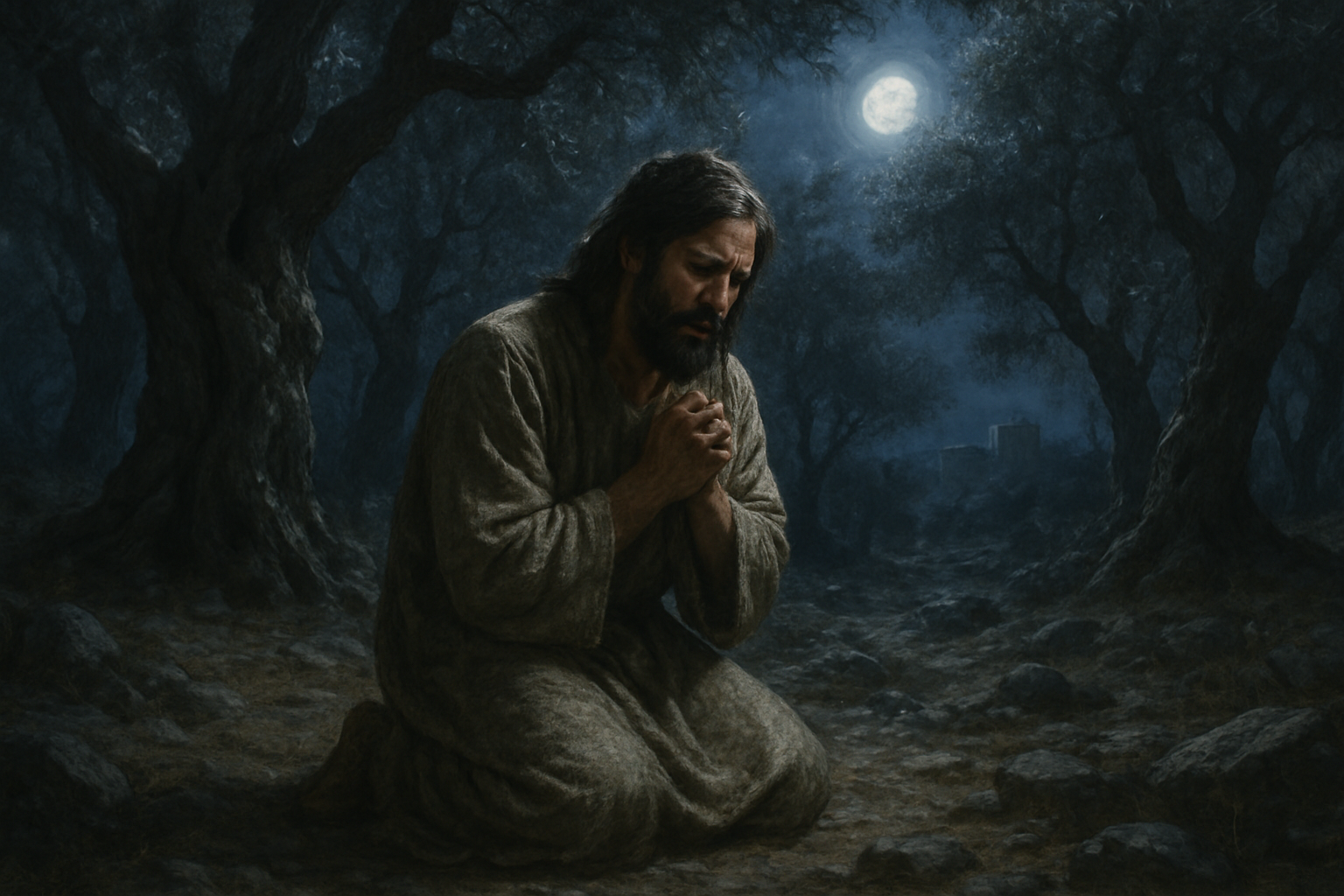
After the Last Supper, Jesus led his disciples to the Garden of Gethsemane, where the weight of what lay ahead pressed down on him like never before. This wasn't just nervousness about physical pain - Jesus was about to bear the sin of all humanity, something that would temporarily separate him from his Father for the first time in eternity.
The Gospels describe Jesus' emotional state with raw honesty. He told his closest disciples, "My soul is overwhelmed with sorrow to the point of death." This wasn't weakness - it was the natural human response of someone fully aware of the cosmic battle about to unfold. Jesus fell face-down on the ground, praying with such intensity that his sweat became like drops of blood.
His prayer reveals the perfect balance of his human and divine nature. As a man, he asked if there might be another way: "Father, if you are willing, take this cup from me." But as the obedient Son, he submitted completely: "Yet not my will, but yours be done." This wasn't Jesus changing his mind about the cross - it was him wrestling with the human reality of what lay ahead while maintaining perfect trust in the Father's plan.
The disciples, exhausted from the emotional evening, kept falling asleep despite Jesus asking them to stay awake and pray. Their failure to support him in this crucial hour shows how alone Jesus was in carrying the burden of salvation. Even his closest friends couldn't stay alert during his darkest moment.
The Betrayal and Arrest That Changed Everything
While Jesus prayed, Judas was already making his way to the garden with a crowd of soldiers and religious leaders. The betrayal wasn't spontaneous - it was calculated and deliberate. Judas had accepted thirty pieces of silver to identify Jesus with a kiss, turning an expression of love and respect into a signal for arrest.
When the crowd arrived with torches, weapons, and official authority, Jesus didn't run or hide. Instead, he stepped forward and asked, "Who is it you want?" When they answered, "Jesus of Nazareth," he replied, "I am he" - words so powerful that the entire crowd fell backward to the ground. Even in his arrest, Jesus demonstrated his divine authority.
Peter, true to his impulsive nature, drew his sword and cut off the ear of the high priest's servant. But Jesus immediately healed the man's ear and told Peter to put away his weapon. "Do you think I cannot call on my Father, and he will at once put at my disposal more than twelve legions of angels?" Jesus asked. He could have escaped, could have called down heaven's armies, but he chose to submit to arrest because it was part of the Father's plan.
The disciples' response was heartbreaking but predictable - they all fled, abandoning Jesus just when he needed them most. The Easter story shows us that even the people closest to Jesus struggled with fear and doubt when the pressure mounted. Yet Jesus willingly walked into captivity, knowing that his arrest was the first step toward the cross and ultimately, the empty tomb that would change everything.
The Crucifixion: God's Ultimate Sacrifice for Humanity
The Physical and Spiritual Agony Jesus Endured
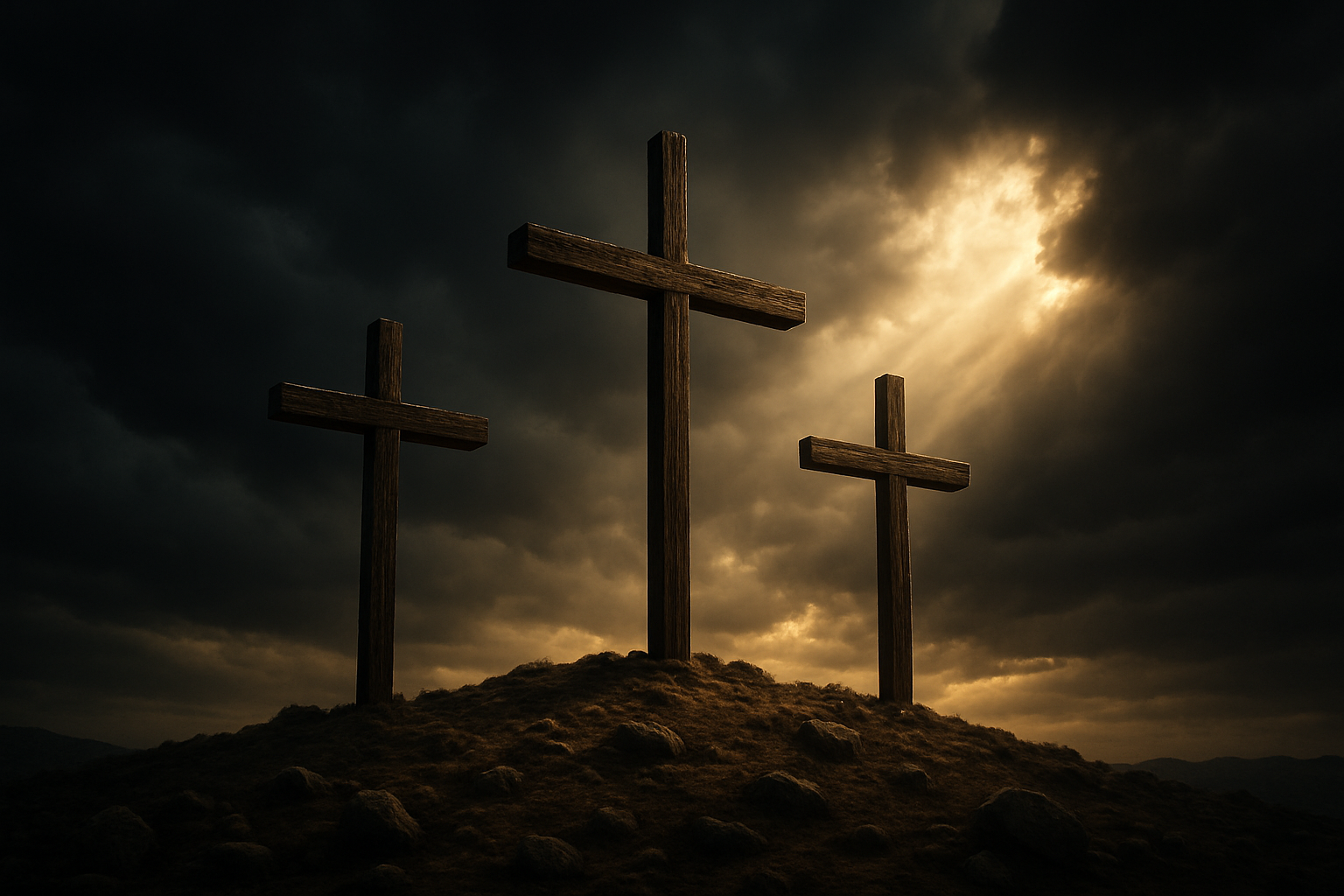
The crucifixion of Jesus represents the darkest moment in human history, where the sinless Son of God bore the weight of humanity's sin. Roman crucifixion was designed to inflict maximum pain and humiliation. Victims were scourged with leather whips embedded with bone and metal fragments, tearing flesh from their backs. Jesus endured this torture before carrying His cross through Jerusalem's streets.
The physical suffering was excruciating. Nails driven through His wrists and feet caused intense nerve damage and blood loss. As His body sagged against the cross, breathing became increasingly difficult. Each breath required pushing up against the nails in His feet, creating a cycle of agony that could last for hours or even days.
Beyond the physical torment lay something infinitely worse - the spiritual anguish of bearing humanity's sin. For the first time in eternity, Jesus experienced separation from His Father as He became sin for us. The weight of every human transgression - past, present, and future - crushed down upon Him. This spiritual darkness explains His cry of abandonment: "My God, my God, why have you forsaken me?"
The Seven Last Words That Reveal Divine Love
The Good Friday crucifixion became a profound display of divine character through Jesus' final statements. Each word reveals His heart even in unimaginable suffering.
His first words, "Father, forgive them, for they do not know what they do," show His compassion for His executioners. Rather than calling down judgment, He interceded for those driving the nails. His conversation with the repentant thief beside Him - "Today you will be with me in paradise" - demonstrates that salvation remains available even in our final moments.
"Woman, behold your son" and "Behold your mother" reveals Jesus' concern for His mother Mary's future care, showing His humanity and responsibility even while dying. His cry "My God, my God, why have you forsaken me?" expresses the depth of His spiritual suffering as He bore our sin.
"I thirst" shows His physical humanity, while "It is finished" declares the completion of His redemptive work. His final words, "Father, into your hands I commit my spirit," demonstrate His trust and voluntary surrender of His life.
The Supernatural Signs That Accompanied His Death
The moment Jesus died, creation itself responded to the cosmic significance of this event. The temple veil, a massive curtain separating the Holy of Holies from the rest of the temple, tore from top to bottom. This wasn't human work - the tear came from above, symbolizing that the barrier between God and humanity had been removed forever.
Darkness covered the land from noon until 3 PM, though no eclipse could last that long. This supernatural darkness represented God's judgment falling on sin as Jesus became our substitute. The earth shook violently, splitting rocks and opening tombs. Some saints who had died were raised to life and appeared to many in Jerusalem after Jesus' resurrection.
These signs convinced even the Roman centurion overseeing the execution. This hardened soldier who had likely witnessed countless crucifixions declared, "Truly this was the Son of God!" The supernatural events testified that this wasn't just another criminal's death - this was God's own Son dying for the world's redemption.
Why the Cross Represents Hope Rather Than Defeat
Though the cross appeared to be Satan's victory and the end of Jesus' mission, it actually became the very means of salvation. What looked like defeat was actually God's masterful plan unfolding exactly as prophesied. Jesus didn't die as a victim but as a victor, voluntarily laying down His life to pay sin's penalty.
The biblical Easter story reveals that death couldn't hold the sinless Son of God. His sacrificial death satisfied God's justice while demonstrating His love. Where Adam's disobedience brought death into the world, Jesus' obedience brought life. The cross became the bridge spanning the chasm between holy God and sinful humanity.
For modern believers, the cross offers hope because it proves God's incredible love and provides complete forgiveness. No sin is too great, no person too far gone. The same power that raised Jesus from the dead is available to transform lives today. The cross doesn't just forgive our past - it empowers us for righteous living and guarantees our eternal future with God.
The Burial: A Moment of Despair and Lost Hope
Joseph of Arimathea's Courageous Act of Faith
When Jesus breathed His last breath on the cross, most of His followers had scattered in fear. Yet one man stepped forward when courage mattered most. Joseph of Arimathea, a wealthy member of the Sanhedrin who had secretly followed Jesus, made a bold decision that would change everything. He approached Pilate and requested Jesus' body for burial—a move that took tremendous bravery.
Joseph wasn't just any ordinary citizen. As a council member, he risked his reputation, his position, and possibly his life by publicly identifying himself with the crucified Jesus. The other religious leaders who had orchestrated Jesus' death would certainly view his actions as betrayal. But love compelled him to act.
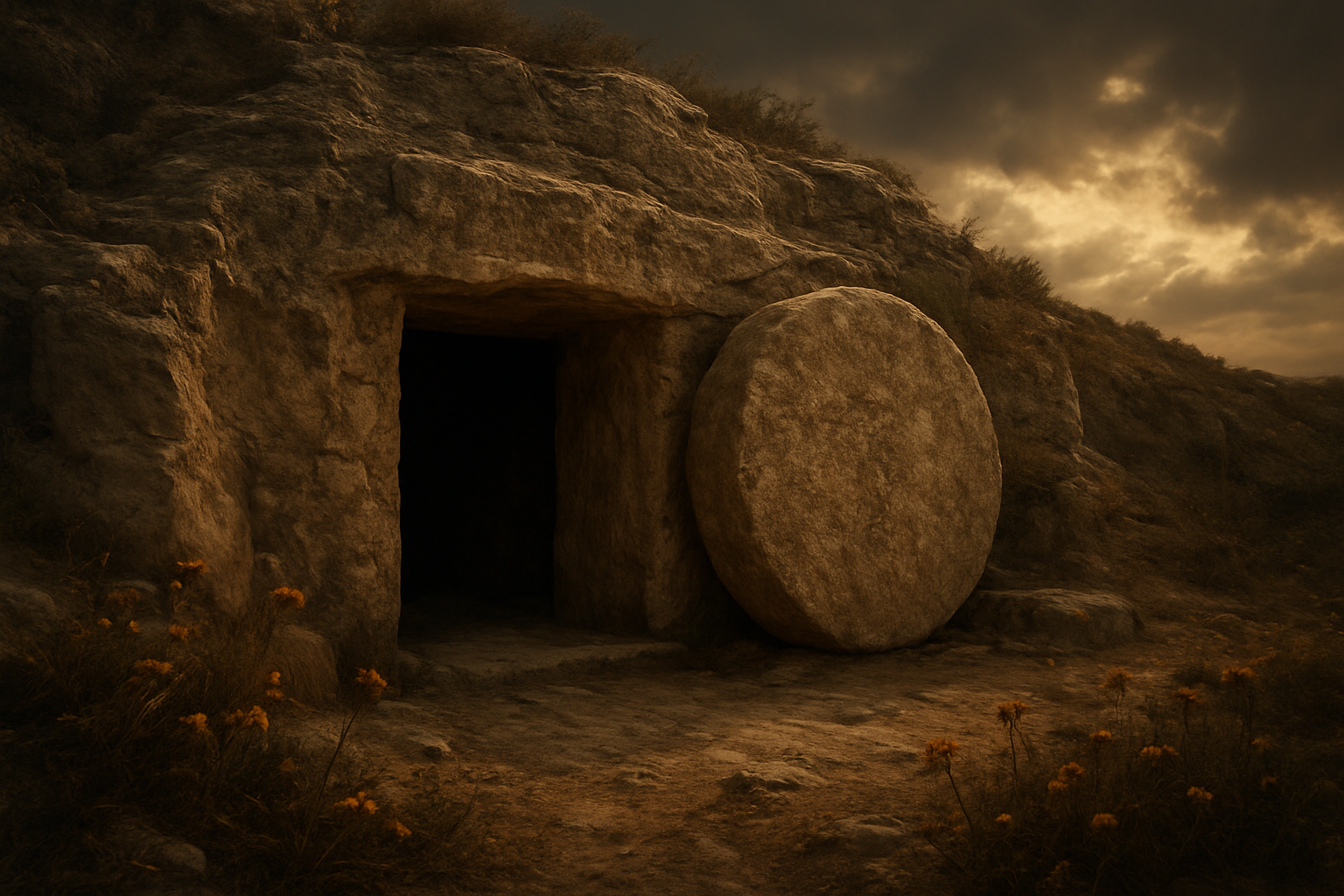
Together with Nicodemus, another secret follower, Joseph carefully removed Jesus' body from the cross. They wrapped Him in linen cloths with expensive spices—myrrh and aloes weighing about seventy-five pounds. This wasn't a hasty burial; it was an act of deep reverence and love. Joseph donated his own new tomb, carved from rock, where no one had ever been laid. This gift represented significant financial sacrifice and demonstrated his genuine faith in Jesus, even in apparent defeat.
The Disciples' Shattered Dreams and Fear
The disciples who had walked with Jesus for three years found themselves in their darkest hour. Their hopes and dreams lay buried with their Teacher in Joseph's tomb. Peter, who had boldly declared he would never deny Jesus, now carried the crushing weight of his three-time betrayal. The other disciples weren't faring much better.
They had believed Jesus was the Messiah who would restore Israel's kingdom. They'd witnessed His miraculous healings, heard His teachings, and seen Him raise the dead. Yet now He was dead Himself. Their confusion ran deep—how could the Son of God die? Where was the victory they'd expected?
Fear gripped their hearts as they huddled behind locked doors. If the religious authorities had killed Jesus, what would stop them from hunting down His followers? The disciples felt abandoned, confused, and terrified. Their faith seemed as dead as their Master. The Easter story shows how even the closest followers struggled with doubt when faced with circumstances that seemed to contradict everything they'd believed.
The Heavy Stone That Sealed the Tomb
The massive stone rolled across the tomb's entrance served as more than just a barrier—it symbolized the apparent finality of death itself. These stones typically weighed between one and two tons, requiring multiple men to move them. Once in place, the heavy stone declared that what lay behind it would remain there permanently.
Roman guards were stationed at the tomb, and Pilate had ordered it sealed with the official Roman seal. Breaking that seal meant death. The religious leaders had taken every precaution to ensure Jesus would stay buried. They remembered His predictions about rising again and wanted no possibility of His body being stolen.
For the grieving followers, that stone represented the end of everything. It sealed away not just Jesus' body, but their hopes, their dreams, and their future. The weight of despair pressed down on them as heavily as the stone pressed against the tomb. Yet unknown to everyone watching that sealed grave, God was preparing the greatest miracle in human history—one that would roll away much more than just a stone.
The Resurrection: Death's Ultimate Defeat
The Empty Tomb Discovery That Changed History
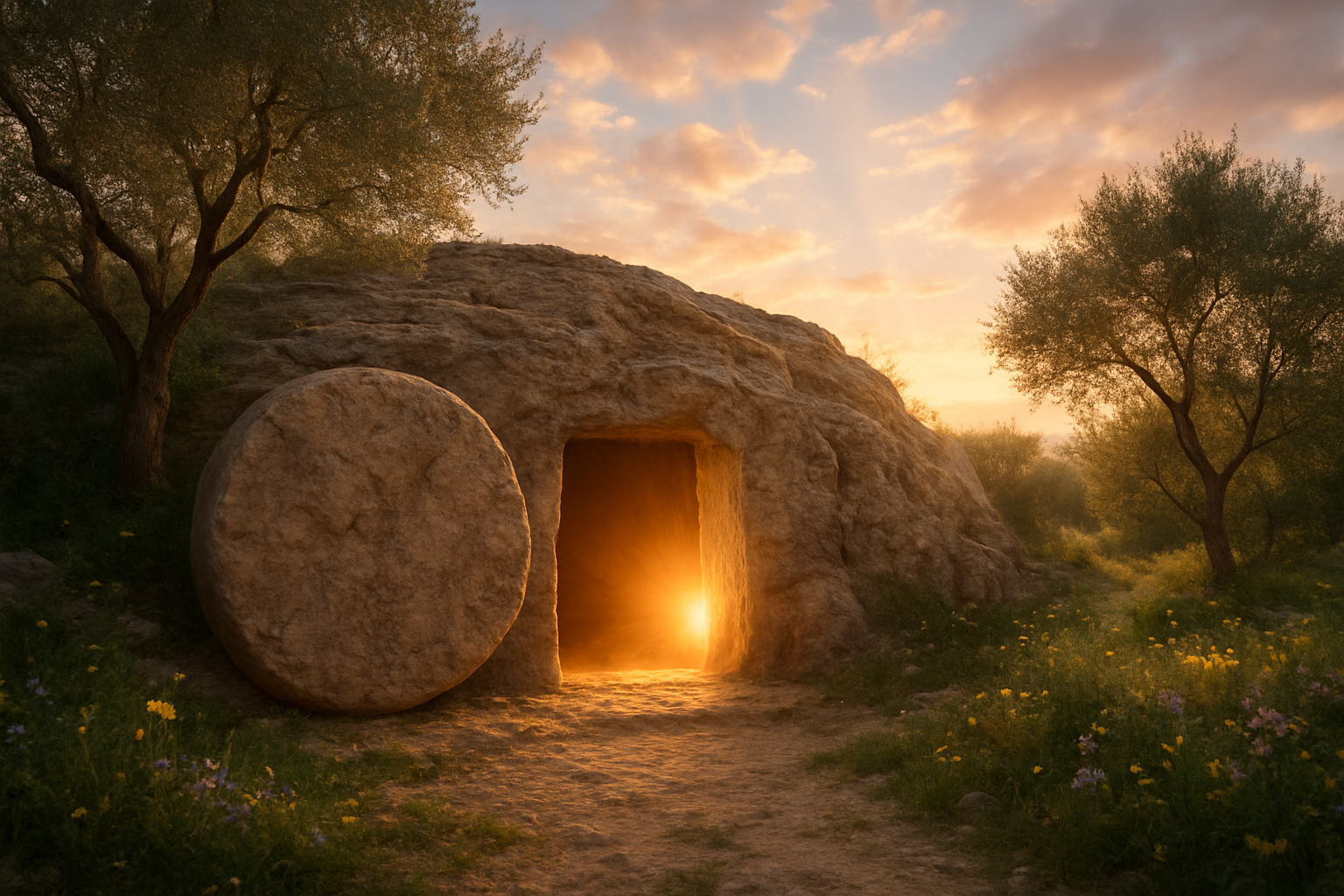
Early Sunday morning, as the first rays of sunlight broke the darkness, Mary Magdalene and other devoted women made their way to Jesus' tomb with burial spices. What they discovered would forever alter human history. The massive stone had been rolled away, and the tomb stood empty except for the abandoned grave clothes. This wasn't a robbery or body snatching – the carefully folded burial linens told a different story entirely.
The empty tomb represented more than just a missing body; it was physical evidence that death itself had been conquered. Roman guards, trained soldiers who faced execution for abandoning their posts, fled in terror. The religious leaders who had demanded Jesus' crucifixion scrambled to create alternative explanations, but none could account for the evidence.
Archaeological discoveries continue to support the Gospel accounts. The tomb's description matches first-century Jewish burial practices, and the details recorded by eyewitnesses demonstrate remarkable consistency across all four Gospel accounts.
Jesus' Appearances to His Followers
Following the resurrection of Christ, Jesus appeared to his disciples on multiple occasions over forty days. These weren't vague spiritual encounters or wishful thinking – they were tangible, physical interactions with the risen Lord.
Mary Magdalene was the first to encounter the resurrected Jesus, initially mistaking him for the gardener until he spoke her name. Later that same day, Jesus appeared to two disciples walking to Emmaus, breaking bread with them and explaining how the Scriptures pointed to his death and resurrection.
The most significant appearance occurred when Jesus met with the gathered disciples, showing them his wounded hands and side. When Thomas, who had been absent, expressed doubt, Jesus invited him to touch the wounds directly. These appearances weren't hallucinations – Jesus ate fish, walked alongside his followers, and engaged in extended conversations.
Biblical Easter story accounts document at least ten separate appearances to different groups of people, including over 500 witnesses at one time. This level of eyewitness testimony would be compelling evidence in any court of law.
The Transformation of Fearful Disciples into Bold Witnesses
Perhaps no evidence for the resurrection proves more convincing than the dramatic transformation of Jesus' followers. Just days after the crucifixion, these same men and women who had scattered in fear became fearless evangelists, willing to face persecution and death for their testimony.
Peter, who had denied knowing Jesus three times during the crucifixion, now boldly proclaimed the resurrection before thousands in Jerusalem. The disciples who had huddled behind locked doors emerged to establish the early church, performing miracles and spreading the Gospel message throughout the known world.
This transformation wasn't gradual or psychological – it happened suddenly and dramatically. People don't typically die for what they know to be a lie, yet nearly all the apostles faced martyrdom rather than recant their testimony about Jesus' resurrection. Their willingness to suffer and die for this message provides powerful evidence for the truth of their claims.
Why the Resurrection Validates Christian Faith
The resurrection of Christ stands as the cornerstone of Christian Easter meaning and the validation of Jesus' divine claims. Without the resurrection, Christianity becomes merely another moral philosophy or failed messianic movement. With it, Jesus' claims about being the Son of God receive their ultimate confirmation.
Jesus had repeatedly predicted his own death and resurrection, something no ordinary teacher or prophet would dare to do. The fulfillment of these specific prophecies demonstrates his divine knowledge and authority over life and death itself.
The resurrection also validates Jesus' teaching about forgiveness, eternal life, and salvation. If Jesus remained dead, his promises would be worthless. Because he conquered death, believers can trust in his ability to deliver on every promise he made.
Early church leaders like Paul understood this connection clearly, writing that if Christ wasn't raised from the dead, Christian faith would be futile and believers would still be lost in their sins.
The Promise of Eternal Life for All Believers
The Easter Sunday resurrection opens the door to eternal life for every person who believes in Jesus Christ. This isn't just a nice theological concept – it's a concrete promise backed by the historical reality of Jesus' victory over death.
Jesus' resurrection serves as the "firstfruits" of what awaits all believers. Just as he was raised with a glorified, eternal body, those who trust in him will also experience resurrection and eternal life. Death no longer has the final word for those who belong to Christ.
This promise transforms how Christians view both life and death. Physical death becomes a temporary separation rather than a permanent ending. The resurrection provides hope during grief, purpose during suffering, and confidence about the future.
The Easter story concludes not with death and despair, but with life and hope. Every believer can face the future knowing that death has been defeated and eternal life awaits. This assurance flows directly from the empty tomb and Jesus' triumph over humanity's greatest enemy.
The Life-Changing Impact of Easter for Modern Believers
How the Cross Provides Forgiveness and Freedom
The crucifixion of Jesus represents more than a historical event—it's the cornerstone of personal transformation for millions of believers today. When Jesus hung on the cross, He carried every sin, shame, and regret that humanity would ever face. This means that every mistake you've made, every moment of guilt that keeps you awake at night, and every burden of shame you carry has already been paid for.
The forgiveness offered through the cross isn't just about having your slate wiped clean. It's about experiencing complete freedom from the weight of past failures. Many people live trapped by their mistakes, constantly trying to earn their way back into God's good graces or prove their worth. The Easter story demolishes this mindset entirely. Through Jesus' sacrifice, forgiveness becomes a gift rather than something you have to work for.
This freedom transforms relationships, careers, and personal decisions. When you truly grasp that you're unconditionally loved and forgiven, you stop living defensively. You can admit when you're wrong without your world falling apart. You can take risks without fear of ultimate failure because your identity rests on what Christ accomplished, not on your performance.
The cross also breaks the power of addiction, bitterness, and destructive patterns. People find themselves released from cycles they couldn't break through willpower alone. This isn't magic—it's the practical result of understanding your true worth and experiencing genuine love that doesn't depend on being perfect.
The Resurrection Power Available in Daily Life
The resurrection of Christ wasn't just a one-time miracle that happened two thousand years ago. According to Christian teaching, the same power that raised Jesus from the dead is available to believers today. This sounds almost too good to be true, but countless people report experiencing this reality in practical ways.
Resurrection power shows up when you find strength to face seemingly impossible situations. It's the single mother who discovers she can provide for her children against all odds. It's the person battling addiction who finds supernatural strength to say no to temptation. It's the broken marriage that somehow gets restored when all hope seemed lost.
This power doesn't promise an easy life, but it does promise that you're never facing challenges alone. The same energy that conquered death works within believers to:
-
Overcome fear and anxiety in daily decisions
-
Find peace during crisis and uncertainty
-
Break free from destructive thought patterns
-
Restore broken relationships and damaged trust
-
Provide wisdom in complex situations
-
Generate love for difficult people
The key is learning to tap into this power through prayer, faith, and trusting God's promises. Many believers report that their most difficult seasons became times of greatest spiritual growth because they learned to depend on God's strength rather than their own limited resources.
Living with Eternal Hope Beyond Earthly Struggles
The empty tomb changes everything about how believers view their current circumstances. When you know that death isn't the end of the story, earthly struggles take on a completely different meaning. This doesn't minimize real pain or suggest that Christians should ignore their problems. Instead, it provides a perspective that makes even the worst situations bearable.
Eternal hope means understanding that your current chapter isn't your final chapter. The job loss, health crisis, or relationship breakdown that feels overwhelming today is temporary in the context of eternity. This hope doesn't make you passive—it actually motivates greater engagement with life because you know your efforts have lasting significance.
People with eternal hope approach challenges differently:
-
They grieve losses without falling into despair
-
They face uncertainty with confidence in God's ultimate plan
-
They invest in relationships knowing they extend beyond this life
-
They pursue justice and compassion because they matter eternally
-
They find joy even during difficult seasons
This hope also transforms how believers view death itself. Instead of seeing it as the ultimate enemy, it becomes a doorway to something infinitely better. This perspective brings comfort during loss and removes the fear that often drives poor decisions.
The biblical Easter story provides a foundation that remains steady when everything else shakes. Your circumstances may change, your feelings may fluctuate, and your plans may fall apart, but the reality of what happened at the cross and empty tomb remains constant. This gives believers an anchor that holds firm no matter what storms they face.

The Easter story takes us through the darkest moments of Jesus' final hours and crucifixion, where God's love was displayed through the ultimate sacrifice. What seemed like the end during his burial became the beginning of something extraordinary when the tomb stood empty three days later. The resurrection proved that death couldn't hold the one who came to give life, changing everything we thought we knew about hope and redemption.
This ancient story still speaks to our lives today in powerful ways. The Easter message reminds us that no situation is too hopeless, no failure too final, and no darkness too deep for God's light to penetrate. Take time this Easter season to reflect on how this incredible love story can bring new life to whatever struggles you're facing right now.


Comments
Post a Comment