The Death and Resurrection of Christ
The death and resurrection of Jesus Christ stands as the cornerstone of Christian faith, transforming billions of lives across two millennia. This comprehensive guide serves Christians seeking deeper understanding, skeptics examining historical claims, and anyone curious about Christianity's central message.
The crucifixion of Christ wasn't just another execution in ancient Rome—it was a pivotal moment that changed everything. The miraculous resurrection of Jesus three days later shattered death's grip and offered hope to humanity. These events continue to shape how believers live today, providing both comfort in suffering and purpose in daily life.
We'll explore the historical crucifixion events that led to Jesus' sacrificial death, examining the evidence and circumstances surrounding that Friday afternoon. You'll discover how the resurrection impact on believers created the early church and why this miracle remains Christianity's most defended claim. Finally, we'll look at the eternal benefits of Christ's death and what living for Christ means in practical terms.
Whether you're strengthening existing faith or investigating these claims for the first time, understanding the significance of Jesus sacrifice opens doors to life's biggest questions about meaning, forgiveness, and what happens after death.
Understanding the Significance of Christ's Sacrificial Death
Fulfillment of Old Testament Prophecies and Symbolism
The sacrificial death of Jesus stands as the ultimate fulfillment of centuries of Old Testament prophecies and symbolic practices. From the very beginning of Scripture, God wove a tapestry of redemptive imagery that pointed directly to Christ's death on the cross.
The Passover lamb holds particular significance in understanding Christ's sacrifice. When Jewish families sacrificed an unblemished lamb and painted its blood on their doorframes, they were participating in a divine object lesson. Just as that innocent lamb died so the firstborn could live, Jesus became the perfect Lamb of God who takes away the sin of the world. The timing wasn't coincidental—Christ died during Passover, revealing God's intentional design across the ages.
Isaiah's prophecy in chapter 53 painted a vivid picture of the suffering servant who would bear our griefs and carry our sorrows. This wasn't written as a historical account but as prophecy centuries before Christ's birth. The details are striking: "He was pierced for our transgressions, he was crushed for our iniquities; the punishment that brought us peace was on him, and by his wounds we are healed."
The entire sacrificial system established through Moses served as a shadow of the coming reality. Every animal sacrifice, every drop of blood shed on the altar, pointed forward to the one sacrifice that would end all need for further offerings. The high priest's annual journey into the Holy of Holies with blood for atonement foreshadowed Christ's single, perfect entry into the heavenly sanctuary.
The Perfect Atonement for Human Sin
Christ's death accomplished what no other sacrifice could: complete atonement for human sin. The word "atonement" literally means "at-one-ment"—the restoration of harmony between God and humanity. Every previous sacrifice only covered sin temporarily, but the death and resurrection of Jesus Christ provided permanent reconciliation.
The perfection of Christ's atonement rests on three crucial elements. First, Jesus was the perfect sacrifice—completely without sin. Unlike the animal sacrifices that were merely symbols, Christ possessed actual moral perfection. He lived a sinless life, making Him qualified to bear the sins of others without being contaminated by His own guilt.
Second, Christ's sacrifice was voluntary. Animals had no choice in their sacrifice, but Jesus willingly laid down His life. This voluntary nature gave His death infinite value. He wasn't a victim of circumstances but the willing participant in God's redemptive plan. He could have called legions of angels to His rescue, but He chose to remain on the cross.
Third, the infinite nature of Christ's divine person gave His sacrifice unlimited worth. When God Himself bore the penalty for sin, the payment was sufficient for all humanity across all time. One divine sacrifice accomplished what billions of animal sacrifices could never achieve.
The significance of Jesus sacrifice becomes clear when we recognize that justice demanded payment for sin. God's holy nature cannot simply overlook wrongdoing—justice must be satisfied. Christ's death satisfied divine justice while expressing divine love, creating the perfect solution to humanity's greatest problem.
Breaking the Barrier Between God and Humanity
The moment Christ died, the temple veil tore from top to bottom, symbolizing the removal of the barrier between God and humanity. This thick curtain had separated the Holy of Holies from the rest of the temple, preventing anyone except the high priest from approaching God's presence, and even then, only once per year.
Sin had created an unbridgeable chasm between holy God and fallen humanity. Like a massive wall, this separation kept people at a distance from their Creator. Every attempt to approach God on human terms fell short because sin-stained humanity couldn't meet God's perfect standards. The crucifixion of Christ demolished this wall completely.
Before Christ's sacrifice, people approached God through mediators—priests who offered sacrifices and interceded on their behalf. The system worked, but it was temporary and incomplete. The sacrifices had to be repeated constantly, and access to God remained limited and indirect.
Christ's death changed everything. Now believers can approach God's throne boldly, not because they're perfect, but because Christ's perfect sacrifice covers their imperfection. The barrier isn't just lowered—it's completely removed. God no longer sees the believer's sin but sees them clothed in Christ's righteousness.
This broken barrier means prayer becomes direct communication with God rather than a formal religious ritual. It means God's presence is available every moment, not just during designated religious ceremonies. It means the believer has been adopted into God's family with full access to the Father's love and care. The miraculous resurrection of Jesus confirmed that this barrier would never be rebuilt—the way to God remains permanently open through Christ's finished work.
The Historical Events of the Crucifixion
The Trial and Condemnation Process
The night Jesus was arrested, He faced an unlawful religious trial that violated numerous Jewish legal procedures. The Sanhedrin, meeting in darkness rather than daylight as required by law, sought false witnesses against Him. When reliable testimony couldn't be found, the high priest Caiaphas demanded Jesus answer whether He was "the Christ, the Son of God." Jesus affirmed His divine identity, prompting charges of blasphemy.
Roman governor Pontius Pilate found no fault in Jesus during the civil trial. Despite multiple attempts to release Him, including offering to free either Jesus or the criminal Barabbas, Pilate eventually succumbed to the crowd's demands. The death and resurrection of Jesus Christ began with this unjust condemnation, where the innocent bore the punishment of the guilty.
The Physical and Spiritual Suffering on the Cross
The crucifixion of Christ involved excruciating physical torment that began before He reached Golgotha. Roman soldiers scourged Jesus with a whip embedded with metal and bone fragments, tearing flesh from His back. They pressed a crown of thorns into His skull and forced Him to carry the heavy crossbeam through Jerusalem's streets.
On the cross, Jesus endured:
-
Asphyxiation as His body weight made breathing nearly impossible
-
Dehydration and blood loss from multiple wounds
-
Muscle cramps and joint dislocation from the unnatural position
-
Exposure to extreme heat and public humiliation
The spiritual suffering surpassed the physical agony. As Jesus bore humanity's sin, He experienced separation from His Father for the first time in eternity. His cry "My God, My God, why have You forsaken Me?" reveals the depth of spiritual anguish as divine wrath against sin fell upon Him.
The Supernatural Signs Accompanying His Death
God demonstrated the cosmic significance of Christ's sacrifice through miraculous signs that defied natural explanation. Darkness covered the land from noon until 3 PM, despite the Passover occurring during a full moon when eclipses are impossible. This supernatural darkness symbolized God's judgment falling on His Son.
The temple veil, a massive curtain separating the Holy of Holies, tore from top to bottom - signifying that access to God was now open to all people. An earthquake shook Jerusalem, splitting rocks and opening tombs. Many saints who had died were raised to life and appeared to people in the city, providing a preview of resurrection power.
Even the Roman centurion overseeing the execution declared, "Truly this was the Son of God," recognizing divine authority in Jesus' death. These signs confirmed that the historical crucifixion events held eternal significance beyond human understanding.
The Burial and Sealing of the Tomb
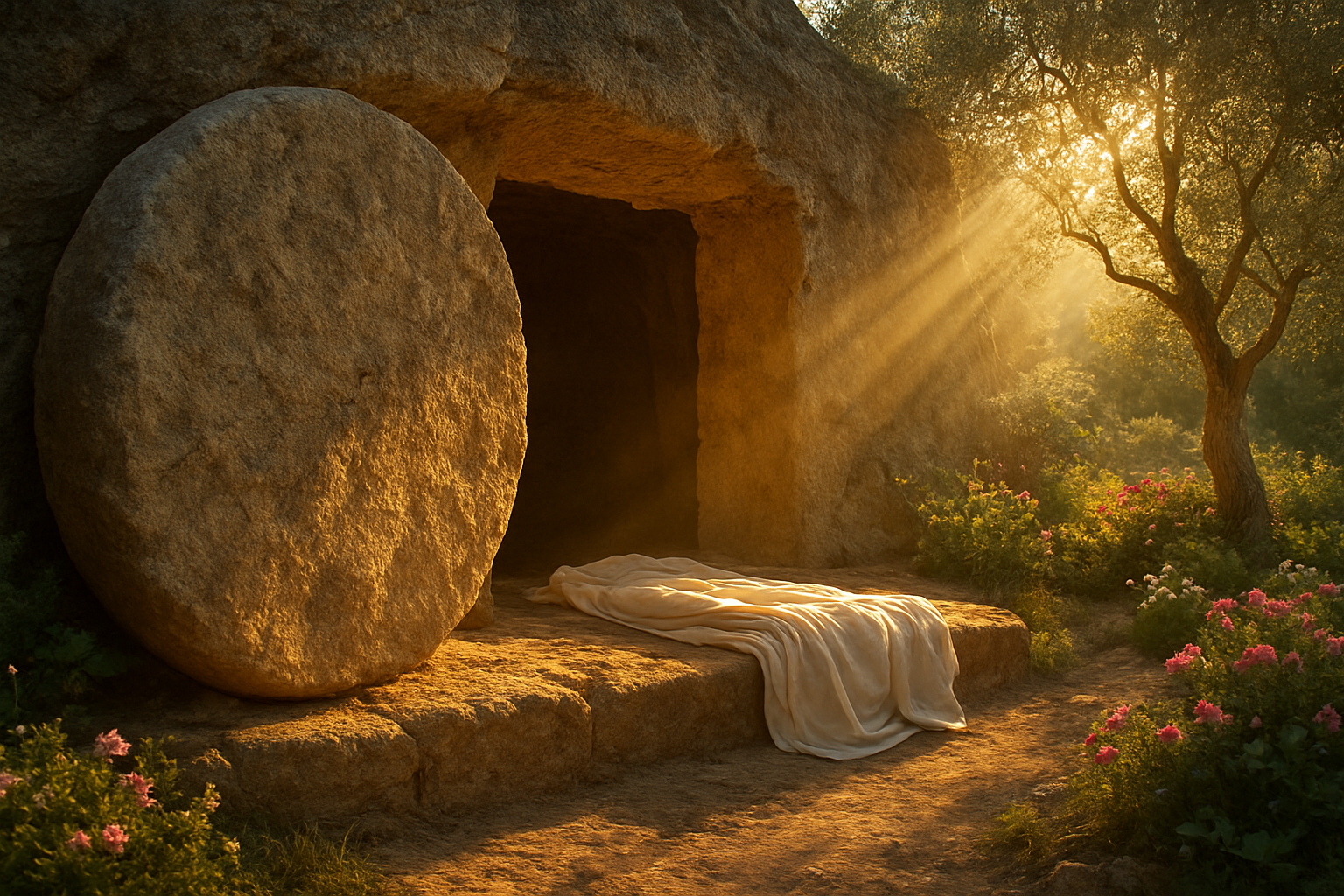
Joseph of Arimathea, a secret disciple and member of the Sanhedrin, courageously requested Jesus' body from Pilate. Along with Nicodemus, they prepared the body according to Jewish burial customs, wrapping it in linen cloths with approximately 75 pounds of myrrh and aloes. They placed Jesus in Joseph's new tomb, carved from rock in a garden near Golgotha.
The religious leaders, remembering Jesus' promise to rise after three days, petitioned Pilate to secure the tomb. Roman soldiers sealed the stone entrance with an official government seal and posted a guard. Breaking this seal carried the death penalty, making the tomb as secure as possible by human standards.
This careful burial and sealing process becomes crucial evidence for the miraculous resurrection of Jesus. The empty tomb, undisturbed grave clothes, and broken seal would soon testify to the greatest victory in human history, transforming the sacrificial death of Jesus into the foundation of eternal hope for believers.
The Miraculous Resurrection and Its Immediate Impact
The Empty Tomb Discovery
When Mary Magdalene and the other women arrived at Jesus' tomb early Sunday morning, they discovered something that changed everything. The massive stone had been rolled away, and the tomb was completely empty. The grave clothes Jesus had been wrapped in were still there, neatly folded, but His body was gone. This wasn't a case of grave robbery or body snatching – the careful arrangement of the burial linens suggested something far more extraordinary had occurred.
The Gospel accounts describe the women's initial shock and confusion. They had come expecting to complete the burial preparations that had been rushed due to the approaching Sabbath. Instead, they found an angel announcing the miraculous resurrection of Jesus. The empty tomb became the first concrete evidence that death could not hold the Son of God.
Archaeological evidence supports the historical reliability of these accounts. The tomb's description matches first-century Jewish burial practices, and the detail about the stone being rolled away aligns with how wealthy families sealed their burial sites during that period.
Eyewitness Encounters with the Risen Christ
The resurrection impact on believers began immediately through multiple eyewitness encounters. Jesus appeared to Mary Magdalene first, then to the disciples on the road to Emmaus, and later to the gathered apostles. Over forty days, more than 500 people witnessed the risen Christ at various times and locations.
These weren't hallucinations or wishful thinking. The encounters included physical interactions – Jesus ate food, invited Thomas to touch His wounds, and held conversations. Each appearance served to confirm His identity and reality. The disciples initially struggled to believe what they were seeing, which actually strengthens the credibility of their testimonies.
Paul's detailed account in 1 Corinthians 15 lists the witnesses systematically, many of whom were still alive when he wrote his letter. This provided an opportunity for verification and challenge if the claims were false.
The Transformation of the Disciples
Perhaps the most compelling evidence for the death and resurrection of Jesus Christ was the dramatic transformation in His disciples. These men had scattered in fear during the crucifixion, hiding behind locked doors. Peter had denied even knowing Jesus three times.
After encountering the risen Christ, these same individuals became bold proclamers who faced persecution and death rather than deny their testimony. Peter, who had cowered before a servant girl, now preached fearlessly to thousands. The disciples who had argued about positions of honor now served sacrificially in spreading the Gospel.
This psychological transformation cannot be explained by grief or delusion. People don't typically become more courageous after losing their leader, especially when maintaining their story brings persecution. The disciples' willingness to suffer and die for their testimony indicates they genuinely believed they had witnessed something supernatural.
Early Church Testimonies and Growth
The early church's explosive growth provides additional evidence of the resurrection's immediate impact. Within weeks of Jesus' death, thousands in Jerusalem were converting to Christianity. This happened in the very city where Jesus had been publicly executed, among people who could easily verify or debunk the claims.
The apostles' preaching consistently centered on the resurrection, not just Jesus' moral teachings. They proclaimed that God had raised Jesus from the dead, offering this as proof of His divine nature and the forgiveness of sins. The historical crucifixion events and subsequent resurrection became the foundation of Christian faith.
Early Christian writings, including letters from Paul written within 20 years of the crucifixion, demonstrate that belief in the resurrection was immediate and widespread among believers. The consistency of these testimonies across different authors, locations, and time periods points to a shared experience of encountering the risen Christ rather than a gradually developed legend.
The Eternal Benefits for Believers Today

Victory Over Death and Eternal Life
The death and resurrection of Jesus Christ broke the ultimate barrier between humanity and God. Death, once the final enemy that claimed everyone without exception, lost its sting through Christ's victory. For believers today, this means death is no longer an ending but a doorway to eternal fellowship with God.
When Jesus walked out of that tomb, He demonstrated His power over the grave and promised the same resurrection to all who trust in Him. This isn't just a future hope—it changes how Christians view their current lives. The fear of death that haunts so many people becomes powerless when you know that physical death is simply a transition to something infinitely better.
Eternal life begins the moment someone places their faith in Christ, not just at their physical death. Believers receive a new spiritual life that death cannot touch. This reality transforms everything from major life decisions to daily anxieties about the future.
Freedom from Sin's Power and Guilt
Before Christ's sacrificial death, humanity was trapped in a cycle of sin and guilt that no amount of good works could break. The eternal benefits of Christ's death include complete liberation from sin's controlling power and the crushing weight of guilt that follows wrongdoing.
This freedom operates on two levels: positional and practical. Positionally, believers stand justified before God—completely forgiven and declared righteous through Christ's sacrifice. The guilt that once separated them from their Creator is permanently removed. Practically, the Holy Spirit empowers believers to resist temptation and live according to God's standards.
Many Christians struggle to fully embrace this freedom because they confuse temporary setbacks with permanent defeat. When believers sin, they don't lose their salvation or return to their former enslaved state. Instead, they have immediate access to forgiveness and restoration through Christ's ongoing intercession.
The resurrection impact on believers includes receiving the same Spirit that raised Jesus from the dead. This divine power enables them to say "no" to destructive behaviors and "yes" to choices that honor God and benefit others.
Hope and Comfort in Times of Suffering
Life brings unavoidable pain—loss, illness, betrayal, financial hardship, and countless other trials that test human endurance. The miraculous resurrection of Jesus provides unshakeable hope that current suffering is temporary and purposeful within God's larger plan.
Christ's resurrection proves that God can bring beauty from ashes and life from death. When believers face their darkest moments, they can draw strength from knowing their Savior experienced the ultimate suffering and emerged victorious. This doesn't minimize their pain but provides perspective that transcends immediate circumstances.
The comfort available through Christ's victory is both emotional and practical. Believers can process grief, disappointment, and fear through prayer and biblical truth rather than relying solely on their own understanding or limited human support systems. They have access to divine peace that surpasses logical explanation.
The significance of Jesus' sacrifice becomes especially meaningful during suffering because it demonstrates God's intimate understanding of human pain. Christ didn't remain distant from human struggle but entered fully into it, making His comfort authentic and His promises trustworthy.
Living in Light of Christ's Death and Resurrection
Embracing Your New Identity in Christ
The death and resurrection of Jesus Christ transforms everything about who you are. When Christ died on the cross, your old sinful nature died with Him. When He rose from the grave, you were raised to new life. This isn't just theology—it's your new reality.
Your identity is no longer defined by past mistakes, current struggles, or what others think about you. You are now a beloved child of God, chosen and set apart. The same power that raised Jesus from the dead lives inside you, giving you strength to overcome sin and live differently.
This new identity means you can stop trying to earn God's love through good behavior. Christ's sacrificial death already secured your acceptance before God. You're free to serve Him out of gratitude rather than guilt, knowing your worth comes from what Jesus accomplished, not what you achieve.
Living from this new identity changes how you see challenges. Setbacks become opportunities to experience God's grace. Temptations lose their grip because you remember who you really are. Your purpose shifts from self-centered goals to bringing glory to the One who rescued you.
Sharing the Gospel with Confidence
The resurrection of Jesus gives you something incredible to share with others. This isn't ancient history—it's the most important news anyone can hear. Christ's victory over death means everyone can have eternal life and freedom from sin's penalty.
Sharing the gospel becomes natural when you truly grasp what Christ accomplished. You're not pushing religion on people; you're offering them the same hope that transformed your life. The historical crucifixion events and miraculous resurrection of Jesus provide a solid foundation for your faith and your conversations with others.
Start with your own story. Tell people how the death and resurrection of Jesus Christ changed your life. Share specific ways you've experienced His love, forgiveness, and power. Personal testimonies are powerful because they're hard to argue with—this is your experience.
Don't worry about having all the answers. Focus on the core message: Jesus died for our sins and rose again to give us eternal life. The Holy Spirit will work through your words to touch hearts. Your job is to plant seeds of truth with love and gentleness.
Look for natural opportunities in everyday conversations. When someone shares struggles, you can offer hope through Christ. When they ask about your peace during difficult times, explain how your faith sustains you.
Experiencing Daily Spiritual Renewal
The resurrection impact on believers includes daily renewal of your mind and spirit. Just as Christ rose with a glorified body, you can experience fresh spiritual life each morning. This isn't about perfection—it's about growth and transformation.
Start each day remembering what Christ has done for you. Spend time in prayer and Bible study, allowing God's Word to shape your thoughts and attitudes. The eternal benefits of Christ's death become real as you apply Scripture to daily situations.
When you fail or sin, don't wallow in guilt. Remember that Christ's sacrifice covers every mistake. Confess your sin, receive forgiveness, and move forward with renewed determination. The cross reminds you that nothing can separate you from God's love.
Practice gratitude throughout your day. Thank God for specific blessings, both big and small. Gratitude keeps your heart focused on His goodness rather than your problems. It reminds you that every good gift comes from above.
Look for ways to serve others daily. Acts of kindness and service flow naturally from a heart that understands Christ's love. Whether it's helping a neighbor, encouraging a friend, or volunteering in your community, service keeps you connected to your purpose in Christ.
Preparing for Christ's Second Coming
Jesus promised He would return, and His resurrection guarantees this promise will be fulfilled. Living for Christ means keeping His return in view while faithfully serving Him today. This hope provides perspective on current troubles and motivation for holy living.
Prepare your heart by growing closer to Jesus daily. Study His Word, pray regularly, and fellowship with other believers. The stronger your relationship with Christ now, the more ready you'll be when He returns. This isn't about earning salvation—it's about deepening intimacy with your Savior.
Share the gospel urgently but not frantically. Christ's return gives evangelism importance, but remember that God desires all people to come to repentance. Balance urgency with patience, knowing that God's timing is perfect.
Live with eternal perspective. Make decisions based on what matters for eternity, not just immediate gratification. Invest in relationships, serve others sacrificially, and use your resources to advance God's kingdom. Store up treasures in heaven where they'll last forever.
Stay alert and watchful without becoming obsessed with timing. Jesus told us to be ready always because no one knows the exact time of His return. Focus on faithfulness in daily responsibilities while maintaining eager anticipation for His appearing.
Christ's death and resurrection form the cornerstone of Christian faith, transforming how believers understand salvation and eternal life. His sacrificial death on the cross paid the ultimate price for humanity's sins, while the miraculous resurrection three days later proved His divine power over death itself. These historical events weren't just moments in time—they created a bridge between God and humanity that continues to offer hope, forgiveness, and eternal life to all who believe.
The impact of these events extends far beyond the pages of history books into the daily lives of believers today. Every person who accepts Christ's sacrifice receives forgiveness, peace with God, and the promise of eternal life. This incredible gift calls for a response—to live with gratitude, share this hope with others, and walk in the freedom that comes from knowing death has been defeated. Christ's victory over the grave means that every believer can face life's challenges with confidence, knowing that the same power that raised Jesus from the dead is at work in their lives too.


Comments
Post a Comment