Women of Influence in the Bible
The Bible showcases remarkable women in the Bible who changed history through their faith, courage, and leadership. These biblical women leaders weren't just supporting characters—they were central figures who shaped God's story and influenced entire nations.
This guide is for Bible study groups, women's ministry leaders, students, and anyone wanting to understand the powerful female biblical figures who demonstrate God's calling on women throughout scripture. You'll discover how these women of faith Bible stories remain relevant for today's challenges.
We'll explore the Bible matriarchs like Sarah and Rebekah who established God's covenant with future generations. You'll meet courageous leaders like Deborah and Esther who delivered their people from destruction. We'll also examine the biblical prophetesses and unlikely heroes whose extraordinary faith turned impossible situations into testimonies of God's power.
These influential women scripture accounts reveal how God uses ordinary women to accomplish extraordinary things, offering inspiration and practical lessons for anyone seeking to understand their own calling and potential.
Matriarchs Who Shaped God's Covenant
Sarah's Faith Journey from Doubt to Divine Promise
Sarah stands as one of the most compelling biblical women leaders whose story demonstrates how God transforms doubt into unwavering faith. When God first promised Abraham descendants as numerous as the stars, Sarah was already past childbearing age. Her initial response shows very human skepticism—she laughed when she overheard the divine promise of a son.
Sarah's struggle with infertility lasted decades, leading her to offer her servant Hagar to Abraham as a surrogate. This decision created household tension and demonstrated how even women of faith Bible stories include moments of taking matters into their own hands rather than trusting divine timing. The conflict between Sarah and Hagar reveals the complex emotions surrounding God's promises when they seem impossible.
Despite her doubts, Sarah eventually embraced God's covenant promise. When Isaac was finally born, her joy was complete. She named him "laughter," transforming her earlier skeptical laughter into celebration. Sarah's journey from barrenness to motherhood established her as the first of the great Bible matriarchs, setting the foundation for God's chosen people.
Her faith journey teaches us that questioning God doesn't disqualify us from His promises. Sarah's story shows how patience and eventual trust in God's timing can lead to miraculous outcomes that exceed our human understanding.
Rebekah's Strategic Role in Securing Jacob's Blessing
Rebekah emerges as one of the most strategically minded female biblical figures in scripture. Before her sons were born, God revealed to her that "the older will serve the younger," giving her unique prophetic insight into her family's destiny. This divine knowledge shaped her actions throughout her sons' lives.
When Isaac prepared to bless Esau, Rebekah knew this would contradict God's revealed plan. She devised an elaborate scheme to ensure Jacob received the blessing meant for the firstborn. While her methods were deceptive, her actions aligned with divine prophecy. Rebekah prepared the food Isaac loved, disguised Jacob with goat skins to mimic Esau's hairy arms, and coached him through the deception.
Her quick thinking and decisive action preserved God's covenant line. Without Rebekah's intervention, the blessing would have gone to Esau, potentially altering the entire trajectory of Israel's history. She understood the spiritual significance of the blessing better than her husband Isaac, who seemed focused only on his personal preference for Esau.
Rebekah's story challenges us to consider how God sometimes uses imperfect people and questionable methods to accomplish His perfect purposes. Her strategic thinking and willingness to act on divine revelation, despite personal risk, secured the covenant blessing for future generations.
Rachel and Leah's Rivalry That Built Twelve Tribes
The sister wives Rachel and Leah represent two of the most influential women scripture records, whose bitter rivalry paradoxically fulfilled God's promise to build Abraham's descendants into a great nation. Jacob loved Rachel but was tricked into marrying Leah first, creating a household dynamic that would shape the twelve tribes of Israel.
Leah, though unloved, proved fertile and bore Jacob his first four sons: Reuben, Simeon, Levi, and Judah. Each birth represented her desperate attempt to win Jacob's love. Her names for her sons reflect her emotional journey—from hoping Jacob would love her to finally praising God regardless of her husband's affection.
Rachel, beautiful and beloved but initially barren, envied her sister's fertility. Her frustration led her to give her servant Bilhah to Jacob, resulting in two more sons. Leah responded by offering her servant Zilpah, adding two additional sons to Jacob's growing family.
The competition intensified when Rachel finally conceived, bearing Joseph and later Benjamin. Meanwhile, Leah continued bearing children, including Jacob's only recorded daughter, Dinah. Their rivalry created a complex family structure, but God used their competition to fulfill His promise of numerous descendants.
| Sister | Sons Born | Significance |
|---|---|---|
| Leah | Reuben, Simeon, Levi, Judah, Issachar, Zebulun | Founded six tribes, including Judah (royal line) and Levi (priestly line) |
| Rachel | Joseph, Benjamin | Joseph's sons Ephraim and Manasseh became tribes; Benjamin produced King Saul |
Tamar's Courage to Preserve Judah's Lineage
Tamar stands among the most courageous biblical heroines whose bold actions preserved the messianic line through Judah. After her husband Er died, she married his brother Onan according to levirate law. When Onan also died without giving her children, Judah promised her his youngest son Shelah but failed to keep his word.
Realizing Judah had no intention of fulfilling his obligation, Tamar took extraordinary action. She disguised herself as a temple prostitute and positioned herself where Judah would encounter her. When he approached her, she secured his signet ring, cord, and staff as pledges for payment—items that would later prove his identity.
When Tamar's pregnancy became apparent, Judah called for her execution, not knowing he was the father. Tamar then produced his personal items, declaring, "I am pregnant by the man who owns these." This revelation forced Judah to acknowledge, "She is more righteous than I," recognizing that she had acted to preserve his family line when he had failed in his duties.
Tamar gave birth to twins, Perez and Zerah. Perez became an ancestor of King David and, ultimately, Jesus Christ. Her story demonstrates how God honors those who courageously act to preserve His covenant promises, even when society fails them. Tamar's inclusion in Christ's genealogy in Matthew's Gospel highlights how God values her righteous determination over conventional respectability.
Female Leaders Who Delivered Nations
Deborah's Dual Authority as Judge and Prophetess
Deborah stands as one of the most powerful biblical women leaders in the Old Testament, holding two extraordinary roles simultaneously. As both judge and prophetess, she wielded unprecedented authority in ancient Israel during a time when women in the Bible rarely held public office. Her story, found in Judges 4-5, showcases how divine calling transcends cultural expectations.
What makes Deborah unique among biblical heroines is that people actively sought her wisdom and leadership. She held court under a palm tree, where Israelites came to settle disputes and seek guidance. This wasn't a position she seized or demanded – it was recognized and accepted by her community. Her prophetic gifts allowed her to receive direct revelations from God, while her judicial role made her the highest civil authority in the land.
When God revealed His plan to defeat the Canaanite army, Deborah didn't hesitate to summon Barak, the military commander. She delivered God's battle strategy with complete confidence, even agreeing to accompany him to war when he requested her presence. Her leadership style blended spiritual insight with practical wisdom, making her one of the most effective rulers Israel ever knew.
The victory song she composed with Barak (Judges 5) remains one of the oldest pieces of Hebrew poetry, celebrating not just military triumph but God's faithfulness to His people.
Jael's Bold Action That Secured Victory
Jael's story demonstrates how ordinary women can become instruments of divine justice through decisive action. As a Kenite woman married to Heber, she lived in a politically complex situation – her husband's clan maintained peaceful relations with both Israel and their Canaanite oppressors.
When Sisera, the fleeing Canaanite commander, sought refuge in her tent, Jael faced a critical choice. She could honor the traditional laws of hospitality and protect her guest, or she could act on behalf of Israel's God. Her decision to kill Sisera while he slept fulfilled Deborah's prophecy that the honor of victory would go to a woman.
Jael's actions required tremendous courage. She risked her family's safety, potential retaliation from Canaanite forces, and social condemnation for violating hospitality customs. Yet her bold move eliminated Israel's primary military threat and secured their freedom from twenty years of oppression.
Her story illustrates how strong women Bible stories often feature unexpected heroes who step forward at pivotal moments. Jael wasn't a professional warrior or recognized leader – she was a tent-dwelling woman who seized her opportunity to serve God's purposes when it mattered most.
Esther's Strategic Courage That Saved Her People
Queen Esther's story reveals how influential women scripture can work within existing power structures to achieve extraordinary outcomes. Thrust into the Persian royal court through a beauty contest, she initially hid her Jewish identity on her cousin Mordecai's advice.
When Haman's genocidal plot threatened all Jews in the Persian Empire, Esther faced an impossible situation. Approaching the king uninvited could mean death, yet remaining silent would ensure her people's destruction. Her famous words, "If I perish, I perish," capture the essence of faith-driven courage.
Esther's approach demonstrates remarkable wisdom and strategic thinking. Rather than making desperate pleas, she invited the king and Haman to private banquets, creating the perfect setting to expose the villain's plot. She understood timing, court politics, and human nature, using her influence to maximum effect.
Her story shows how God can position biblical women leaders in places of influence for specific purposes. Esther's beauty opened doors, but her courage, wisdom, and willingness to risk everything saved an entire nation. The Jewish festival of Purim still celebrates her victory, making her story one of the most enduring examples of faith in action.
Each woman's willingness to act decisively when called upon changed the course of history for God's people.
Prophetesses Who Spoke God's Truth
Miriam's Leadership Through Song and Prophecy
Miriam stands as one of the most remarkable biblical prophetesses in the Old Testament, demonstrating how women in the Bible wielded both spiritual authority and political influence. As Moses and Aaron's sister, she played a crucial role in Israel's liberation from Egypt and wilderness journey.
Her prophetic calling emerged early when she courageously watched over baby Moses in the Nile, approaching Pharaoh's daughter with wisdom beyond her years. This act of protective leadership foreshadowed her later role as a spiritual guide for the Israelite women.
Miriam's most celebrated moment came after the Red Sea crossing, where she led the women in worship with tambourines and dancing. Her prophetic song in Exodus 15:21 - "Sing to the Lord, for he is highly exalted" - became one of Scripture's earliest recorded hymns. This wasn't just celebration; it was prophetic declaration, proclaiming God's victory and setting the spiritual tone for Israel's wilderness experience.
The text specifically identifies her as "Miriam the prophet," placing her among the female biblical figures who received direct divine communication. She wasn't merely Moses' helper but a co-leader who spoke God's truth to the people. Her influence extended beyond individual prophecy to corporate worship leadership, showing how women of faith Bible characters shaped Israel's spiritual practices.
When she challenged Moses' authority alongside Aaron, God's response revealed both her significance and the boundaries of her calling, demonstrating the complex dynamics of prophetic leadership in ancient Israel.
Huldah's Validation of Scripture During King Josiah's Reign
Among biblical women leaders, Huldah occupies a unique position as the prophetess who authenticated Scripture during one of Judah's most pivotal moments. When King Josiah's workers discovered the Book of the Law in the temple around 622 BC, the king didn't consult the male prophets available in Jerusalem. Instead, he sent his officials directly to Huldah.
This decision speaks volumes about her reputation and spiritual authority. Contemporary male prophets like Jeremiah and Zephaniah were active, yet Josiah's advisors sought Huldah's confirmation of the discovered text. Her residence in Jerusalem's Second District, rather than in religious quarters, suggests she was accessible to common people while maintaining close connections to the royal court.
Huldah's prophetic response carried enormous weight. She confirmed the book's authenticity and delivered both judgment and mercy: God's wrath would come upon Judah for their unfaithfulness, but not during Josiah's lifetime due to his humble response. Her words directly influenced Josiah's sweeping religious reforms, which included destroying pagan altars, removing corrupt priests, and renewing the covenant.
Her validation of Scripture demonstrates how biblical prophetesses served as divine authenticators of God's written word. Huldah didn't just receive visions or dreams; she possessed the spiritual discernment to recognize genuine Scripture and interpret its implications for her generation. This makes her one of the most influential women scripture records, whose words shaped national policy and religious practice.
Anna's Faithful Witness at Jesus' Dedication
Anna represents the bridge between Old Testament prophecy and New Testament fulfillment, embodying the patient faith of strong women Bible stories celebrate. At 84 years old, having been widowed after just seven years of marriage, she had devoted nearly six decades to prayer and fasting in the temple courts.
Her prophetic gift manifested not through dramatic pronouncements but through persistent devotion and spiritual sensitivity. When Mary and Joseph brought infant Jesus for dedication, Anna immediately recognized the child's significance. Her response was immediate and public - she "spoke about the child to all who were looking forward to the redemption of Jerusalem."
This scene reveals Anna's role as a prophetic witness to Jesus' identity. While Simeon received a specific revelation about the Messiah, Anna's recognition came through years of faithful waiting and spiritual preparation. Her prophecy wasn't recorded word-for-word, but her witness carried tremendous authority among Jerusalem's devout community.
Anna's life illustrates how women of faith Bible narratives often emphasize endurance over dramatic moments. Her decades of temple service prepared her for this crucial moment of recognition. She represents the faithful remnant who maintained hope during Israel's spiritual darkness, positioning her perfectly to herald the dawn of redemption.
Her immediate proclamation to others demonstrates how prophetic calling often involves public testimony. Anna didn't keep her revelation private but became an evangelist, sharing the good news with everyone anticipating Israel's restoration. This makes her one of the first to publicly declare Jesus' messianic identity.
Women of Extraordinary Faith and Sacrifice
Ruth's Loyalty That Redefined Family Bonds
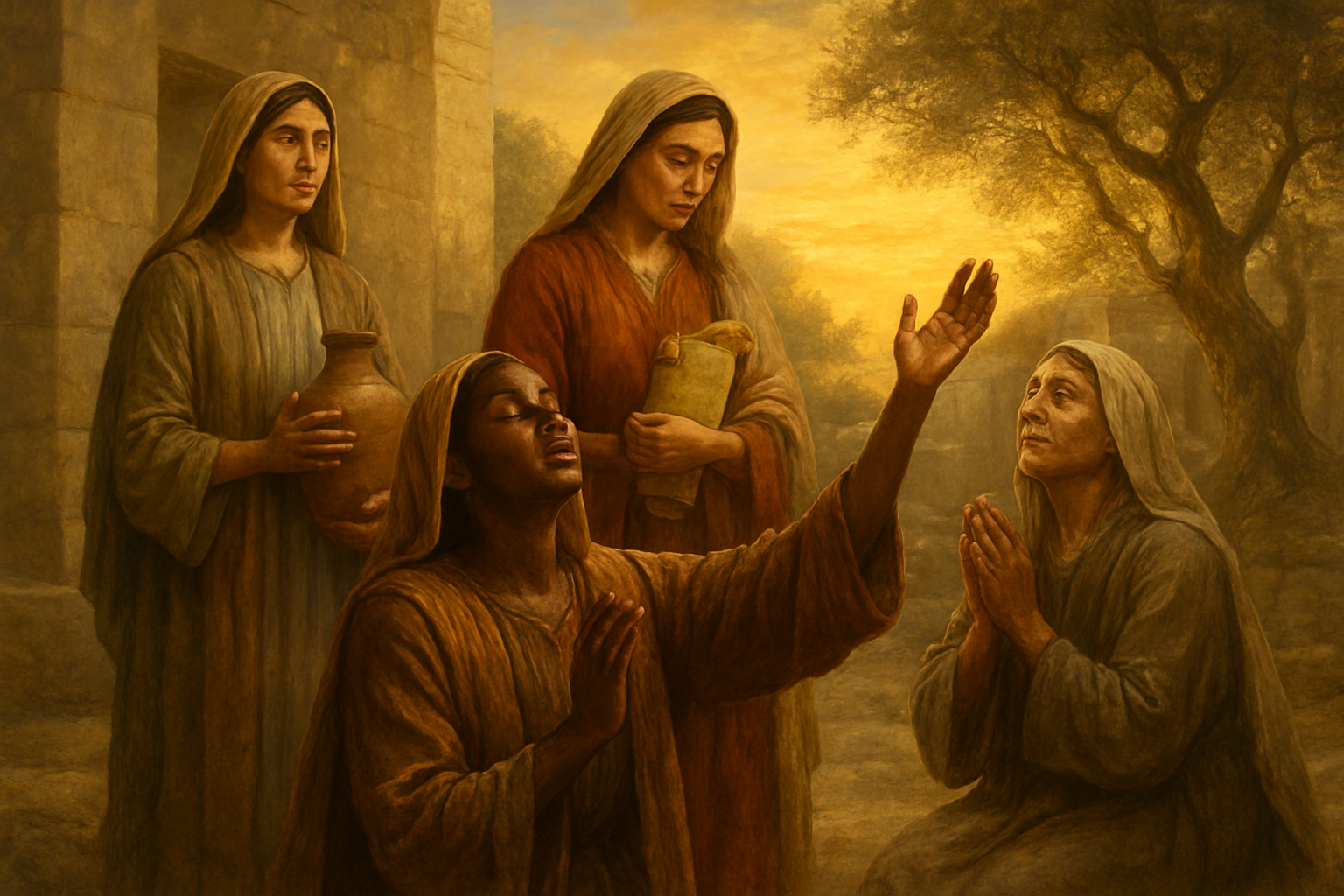
Ruth's story shows us how loyalty can transcend blood relations and cultural boundaries. When her husband died, leaving her widowed in a foreign land, Ruth faced a crossroads. She could return to her Moabite family and their gods, or stay with her mother-in-law Naomi and embrace the God of Israel. Her famous declaration - "Where you go I will go, and where you stay I will stay. Your people will be my people and your God my God" - became one of the most powerful expressions of covenant loyalty in all of scripture.
This choice wasn't easy or practical. Ruth was choosing poverty, uncertainty, and life as a foreigner in Israel. Yet her dedication to Naomi and faith in God's provision led to extraordinary blessings. Through her sacrificial love, Ruth became part of the lineage of King David and ultimately Jesus Christ. Her story demonstrates how God honors those who choose loyalty over convenience, faith over fear.
Ruth's example challenges our understanding of family bonds. She shows us that the deepest relationships aren't always defined by genetics but by commitment, love, and shared faith. Her willingness to leave everything familiar speaks to women of faith who must sometimes make difficult choices to follow God's calling.
Hannah's Persistent Prayer That Changed History
Hannah's desperate longing for a child drove her to prayers so intense that the priest Eli thought she was drunk. Year after year, she endured the taunts of her husband's other wife and the deep ache of barrenness in a culture that measured women's worth by their ability to bear children. But instead of becoming bitter, Hannah poured her heart out to God with unwavering persistence.
Her prayer life reveals several powerful truths about faith. First, she brought her raw emotions directly to God - no polite, sanitized requests, but honest anguish and longing. Second, she made a vow that showed her understanding of sacrifice: if God gave her a son, she would give him back for service in the temple. Third, she trusted God's timing even when it seemed impossibly delayed.
When God answered her prayer with the birth of Samuel, Hannah kept her promise. She brought her young son to the temple and left him there, visiting only once a year. This sacrifice produced one of Israel's greatest prophets and judges. Samuel would later anoint both Saul and David as kings, shaping the entire future of Israel.
Hannah's song of praise after Samuel's birth became a prophetic template that Mary, the mother of Jesus, would echo centuries later. Her story reminds us that persistent, heartfelt prayer can literally change the course of history.
The Widow of Zarephath's Generous Trust During Famine
During one of Israel's worst famines, God directed the prophet Elijah to a most unlikely source of provision - a poor widow in Zarephath who was preparing her last meal before expecting to die with her son. When Elijah asked her for bread and water, she could have reasonably refused. She had every excuse to hold onto her meager resources.
Instead, this Gentile woman displayed faith that put many Israelites to shame. She believed Elijah's promise that her flour and oil wouldn't run out until the famine ended. Her willingness to feed the prophet first, before her own son, demonstrated trust that defied human logic. She risked everything on the word of a stranger's God.
God honored her faith spectacularly. The flour jar never emptied, and the oil jug never ran dry throughout the famine. When her son later became ill and died, Elijah raised him back to life - the first recorded resurrection in scripture. This widow received not just physical provision but witnessed God's power over death itself.
Her story teaches us about the relationship between faith and generosity. Sometimes God asks us to give when we feel we have nothing left to give. The widow's example shows that radical trust often precedes miraculous provision. Her generous spirit toward God's servant opened the door to abundant blessing.
Mary's Willing Surrender to God's Plan
When the angel Gabriel appeared to teenage Mary with news that she would conceive the Messiah through the Holy Spirit, her world changed forever. She could have questioned, argued, or refused. Instead, she responded with words that reveal extraordinary spiritual maturity: "I am the Lord's servant. May your word to me be fulfilled."
Mary's acceptance wasn't passive resignation but active surrender. She understood the enormous personal cost - potential rejection by Joseph, shame from her community, and the danger of pregnancy outside marriage in first-century Palestine. Yet she trusted God completely, even when His plan seemed impossible and potentially devastating to her reputation and future.
Her willingness to bear the Christ child required immense courage and faith. She would watch her son face rejection, persecution, and ultimately crucifixion. The sword that Simeon prophesied would pierce her soul became reality as she stood at the foot of the cross, witnessing her son's sacrificial death.
Mary's example of surrender challenges every believer to trust God's plans even when they disrupt our own. Her "yes" to God changed the entire trajectory of human history, bringing salvation to the world. Through her willingness to be used by God, she became the most honored woman in Christian history - not because she sought glory, but because she chose obedience over comfort, faith over fear.
Unlikely Heroes Who Displayed Divine Courage
Rahab's Protection of Spies That Secured Her Future
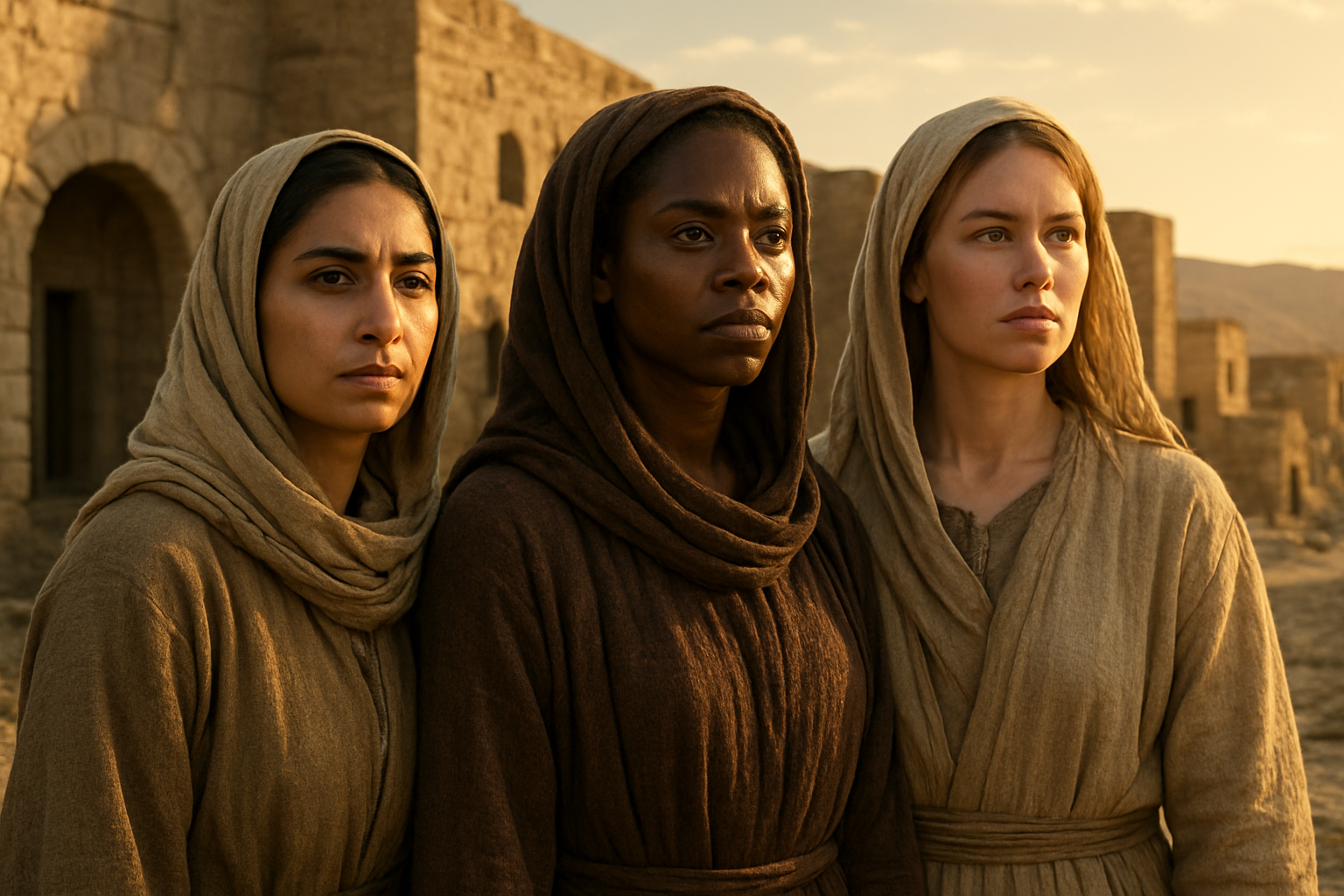
Hidden in the shadows of Jericho's ancient walls lived a woman whose past seemed to disqualify her from God's plan. Rahab, a prostitute in a pagan city, made a split-second decision that changed everything. When Joshua's spies arrived to scout the land, she chose to hide them rather than turn them over to the king's soldiers.
Rahab's courage went beyond physical protection. She declared her faith in the God of Israel, saying, "The Lord your God is God in heaven above and on the earth below." This confession from someone society would have dismissed shows how God uses unlikely heroes to accomplish His purposes. Her quick thinking and bold action saved not only the spies but her entire family when Jericho fell.
The scarlet cord she hung from her window became a symbol of salvation, prefiguring Christ's redemptive work. Rahab's story proves that past mistakes don't determine future destiny. She married into the Israelite community and became an ancestor of both King David and Jesus Christ - a biblical heroine whose faith transformed her from outcast to matriarch.
Abigail's Wisdom That Prevented David's Vengeance
Married to a fool named Nabal, Abigail found herself caught between her husband's stupidity and David's righteous anger. When Nabal insulted David after refusing to pay for protection services, David gathered 400 men to destroy Nabal's household. Abigail had minutes to prevent a massacre.
Her diplomatic approach was masterful. She loaded donkeys with food, rode out to meet David, and fell at his feet with a carefully crafted speech that acknowledged David's future kingship while appealing to his sense of justice. She reminded him that unnecessary bloodshed would haunt his reign, saying he shouldn't have "the staggering burden of needless bloodshed."
Abigail's intervention saved lives and preserved David's reputation. David recognized God's wisdom speaking through her, blessing her for keeping him from violence. When Nabal died ten days later, David married Abigail, recognizing her as a woman of extraordinary faith whose wisdom exceeded that of many counselors. She turned potential disaster into divine opportunity through courage and intelligence.
The Woman at the Well's Evangelistic Impact
A Samaritan woman with a complicated romantic history became an unlikely evangelist in her community. When Jesus asked her for water at Jacob's well, cultural barriers should have prevented any conversation - Jews avoided Samaritans, and rabbis didn't speak publicly with women. Yet this encounter became one of the most powerful evangelistic moments in scripture.
Jesus revealed her past without condemnation, offering living water that would satisfy her deepest spiritual thirst. Her response shows remarkable spiritual insight as she engaged in theological discussion about worship and the coming Messiah. When Jesus revealed His identity, she immediately left her water jar and ran to tell her town.
Her testimony was simple but powerful: "Come, see a man who told me everything I ever did. Could this be the Messiah?" The entire town came out to meet Jesus because of her witness. Many Samaritans believed based on her testimony alone, and even more believed after hearing Jesus themselves. This woman's courage to share her encounter despite her reputation resulted in an entire community discovering salvation - proving that God chooses strong women from unexpected backgrounds to spread His truth.
The stories of biblical women reveal powerful examples of faith, courage, and divine purpose that continue to inspire us today. From the matriarchs who helped establish God's covenant with humanity to the brave leaders who saved entire nations, these women show us that God works through ordinary people to accomplish extraordinary things. The prophetesses who fearlessly delivered God's messages, the faithful women who made incredible sacrifices, and the unlikely heroes who stepped up in moments of crisis all demonstrate that strength comes in many forms.
These biblical accounts remind us that God values and uses women in significant ways throughout history. Their stories teach us about unwavering faith, bold leadership, and the courage to act when others might hesitate. Take time to study these remarkable women more deeply - their examples can guide your own journey of faith and help you recognize the unique ways God might be calling you to make a difference in your world.


Comments
Post a Comment