Social Media and the Christian Woman

Social media can feel overwhelming for Christian women who want to honor God while staying connected online. You're not alone if you've wondered how to navigate Instagram, Facebook, and TikTok without compromising your faith or getting caught up in comparison and negativity.
This guide is for Christian women who use social media and want practical, biblical wisdom for their online presence. Whether you're a mom sharing family moments, a professional building your career, or someone who loves connecting with friends, you can create a digital space that reflects your values.
We'll explore how to build authentic Christian community online that goes beyond surface-level interactions and actually strengthens your faith. You'll also discover practical ways to share your faith on social media naturally and effectively, without being preachy or turning people away. Finally, we'll discuss how to protect your heart and mind from the digital temptations that can pull you away from what matters most.
Your social media presence can be a powerful tool for ministry and connection when guided by biblical principles.
Navigate Social Media Platforms with Biblical Wisdom
Apply Scripture to Your Daily Scrolling Habits
Your phone buzzes, and before you know it, you're deep in a scroll session that started as a quick check-in. As Christian women navigating social media, we need biblical wisdom to guide our digital habits. Consider Philippians 4:8, which calls us to focus on whatever is true, noble, right, pure, lovely, and admirable. This verse becomes a powerful filter for your daily scrolling.
Create a mental checklist before opening any app: "Will this content align with God's truth? Does it build up rather than tear down?" When you encounter posts that stir anger, envy, or discouragement, pause and pray. Ask the Holy Spirit to help you respond with grace or simply scroll past content that doesn't serve your spiritual growth.
Start your social media time with prayer, inviting God into your digital space. Set your heart on His kingdom priorities before diving into the endless feed. Consider bookmarking encouraging Christian accounts or Bible verse pages so they appear early in your scroll, setting a positive tone for your entire session.
Distinguish Between Healthy and Harmful Content Consumption
Not all social media content serves your soul equally well. Healthy content for Christian women often includes encouraging testimonies, biblical teaching, family moments that celebrate God's goodness, and posts that inspire growth in faith. This type of content leaves you feeling uplifted, motivated to serve others, and more connected to your purpose in Christ.
Harmful content, however, might seem innocent at first glance. Watch for posts that consistently make you feel inadequate about your appearance, parenting, marriage, or spiritual walk. Content that promotes gossip, divisiveness, or worldly values can slowly shift your heart away from Christ's peace. Pay attention to how you feel after consuming certain types of content.
| Healthy Content Signs | Harmful Content Warning Signs |
|---|---|
| Inspires gratitude and worship | Breeds comparison and discontent |
| Encourages biblical values | Promotes worldly standards |
| Builds up the body of Christ | Creates division or judgment |
| Points to God's truth | Distracts from eternal perspective |
Trust your spirit's discernment when something feels off about particular content, even if you can't immediately explain why.
Set God-Honoring Boundaries for Screen Time
Biblical wisdom calls us to be intentional stewards of our time, remembering that each moment is a gift from God. Setting healthy screen time boundaries protects your relationships, spiritual disciplines, and mental well-being. Consider implementing a digital Sabbath where you step away from social platforms for a full day each week, creating space for deeper connection with God and loved ones.
Establish specific time blocks for social media use rather than allowing it to interrupt throughout your day. Many Christian women find success with morning and evening boundaries—avoiding phones during the first hour after waking and the last hour before bed. This creates space for prayer, Scripture reading, and peaceful transitions.
Use your phone's built-in screen time tools to track your actual usage versus your intended limits. You might be surprised how those "quick checks" add up. Set app-specific time limits and stick to them, remembering that every minute spent scrolling is a minute not invested in your calling as a daughter of Christ.
Practice Digital Discernment in Information Sharing
Before hitting that share button, pause and ask yourself key questions rooted in biblical wisdom. Is this information true and verified? Does sharing this post serve love and unity, or does it stir up unnecessary conflict? Christian women have a unique opportunity to be voices of wisdom and peace in digital spaces often filled with division and misinformation.
Develop the habit of fact-checking before sharing news or controversial content. Quick Google searches or visits to reputable fact-checking sites can prevent you from spreading false information that could harm your Christian witness. When in doubt, don't share—your reputation and the gospel's reputation are too valuable to risk.
Consider the heart behind your sharing. Are you motivated by genuine care for others, or by the desire to be seen as informed or first with breaking news? Biblical discernment means examining your motives and choosing to share only what truly serves others' good and God's glory. Your social media presence becomes a reflection of Christ's character when filtered through this lens of love and truth.
Build Authentic Christian Community Online
Foster Meaningful Relationships Through Digital Connections
Building genuine friendships as a Christian woman social media user requires intentional effort and authentic engagement. Start by sharing real moments from your life - the struggles with your prayer time, the joy of seeing God work in small ways, or honest questions about Scripture. When you post vulnerable content, other believers feel permission to do the same.
Engage meaningfully with others' posts by asking thoughtful follow-up questions and sharing your own experiences. Instead of just dropping a quick "praying for you" comment, take time to craft specific prayers or share how their situation reminds you of God's faithfulness in your own life. Many women have formed deep friendships that began with consistent, caring interactions in comment sections.
Join Facebook groups, Instagram faith communities, or Christian Discord servers where biblical wisdom online is shared regularly. These spaces create opportunities for ongoing conversations beyond surface-level interactions. Look for groups that encourage biblical discussion, prayer requests, and authentic sharing about the Christian walk.
Support and Encourage Fellow Believers in Virtual Spaces
Digital discipleship for women happens naturally when we show up consistently for each other online. Create a practice of checking in with sisters who share prayer requests or going through difficult seasons. Send private messages when someone shares something heavy, offering specific ways you can pray or practical help if you live nearby.
Share encouraging Scripture verses or devotional insights that speak to common struggles. When you see a sister celebrating an answered prayer or spiritual breakthrough, celebrate with her publicly. Your enthusiasm for God's work in her life encourages both her and everyone who sees your response.
Use your platform to highlight other Christian women doing amazing work - whether that's ministry, creative endeavors, or simply living out their faith well. This kind of mutual encouragement strengthens the entire body of Christ and helps combat the comparison trap that social media often creates.
Create Safe Spaces for Spiritual Growth and Prayer
Christian community building online thrives when we establish environments where women feel safe to be vulnerable about their spiritual journeys. If you have a larger following, consider hosting regular Instagram Live sessions focused on prayer, Bible study, or honest conversations about faith challenges.
Set clear boundaries about what kind of content and interactions you welcome in your space. This might mean moderating comments to keep discussions respectful and Christ-centered, or creating private groups where deeper conversations can happen away from public scrutiny.
Start prayer chains through direct messages or create dedicated prayer request posts where women can share needs and follow up with praise reports. Many find that accountability partnerships formed through social media connections help them grow spiritually in ways their offline community might not provide.
Remember that protecting faith online means being wise about what spiritual struggles you share publicly versus privately with trusted friends you've met through these digital spaces.
Share Your Faith Effectively Through Social Media

Craft Posts That Reflect Christ's Love Without Being Preachy
Finding the sweet spot between sharing your faith and connecting naturally with others takes practice. Start by focusing on the heart behind your message rather than trying to sound religious. When you post about challenges you're facing, share how your faith gives you strength without lecturing. For example, instead of posting "God has a plan for everyone," try something like "Grateful for the peace I've found in prayer during this uncertain season."
Your audience responds better to authenticity than perfection. Share real moments where your faith intersects with daily life - maybe how reading scripture helped you through a difficult conversation with your teenager, or how choosing forgiveness changed your perspective. These genuine glimpses into your spiritual journey invite others to consider their own relationship with God without feeling pressured.
Visual content works wonderfully for faith-based social media when done thoughtfully. Pair beautiful images with simple, encouraging words that point to God's character. A sunset photo with "His mercies are new every morning" feels natural and hopeful rather than pushy.
Use Your Platform to Spread Hope and Biblical Truth
Your social media presence can become a source of encouragement for others seeking hope in dark times. Biblical wisdom shared at the right moment can change someone's entire day. When current events feel overwhelming or your friends are struggling, carefully chosen scripture verses or biblical principles can offer comfort and perspective.
Create content that addresses real-life situations through a biblical lens. Share how God's promises apply to modern challenges like anxiety, relationship struggles, financial stress, or parenting difficulties. When you post about overcoming fear, include verses about God's protection. When discussing forgiveness, share how Christ's example transforms our approach to difficult relationships.
Timing matters when sharing biblical truth on social media. Pay attention to what your friends and followers are experiencing. During seasons of grief, focus on God's comfort. During times of celebration, highlight gratitude and God's goodness. This digital discipleship for women requires sensitivity and wisdom about when to speak and when to simply pray for others.
Consider creating regular features like "Monday Motivation" with encouraging verses or "Wisdom Wednesday" with practical biblical advice for women. Consistency helps people know they can count on your platform for spiritual encouragement.
Engage Respectfully with Non-Believers in Comment Sections
Comment sections can become battlegrounds, but they don't have to be. When non-believers question your posts or express different viewpoints, respond with gentleness and respect. Remember that behind every comment is a real person created in God's image, regardless of their current relationship with Him.
Ask questions rather than making statements when discussions get heated. "What experiences have shaped your perspective on this?" opens dialogue better than defensive arguments. Listen genuinely to understand their concerns rather than formulating your rebuttal while they speak.
Avoid using Christian jargon that creates barriers. Terms like "blessed," "surrender," or "conviction" might confuse people unfamiliar with church culture. Explain concepts in everyday language that everyone can understand. Instead of saying "God convicted my heart," try "I realized I needed to change my attitude."
Sometimes the most powerful witness is knowing when not to engage. If a conversation becomes hostile or unproductive, it's perfectly acceptable to step away. You can pray for that person privately while protecting your own peace and the positive atmosphere of your online community.
Balance Personal Testimony with Everyday Life Content
Authentic Christian woman social media presence includes both spiritual insights and regular life moments. People connect with you as a whole person, not just a spiritual teacher. Share your struggles with meal planning, your daughter's soccer game, your favorite coffee shop, and your morning devotions with equal enthusiasm.
This balance prevents your platform from feeling like a religious broadcast while still maintaining your Christian identity. When followers see you posting about your garden, your work challenges, and your faith journey, they understand that Christianity isn't separate from real life - it's woven throughout everything you do.
Mix content types throughout the week. Monday might feature weekend family activities, Tuesday could include a meaningful quote from your devotional reading, Wednesday might show your current book or podcast recommendation, and Thursday could share prayer requests or praise reports. This variety keeps your feed interesting while naturally incorporating your faith.
Remember that everyday moments often provide the best opportunities for subtle testimony. A photo of homemade bread might include gratitude for simple blessings. A difficult day at work becomes a chance to share how prayer helped you respond with patience. These natural connections between faith and daily life feel authentic and relatable to both believers and seekers following your journey.
Protect Your Heart and Mind from Digital Temptations

Combat Comparison and Envy Through Gratitude Practices
Social media feeds are carefully curated highlight reels that rarely show the full picture of someone's life. When we scroll through endless posts of perfect family photos, dream vacations, and seemingly flawless moments, it's natural for our hearts to drift toward comparison. The enemy loves to whisper lies about our worth when we see others appearing to have what we lack.
Scripture calls us to a different response. Philippians 4:8 reminds us to focus on what is true, noble, right, and praiseworthy. Instead of allowing comparison to steal our joy, we can develop intentional gratitude practices that protect our hearts. Start each social media session with a prayer of thanksgiving for three specific blessings in your life. Keep a gratitude journal beside your phone, jotting down God's goodness as you encounter posts that might trigger envy.
When you feel that familiar pang of "why don't I have that," pause and ask God to show you His provision in your current season. Remember that His timing is perfect, and His plans for you are uniquely designed for your good and His glory. Consider unfollowing accounts that consistently trigger comparison, replacing them with content that encourages your faith and celebrates God's work in everyday moments.
Guard Against Gossip and Negative Speech Online
The digital world makes it incredibly easy to share our thoughts without considering their impact. A quick comment, a shared post with our own commentary, or even a seemingly innocent "prayer request" can quickly cross the line into gossip territory. As Christian women practicing biblical wisdom online, we must be especially careful about how we speak of others in digital spaces.
Ephesians 4:29 instructs us to let no unwholesome talk come from our mouths, but only what is helpful for building others up. This applies equally to our keyboards and our voices. Before posting or commenting about someone else, ask yourself: Is this true? Is it necessary? Is it kind? Will this build up or tear down?
Resist the urge to join in when others are criticizing church leadership, complaining about family members, or sharing details about someone else's struggles. If you genuinely need prayer for a situation involving others, reach out privately to trusted friends rather than broadcasting the details publicly. Choose to be known as someone who speaks life and encouragement online, creating space for grace rather than judgment.
Maintain Modesty and Dignity in Photos and Posts
Your social media presence reflects your identity as a daughter of the King. Every photo and post is an opportunity to honor God and demonstrate the dignity that comes from knowing your worth in Christ. This doesn't mean you can't have fun or show personality, but it does mean being thoughtful about how you present yourself to the world.
Consider how your photos might impact others. Are you dressing in a way that reflects modesty and respect for your body as God's temple? Would you be comfortable if your pastor, your children, or Jesus Himself saw these images? This isn't about legalism or shame, but about wisdom and honoring the calling God has placed on your life as a Christian woman.
Your captions and posts also matter. Share authentically about your life, struggles, and victories, but do so in ways that point others toward God rather than drawing attention solely to yourself. Let your words reflect the fruit of the Spirit: love, joy, peace, patience, kindness, goodness, faithfulness, gentleness, and self-control.
Resist the Urge to Seek Validation Through Likes and Comments
The dopamine hit from social media engagement can become addictive quickly. When we start measuring our worth by the number of likes, comments, or shares we receive, we've allowed the world's system to define our value instead of resting in God's unchanging love for us.
Your identity as God's beloved daughter doesn't fluctuate based on social media metrics. Whether a post receives two likes or two hundred, your worth remains constant in His eyes. Recognizing this truth helps free us from the exhausting cycle of posting for approval and constantly checking for validation.
Create healthy boundaries around your social media use. Consider turning off notifications, checking apps only at designated times, or even taking regular social media breaks to recalibrate your heart. Remember that real community and genuine affirmation come through face-to-face relationships and time spent in God's presence, not through digital interactions.
Develop Healthy Responses to Criticism and Online Conflict
The internet can bring out the worst in people, and as Christian women sharing our faith online, we may face criticism, misunderstandings, or even attacks on our beliefs. Learning to respond with grace and wisdom protects our hearts and provides a powerful witness to others.
When faced with negative comments or disagreements, take time to pray before responding. Sometimes the most Christ-like response is no response at all. Other times, a gentle, respectful reply that shows love for the person while standing firm in truth can open doors for meaningful conversation.
Remember that hurt people often hurt others online because they feel safe behind a screen. Choose to respond with compassion rather than defensiveness. If someone challenges your faith, see it as an opportunity to share God's love rather than a personal attack to defend against. Block or unfollow accounts that consistently spread negativity or hatred, protecting your peace while continuing to pray for those individuals.
Most importantly, don't allow online criticism to silence your voice or dim your light. God has given you a unique testimony and calling that the world needs to hear. Stay grounded in His truth, surround yourself with encouraging Christian community, and continue sharing His love boldly in digital spaces.
Model Christian Values for the Next Generation
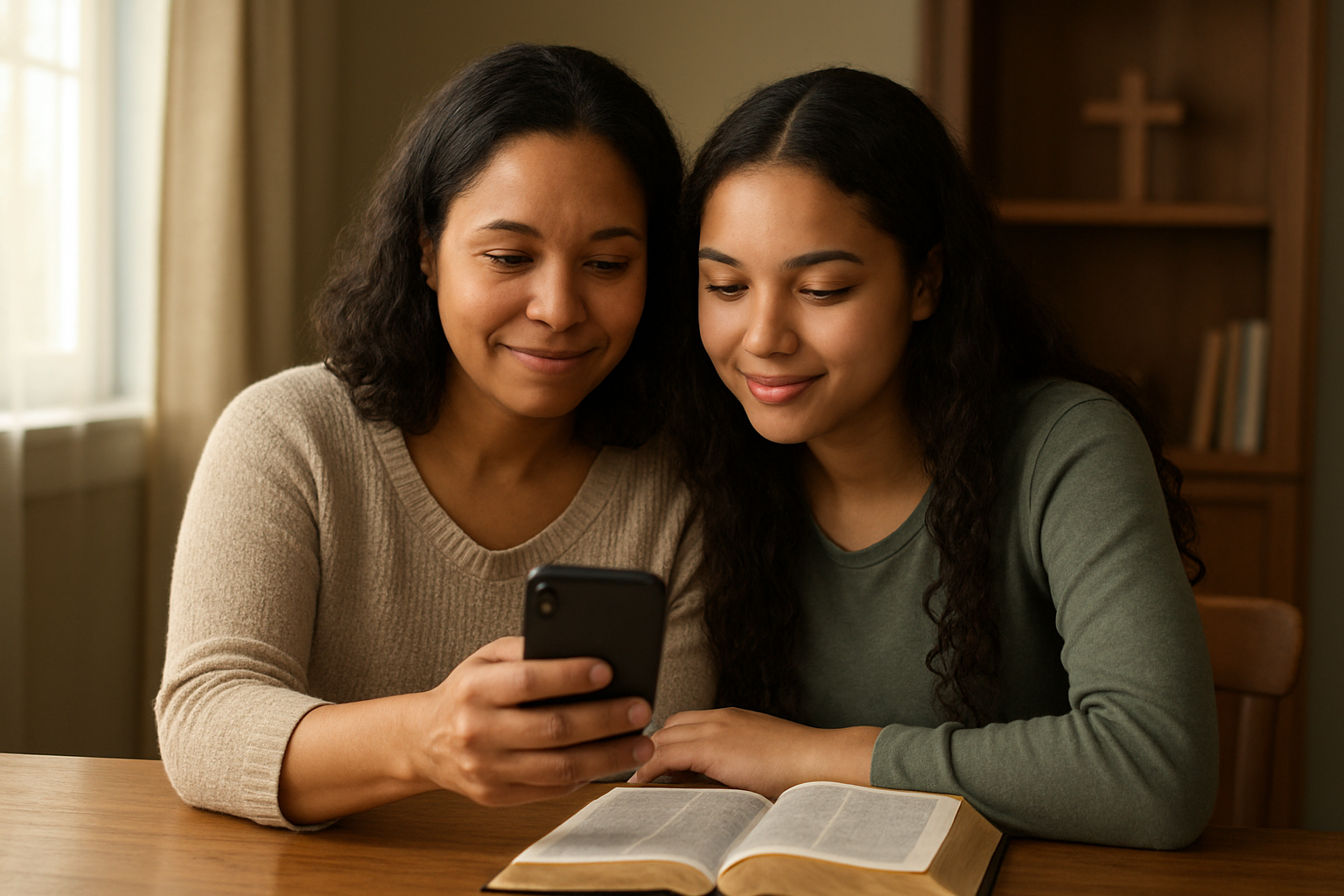
Demonstrate Wisdom in What You Share About Your Family
Your family moments are precious gifts, but not every precious moment belongs on the internet. As a Christian woman social media user, you hold the responsibility of protecting your family's privacy while still sharing glimpses of God's goodness in your daily life.
Think twice before posting photos that reveal too much personal information about your children. Those adorable first-day-of-school pictures with the school name clearly visible? Consider blurring the background or cropping strategically. Birthday posts announcing ages and specific locations? Maybe skip the restaurant name and just focus on celebrating your child's special day.
Your children didn't choose to have their lives documented online. Ask yourself: "Will my child appreciate this being on the internet when they're fifteen?" That potty-training victory might feel share-worthy now, but your toddler will grow up to become a teenager who values privacy.
Create boundaries around what stays private and what gets shared. Family conflicts, discipline moments, and challenging parenting situations don't need an audience. Instead, share the victories, the sweet moments, and the ways you see God working in your family's story.
Remember that strangers can see what you post, even with privacy settings. Protect your family by being selective about details like travel plans, daily routines, and personal struggles your children might face.
Teach Children Healthy Social Media Habits Through Your Example
Your kids are watching everything you do online, even when you think they're not paying attention. They notice when you scroll endlessly through your phone during family time. They see when you get upset about comments or when you compare your life to others' highlight reels.
Biblical wisdom online starts with self-control and intentionality. Put your phone down during meals, bedtime stories, and family conversations. Show your children that real people matter more than virtual connections. When you do use social media, explain why you're checking it and what you're doing.
Talk openly about the difference between real life and what people share online. Help your children understand that everyone struggles, even people who seem to have perfect lives on Instagram. Share your own experiences with comparison and how you handle those feelings through prayer and grounding yourself in God's truth.
Set specific times for social media use and stick to them. Your children will learn that digital boundaries are healthy and necessary. Show them how to evaluate content critically by discussing posts together and asking questions like, "Does this align with our family values?" or "How does this make us feel about ourselves?"
Model kindness in your comments and interactions. Your children will learn to communicate with grace online by watching you respond to both positive and negative interactions with biblical wisdom.
Create Content That Inspires Other Women in Their Faith Journey
Your social media presence can become a powerful tool for digital discipleship for women. Share authentic glimpses of how you're growing in your relationship with Jesus, not just the polished moments but the real, messy, beautiful journey of faith.
Post scripture verses that speak to your heart, but don't just share the pretty graphics. Tell the story behind why that verse matters to you right now. Share how you're applying biblical truth in practical ways - maybe it's learning to forgive a difficult neighbor or trusting God through a challenging season.
Your struggles don't need to be hidden away. Other Christian women need to see that following Jesus doesn't mean having a perfect life. Share honestly about seasons of doubt, times when prayer feels difficult, or moments when you're learning to surrender control to God. Your vulnerability gives other women permission to be real about their own faith journeys.
Use your platform to encourage other mothers, wives, single women, and sisters in Christ. Celebrate their victories, pray for their struggles, and create a community where women feel safe to share their hearts. Comment meaningfully on others' posts, not just with emojis but with genuine encouragement.
Christian values social media means using your influence - whether you have fifty followers or fifty thousand - to point people toward Jesus. Share resources that have helped you grow, recommend books that have changed your perspective, and highlight other women who are living out their faith authentically.
Your content doesn't need to be professionally polished to make an impact. Sometimes the most powerful posts are the unfiltered moments where God's grace shines through your ordinary day. Let other women see that faith-based social media can be real, encouraging, and transformative.

Social media can be a powerful tool when guided by biblical wisdom and genuine faith. The key is finding balance – building real connections while protecting your heart, sharing your beliefs naturally without being preachy, and setting boundaries that honor God. When you approach online spaces with intentionality and grace, you create opportunities to encourage others and live out your values authentically.
Your digital footprint matters just as much as your offline witness. Young people are watching how you navigate these platforms, learning from your example of what it means to follow Christ in the modern world. Take time to evaluate your social media habits regularly, asking God to show you where you can grow and how you can better reflect His love online. Your voice and testimony have the potential to impact lives in ways you may never fully know.


Comments
Post a Comment