Lessons From Sisters Mary and Martha in the Bible

The Mary and Martha Bible story offers some of the most relatable lessons about faith, service, and finding balance in our spiritual lives. These biblical sisters show us two distinct approaches to following Jesus, and their experiences reveal timeless truths about discipleship that still speak to Christians today.
This deep dive into their story is for anyone who has ever felt torn between doing and being, serving and sitting still, or wondered if their personality type fits into God's plan. You'll discover why both Martha's service-oriented leadership and Mary's contemplative discipleship matter in the kingdom of God.
We'll explore the famous dinner party conflict that many of us can relate to - when good intentions collide and feelings get hurt. You'll also see how both sisters handled devastating grief when their brother Lazarus died, revealing different but equally valid ways to process loss and trust God. Finally, we'll unpack practical applications that help modern Christians embrace their unique calling while learning from both sisters' strengths.
Whether you're a natural helper like Martha or a deep thinker like Mary, these biblical women leadership examples will help you grow in your faith journey.
Understanding the Biblical Context of Mary and Martha

Their family relationship with Lazarus in Bethany
Mary and Martha lived together with their brother Lazarus in the village of Bethany, located about two miles southeast of Jerusalem on the eastern slope of the Mount of Olives. This small town served as a perfect retreat location for Jesus during his ministry, offering both proximity to Jerusalem and peaceful respite from the crowds. The three siblings shared a close bond that extended beyond typical family relationships - they formed a household of faith that welcomed Jesus and his disciples regularly.
Archaeological evidence suggests that Bethany was a modest farming community during the first century, and the siblings likely maintained a comfortable middle-class lifestyle. Their ability to host Jesus and his followers multiple times indicates they had adequate resources and space. Lazarus appears to have been the head of the household, while his sisters Mary and Martha managed domestic responsibilities and spiritual hospitality in ways that reflected their distinct personalities.
The biblical narrative reveals deep affection between the siblings, particularly evident when Lazarus fell ill and eventually died. Both sisters sent urgent word to Jesus, demonstrating their unwavering faith in his healing power. Their grief was profound and public, showing how central Lazarus was not only to their family unit but also to their spiritual community in Bethany.
Jesus' frequent visits to their household
The home in Bethany became Jesus' preferred place of refuge during his final months of ministry. Unlike other locations where he might face opposition or crowds seeking miracles, this household offered genuine friendship and understanding. Jesus felt comfortable enough to arrive unannounced, rest freely, and engage in deep conversations about spiritual matters.
These visits weren't formal teaching sessions but intimate gatherings where Jesus could be himself. The siblings treated him as family rather than just a rabbi or miracle worker. This unique relationship allowed Jesus to experience normal human fellowship - sharing meals, discussing daily concerns, and enjoying the simple pleasure of trusted friendships.
The frequency of these visits created a natural rhythm where Mary and Martha developed their distinct ways of expressing devotion. Martha channeled her love through active service, ensuring Jesus and his disciples were well-fed and comfortable. Mary expressed hers through attentive listening and spiritual contemplation. Both approaches pleased Jesus, though he occasionally needed to address the tension that arose between their different styles.
The cultural expectations for women during biblical times
First-century Jewish society placed specific expectations on women that shaped how Mary and Martha navigated their relationships with Jesus. Women typically managed household affairs, prepared meals, and cared for guests, making Martha's service-oriented approach culturally appropriate and expected. Her bustling activity in the kitchen would have been seen as proper feminine duty and hospitality.
Mary's choice to sit at Jesus' feet learning alongside the disciples challenged social norms. Rabbinical education was generally reserved for men, and women weren't expected to engage in theological discussions. Her behavior was radical for the time, yet Jesus defended her right to learn and participate in spiritual discourse.
The cultural context makes Jesus' responses to both sisters even more significant. He didn't dismiss Martha's service as unimportant - hospitality was crucial in ancient Middle Eastern culture. However, he also didn't restrict Mary from pursuing spiritual growth beyond traditional gender roles. This balanced approach showed respect for both cultural sensitivities and individual spiritual calling.
Both sisters operated within their society's framework while pushing boundaries in their own ways. Martha's leadership in managing household hospitality and Mary's boldness in claiming a place among Jesus' students demonstrated how faith could work within and sometimes transcend cultural limitations.
Their unique personalities and approaches to faith
Mary and Martha represent two distinct personality types that continue to resonate with believers today. Martha embodied the active, task-oriented approach to faith - she believed in showing love through practical service and ensuring others' physical needs were met. Her faith expressed itself through movement, preparation, and tangible acts of care.
Mary demonstrated the contemplative, relationship-focused path to discipleship. She prioritized spiritual connection over physical comfort, choosing to absorb Jesus' teachings rather than focus on meal preparation. Her faith centered on presence, listening, and internal spiritual development.
Neither approach was superior to the other, though they sometimes created tension. Martha's frustration with Mary during the famous dinner party incident reveals how different faith expressions can clash when people don't understand or appreciate alternative styles. Martha valued productivity and visible contribution, while Mary treasured spiritual intimacy and learning opportunities.
These personality differences became strengths when crisis struck. During Lazarus's illness and death, Martha's practical nature led her to take action - sending messengers and later meeting Jesus on the road. Mary's contemplative spirit helped her process grief more internally before encountering Jesus. Both responses were authentic expressions of their distinct approaches to faith and relationship with Christ.
Martha's Service-Oriented Leadership Style
Taking Charge of Hospitality and Household Management
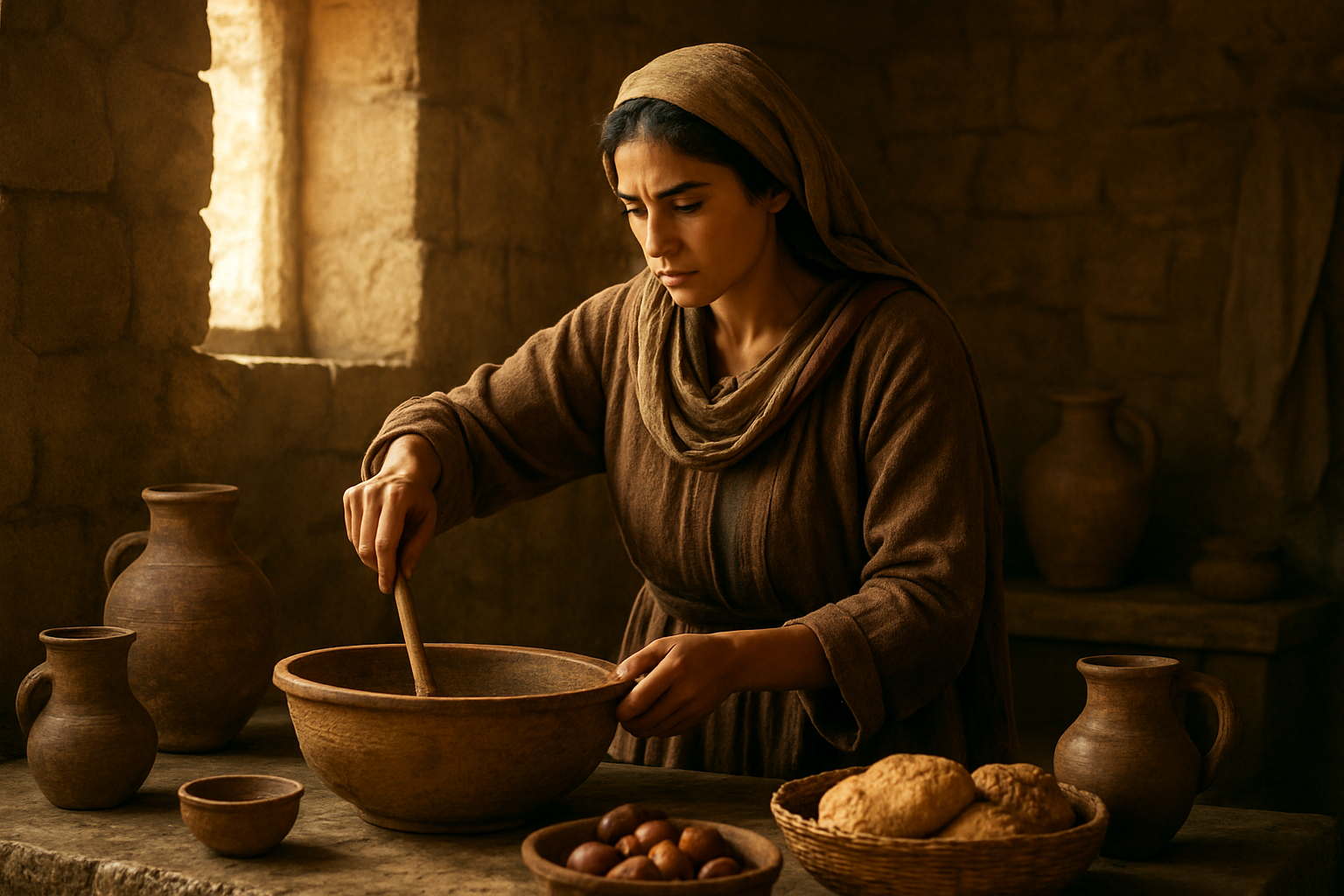
Martha emerges in the biblical narrative as a natural leader who understood the weight of hospitality in ancient Jewish culture. When Jesus visited their home in Bethany, Martha immediately stepped into her role as hostess, orchestrating every detail to ensure her honored guest received proper care. This wasn't just about being polite – in first-century Palestine, hospitality carried deep spiritual and social significance.
Martha's leadership style shows itself through her proactive approach. She didn't wait for someone else to make decisions or delegate tasks. Instead, she took charge of meal preparation, coordinated household activities, and managed the logistics of hosting. Her mindset reflected a servant-leader mentality where she saw herself as responsible for creating an environment where others could be comfortable and blessed.
The Martha service leadership approach resonates with many people who naturally gravitate toward organizing, managing, and ensuring things run smoothly. Martha recognized that someone needed to handle the practical details, and she willingly shouldered that responsibility.
Demonstrating Practical Love Through Action
Martha expressed her devotion to Jesus through tangible acts of service. While others might share their feelings through words or contemplation, Martha's love language was action. She believed that preparing an excellent meal, maintaining a clean home, and attending to physical needs demonstrated genuine care and respect.
Her approach mirrors the biblical principle that faith without works is incomplete. Martha lived out her beliefs by creating spaces where ministry could happen. She understood that someone had to prepare food, clean spaces, and handle countless behind-the-scenes tasks that make community life possible.
This action-oriented love appears throughout her interactions with Jesus. Even during her grief over Lazarus's death, Martha rushed out to meet Jesus on the road, taking initiative rather than waiting passively. Her practical nature drove her to engage directly with problems and seek solutions.
Learning to Balance Doing with Being Present
The famous Mary and Martha conflict in Luke 10 reveals Martha's greatest leadership challenge: finding balance between productive activity and present-moment awareness. Martha became "distracted by all the preparations" – a phrase that captures the tension many service-oriented leaders face today.
Martha's complaint to Jesus wasn't really about Mary's lack of help; it reflected her internal struggle with priorities. She had trained herself to show love through doing, but Jesus gently redirected her attention toward the value of simply being present with him.
This doesn't mean Martha's service was wrong or unnecessary. Rather, Jesus helped her understand that even good activities can become obstacles to deeper relationship when they consume all our attention. The biblical account suggests that Martha learned from this correction, as later stories show her continuing to serve while also engaging more personally with Jesus's teachings.
Modern leaders can learn from Martha's journey toward balance. Her story teaches us that effectiveness requires both productive action and intentional presence – knowing when to work and when to simply listen and connect.
Mary's Contemplative Approach to Discipleship

Choosing to sit at Jesus' feet and listen
Mary made a radical choice that shocked everyone at the dinner party. While her sister Martha busied herself with meal preparations, Mary positioned herself at Jesus' feet - the traditional place of a student learning from their rabbi. This wasn't just about being physically close to Jesus; it represented a deliberate decision to become his disciple.
In first-century Jewish culture, women rarely received formal religious education. They were expected to handle domestic duties while men engaged in theological discussions. Mary broke these social boundaries by claiming her right to learn directly from the Teacher. Her decision to sit and listen demonstrated courage and spiritual hunger that transcended cultural limitations.
The Luke 10 Mary Martha story reveals Mary's deep understanding of what really mattered. She recognized that Jesus offered something far more valuable than perfectly prepared meals or spotless homes. His words contained eternal truth, wisdom for living, and insights into God's kingdom that couldn't be found anywhere else.
Mary's choice shows us that discipleship requires intentional decisions. She could have helped Martha with the cooking and serving, but she chose spiritual nourishment instead. Her action teaches modern believers that we must sometimes set aside urgent tasks to focus on what's truly important - our relationship with God.
Prioritizing spiritual growth over social expectations
Mary's contemplative discipleship challenged every social expectation of her time. Women were supposed to focus on hospitality duties, especially when important guests visited their homes. Yet Mary chose spiritual development over social conformity, placing her growth as a disciple above cultural pressures to fulfill traditional gender roles.
Her decision wasn't selfish or inconsiderate. Mary understood that spiritual growth required sacrifice and deliberate choices. She couldn't serve Jesus effectively without first learning from him. By prioritizing her spiritual development, she was actually preparing herself for greater service in God's kingdom.
The biblical sisters lessons from this story reveal how Mary's approach complemented Martha's service-oriented leadership. While Martha expressed love through action and hospitality, Mary demonstrated devotion through listening and learning. Both approaches have value, but Mary's choice highlights the essential foundation of spiritual growth that must underpin all Christian service.
Mary's example encourages believers to examine their own priorities. Are we so focused on doing things for God that we forget to spend time with God? Her contemplative approach reminds us that spiritual growth often requires saying no to good activities in order to say yes to the best ones.
Finding strength through quiet reflection and worship
Mary's contemplative nature became especially evident during times of crisis and loss. When her brother Lazarus died, she didn't immediately rush out to meet Jesus like Martha did. Instead, Mary remained in the house, likely processing her grief through quiet reflection until Jesus specifically called for her.
This pattern of finding strength through contemplation rather than action characterized Mary's discipleship style throughout the gospels. She consistently chose moments of worship and reflection as her primary way of connecting with Jesus. Even when others criticized her choices - like when she anointed Jesus' feet with expensive perfume - Mary stayed true to her contemplative approach.
Her quiet strength complemented Martha's more active leadership style. While Martha questioned, challenged, and took immediate action, Mary absorbed, reflected, and responded through worship. Both sisters handled grief and loss differently, yet both found comfort in their relationship with Jesus.
Mary's contemplative discipleship offers valuable lessons for modern Christian living. Her example shows that strength can come through stillness, wisdom through listening, and growth through reflection. In our fast-paced world, Mary's approach reminds us that spiritual depth often develops in quiet moments rather than busy activity.
Her life demonstrates that contemplative disciples serve important roles in God's kingdom. They offer different perspectives, deeper insights, and often recognize spiritual truths that more action-oriented people might miss. Mary's story validates the importance of quiet reflection and worship as legitimate and valuable expressions of faith.
The Famous Dinner Party Conflict and Its Lessons
Martha's Frustration with Unequal Work Distribution
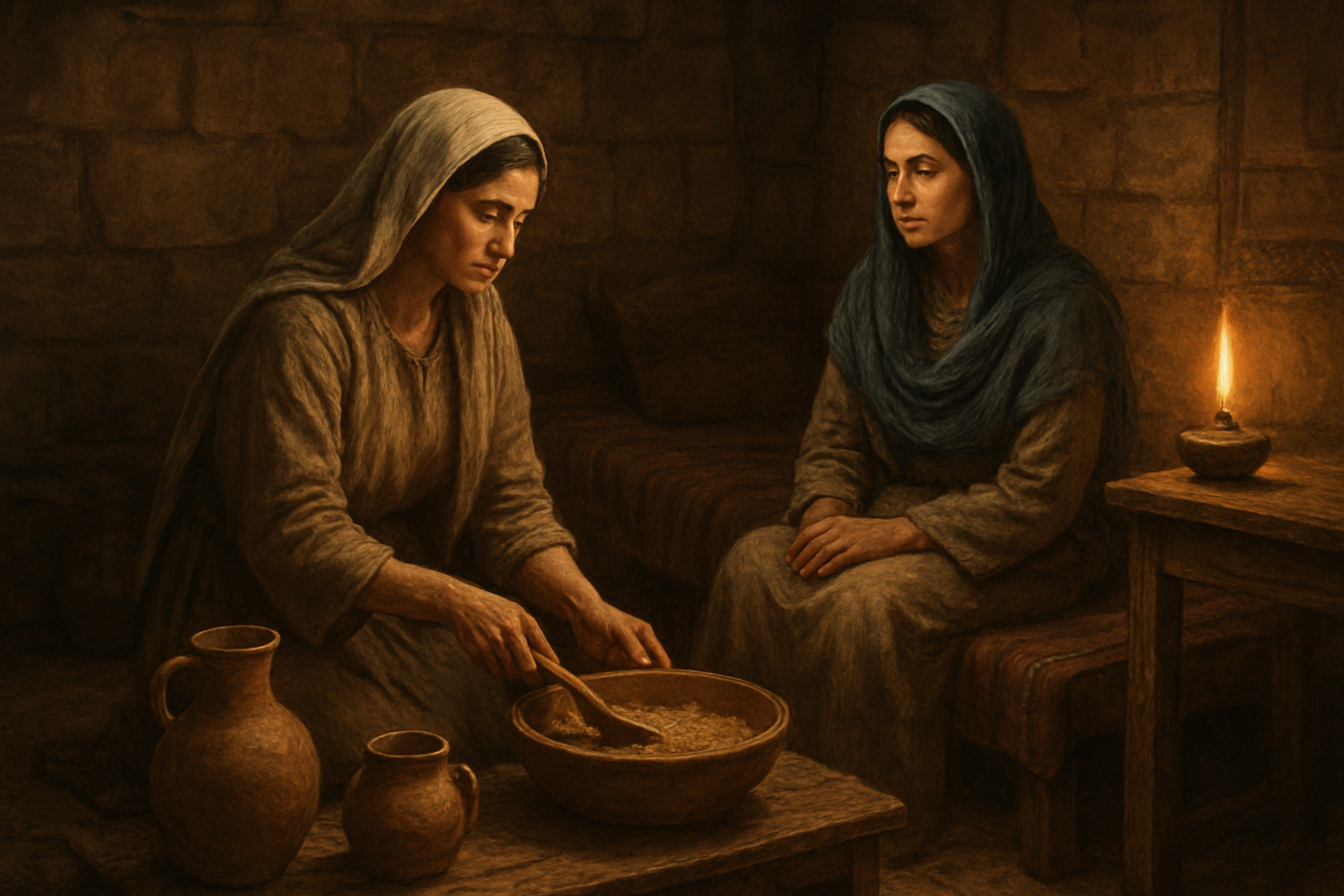
Picture this scene: guests have arrived at your home, and you're rushing around preparing food, setting up seating, and making sure everything runs smoothly. Meanwhile, your sibling sits chatting with the visitors, seemingly oblivious to all the work that needs doing. This was Martha's reality when Jesus visited their home in Bethany.
Martha had thrown herself into hosting duties with characteristic determination. She was likely preparing multiple dishes, arranging the house, and coordinating every detail to ensure Jesus and his disciples felt welcomed. But as she worked alone in the kitchen area, frustration built up inside her. Mary, instead of helping with the practical preparations, had chosen to sit at Jesus' feet, listening to his teaching.
The Greek text reveals Martha was "distracted with much serving" - the word "distracted" suggests being pulled in different directions, overwhelmed by competing demands. Her complaint to Jesus wasn't just about Mary's lack of help; it reflected a deeper struggle with feeling unsupported and undervalued. Martha believed the work she was doing was essential and that Mary should share the responsibility.
Jesus' Gentle Correction About Priorities
Jesus' response to Martha's complaint has become one of the most discussed passages about priorities in Christian discipleship. Rather than scolding Martha harshly, he spoke with tenderness: "Martha, Martha, you are anxious and troubled about many things, but one thing is necessary. Mary has chosen the good portion, which will not be taken away from her."
The repetition of her name signals both affection and concern. Jesus wasn't dismissing Martha's service as unimportant - hospitality was a sacred duty in Jewish culture. Instead, he was addressing her anxious state of mind. The Mary and Martha Bible story shows Jesus distinguishing between necessary service and service driven by worry or the need to impress.
Jesus highlighted that Mary had chosen "the good portion" - not the only good thing, but the better choice in that moment. Mary's contemplative discipleship style allowed her to receive spiritual nourishment that would sustain her long after the meal was finished. Jesus was teaching that while practical service matters, it shouldn't crowd out opportunities for spiritual growth.
Understanding When to Serve and When to Rest
The Mary and Martha conflict reveals an important truth: there's a season for everything. Both sisters demonstrated valuable qualities, but timing and motivation matter. Martha's service-oriented approach was admirable, but her anxiety about the details had robbed her of joy and peace.
Jesus wasn't establishing a hierarchy where contemplation always trumps action. Throughout Scripture, we see him affirming both Mary's listening heart and Martha's serving hands. The key lesson involves discernment - knowing when circumstances call for action and when they call for stillness.
Consider how Jesus himself modeled this balance. He withdrew for prayer and solitude, yet he also served others practically through healing, feeding crowds, and meeting physical needs. The biblical sisters lessons teach us that spiritual maturity includes developing sensitivity to what each moment requires.
Sometimes the most loving thing we can do is stop our busy work and be present with someone. Other times, love expresses itself through practical service. Wisdom lies in recognizing which response fits the situation.
Balancing Productivity with Spiritual Nourishment
Modern life often mirrors Martha's dilemma. We live in a culture that prizes productivity and visible results. Martha's instinct to measure value through completed tasks resonates with many believers today. Yet Jesus' words challenge us to examine whether our service flows from love and calling or from anxiety and performance pressure.
The balance between Martha service leadership and Mary's contemplative approach isn't about choosing sides - it's about integration. Both approaches contribute to healthy Christian discipleship styles. Martha's organizational skills and practical care made Jesus' ministry possible in many ways. Mary's attentive listening and worship enriched their relationship with him.
| Martha's Strengths | Mary's Strengths |
|---|---|
| Practical service | Spiritual receptivity |
| Hospitality | Worship and adoration |
| Organization | Present-moment awareness |
| Meeting physical needs | Prioritizing relationship |
The Luke 10 Mary Martha passage invites us to examine our own motivations. Are we serving from a place of love and joy, or from obligation and fear? Do we create space for spiritual nourishment, or does our busy schedule crowd out time with God?
True discipleship involves both the Martha heart that serves and the Mary heart that sits and listens. The goal isn't perfect balance every day, but rather developing both capacities and knowing when each is most needed.
How Both Sisters Handled Grief and Loss

Their Different Responses to Lazarus' Death
When death knocked at their door, the biblical sisters revealed their true characters through raw grief. Martha, ever the action-oriented leader, rushed out to meet Jesus while He was still approaching Bethany. Her immediate response shows someone who processes crisis through engagement and confrontation. She couldn't sit still in her sorrow – she needed to move, to do something, to seek answers directly.
Mary, staying inside the house until called, demonstrated her contemplative nature even in devastation. She didn't rush to meet Jesus initially, perhaps needing time to process her emotions internally before facing the One she had sat at the feet of so many times. When she finally did approach Jesus, her grief poured out as she fell at His feet – the same position she'd taken during peaceful times of learning.
Both sisters spoke nearly identical words to Jesus: "Lord, if you had been here, my brother would not have died." Yet their delivery and timing revealed their distinct personalities. Martha's statement came with an immediate follow-up showing her continued faith in Jesus' power, while Mary's words carried the weight of deeper emotional processing. Neither response was wrong – they simply reflected different ways of handling overwhelming loss.
Processing Disappointment When Prayers Seem Unanswered
The sisters had sent word to Jesus about Lazarus' illness, essentially asking for His help. When Jesus delayed His arrival and Lazarus died, both women faced the crushing disappointment of seemingly unanswered prayers. Their responses teach us about maintaining relationships with God through unmet expectations.
Martha's approach involved direct questioning mixed with unwavering faith. She expressed her disappointment honestly – "if you had been here" – but immediately balanced it with continued trust: "But I know that even now God will give you whatever you ask." Her disappointment didn't destroy her faith; instead, it coexisted with hope in ways that seem almost contradictory but prove deeply human.
Mary's processing appears more internalized and emotionally raw. When she finally encountered Jesus, her grief moved Him to tears. She didn't immediately follow her sorrow with statements of faith like Martha did. Instead, she allowed her disappointment to be fully present and witnessed. Sometimes the most faithful response to unanswered prayer is honest lament rather than forced optimism.
Both sisters discovered that God's timeline doesn't always match our urgent needs, but His purposes often exceed our initial requests. They asked for healing; they received resurrection.
Maintaining Faith During Life's Darkest Moments
The Mary and Martha Bible story reveals two sustainable approaches to keeping faith alive when everything seems lost. Martha maintained her faith through continued engagement and declaration. Even in her disappointment, she publicly declared Jesus as "the Messiah, the Son of God, who is to come into the world." Her faith found expression through bold statements and active participation in the unfolding drama.
Mary's faith showed itself differently – through vulnerability and authentic presence. When she fell at Jesus' feet weeping, she didn't offer theological statements or expressions of continued trust. Instead, she brought her broken heart to the feet of Jesus, just as she had brought her eager heart there before. Her faith was demonstrated through her willingness to remain close to Jesus even when she couldn't understand His actions.
Both approaches proved valid when Jesus raised Lazarus from the dead. Martha's declarative faith and Mary's vulnerable faith were both honored. The biblical grief lessons here show us that faith doesn't require us to feel the same way or respond identically to crisis. Some believers will fight through darkness with bold declarations, while others will cling quietly to God's character even when they can't see His plan.
Their story reminds us that faith during dark moments isn't about having all the answers or feeling confident. Sometimes it's about staying close enough to Jesus to hear Him call your name when He's ready to bring new life from death.
Practical Applications for Modern Life
Identifying Your Natural Spiritual Temperament
Your personality often leans toward either Martha's action-oriented service or Mary's quiet contemplation, and recognizing this natural bent can transform your Christian discipleship. Take notice of how you instinctively respond to spiritual practices. Do you feel energized when organizing church events, cooking for others, or solving practical problems? You likely share Martha's service leadership style. If you find yourself drawn to prayer, meditation, Bible study, or deep conversations about faith, you may naturally align with Mary's contemplative approach.
Neither temperament is superior - both Martha service leadership and Mary contemplative discipleship are essential to healthy Christian communities. Martha types often struggle with feeling guilty for not being "spiritual enough" when they prefer action over lengthy prayer sessions. Mary types may feel pressured to be more active when their souls crave stillness and reflection.
Create a simple assessment by tracking your spiritual activities for a week. Notice when you feel most connected to God and when spiritual practices feel like a burden rather than a blessing. This awareness helps you lean into your strengths while still growing in areas that don't come as naturally.
Creating Boundaries Between Service and Self-Care
The Mary and Martha conflict in Luke 10 reveals a crucial lesson about sustainable Christian living: even God-honoring service requires healthy limits. Martha's frustration stemmed from taking on too much responsibility while neglecting her own spiritual needs. She expected recognition for her efforts and felt resentful when others didn't match her level of activity.
Establishing boundaries means saying no to good opportunities when they prevent you from maintaining your relationship with God and caring for your physical and emotional health. This doesn't mean becoming selfish or lazy - it means serving from a place of abundance rather than depletion.
Practice these boundary-setting strategies:
-
Schedule non-negotiable time for rest and spiritual renewal
-
Delegate tasks instead of trying to handle everything yourself
-
Communicate your limits clearly and kindly to others
-
Regular check-ins with trusted friends about your stress levels
-
Give yourself permission to step back from commitments when needed
Martha types especially need to remember that their worth doesn't come from their productivity. Mary types may need boundaries around their time to ensure they're contributing actively to their communities and not using contemplation as an escape from responsibility.
Building Meaningful Relationships Through Both Action and Presence
The biblical sisters lessons show us that authentic relationships require both practical care and emotional availability. Martha expressed love through cooking, cleaning, and creating comfortable spaces for others. Mary demonstrated care through attentive listening, meaningful conversation, and simply being present with people in their joys and struggles.
Modern relationships thrive when we combine these approaches. Your friend going through a divorce needs someone to bring meals (Martha's gift) and someone to sit quietly while they process their emotions (Mary's gift). Your elderly neighbor appreciates help with grocery shopping and someone who remembers their stories and asks thoughtful questions.
Consider these relationship-building strategies:
| Martha Approach | Mary Approach | Combined Impact |
|---|---|---|
| Bringing meals during illness | Checking in regularly via text | Shows both practical and emotional support |
| Organizing group activities | Having one-on-one coffee conversations | Builds community and intimacy |
| Helping with projects | Listening without trying to fix | Demonstrates respect and care |
| Remembering birthdays | Asking about personal struggles | Creates lasting emotional connection |
The key is matching your response to what the person actually needs rather than what feels most comfortable for you to give.
Integrating Both Martha and Mary Qualities in Daily Living
Growing in Christian maturity means developing both contemplative discipleship and active service, regardless of your natural temperament. This integration creates a more balanced and effective approach to modern Christian living lessons.
Start small by adding elements of the opposite temperament to your routine. If you're naturally a Martha, begin each day with five minutes of silent prayer before jumping into your to-do list. Practice sitting still during conversations instead of mentally planning your next task. If you're naturally a Mary, volunteer for one practical service opportunity each month. Offer to help with specific tasks when friends mention struggles.
Create rhythms that honor both sisters' approaches:
-
Morning contemplation followed by purposeful action
-
Weekly service projects balanced with regular spiritual retreat time
-
Prayer before major decisions AND seeking practical advice from others
-
Studying Scripture for personal growth AND applying its principles through concrete acts of service
The goal isn't perfect balance but rather intentional growth. Some seasons of life will require more Martha-like activity, while others call for Mary's contemplative focus. The Mary and Martha Bible story teaches us that both sisters were beloved by Jesus - and both approaches honor God when they flow from a heart centered on Christ rather than performance or perfection.
Pay attention to how God uses your natural gifts while remaining open to developing qualities that don't come as easily. This integration creates resilience, prevents burnout, and allows you to serve others more effectively by meeting them where they are rather than where you're most comfortable.
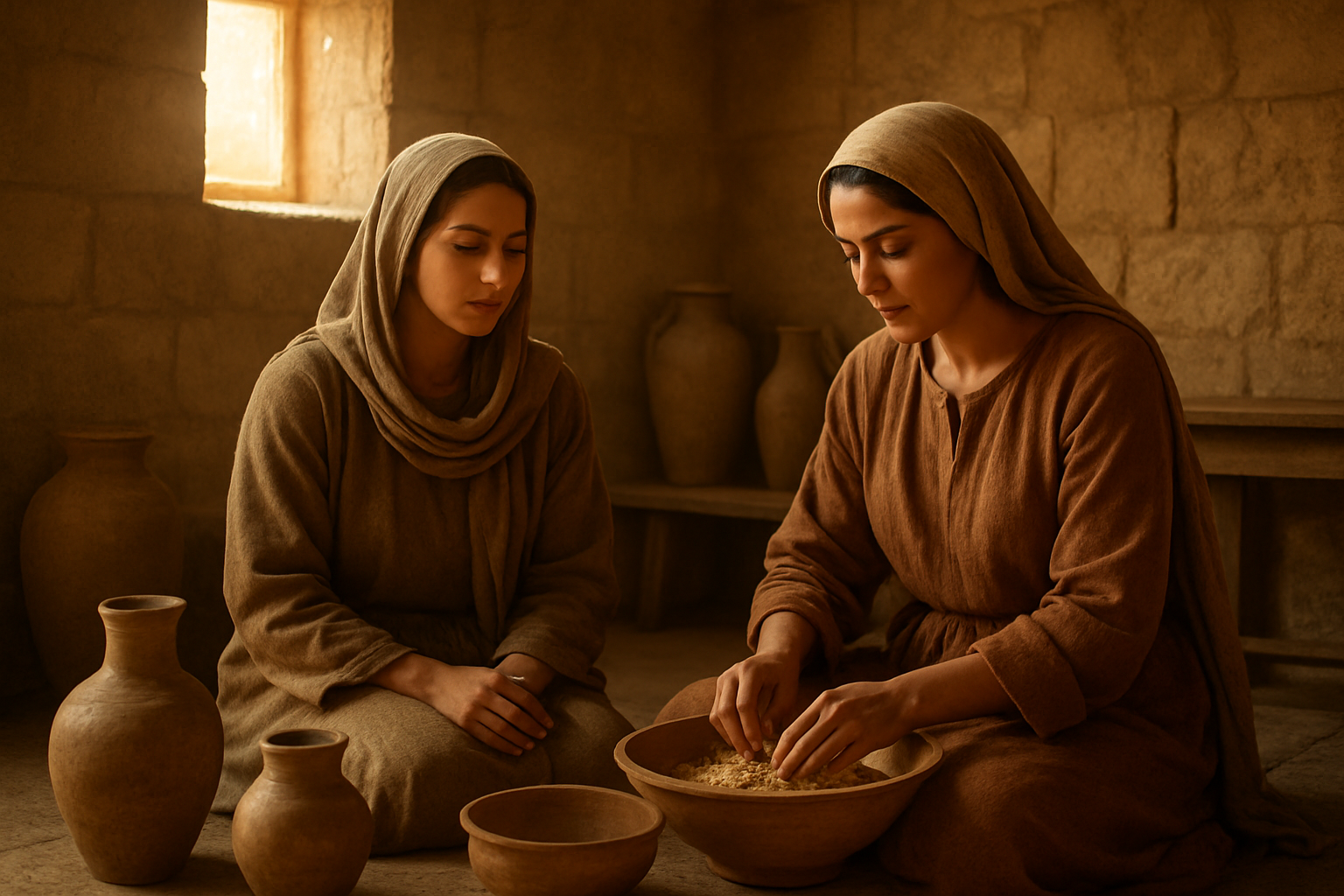
The story of Mary and Martha offers us a beautiful lesson about balance in our spiritual lives. Both sisters loved Jesus deeply, but they showed it in completely different ways. Martha worked tirelessly to serve and care for others, while Mary chose to sit quietly and listen. Their famous dinner party disagreement reminds us that both service and contemplation have their place, and we don't need to choose just one path. When faced with their brother's death, we see how their different personalities shaped their grief, yet both found comfort and hope in Jesus.
These two sisters teach us that there's no single "right" way to follow God or live our faith. Some of us are naturally doers, jumping in to help wherever we can, while others find their strength in quiet reflection and study. The key is recognizing that both approaches matter and learning when to step back from our busy lives to simply be present. Take a moment to think about which sister you relate to most, then challenge yourself to embrace a little of the other's approach. Your spiritual life will be richer for it.


Comments
Post a Comment