Lessons From Lydia in the Bible (Acts 16)

Lydia's story in Acts 16 offers powerful lessons for Christian women, entrepreneurs, and anyone seeking to deepen their faith walk. This biblical business woman transformed from a successful purple seller into one of the New Testament's most inspiring examples of spiritual openness and bold leadership.
This Lydia Bible study is perfect for women's ministry groups, Christian entrepreneurs, small group leaders, and believers who want to learn from biblical women entrepreneurs who made lasting kingdom impact. You'll discover practical applications for your own faith journey and business endeavors.
We'll explore how Lydia's heart was opened to the Gospel and what her receptivity teaches us about spiritual readiness. You'll also learn how this New Testament women leader used Christian hospitality to build the early church community and lead her entire household to faith. Finally, we'll examine how Lydia's bold actions after her conversion show us what authentic spiritual transformation looks like in daily life.
Discovering Lydia's Background and Business Success
Understanding her role as a successful purple cloth merchant
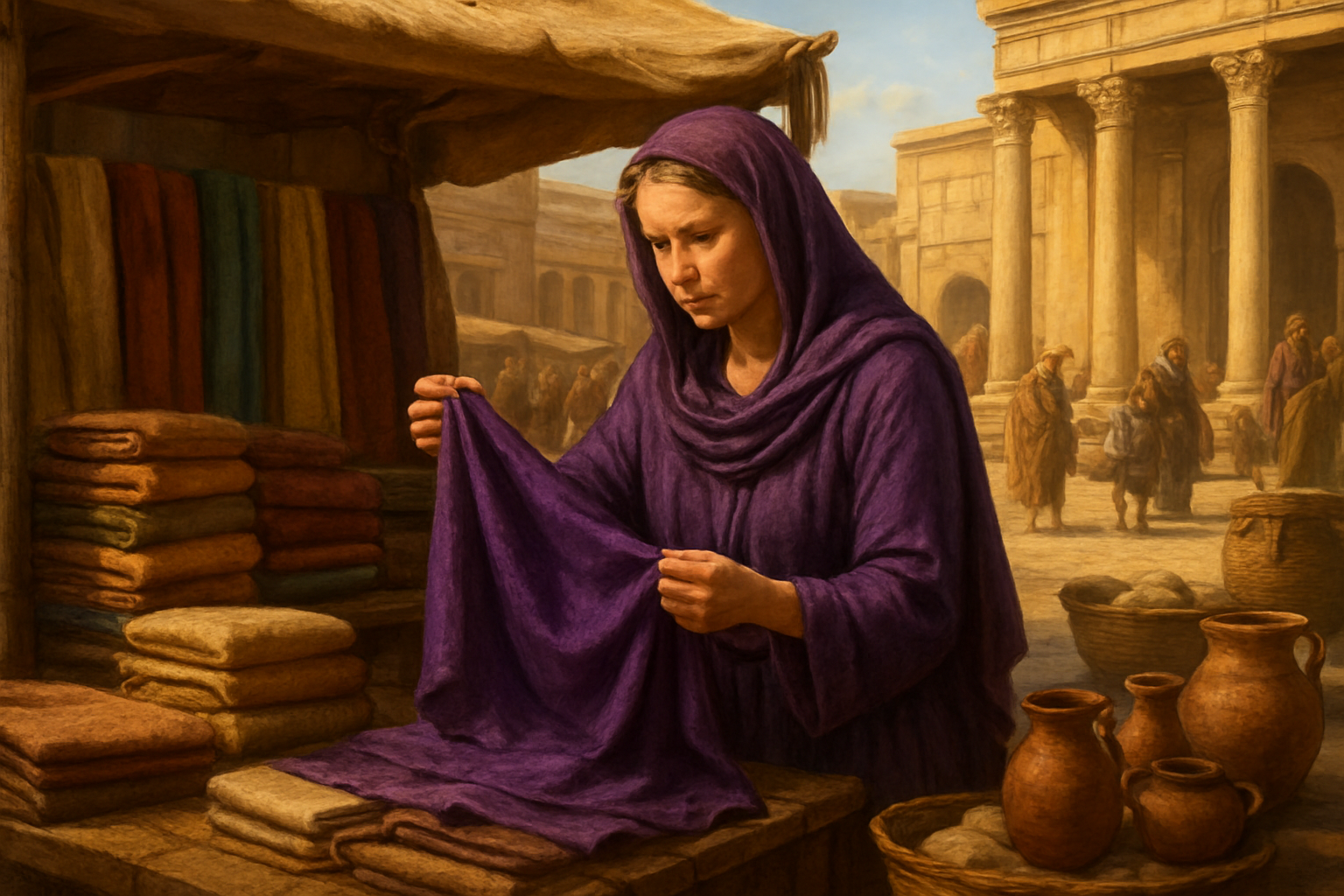
Lydia wasn't just any ordinary businesswoman in Thyatira—she was a dealer in purple cloth, one of the most expensive and prestigious commodities in the ancient world. Purple dye came from murex shells found along the Mediterranean coast, making it incredibly costly to produce. Only the wealthy and powerful could afford purple garments, which meant Lydia operated in an exclusive market serving royalty, government officials, and the upper class.
Her business required sophisticated skills in quality assessment, international trade networks, and customer relationships. She had to understand color gradations, fabric quality, and market trends across different cities. The fact that she traveled to Philippi on business shows she managed operations beyond her home city, indicating a substantial enterprise with multiple revenue streams.
Learning from her leadership in a male-dominated society
In first-century Roman society, women rarely held prominent business positions, yet Lydia commanded respect and authority in her field. She operated independently, made major financial decisions, and built a reputation that attracted high-end clientele. This required exceptional business acumen and the ability to navigate complex social dynamics where women typically deferred to male authority.
Her success suggests she mastered relationship-building, negotiation, and strategic thinking—skills that transcended gender limitations of her era. She likely mentored other women in business and created opportunities within her household and community. Her leadership style balanced assertiveness with wisdom, allowing her to thrive without threatening established social structures.
Recognizing the significance of her wealth and independence
Lydia's financial independence gave her unique freedom in ancient society. She owned property large enough to host Paul and his companions, employed servants, and made household decisions without needing male approval. This economic power translated into social influence and spiritual leadership opportunities that most women of her time couldn't access.
Her wealth wasn't just personal prosperity—it became a tool for advancing God's kingdom. She used her resources to support missionaries, provide meeting spaces for early Christians, and establish a foundation for church growth in Philippi. Her example shows how financial success, when guided by faith, creates platforms for greater kingdom impact.
Applying her entrepreneurial mindset to modern business
Lydia's approach to business offers timeless principles for today's entrepreneurs. She focused on premium products with high margins rather than competing in crowded, low-value markets. She built relationships across cultural boundaries, traveling to connect with diverse customer bases. Her attention to quality and reputation created sustainable competitive advantages.
Modern business leaders can learn from her balance of ambition and integrity. She pursued profit while maintaining ethical standards and treating people with respect. When she encountered new spiritual truths, she integrated them into her business practices rather than compartmentalizing faith and work. Her willingness to take calculated risks, like hosting controversial religious leaders, demonstrates the bold decision-making that drives entrepreneurial success.
Embracing Spiritual Openness and Receptivity

Cultivating a Heart Ready to Receive New Truths
Lydia's story in Acts 16 showcases the beauty of a heart positioned for spiritual transformation. When Paul and his companions found her by the riverside in Philippi, she wasn't just physically present - her heart was already tuned to God's frequency. The scripture tells us "the Lord opened her heart to pay attention to what was being said by Paul." This divine opening didn't happen to a closed or resistant heart, but to one that had already been cultivated for spiritual receptivity.
Creating this readiness requires intentional spiritual preparation. Like a gardener preparing soil for planting, we must tend to the conditions of our hearts. This means:
-
Regular prayer and meditation - Creating quiet spaces where God can speak
-
Removing spiritual clutter - Letting go of distractions that crowd out divine whispers
-
Maintaining expectancy - Approaching each day believing God has something new to teach us
-
Staying humble - Acknowledging we don't have all the answers
Lydia's receptive heart wasn't an accident. As a God-fearing woman who regularly attended prayer gatherings, she had been preparing for this divine appointment long before Paul arrived in Philippi.
Practicing Active Listening in Spiritual Matters
Active listening goes far beyond simply hearing words - it involves engaging our whole being in the process of receiving truth. Lydia demonstrated this perfectly when she "paid attention" to Paul's message. The Greek word used here suggests she wasn't passively listening but actively absorbing, processing, and applying what she heard.
Spiritual active listening requires several key elements:
| Element | Description | Practical Application |
|---|---|---|
| Focus | Eliminating distractions | Put away devices during prayer or Bible study |
| Engagement | Asking questions and seeking clarity | Journal thoughts and questions that arise |
| Response | Taking action on what you hear | Implement teachings in daily life |
| Reflection | Processing the message deeply | Meditate on scripture throughout the day |
When we practice active listening in our Lydia Bible study, we discover that God speaks through multiple channels - scripture, prayer, circumstances, and other believers. Lydia's example shows us that those who listen well position themselves for life-changing encounters with divine truth.
Overcoming Preconceived Notions About Faith
Lydia faced a significant paradigm shift when she encountered the gospel message. As a God-fearing Gentile, she likely held certain beliefs about how one could approach God and what spiritual truth looked like. Yet she didn't let her existing framework prevent her from embracing something new and transformative.
Breaking through spiritual preconceptions requires courage and humility. Many of us carry assumptions about faith that can limit our spiritual growth:
-
Cultural conditioning - Ideas about God shaped by family or society rather than scripture
-
Past experiences - Negative encounters that create walls around our hearts
-
Religious traditions - Practices that become more important than relationship
-
Intellectual barriers - Over-analyzing instead of simply receiving
Lydia's openness teaches us that spiritual growth often means being willing to have our existing beliefs challenged and refined. She didn't cling to old ways of thinking when presented with new truth about Jesus Christ.
Developing Genuine Hunger for Divine Wisdom
What drew Lydia to that riverside prayer meeting wasn't religious obligation but spiritual hunger. This deep desire for divine connection positioned her perfectly for the life-changing encounter that followed. Her regular attendance at prayer gatherings revealed a woman who genuinely craved spiritual truth and divine wisdom.
Developing this hunger involves recognizing our spiritual need and actively pursuing satisfaction. Like physical hunger drives us to seek food, spiritual hunger compels us to seek God. We can cultivate this appetite by:
-
Acknowledging our limitations - Recognizing we need divine guidance for life's challenges
-
Studying biblical women entrepreneurs like Lydia who found wisdom in their faith
-
Pursuing spiritual disciplines - Prayer, fasting, and scripture study that create spiritual appetite
-
Surrounding ourselves with truth-seekers - Community with others hungry for God's wisdom
Lydia's transformation from a successful businesswoman to a foundational leader in the early church demonstrates what happens when spiritual hunger meets divine provision. Her openness and receptivity created the perfect conditions for God to work powerfully in her life and through her influence on others.
The lessons from Lydia remind us that spiritual openness isn't passive waiting - it's active preparation for divine encounters that can transform our lives and the lives of those around us.
Building Your Faith Community Through Hospitality
Creating welcoming spaces for spiritual growth
Lydia understood something powerful about creating environments where faith could flourish. After her conversion, she didn't just keep her newfound beliefs private—she actively cultivated spaces where others could encounter God. Her home became more than just a dwelling; it transformed into a sanctuary where spiritual conversations could happen naturally.
The beauty of Lydia's approach lies in her intentionality. She recognized that spiritual growth often happens best in comfortable, familiar settings where people feel safe to ask questions and explore their beliefs. Your home doesn't need perfect décor or elaborate setups to become a place where God moves. What matters is your heart's posture and willingness to open your doors.
Consider how you can make your living spaces more conducive to meaningful conversations about faith. Simple touches like comfortable seating arrangements that encourage face-to-face interaction, good lighting for reading Scripture together, or even having Bibles readily available can signal to guests that spiritual discussions are welcome and valued.
Using your resources to serve others effectively
Lydia's success as a purple seller positioned her uniquely to serve the early church, and she leveraged her resources with remarkable wisdom. Her business acumen translated beautifully into kingdom work, showing us that God can use our professional skills and financial blessings to advance His purposes.
The key insight from Lydia's example is strategic generosity. She didn't give randomly or without thought; she used her resources where they could make the greatest impact. Her home became Paul's base of operations in Philippi, providing not just shelter but a launching point for gospel work throughout the region.
Your resources—whether financial, professional, or relational—represent opportunities to serve God's kingdom. Maybe you have organizational skills that could help coordinate church events, a network of contacts who need to hear about Jesus, or financial capacity to support missionaries or local ministry efforts. Lydia shows us that effective stewardship means identifying where our unique resources can create the most significant spiritual impact.
Establishing your home as a ministry hub
Lydia Bible study reveals how one woman's home became the epicenter of Christian activity in Philippi. She didn't wait for church buildings or formal structures; she made her residence the gathering place for believers to worship, learn, and plan ministry activities.
This concept challenges our modern tendency to compartmentalize faith and home life. Lydia integrated the two seamlessly, showing that our homes can serve dual purposes as family sanctuaries and ministry centers. Her house likely buzzed with activity—prayer meetings, strategy sessions for evangelism, meals shared with new converts, and late-night discussions about Scripture.
Making your home a ministry hub doesn't require a large house or special facilities. It requires a willingness to share your space and embrace the beautiful chaos that comes with opening your life to others. Whether hosting small group Bible studies, providing temporary housing for those in need, or simply maintaining an open-door policy for neighbors seeking spiritual guidance, your home can become a beacon of God's love in your community.
Modeling generous hospitality without expecting returns
Perhaps the most challenging aspect of Lydia's example is her expectation-free hospitality. She served Paul and his companions not because she anticipated something in return, but because her transformed heart compelled her to give freely. This genuine, no-strings-attached generosity set her apart and created an atmosphere where ministry could thrive.
True Christian hospitality flows from gratitude for what God has done, not from calculating what we might gain. Lydia had experienced spiritual transformation through Paul's ministry, and her response was to pour out blessing on others without keeping score. She understood that hospitality is worship—a tangible expression of God's character through our actions.
This kind of generosity creates ripple effects that extend far beyond immediate recipients. When people experience unconditional kindness, they're more likely to extend the same to others. Lydia's household probably became known throughout Philippi for their warmth and openness, drawing curious neighbors who wanted to understand what made this family different.
Your hospitality doesn't need to be elaborate or expensive to be meaningful. Simple acts like remembering people's names, offering genuine interest in their struggles, or providing a listening ear can communicate God's love powerfully. The goal isn't impressing people with your hosting abilities but demonstrating Christ's character through your actions.
Leading Your Household in Faith Transformation
Influencing family members through personal example
When Lydia embraced Christianity after hearing Paul's message, her transformation didn't happen in isolation. The Bible tells us that both she and her household were baptized, revealing the profound impact her spiritual journey had on everyone under her roof. Her example shows us that authentic faith naturally radiates outward, touching the lives closest to us.
Lydia's influence came through consistent actions rather than forceful words. As a successful business owner, she already demonstrated leadership qualities, but her spiritual awakening added a new dimension to her character. Her family and servants witnessed her genuine transformation - perhaps seeing increased generosity, changed priorities, or a deeper sense of purpose in her daily dealings with customers and community members.
Modern families can learn from Lydia's approach to spiritual influence. When parents or household leaders live out their faith authentically, children and other family members notice. They observe how faith impacts decision-making, relationships, and responses to challenges. This kind of influence doesn't require lengthy lectures or forced participation in religious activities. Instead, it flows from a life that demonstrates the practical benefits of spiritual commitment.
Making decisive choices that impact your entire household
Lydia faced a pivotal moment when she encountered Paul's teachings. Her decision to become a Christian wasn't just personal - it would reshape her entire household's spiritual trajectory. This decision required courage because it meant embracing a relatively new religious movement that might have social and business implications.
The text suggests that Lydia's household conversion wasn't coerced but rather inspired by her leadership. As the head of her household, she possessed the authority to make decisions that affected everyone under her care, including servants and possibly extended family members. Her choice to invite Paul and his companions to stay in her home further demonstrated how personal spiritual decisions can transform entire living situations.
Today's household leaders can apply Lydia's example by recognizing how their spiritual choices create ripple effects throughout their families. Decisions about church attendance, charitable giving, lifestyle changes, or moral standards don't exist in a vacuum. When parents or guardians make faith-centered choices, they're establishing a spiritual climate that shapes everyone in the household.
| Decision Type | Personal Impact | Household Impact |
|---|---|---|
| Spiritual practices | Personal growth | Modeling behavior |
| Moral standards | Character development | Setting expectations |
| Community involvement | Expanded relationships | Family connections |
| Resource allocation | Priority clarification | Value demonstration |
Balancing leadership with humility in family decisions
What makes Lydia's household faith leadership particularly compelling is how she balanced authority with genuine care. She didn't impose her newfound faith through dictatorial commands but rather created an environment where others could embrace the same spiritual journey. Her invitation to Paul showed humility - she recognized her need for continued spiritual guidance and wasn't too proud to learn from others.
Effective household faith leadership requires walking a careful line between decisive action and respectful consideration of others' perspectives. Lydia's approach suggests she understood that true spiritual leadership serves others rather than demanding blind obedience. When she opened her home to Paul and his companions, she demonstrated that learning and growth continue even after making initial faith commitments.
Families today benefit when leaders combine conviction with compassion. This might mean making non-negotiable decisions about household values while remaining open to questions and discussions. It could involve establishing spiritual routines while allowing flexibility in how different family members participate. Like Lydia, effective household leaders create space for others to grow spiritually at their own pace while maintaining clear direction for the family's overall spiritual journey.
The key lies in leading through service rather than control, following Lydia's example of using influence to create opportunities for others' spiritual development rather than simply demanding compliance.
Demonstrating Bold Action After Spiritual Encounters
Moving Quickly from Belief to Baptism and Commitment
Lydia's immediate response to Paul's message shows us what genuine spiritual transformation looks like. The moment she believed, she didn't hesitate or ask for time to think things over. She moved straight from hearing the gospel to getting baptized along with her entire household. This rapid progression from belief to action reveals something powerful about authentic faith - it compels us to act.
Her swift baptism wasn't just a personal decision. As a successful businesswoman and household leader, Lydia understood the weight of commitment. She wasn't making a casual choice but a life-altering decision that would affect her business relationships, social standing, and entire way of life. Yet she moved forward without delay.
This teaches us that spiritual encounters demand response. When God opens our hearts, as Scripture says He did for Lydia, procrastination becomes the enemy of transformation. Real faith doesn't need endless deliberation - it recognizes truth and responds immediately.
Taking Immediate Steps to Live Out Newfound Convictions
Right after her baptism, Lydia didn't return to business as usual. She immediately put her new faith into practice by offering her home to Paul and his companions. This wasn't a small gesture - hosting traveling missionaries meant opening her private space, sharing her resources, and taking on financial responsibility for their needs.
Her actions reveal how genuine conversion changes our priorities instantly. Lydia went from being focused solely on her purple cloth business to using her success as a platform for ministry. She transformed her home into a hub for the early church, showing that real faith reshapes how we use our resources, time, and influence.
The purple seller from Acts 16 demonstrates that living out our convictions means more than internal belief - it requires external action that others can see and experience. She didn't keep her faith private but made it visible through generous hospitality and practical support.
Showing Courage in Public Displays of Faith
Lydia's public baptism and open hospitality to Christian missionaries took real courage. As a prominent businesswoman in Philippi, she risked her reputation and potentially her livelihood by associating with this new religious movement. Roman society didn't look kindly on disruptive religious practices, and Christianity was certainly disruptive.
Her boldness extended beyond personal risk to protecting others. When Paul and Silas were imprisoned and later released, they returned to Lydia's house - making her home a known gathering place for Christians. She could have asked them to meet elsewhere to protect herself, but instead she opened her doors wider.
This kind of courage doesn't come from human strength alone. Lydia's boldness flowed from her spiritual encounter with God. When we truly experience divine transformation, it produces a boldness that overcomes social pressure and personal fear. Her example challenges us to consider whether our faith is bold enough to be noticed by others.
Transforming Personal Revelation into Community Impact
Lydia understood that personal spiritual encounters are meant to benefit entire communities, not just individuals. She immediately involved her household in her decision, leading to their baptism alongside hers. This wasn't spiritual tyranny but spiritual leadership - she recognized her responsibility to share what God had revealed to her.
Her home became the first church meeting place in Philippi, transforming a private residence into a community center for Christian worship and fellowship. Through her hospitality and resources, Lydia created space for others to encounter the same life-changing message she had received.
The ripple effects of her transformation extended far beyond her immediate circle. By supporting Paul's ministry team, she enabled them to continue preaching throughout the region. Her bold action after her spiritual encounter became the foundation for establishing Christianity in Philippi, showing how one person's response to God can impact entire cities and regions for generations to come.

Lydia's story teaches us that success in business and openness to spiritual growth go hand in hand. She shows us that being receptive to new ideas and different perspectives can transform not just our own lives, but also the lives of those around us. Her willingness to welcome strangers into her home and share her resources created a foundation for one of the early Christian communities.
What makes Lydia's example so powerful is how she immediately took action after her spiritual encounter. She didn't hesitate to get baptized, bring her whole household along on the journey, and open her doors to Paul and his companions. This kind of bold leadership - where we lead by example and create spaces for others to grow - is exactly what our communities need today. Take a page from Lydia's playbook: be open to new spiritual experiences, use your resources to help others, and don't be afraid to step up as a leader in your own circle of influence.


Comments
Post a Comment