Christian Perspective About Women's Day
.png)
Women's Day offers Christian communities a meaningful opportunity to reflect on God's heart for women and their vital role in His kingdom. This guide is designed for pastors, church leaders, and believers who want to understand the Christian perspective on women while planning thoughtful celebrations that honor biblical womanhood.
Many churches struggle with how to celebrate women without compromising biblical truth or getting caught up in secular movements. The key lies in returning to Scripture's rich teaching about women's worth in Christianity and the incredible women of faith in Bible who shaped God's story.
We'll explore how the biblical view of women establishes their equal value and unique calling from creation. You'll discover inspiring stories of biblical women who demonstrated courage, leadership, and faithfulness in ways that still speak to us today. Finally, we'll share practical ideas for how your church can meaningfully celebrate Christian women's day while staying true to God's design for womanhood.
Whether your congregation leans traditional or progressive, these biblical insights will help you honor women in ways that glorify God and strengthen your church community.
Biblical Foundation of Women's Worth and Purpose

God's Equal Creation of Male and Female in His Image
The foundation of women's worth begins in Genesis 1:27, where Scripture declares that God created both male and female in His own image. This biblical truth establishes that women possess the same divine imprint as men - they reflect God's character, creativity, and capacity for relationship. The Hebrew word "tselem" (image) carries profound meaning, indicating that women are God's representatives on earth, equipped with His nature and authority.
When God said "it is not good for man to be alone" in Genesis 2:18, He created woman as "ezer kenegdo" - often translated as "helper," but the Hebrew conveys something far richer. The word "ezer" appears throughout Scripture to describe God Himself as our helper, while "kenegdo" means "corresponding to" or "equal counterpart." This reveals God's design for women as equal partners, not subordinates.
Women as Co-Heirs and Partners in God's Kingdom
Paul's revolutionary declaration in Galatians 3:28 shatters cultural barriers: "There is neither Jew nor Gentile, neither slave nor free, nor is there male and female, for you are all one in Christ Jesus." This passage doesn't erase gender distinctions but establishes spiritual equality before God. Women stand as co-heirs of God's grace, sharing the same access to salvation, spiritual gifts, and eternal inheritance.
The biblical narrative consistently shows women as active participants in God's redemptive plan. From Eve, the mother of all living, to Mary, who bore the Savior, women play central roles in advancing God's kingdom. The biblical view of women encompasses their calling as leaders, prophets, judges, and disciples who contribute uniquely to God's purposes.
Jesus Christ's Revolutionary Treatment of Women
Christ's interactions with women challenged first-century norms and continue to inform the Christian perspective on women today. He spoke publicly with the Samaritan woman at the well, defended Mary's choice to sit and learn at His feet, and appeared first to women after His resurrection. These actions weren't cultural accidents - they reflected God's heart for women's dignity and participation in His mission.
Jesus consistently elevated women in a society that marginalized them. He healed the woman with the issue of blood, calling her "daughter," and commended the poor widow's offering above wealthy donors. His treatment of women demonstrates that celebrating Christian women isn't merely cultural courtesy - it's following Christ's example of honoring their contributions and recognizing their value.
The Holy Spirit's Gifts Distributed Without Gender Discrimination
Acts 2:17-18 records Joel's prophecy fulfilled at Pentecost: "Your sons and daughters will prophesy... Even on my servants, both men and women, I will pour out my Spirit." The Holy Spirit distributes spiritual gifts based on God's sovereign will, not gender categories. Throughout church history, women have exercised gifts of prophecy, teaching, leadership, and service as the Spirit enabled them.
Paul's instructions about women in ministry must be understood within their cultural context while recognizing the Spirit's work through women of faith in Bible times and today. The gifts of the Spirit - wisdom, knowledge, faith, healing, miracles, prophecy, discernment, tongues, and interpretation - flow through both men and women according to God's design. This biblical womanhood encompasses the full range of spiritual giftedness, demonstrating that women's worth in Christianity extends far beyond traditional roles.
Celebrating God's Design for Womanhood
.png)
Unique Strengths and Qualities God Gave Women
Women possess distinct strengths that reflect God's intentional design in creation. Scripture reveals that women often demonstrate exceptional emotional intelligence, compassion, and nurturing abilities that complement masculine qualities. The biblical view of women showcases their capacity for deep relationships, intuitive understanding, and resilience under pressure.
Consider the multitasking abilities women display daily - managing households, careers, relationships, and ministry responsibilities simultaneously. This reflects God's design for women to be life-givers and culture-makers. Women's natural tendency toward collaboration rather than competition creates environments where communities thrive. Their attention to detail and ability to see the bigger picture while managing countless small tasks mirrors God's own character.
Biblical femininity also includes strength and courage. The Hebrew word "ezer kenegdo" used to describe women as helpers suggests a strong support that comes alongside another - not from below, but from beside. Women's strength often manifests differently than men's, showing up as emotional fortitude, perseverance through hardship, and the ability to hold families and communities together during difficult seasons.
The Beauty of Biblical Femininity and Its Modern Expression
Christian femininity isn't about weakness or passivity - it's about strength wrapped in grace. Biblical womanhood encompasses both the gentle spirit of kindness and the fierce protection of a lioness defending her cubs. Modern Christian women can embrace this balance without conforming to cultural extremes that either diminish their strength or reject their femininity.
Today's Christian women express biblical femininity through various paths. Some find their calling in traditional homemaking roles, pouring their creativity and leadership skills into raising families and creating welcoming homes. Others express their God-given talents in boardrooms, classrooms, hospitals, or mission fields. Both expressions honor God when rooted in biblical principles.
The key lies in understanding that biblical womanhood isn't a one-size-fits-all mold. Women of faith in Bible stories show us this diversity - from Deborah's political leadership to Mary's quiet devotion, from Lydia's business acumen to Dorcas's charitable works. Modern Christian women can draw inspiration from these examples while navigating contemporary challenges with grace and wisdom.
Honoring Women's Diverse Callings and Ministries
Churches celebrating Christian women's day must recognize the vast array of ways women serve God's kingdom. Women's worth in Christianity isn't measured by a single standard but by their faithful response to God's unique calling on their lives. Some women are called to lead worship, others to teach children, counsel the hurting, or serve in overseas missions.
The church honoring women means creating space for various gifts and ministries. This includes recognizing women in traditionally "behind-the-scenes" roles - the intercessors who pray faithfully, the hospitality teams who welcome newcomers, and the children's ministry workers who shape future generations. These ministries deserve equal celebration alongside more visible leadership roles.
Christian women serve as entrepreneurs, doctors, teachers, artists, and in countless other professions where they represent Christ daily. Their workplace witness often reaches people who might never step foot in a church building. Single women dedicate their energy to ministry and career without the responsibilities of family life. Mothers invest their talents in raising the next generation of believers. Each calling deserves recognition and support from the church community.
Celebrating Christian women means acknowledging that God's design includes diversity in gifting, personality, and calling. When churches embrace this truth, they create environments where all women can flourish in their unique expressions of faith and service.
Women of Faith Who Changed History
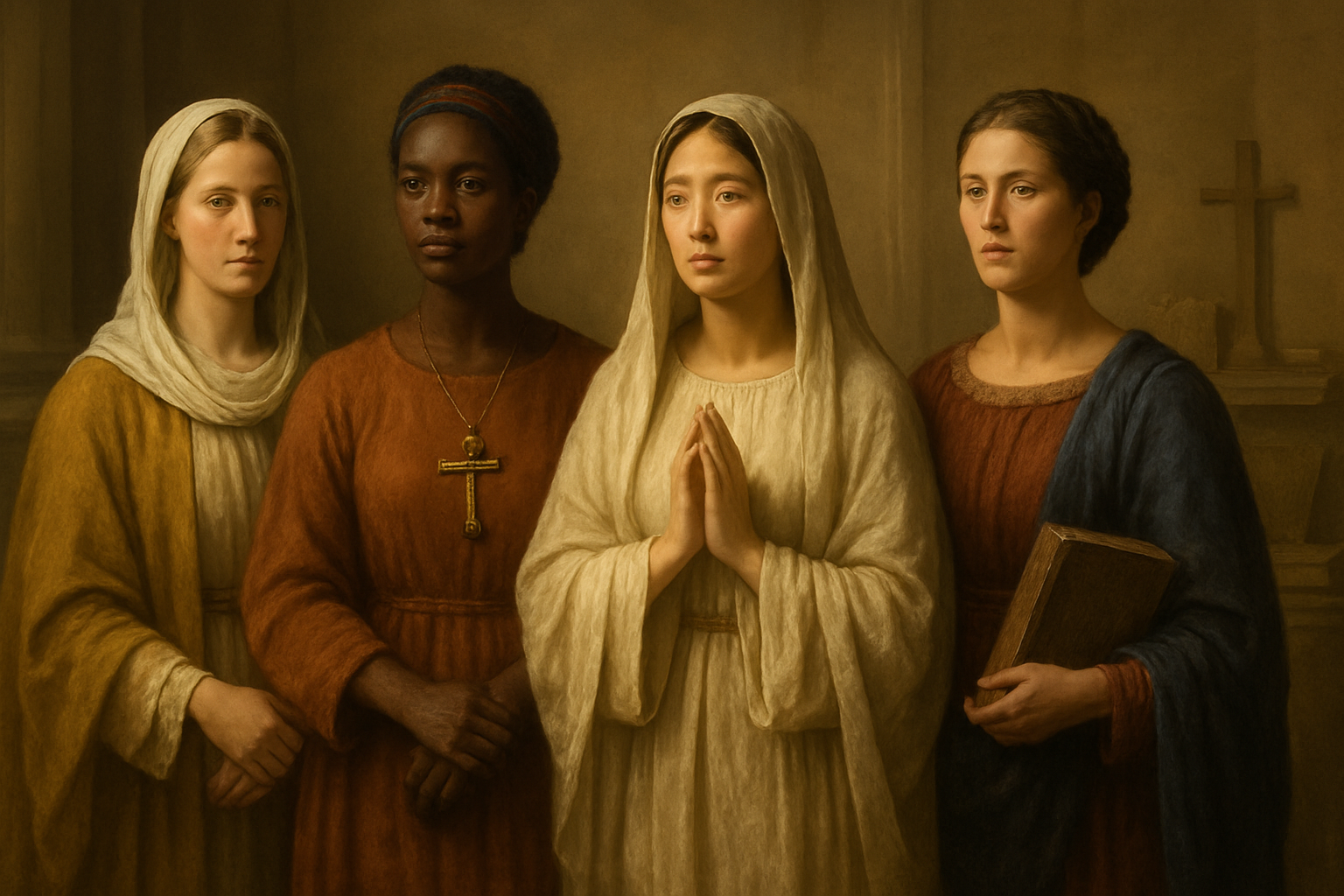
Old Testament Heroines Who Shaped God's Plan
The pages of Scripture overflow with remarkable women of faith in Bible who demonstrated extraordinary courage and obedience to God's calling. Esther stands as a beacon of bravery, risking her life to save the Jewish people from genocide. Her famous words, "If I perish, I perish," reveal a heart completely surrendered to God's purposes. Ruth's loyalty and faithfulness to Naomi showed how Christian women's day celebrates not just individual achievements but the power of covenant relationships that reflect God's own faithfulness to His people.
Deborah broke cultural barriers as both a prophetess and judge, leading Israel with wisdom and strength. Her story demonstrates that God equips women for leadership when He calls them to specific roles. Rahab's transformation from a life of shame to becoming part of Jesus' lineage shows how God redeems and uses women regardless of their past. Mary, the mother of Jesus, exemplifies humble submission to God's will, despite facing social stigma and personal uncertainty.
These women shaped history not through self-promotion but through radical obedience to God's plan. They teach us that biblical womanhood isn't about limitation but about responding faithfully to divine calling, whatever form it takes.
New Testament Women Who Advanced the Gospel
The early Christian movement was profoundly shaped by dedicated women who served alongside the apostles in spreading the gospel message. Mary Magdalene earned the distinction of being the first witness to Christ's resurrection, making her the first evangelist of the risen Lord. Her testimony launched the most important news in human history.
Priscilla partnered with her husband Aquila in church planting and discipleship, even instructing the eloquent Apollos in the way of God more accurately. Her example shows how women in Christianity have always played vital roles in theological education and church establishment. Lydia, a successful businesswoman, opened her home and heart to Paul's ministry, becoming Europe's first recorded Christian convert and establishing the foundation for the Philippian church.
The four daughters of Philip the evangelist served as prophetesses, showing that God gifted women with supernatural abilities to speak His word. Phoebe carried Paul's letter to the Romans, serving as a deacon and benefactor to many believers. These women didn't wait for permission to serve God—they simply responded to His calling with enthusiasm and dedication.
Their courage in a male-dominated society paved the way for countless women who would follow in their footsteps throughout church history.
Modern Christian Women Making Global Impact
Today's Christian perspective on women continues to be shaped by extraordinary women who are transforming communities worldwide through their faith and dedication. Mother Teresa's work among the poorest of the poor in Calcutta demonstrated Christ's love in action, earning global recognition and inspiring millions to serve the marginalized. Her ministry showed how celebrating Christian women means recognizing their unique compassion and dedication to caring for society's most vulnerable.
Elisabeth Elliot's response to her husband's martyrdom in Ecuador—choosing forgiveness over bitterness and continuing mission work among the very people who killed him—exemplifies supernatural grace that only comes from deep faith. Corrie ten Boom's Holocaust survival story and subsequent ministry of forgiveness touched countless lives across the globe.
Contemporary leaders like Kay Arthur have revolutionized Bible study methods, equipping millions of women to study Scripture inductively. Ann Voskamp's writings on gratitude and sacred living have helped women worldwide discover joy in ordinary moments. Beth Moore's teaching ministry has empowered women to develop deeper relationships with God through intensive biblical study.
Organizations founded by Christian women continue making global impact: World Vision, Samaritan's Purse women's initiatives, and countless pregnancy resource centers demonstrate how women's worth in Christianity translates into practical compassion and life-changing ministry.
Lessons from Their Courage and Faithfulness
The common thread weaving through these remarkable women's stories is their willingness to trust God beyond their circumstances and cultural limitations. They teach us that biblical womanhood isn't defined by weakness but by strength channeled through divine purpose. Each woman faced unique challenges—political pressure, social ostracism, personal loss, or cultural barriers—yet their faith remained unshakeable.
Their courage wasn't reckless bravery but calculated obedience to God's calling. Esther prepared thoroughly before approaching the king. Deborah sought God's wisdom before making decisions. Mary pondered God's word in her heart. Modern women like Elisabeth Elliot spent years in prayer and preparation before making life-changing decisions.
These women also demonstrate that faithfulness often requires patience. Hannah waited years for her promised child. Ruth worked faithfully in foreign fields before finding her destiny. Modern missionaries often spend decades building trust and relationships before seeing significant spiritual fruit.
Perhaps most importantly, these women show us that God uses ordinary people for extraordinary purposes. They weren't superhumans—they experienced doubt, fear, and uncertainty just like we do. Yet they chose to trust God's character over their circumstances, and their faithfulness changed the course of history for countless people who followed.
Addressing Gender Equality Through Christian Love
.png)
Supporting Women's Rights While Honoring Biblical Values
The Christian perspective on women's day doesn't require choosing between faith and justice. Scripture teaches that both men and women are created in God's image (Genesis 1:27), establishing equal dignity and worth. This biblical foundation supports advocating for women's rights while maintaining core Christian beliefs about God's design for relationships and society.
Christians can champion fair wages for women, educational opportunities, and protection from violence without compromising biblical principles. Jesus himself demonstrated this balance by treating women with unprecedented respect in his cultural context, while still operating within God's moral framework. He spoke with the Samaritan woman at the well, defended the woman caught in adultery, and chose women as the first witnesses to his resurrection.
Churches today can support policies that protect women from discrimination and abuse while teaching biblical roles with love and respect. This isn't about political alignment but about reflecting Christ's heart for justice and compassion. The key lies in distinguishing between cultural practices that may have oppressed women and timeless biblical principles that actually elevate their value.
When addressing issues like domestic violence, human trafficking, or workplace discrimination, Christians should be at the forefront of change. These injustices contradict God's design for how women should be treated and honored.
Fighting Injustice and Oppression in Christ's Name
Jesus consistently stood against oppression and injustice, particularly when it affected the vulnerable. His ministry included healing women, restoring their dignity, and challenging systems that devalued them. Following Christ's example means actively opposing any form of oppression against women, whether it occurs in secular society or sadly, sometimes within religious communities.
Christian women's day celebrations should include acknowledging areas where the church has fallen short in protecting and empowering women. This honest reflection opens doors for repentance and positive change. Churches can take practical steps by:
-
Creating safe spaces for women to report abuse
-
Training leaders to recognize signs of domestic violence
-
Supporting women escaping dangerous situations
-
Advocating for laws that protect women's safety and rights
-
Addressing harmful teachings that have been used to justify mistreatment
The biblical view of women calls Christians to be voices for the voiceless. When women face oppression based on gender, believers should respond with the same passion Christ showed when he cleared the temple or condemned the Pharisees for their hypocrisy.
Many Christian organizations already lead efforts to combat sex trafficking, provide education for girls in developing countries, and support women in poverty. These ministries demonstrate how faith translates into action for women's welfare globally.
Building Bridges Between Faith Communities and Women's Movements
Christian communities and women's rights advocates often view each other with suspicion, but common ground exists on many issues. Both groups typically support protecting women from violence, ensuring equal pay, and providing opportunities for women to contribute their unique gifts to society.
Building these bridges requires Christians to listen carefully to women's experiences and concerns without immediately defending church traditions. Sometimes what appears as an attack on biblical values is actually a cry for justice against harmful cultural practices that have been wrongly labeled as "biblical."
Collaborative efforts can emerge around shared concerns:
-
Anti-trafficking initiatives bringing together Christian ministries and secular organizations
-
Educational programs supporting girls' schooling in communities where faith groups have influence
-
Healthcare advocacy ensuring women have access to necessary medical care
-
Economic empowerment creating opportunities for women to develop skills and start businesses
Churches celebrating Christian women's day can invite dialogue with local women's organizations, discovering ways to work together despite theological differences. This approach models Christ's method of building relationships across social boundaries while maintaining his convictions.
Success stories from around the world show Christian groups partnering with women's movements to address maternal mortality, education gaps, and economic inequality. These partnerships demonstrate that celebrating women of faith doesn't mean isolating from broader efforts to improve women's lives.
The goal isn't compromising biblical truth but rather applying it in ways that bring healing and hope to women who have experienced injustice or oppression.
Practical Ways Churches Can Honor Women
Creating Opportunities for Women's Leadership and Service
Churches can actively create platforms where women demonstrate their God-given talents and calling. This means establishing women's ministry teams, inviting female speakers for special events, and encouraging women to lead Bible studies or small groups. Many Christian women possess incredible gifts in teaching, counseling, and evangelism that can transform communities when properly supported.
Consider appointing women to serve on church committees, missions boards, and planning teams. Their perspectives bring balance and wisdom to decision-making processes. Churches honoring women also recognize that leadership doesn't always mean standing behind a pulpit – it includes organizing community outreach, coordinating children's programs, and managing administrative responsibilities that keep ministries running smoothly.
Celebrating Women's Contributions to Ministry
Recognition matters deeply in building healthy church communities. Dedicate special services to highlight how women of faith have contributed to your congregation's growth and impact. Share testimonies of women who've served faithfully in various capacities – from nursery workers to missionaries, from worship team members to financial stewards.
Create visual displays showcasing Christian women's achievements within your church family. Document their stories through newsletters, social media posts, or video testimonials. When celebrating Christian women's day, invite different women to share how their faith journey has shaped their service to God and others.
Supporting Women Facing Challenges and Discrimination
Real support goes beyond Sunday morning encouragement. Churches should establish practical assistance programs for single mothers, widows, and women experiencing domestic violence or workplace discrimination. Partner with local organizations that provide job training, childcare assistance, and legal counsel.
Biblical womanhood includes recognizing that women face unique societal pressures and challenges. Offer counseling services, support groups, and financial assistance when needed. Create safe spaces where women can discuss difficult topics without judgment, knowing their church family stands ready to help.
Teaching Biblical Respect for All People
Integrate teachings about women's worth in Christianity into regular sermons and Bible studies. Address misconceptions about gender roles while emphasizing that every person bears God's image equally. Help congregation members understand that respecting women aligns with Christ's treatment of women throughout His ministry.
Teach children and teenagers about healthy relationships, consent, and treating others with dignity regardless of gender. When discussing marriage and family roles, present balanced perspectives that honor both traditional and contemporary expressions of Christian femininity and partnership.
Mentoring the Next Generation of Godly Women
Establish formal mentoring programs pairing older women with younger ones, following the Titus 2 model. These relationships can cover spiritual growth, career guidance, parenting advice, and life skills development. Celebrating Christian women means investing in those who will carry the faith forward.
Host workshops on topics relevant to different life stages – college students navigating career choices, young mothers balancing family and personal growth, and professional women integrating faith with workplace challenges. Create book clubs, prayer groups, and skill-sharing sessions that build community while developing character and competence.
.png)
Women hold a special place in God's heart, and their worth isn't determined by society's standards but by their identity as daughters of the King. The Bible shows us countless examples of women who stepped boldly into their calling, from Esther's courage to Mary's faithfulness, proving that God uses women powerfully in His kingdom work. When we look at gender equality through the lens of Christian love, we see that it's not about competing for positions but about recognizing that men and women are both created in God's image with unique gifts and purposes.
Churches have an incredible opportunity to lead by example in how we celebrate and support the women in our communities. This goes beyond one day of recognition – it's about creating spaces where women feel valued, heard, and empowered to use their God-given talents. When we honor women the way Christ does, we reflect His heart to the world and build stronger, more loving communities that truly represent the body of Christ.


Comments
Post a Comment