How to face a New Year with faith, not fear
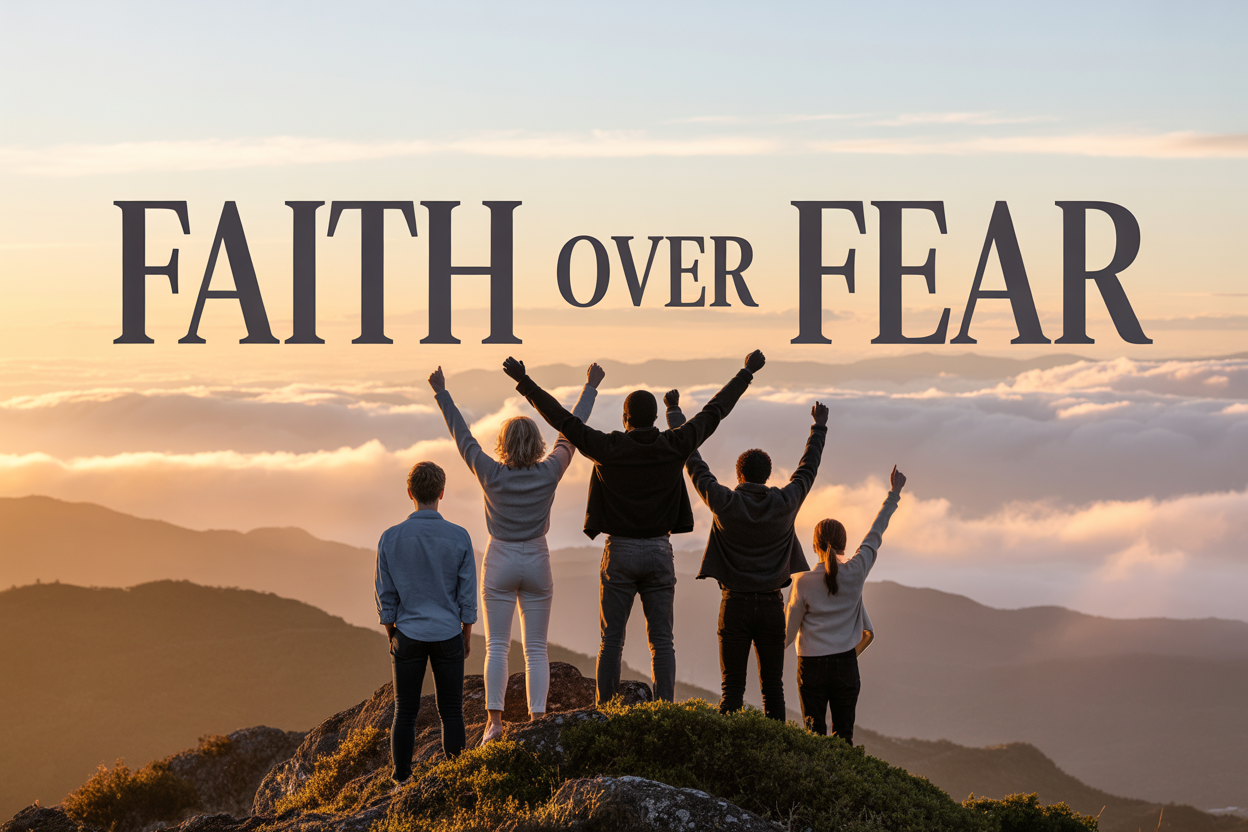
Starting fresh can feel overwhelming when you're staring down another year filled with unknowns. If you're someone who wants to step into the New Year with confidence instead of anxiety, this guide will help you shift from fear-based thinking to faith-centered living.
Many people struggle with New Year faith because they focus on everything that could go wrong rather than trusting what's possible. The good news? You can learn practical ways to choose faith over fear, even when uncertainty feels heavy.
This article will show you how to identify what's really scaring you about the coming year and help you build a foundation of faith that won't crumble when challenges arise. You'll also discover how to transform fear into action through spiritual preparation for New Year goals that actually align with your deeper purpose.
Identify Your Fears About the Coming Year
Recognize Common New Year Anxieties and Worries
The calendar flip brings a unique cocktail of emotions that millions experience worldwide. Financial stress tops the list for many people, especially after holiday spending leaves bank accounts lighter and credit card bills heavier. Career uncertainties create another layer of anxiety - will this be the year of promotion or layoffs? Health concerns often surface too, particularly as we become more aware of aging parents or our own physical limitations.
Relationship worries weave through our thoughts like persistent threads. Singles wonder if they'll find meaningful connections, while couples question whether their partnerships will strengthen or strain under life's pressures. Parents worry about their children's futures in an increasingly complex world, from education costs to social media influences.
The weight of unfulfilled resolutions from previous years can trigger shame spirals. That gym membership gathering dust, the creative project still sitting in draft form, or the broken habit that crept back in - these reminders of past "failures" fuel anxiety about setting new goals.
Global uncertainties add another dimension to New Year fears. Economic instability, political tensions, climate changes, and social divisions create a backdrop of unease that can make personal planning feel pointless or overwhelming.
Write Down Specific Concerns Holding You Back
Capturing your fears on paper transforms abstract worries into concrete challenges you can address. Start with a brain dump - write everything that makes your stomach tighten when you think about the coming months. Don't edit or judge these thoughts; simply let them flow onto the page.
Create categories for different types of concerns. Personal fears might include health scares, aging, or self-doubt about abilities. Professional anxieties could cover job security, career direction, or workplace relationships. Family concerns might involve parenting challenges, caring for elderly relatives, or maintaining connections with loved ones.
Financial worries deserve their own detailed list. Be specific: "Can't afford the mortgage if interest rates rise" hits differently than "money problems." This specificity helps you distinguish between manageable challenges and catastrophic thinking.
Rate each concern on a scale of 1-10 based on how much control you actually have over the outcome. This exercise reveals which worries deserve your energy and which ones you need to release. Some fears will surprise you with their lack of substance once written down, while others will clearly require attention and planning.
Understand the Difference Between Legitimate Planning and Fearful Overthinking
Healthy planning focuses on actionable steps within your control, while fearful overthinking spirals into worst-case scenarios beyond your influence. Planning asks "What can I do?" while overthinking asks "What if everything goes wrong?"
Legitimate planning has a productive endpoint. You research, gather information, make decisions, and move forward with concrete actions. Fearful overthinking loops endlessly, creating elaborate disaster scenarios without generating solutions. When you catch yourself rehearsing the same catastrophic situation repeatedly, you've crossed into unproductive territory.
Time boundaries separate planning from overthinking. Set aside specific periods for thoughtful preparation - maybe Sunday afternoons for weekly planning or monthly sessions for bigger picture goals. When planning time ends, redirect your mental energy elsewhere. Overthinking happens at random moments throughout the day, often triggered by stress or idle time.
Planning involves seeking advice, researching options, and consulting reliable sources. Overthinking feeds on speculation, worst-case stories from news or social media, and conversations with other anxious people. The information quality differs dramatically between these two approaches.
Physical sensations offer another clue. Planning might feel energizing or mildly challenging, like mental exercise. Overthinking typically creates tension, restlessness, or that familiar knot in your stomach. Your body knows the difference even when your mind doesn't.
Planning creates peace through preparation; overthinking creates exhaustion through endless worry loops. Recognizing this distinction becomes the first step toward facing your New Year with faith rather than fear.
Build Your Foundation of Faith

Connect with your spiritual beliefs and values
Your New Year faith begins with reconnecting to what you truly believe at your core. Take time to reflect on the spiritual principles that have guided you through challenging seasons before. Whether you follow Christianity, Judaism, Islam, Buddhism, or another path, your foundational beliefs hold the power to anchor you when uncertainty tries to shake your confidence.
Write down your core values and spiritual convictions. What do you believe about divine love, protection, and guidance? How have these beliefs carried you through difficult times in the past? This exercise helps clarify the unshakeable truths you can lean on when facing the unknown aspects of the coming year.
Consider creating a personal faith statement or mission that reflects your deepest convictions. This becomes your touchstone when doubt creeps in, reminding you that your foundation rests on something far greater than your circumstances.
Practice daily prayer or meditation routines
Consistent spiritual practices create the strongest defense against fear-based thinking. Building faith foundation requires daily connection with the divine, not just crisis moments when panic sets in. Start with just five minutes each morning before checking your phone or diving into your to-do list.
Choose a prayer or meditation style that resonates with your spiritual tradition. Some people find comfort in reciting traditional prayers, while others prefer conversational prayer or silent meditation. The key is consistency, not perfection.
| Morning Practice | Evening Practice |
|---|---|
| Gratitude prayer | Reflection on the day's blessings |
| Scripture reading | Peaceful meditation |
| Intention setting | Prayer for loved ones |
| Mindful breathing | Releasing worries to divine care |
Your spiritual preparation for New Year becomes more powerful when you establish these rhythms before January 1st arrives. This way, you enter the new year already grounded in practices that connect you to divine peace and wisdom.
Study inspirational texts that strengthen your resolve
Feed your spirit with words that build faith over fear. Whether you turn to sacred scriptures, devotional books, or inspirational writings, regular study nourishes your soul and provides ammunition against anxious thoughts about the future.
Create a reading plan that includes passages about courage, divine provision, and trusting in God's timing. Many people find comfort in the Psalms, which express every human emotion while ultimately pointing toward hope. Others prefer modern devotionals that apply ancient wisdom to contemporary challenges.
Keep a journal of meaningful verses or quotes that speak directly to your heart. When fear whispers lies about what might happen in the coming year, these collected truths become powerful weapons against negativity.
Consider joining a book study group or finding accountability partners who share similar spiritual interests. Discussing inspirational content with others often reveals insights you might miss when reading alone.
Surround yourself with faith-based community support
Your journey toward facing New Year with confidence becomes exponentially easier when you're surrounded by people who share your commitment to faith over fear. Isolation makes every worry seem bigger than it actually is, while community provides perspective and encouragement.
Actively seek relationships with people who demonstrate the kind of faith you want to develop. This might mean joining a small group at your place of worship, participating in online faith communities, or simply spending more time with friends who encourage your spiritual growth.
Don't wait for others to reach out first. Take initiative in building these connections. Invite someone for coffee to discuss your hopes and concerns about the coming year. Share prayer requests and celebrate answered prayers together. Offer to pray for others when they're struggling with fear or uncertainty.
Remember that healthy faith communities both support you during difficult seasons and challenge you to grow. Look for relationships that provide both comfort and accountability as you develop unshakeable trust in divine timing.
Transform Fear Into Faithful Action
Replace worry with purposeful goal-setting
Worry traps us in endless loops of "what if" scenarios, while purposeful goal-setting channels that same energy into productive planning. When you catch yourself spiraling into anxious thoughts about the year ahead, redirect that mental energy toward creating concrete, faith-based objectives.
Start by writing down three specific areas where you want to grow this year. Instead of vague wishes like "be happier," craft goals that reflect your values and beliefs: "Practice gratitude daily to deepen my appreciation for God's blessings" or "Volunteer monthly to serve others with love."
The key difference between worry-driven planning and faith-based goal-setting lies in the foundation. Worry assumes the worst and tries to control every variable. Faith-based goals acknowledge uncertainty while trusting in divine guidance and provision. They focus on what you can control - your actions, attitudes, and responses - rather than obsessing over outcomes beyond your influence.
Transform each worry into a question: "What can I do today to address this concern?" This simple shift moves you from passive anxiety to active participation in shaping your future with confidence and spiritual guidance.
Create action plans rooted in your beliefs
Your beliefs should serve as the compass for every plan you make. When you align your actions with your core values and faith, you create a powerful synergy that transforms fear into action and uncertainty into purposeful direction.
Begin by identifying your non-negotiable beliefs - those principles that guide your life regardless of circumstances. Maybe it's treating others with kindness, maintaining integrity in all dealings, or trusting in God's timing for your life. These become the foundation stones for every action plan you develop.
Break down each goal into monthly, weekly, and daily actions that honor these beliefs. If you value service, schedule regular volunteer opportunities. If you believe in continuous growth, block time for learning and reflection. If faith is central to your life, prioritize prayer, meditation, or spiritual study.
| Belief | Monthly Action | Weekly Action | Daily Action |
|---|---|---|---|
| Serving others | Volunteer 8 hours | Check on elderly neighbor | Practice one act of kindness |
| Growing spiritually | Attend faith retreat | Join study group | Read devotional |
| Nurturing relationships | Plan family gathering | Schedule friend coffee date | Text encouragement to someone |
This framework ensures every step you take reinforces your faith foundation rather than contradicting it, creating authentic momentum toward your vision for the New Year.
Take small daily steps toward your vision
Big visions can feel overwhelming, but they become achievable when broken into bite-sized daily actions. The secret lies in consistency over intensity - small steps taken faithfully every day compound into remarkable transformations over time.
Choose one simple action for each major goal that takes less than 15 minutes daily. Want to deepen your spiritual life? Start with five minutes of morning prayer. Hoping to improve your health? Begin with a 10-minute walk. Dreaming of writing a book? Commit to writing 100 words each day.
These micro-habits might seem insignificant, but they serve a dual purpose: they create tangible progress while building your confidence muscle. Each completed small step reminds you that you're capable of following through on commitments, which strengthens your faith in yourself and your ability to achieve larger goals.
Track your daily actions using a simple checklist or journal. Seeing those checkmarks accumulate provides visual proof of your faithfulness and progress. When fear whispers that you're not making enough progress, you can point to concrete evidence of your consistent efforts.
Remember that building faith over fear requires practice, just like developing any skill. Every small step you take in alignment with your beliefs and vision becomes a prayer in action, demonstrating trust in the process and confidence in divine guidance for your journey ahead.
Develop Unshakeable Trust in Divine Timing

Accept that you cannot control all outcomes
Life has a way of throwing curveballs when we least expect them, especially as we step into a new year. The truth is, no matter how carefully we plan or how hard we work, there are countless variables beyond our reach. Weather patterns, economic shifts, other people's decisions, health challenges, and global events all fall outside our sphere of influence. Recognizing this reality isn't about becoming passive or giving up on our goals—it's about channeling our energy where it actually makes a difference.
When you truly grasp that outcomes often depend on factors you can't control, you free yourself from the exhausting burden of trying to manage every detail. This acceptance becomes the foundation for trusting divine timing in your New Year journey. Instead of fighting against uncertainty, you learn to work with it, knowing that your higher power sees the bigger picture even when you can't.
Focus on what you can influence today
While outcomes remain uncertain, your daily choices are completely within your control. You can choose your attitude, your responses to challenges, your habits, and your actions. These elements become your sphere of influence—the sacred space where faith meets practical living.
Start each morning by identifying three specific things you can control that day. Maybe it's choosing gratitude over complaint, taking one step toward a goal, or treating someone with kindness. These small, controllable actions create ripples that extend far beyond what you can see.
Your daily choices also include:
-
How you spend your time
-
What information you consume
-
The conversations you engage in
-
The boundaries you set
-
The way you care for your body and mind
When you focus intensely on these areas, you build momentum that aligns with divine timing rather than fighting against it.
Practice patience when results don't come immediately
Our culture pushes instant gratification, but faith operates on a different timeline. The seeds you plant today might not sprout for months or even years. This doesn't mean your efforts are wasted—it means you're learning to trust a process bigger than your immediate understanding.
Patience isn't passive waiting; it's active faith in motion. When results don't appear as quickly as you hoped, use that time to deepen your spiritual practices, refine your approach, or prepare for opportunities you can't yet see. Some of the most beautiful transformations happen slowly, like a tree growing strong roots before reaching toward the sky.
Remember that delays often serve a purpose. Maybe you need more preparation, or maybe the timing needs to align with other circumstances beyond your awareness. Trust that your higher power knows when the moment is right.
Find peace in surrendering bigger concerns to higher power
Surrender doesn't mean giving up—it means releasing your death grip on how things "should" happen. When you're facing the New Year with faith instead of fear, surrender becomes your secret weapon against anxiety and overwhelm.
Create a simple practice of regularly releasing your biggest worries to your higher power. This might look like prayer, meditation, journaling, or simply speaking your concerns aloud and consciously letting them go. Picture yourself placing these concerns into capable, loving hands that are far more equipped to handle them than you are.
Surrender also means staying open to solutions that look different from what you originally imagined. Your higher power might have a completely different—and ultimately better—path in mind for you this year.
Create Rituals That Reinforce Faith Over Fear
Establish morning practices that center your spirit
Starting your day with intentional spiritual practices sets the tone for choosing New Year faith over anxiety. Create a simple morning routine that grounds you before the world demands your attention. This might include reading scripture, journaling three things you're grateful for, or spending ten minutes in prayer or meditation.
Consider keeping a faith journal beside your bed where you write down one verse or spiritual truth to carry with you through the day. When you anchor your mornings in something bigger than your worries, you're building resilience against fear-based thinking that can derail your confidence.
Your morning practice doesn't need to be elaborate. Even five minutes of quiet reflection while drinking your coffee can become a powerful ritual for overcoming fear with faith. The key is consistency – showing up for yourself and God every single day, especially when you don't feel like it.
Use evening reflection to count daily blessings
End each day by actively looking for God's goodness in your life. Keep a gratitude notebook where you write down three specific blessings from that day – they can be as simple as a stranger's smile or as significant as a job opportunity.
This practice rewires your brain to notice provision rather than problems. When you consistently focus on evidence of divine care, you're training yourself to expect good things rather than dreading what might go wrong in the new year.
Ask yourself these questions each evening:
-
Where did I see God's hand at work today?
-
What challenges helped me grow in faith?
-
How did I show love to others?
-
What am I most grateful for right now?
Schedule regular times for spiritual renewal
Block out time in your calendar for deeper spiritual connection, just like you would for important appointments. This might be a weekly nature walk where you pray, a monthly retreat day at home, or joining a weekly Bible study group.
Faith-based New Year resolutions work best when supported by regular spiritual input. Schedule time for activities that fill your soul – whether that's worship music, inspirational podcasts, or reading books that strengthen your faith. Treat these appointments as non-negotiable.
Create seasonal rhythms too. Plan quarterly personal retreats where you can step back, evaluate your spiritual growth, and reset your focus on trusting divine timing rather than forcing outcomes.
Build accountability with fellow believers
Share your journey with trusted friends who will encourage your faith when fear creeps in. Form or join a small group where you can be honest about your struggles and celebrate victories together.
Choose accountability partners who will remind you of God's faithfulness when you forget. Exchange phone numbers with people who won't judge your doubts but will speak truth over your fears. Sometimes we need others to hold our faith for us when we're too tired to hold it ourselves.
Create regular check-ins – maybe a weekly coffee date or monthly dinner where you share what you're learning about facing the New Year with confidence. Having witnesses to your spiritual growth makes the journey less lonely and more sustainable.

Fear about what's coming next year is completely normal, but it doesn't have to control your decisions or steal your peace. When you take time to name your worries, strengthen your spiritual foundation, and turn those anxious thoughts into purposeful action, you're already moving in the right direction. The key is remembering that you don't have to have all the answers right now - sometimes the best thing you can do is trust that things will work out as they're meant to.
Start small by creating simple daily practices that remind you of what you believe in and what gives you hope. Whether that's morning prayer, journaling about gratitude, or just taking a few deep breaths while setting positive intentions, these little moments add up to big changes in how you approach challenges. This new year can be your chance to lean into faith instead of letting fear call the shots. You've got everything you need within you to face whatever comes next.


Comments
Post a Comment