Health Scriptures for the New Year
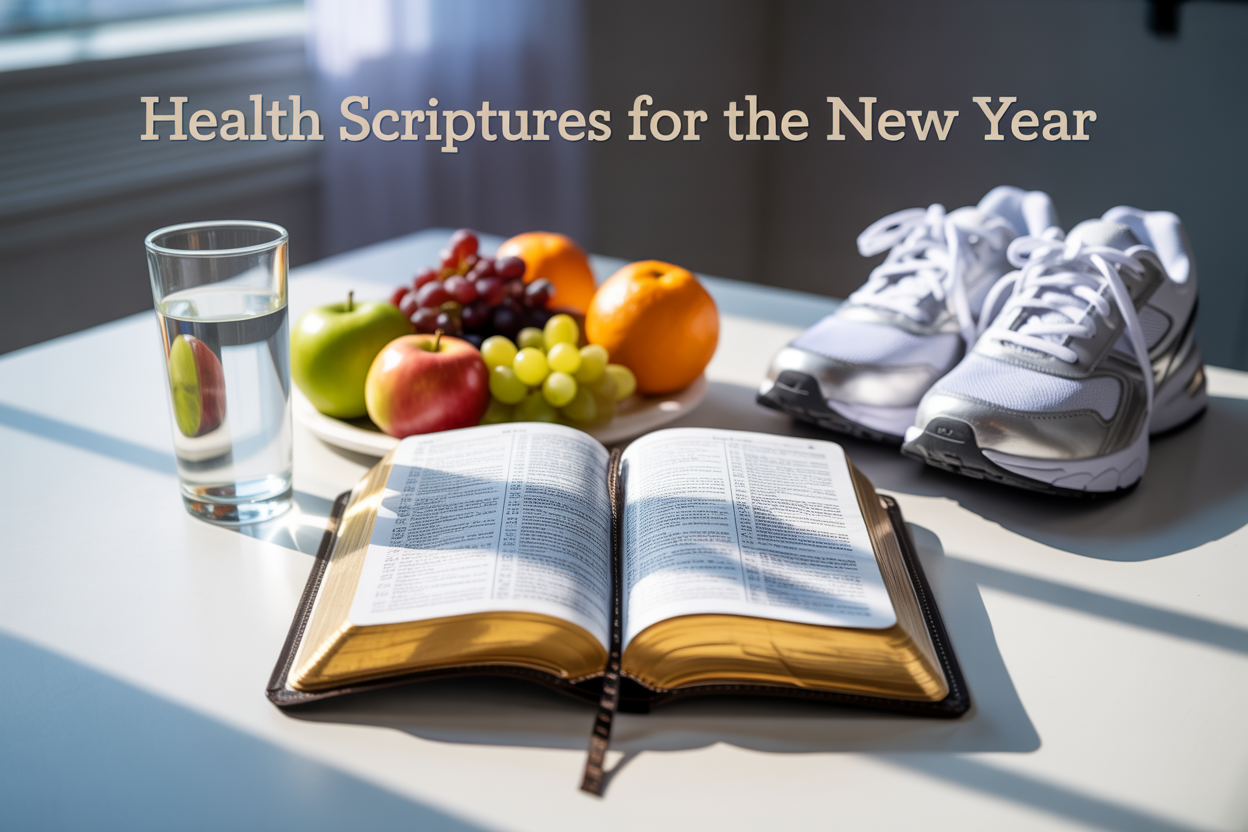
Starting fresh this New Year means more than just hitting the gym or eating salad – it's about aligning your health goals with your faith. This guide is designed for Christian believers who want to honor God through better physical wellness while building habits that strengthen both body and spirit.
Many Christians struggle to connect their faith with their health journey, but the Bible offers clear guidance on caring for our bodies as temples of the Holy Spirit. You'll discover how biblical wellness principles can transform your approach to fitness, nutrition, and overall well-being.
We'll explore how Christian health practices rooted in Scripture can revolutionize your wellness routine. You'll learn practical spiritual disciplines for health that go beyond typical resolutions, including how prayer for physical healing can complement your wellness efforts. We'll also dive into biblical nutrition principles that guide healthy eating choices and faith based fitness approaches that honor God while building strength and endurance.
Ready to make this your healthiest year yet? Let's discover what God's Word says about caring for the body He gave you.
Biblical Foundations for Physical Wellness

Understanding Your Body as God's Temple
The apostle Paul's words in 1 Corinthians 6:19-20 revolutionize how we view physical wellness: "Do you not know that your bodies are temples of the Holy Spirit, who is in you, whom you have received from God? You are not your own; you were bought at a price. Therefore honor God with your bodies." This profound truth transforms Christian health from mere vanity or social pressure into an act of worship and stewardship.
When you grasp that your physical body houses the Holy Spirit, every health decision becomes sacred. Your morning workout isn't just about fitting into smaller clothes—it's about maintaining the dwelling place of God Himself. Your food choices aren't merely about personal preference—they're about treating your body with the reverence it deserves as God's temple.
This biblical perspective shifts your motivation from external pressures to internal calling. You're not pursuing biblical wellness because society demands it, but because you recognize the incredible honor of being chosen as God's dwelling place. Your body, with all its perceived flaws and limitations, is precious to the Creator of the universe.
Biblical nutrition principles and faith-based fitness take on deeper meaning when viewed through this lens. You're not following another diet trend—you're stewarding something holy. This understanding naturally leads to healthier choices because you're caring for something infinitely valuable.
Divine Principles for Healthy Living
Scripture provides timeless principles that support physical wellness and spiritual disciplines for health. The Bible doesn't offer a specific meal plan, but it reveals God's heart for balance, moderation, and intentional living that directly impacts our physical well-being.
The principle of self-control appears repeatedly throughout Scripture. Galatians 5:22-23 lists self-control as a fruit of the Spirit, and Proverbs 25:28 warns that "whoever has no rule over his own spirit is like a city broken down, without walls." This self-control extends to eating habits, exercise routines, and sleep patterns.
Ecclesiastes 3:1 teaches there's "a time for everything," including rest and activity. God designed our bodies with natural rhythms that require both work and rest. The biblical concept of Sabbath isn't just spiritual—it's deeply physical. Regular rest prevents burnout and allows your body to repair and regenerate.
| Biblical Principle | Health Application | Scripture Reference |
|---|---|---|
| Self-Control | Portion control, consistent exercise | Galatians 5:22-23 |
| Moderation | Balanced nutrition, avoiding extremes | 1 Corinthians 6:12 |
| Rest | Quality sleep, recovery time | Exodus 20:8-11 |
| Gratitude | Mindful eating, body appreciation | 1 Thessalonians 5:18 |
The principle of gratitude also shapes healthy living. When you thank God for your food, you naturally eat more mindfully. When you appreciate your body's ability to move, exercise becomes celebration rather than punishment.
Scripture-Based Motivation for Lifestyle Changes
Christian New Year resolutions often fail because they rely on willpower instead of God's power. Scripture provides sustainable motivation that goes beyond temporary enthusiasm to create lasting transformation.
Philippians 4:13 declares, "I can do all things through Christ who strengthens me." This verse isn't about achieving superhuman feats—it's about finding divine strength for daily challenges, including health goals. When you face the temptation to skip your workout or reach for unhealthy food, you can tap into Christ's strength rather than relying solely on personal determination.
Romans 12:1-2 calls believers to present their bodies as "living sacrifices, holy and acceptable to God." This passage reframes healthy living as worship. Your commitment to physical wellness becomes an offering to God, transforming mundane activities like meal prep and exercise into sacred acts.
The promise in Isaiah 40:31 offers hope for those struggling with energy and motivation: "But those who hope in the Lord will renew their strength. They will soar on wings like eagles; they will run and not grow weary, they will walk and not be faint." God promises supernatural endurance for those who trust in Him.
Scripture also addresses the mental battles that accompany lifestyle changes. 2 Corinthians 10:5 teaches us to "take captive every thought to make it obedient to Christ." This applies to negative self-talk, food obsessions, and discouraging thoughts about your progress.
Prayer for physical healing and strength becomes a daily practice rather than a last resort. James 5:16 reminds us that "the prayer of a righteous person is powerful and effective." You can pray for wisdom in food choices, motivation for exercise, and healing from unhealthy patterns.
Remember that biblical wellness isn't about perfection—it's about progress. God's grace covers your failures and provides fresh strength each morning. Your health journey becomes a partnership with the Creator who designed your body and knows exactly what it needs to thrive.
Spiritual Disciplines That Transform Your Health

Prayer and Meditation for Stress Reduction
The practice of prayer and meditation serves as a cornerstone of Christian health, offering profound benefits for both spiritual and physical wellness. Scripture teaches us to "cast all your anxiety on him because he cares for you" (1 Peter 5:7), demonstrating how spiritual disciplines can directly impact our stress levels and overall health.
Regular prayer creates a sacred space where we can release the burdens that accumulate in our daily lives. When we bring our concerns to God through intentional prayer, our nervous system naturally shifts from a state of fight-or-flight to rest-and-digest, lowering cortisol levels and blood pressure. This biological response mirrors what medical research has shown about meditation's impact on the body.
Biblical meditation differs from secular practices by focusing on God's Word and character. Psalm 1:2-3 describes the blessed person who "meditates on his law day and night" and becomes "like a tree planted by streams of water." This imagery suggests that spiritual disciplines for health create deep roots of stability and nourishment.
Practical Prayer Techniques for Health:
-
Start each morning with 10 minutes of gratitude prayer
-
Use breathing prayers throughout stressful moments
-
Practice Scripture meditation by slowly repeating verses like Philippians 4:6-7
-
End each day with surrender prayers, releasing worries to God
Fasting as a Tool for Physical and Spiritual Renewal
Biblical fasting extends far beyond dietary restriction—it represents a powerful spiritual discipline that can transform both our relationship with God and our physical health. Jesus himself practiced fasting and taught that "this kind does not go out except by prayer and fasting" (Matthew 17:21), highlighting fasting's role in spiritual breakthrough.
From a health perspective, fasting allows our digestive system to rest and repair while triggering cellular autophagy—the body's natural process of cleaning out damaged cells. This aligns beautifully with the spiritual principle of renewal and restoration that fasting represents in Scripture.
The Bible presents various fasting approaches, from the one-day fast Esther called (Esther 4:16) to Daniel's 21-day partial fast (Daniel 10:3). Each type offers unique benefits for both spiritual growth and physical wellness:
Types of Biblical Fasts and Their Health Benefits:
| Fast Type | Duration | Physical Benefits | Spiritual Focus |
|---|---|---|---|
| Daniel Fast | 21 days | Improved digestion, clearer skin | Seeking God's guidance |
| Esther Fast | 3 days | Rapid detox, mental clarity | Urgent prayer needs |
| Intermittent Fast | Daily | Weight management, stable blood sugar | Daily dependence on God |
Always consult healthcare providers before beginning extended fasts, especially if you have medical conditions.
Sabbath Rest for Mental and Physical Recovery
The principle of Sabbath rest represents one of God's most caring provisions for human wellness. Exodus 20:8-11 establishes Sabbath not as a burden but as a gift—a weekly rhythm that acknowledges our need for restoration and God's sovereignty over our schedules.
Modern science confirms what Scripture has always taught: our bodies and minds require regular rest cycles for optimal function. During deep rest, our brains consolidate memories, our immune systems strengthen, and our emotional reserves replenish. The Sabbath principle protects us from the chronic stress that leads to burnout, anxiety, and physical illness.
Creating a true Sabbath involves more than simply taking a day off. It requires intentionally stepping away from productivity-focused activities and embracing practices that restore our souls. This might include extended prayer time, nature walks, meaningful conversations, or simply resting without guilt.
Practical Sabbath Practices for Health:
-
Prepare meals in advance to minimize work
-
Turn off electronic devices for extended periods
-
Spend time in nature, reflecting on God's creation
-
Engage in activities that bring joy rather than achievement
-
Practice saying "no" to urgent but non-essential tasks
Community Fellowship for Emotional Wellbeing
The New Testament consistently emphasizes the importance of Christian community, with Hebrews 10:24-25 urging believers not to "give up meeting together." This isn't merely about church attendance—it reflects God's design for human flourishing through meaningful relationships and mutual support.
Research consistently shows that strong social connections contribute to longer life expectancy, better immune function, and reduced rates of depression and anxiety. The biblical concept of fellowship creates exactly the type of supportive community that promotes both emotional and physical health.
Christian community offers unique benefits that secular social groups often cannot provide. When we share our struggles with fellow believers, we experience the comfort of knowing we're not alone in our challenges. Prayer support, practical help during difficult seasons, and accountability relationships all contribute to a comprehensive support system.
Building Health-Supporting Community:
-
Join or create small group Bible studies
-
Participate in church service projects together
-
Share meals regularly with other believers
-
Create prayer partnerships for mutual support
-
Offer practical help during others' health challenges
-
Celebrate victories and milestones together
The early church modeled this perfectly in Acts 2:46-47, where believers "broke bread in their homes and ate together with glad and sincere hearts." This combination of spiritual connection and practical care creates an environment where both faith and wellness can flourish.
Biblical Nutrition and Eating Principles

God's Original Design for Food in Genesis
The Bible reveals God's perfect blueprint for human nutrition right from the beginning. In Genesis 1:29, God tells Adam and Eve, "I have given you every herb that yields seed which is on the face of all the earth, and every tree whose fruit yields seed; to you it shall be for food." This original diet consisted of fruits, vegetables, nuts, seeds, and grains - what many nutritionists today call whole foods.
After the flood, God expanded the dietary guidelines to include clean animals (Genesis 9:3), but the foundation remained rooted in natural, unprocessed foods. These biblical nutrition principles emphasize eating foods in their God-given state rather than heavily modified versions. Modern science confirms what Scripture taught thousands of years ago - whole foods provide superior nutrition and promote better health outcomes.
God's design also included variety and abundance. The Garden of Eden wasn't limited to one type of fruit or vegetable but offered diverse options, each providing unique nutrients and benefits. This divine pattern shows us that healthy eating isn't about restriction but about embracing the rich variety of foods God created for our nourishment and enjoyment.
Daniel's Diet for Optimal Health and Energy
Daniel's approach to biblical eating habits offers a powerful example of faith-based nutrition choices. When faced with the king's rich foods and wine, Daniel requested vegetables and water instead (Daniel 1:12). After ten days on this simple diet, Daniel and his friends appeared healthier and more nourished than those eating the royal cuisine.
The Daniel Fast, based on this biblical account, typically includes:
-
Fresh fruits and vegetables
-
Whole grains and legumes
-
Nuts and seeds
-
Water and herbal teas
-
No processed foods, sugar, or animal products
This approach to Christian health demonstrates several key principles. First, Daniel showed that dietary choices can be acts of faith and obedience to God. Second, simple, plant-based foods often provide better nutrition than rich, processed alternatives. Third, fasting from certain foods can create spiritual focus and physical benefits.
Many believers today adopt variations of Daniel's diet as part of their spiritual disciplines for health. They report increased energy, better digestion, clearer thinking, and deeper spiritual connection. The combination of physical discipline and spiritual purpose creates a powerful foundation for overall wellness.
Practicing Gratitude and Mindful Eating
Scripture transforms not just what we eat but how we eat. First Timothy 4:4-5 teaches that "every creature of God is good, and nothing is to be refused if it is received with thanksgiving; for it is sanctified by the word of God and prayer." This passage reveals the spiritual dimension of biblical nutrition principles - food becomes sacred when received with gratitude.
Mindful eating from a Christian perspective involves several practices:
Prayer Before Meals
-
Thank God for providing the food
-
Ask for blessing and nourishment
-
Acknowledge God as the source of all provision
Conscious Consumption
-
Eat slowly and appreciate flavors and textures
-
Listen to your body's hunger and fullness cues
-
Avoid distractions like phones or television during meals
Community and Fellowship
-
Share meals with family and friends when possible
-
Use mealtimes for meaningful conversation
-
Remember Jesus often taught and ministered during meals
This approach to faith and wellness helps break unhealthy eating patterns like emotional eating, rushed meals, or mindless snacking. When we see food as God's gift rather than just fuel or comfort, our relationship with eating becomes healthier and more intentional.
Gratitude also extends to being thankful for the ability to taste, chew, and digest food - recognizing these as gifts from God rather than automatic functions. This perspective naturally leads to better food choices and more satisfaction with smaller portions, supporting both physical health and spiritual growth.
Faith-Based Approaches to Exercise and Movement

Stewarding Your Physical Strength for Kingdom Work
Your body represents God's temple and His investment in your earthly mission. Scripture reminds us that we are "fearfully and wonderfully made" (Psalm 139:14), which means every muscle, every heartbeat, and every breath carries divine purpose. When you maintain physical strength through regular exercise, you're preparing yourself to serve others more effectively and endure the challenges God places before you.
Think of biblical figures like David, who built physical stamina while shepherding sheep, preparing him for battles ahead. Daniel maintained his strength through disciplined eating and movement, enabling him to serve in foreign courts for decades. Your physical conditioning directly impacts your capacity to answer God's calling on your life.
Key ways to steward physical strength:
-
View exercise as preparation for service, not vanity
-
Build endurance to support long-term ministry commitments
-
Maintain energy levels for daily acts of love and service
-
Strengthen your body to carry others' burdens when needed
Finding Joy and Purpose in Physical Activity
Physical movement becomes transformational when you connect it to God's greater purposes rather than focusing solely on appearance or performance. The Bible speaks of running the race set before us (Hebrews 12:1), suggesting that our physical pursuits should mirror our spiritual journey with intentionality and perseverance.
Many believers discover that hiking becomes prayer time, swimming transforms into meditation, and team sports teach cooperation and humility. When you shift your perspective from "I have to exercise" to "I get to honor God through movement," physical activity becomes worship rather than work.
Ways to find purpose in movement:
-
Choose activities that connect you with God's creation
-
Exercise with others to build Christian community
-
Set goals that reflect spiritual growth principles
-
Celebrate progress as evidence of God's strength working through you
Overcoming Laziness Through Biblical Discipline
Scripture addresses laziness directly, calling believers to diligence and purposeful action. Proverbs warns against the sluggard's ways, while Paul encourages believers to discipline their bodies like athletes training for competition (1 Corinthians 9:27). Biblical discipline isn't about punishment but about aligning your actions with your values and God's calling.
When motivation fails, biblical discipline creates sustainable habits. Start small with consistent daily movement, just as spiritual disciplines begin with brief daily prayers that grow over time. Remember that discipline produces freedom - the freedom to serve effectively and live abundantly.
Biblical principles for overcoming laziness:
-
Begin each day with gratitude for your body's abilities
-
Create accountability through Christian community
-
Set realistic goals that honor your current season of life
-
Remember that discipline today enables tomorrow's opportunities
Using Movement as Worship and Praise
Physical activity becomes a form of worship when you acknowledge God as the source of your strength and ability. David danced before the Lord with all his might, showing us that movement can express praise and thanksgiving. Your morning run can become a time of gratitude, your yoga practice a moment of surrender, and your weightlifting a celebration of God's power working through you.
When you exercise with worship music or spend time in prayer during physical activity, you're following the biblical pattern of integrating spiritual and physical disciplines. This approach transforms routine workouts into encounters with God, making fitness a pathway to deeper faith rather than just better health.
Ways to worship through movement:
-
Listen to worship music during exercise
-
Practice gratitude for each body part as you move
-
Dedicate specific workouts to prayer and reflection
-
Use physical challenges as opportunities to depend on God's strength
Healing Through Scripture and Prayer

Powerful Bible Verses for Physical Healing
God's word contains countless promises for healing that believers have clung to for centuries. Isaiah 53:5 reminds us that "by His wounds we are healed," while Jeremiah 17:14 declares "Heal me, Lord, and I will be healed; save me and I will be saved." These scripture for healing verses form the foundation of faith-based wellness practices.
Psalm 103:2-3 encourages us to "praise the Lord, my soul, and forget not all his benefits—who forgives all your sins and heals all your diseases." This powerful reminder connects spiritual and physical restoration, showing how God cares for our complete well-being. Other transformative verses include 3 John 1:2, which expresses God's desire for us to "be in good health and that all may go well with you," and Exodus 15:26, where God declares Himself as "the Lord, who heals you."
Creating a personal collection of healing scriptures provides comfort during illness and strengthens faith in God's power to restore. Many believers write these verses on cards, memorize them, or incorporate them into daily prayer for physical healing routines.
Combining Medical Treatment with Spiritual Faith
Christian health practices don't require choosing between medical care and spiritual faith—both work together in God's healing plan. Luke, the beloved physician and Gospel writer, demonstrates how God uses medical professionals as instruments of healing. Smart believers seek quality medical care while maintaining unwavering trust in God's ultimate authority over their health.
Prayer can accompany every medical appointment, treatment, and procedure. Before seeing doctors, many Christians pray for wisdom for their healthcare providers, asking God to guide their decisions and treatments. This approach acknowledges that medical knowledge and skills come from God, who works through dedicated professionals to bring healing.
Some believers create prayer for physical healing lists that include specific medical concerns, upcoming procedures, and thanksgiving for healthcare workers. Others fast and pray before major medical decisions, seeking God's peace and direction. The key lies in viewing medical treatment as one of many tools God provides for healing, rather than a replacement for faith.
Praying for Others' Health and Wellness
Intercessory prayer for others' health creates powerful spiritual bonds within the Christian community. James 5:16 tells us to "pray for each other so that you may be healed," highlighting the collective power of believers praying together. Many churches maintain prayer lists for members facing health challenges, creating networks of spiritual support.
Effective health intercession involves specific, persistent prayer rather than general requests. Instead of simply asking God to "bless" someone's health, believers can pray for particular needs: successful surgery, pain relief, wisdom for doctors, or strength during treatment. This focused approach demonstrates genuine care and creates opportunities to see God's specific answers.
Biblical wellness communities often organize prayer walks, healing services, or dedicated prayer times for health concerns. These gatherings combine the power of corporate prayer with practical support, as members often coordinate meals, transportation, or other assistance for those experiencing health challenges.
Trusting God's Plan During Health Challenges
Health struggles test faith like few other life experiences. Romans 8:28 promises that "in all things God works for the good of those who love him," including difficult health situations that seem impossible to understand. This trust doesn't mean passively accepting poor health without seeking treatment, but rather maintaining peace and hope regardless of circumstances.
Many believers find strength in remembering biblical characters who faced health challenges. Job's story demonstrates how suffering can deepen faith, while Paul's "thorn in the flesh" shows how God's grace proves sufficient even when healing doesn't come as expected. These examples provide comfort and perspective during personal health struggles.
Building trust during health challenges often requires daily surrender and conscious choices to believe God's goodness despite difficult circumstances. Spiritual disciplines for health like meditation on scripture, worship, and fellowship help maintain this trust when emotions fluctuate with medical reports or physical symptoms.
Building a Support Network of Believing Community
Strong Christian health journeys require community support that goes beyond medical care. Ecclesiastes 4:12 reminds us that "a cord of three strands is not quickly broken," emphasizing the strength found in unified relationships. Health-focused Christian communities provide prayer, practical help, and spiritual encouragement during both wellness and illness.
Effective support networks include various types of relationships: prayer partners for regular intercession, practical helpers for meals and transportation, and spiritual mentors for guidance during difficult decisions. Many churches create care teams that systematically support members through health crises, ensuring no one faces challenges alone.
Faith based fitness groups, healthy cooking clubs, or walking partners create ongoing support for wellness goals while building deeper friendships. These relationships provide accountability for healthy choices and celebrate progress together. Social media groups focused on Christian health can extend support beyond local congregations, connecting believers with similar health journeys worldwide.
The most effective Christian health communities balance spiritual support with practical assistance, creating environments where members feel comfortable sharing both victories and struggles. This vulnerability strengthens everyone's faith and demonstrates God's love through tangible care.

Drawing from biblical wisdom can completely transform how you approach your health in the coming year. The scriptures offer clear guidance on treating your body as a temple, eating with intention, moving with purpose, and finding healing through faith. When you combine spiritual disciplines with practical wellness habits, you create a foundation that goes beyond just physical fitness—you're building a lifestyle that honors both your body and your spiritual calling.
Start this new year by choosing one area where faith and health can intersect in your daily routine. Whether that's beginning your workouts with prayer, choosing foods that reflect biblical principles, or turning to scripture during health challenges, small steps can lead to lasting change. Your wellness journey becomes more meaningful when it's rooted in faith, and God's word provides the strength and wisdom you need to stay committed to caring for the body He's given you.


Comments
Post a Comment