UNDERSTANDING THE SIGNS OF THE BIRTH OF CHRIST
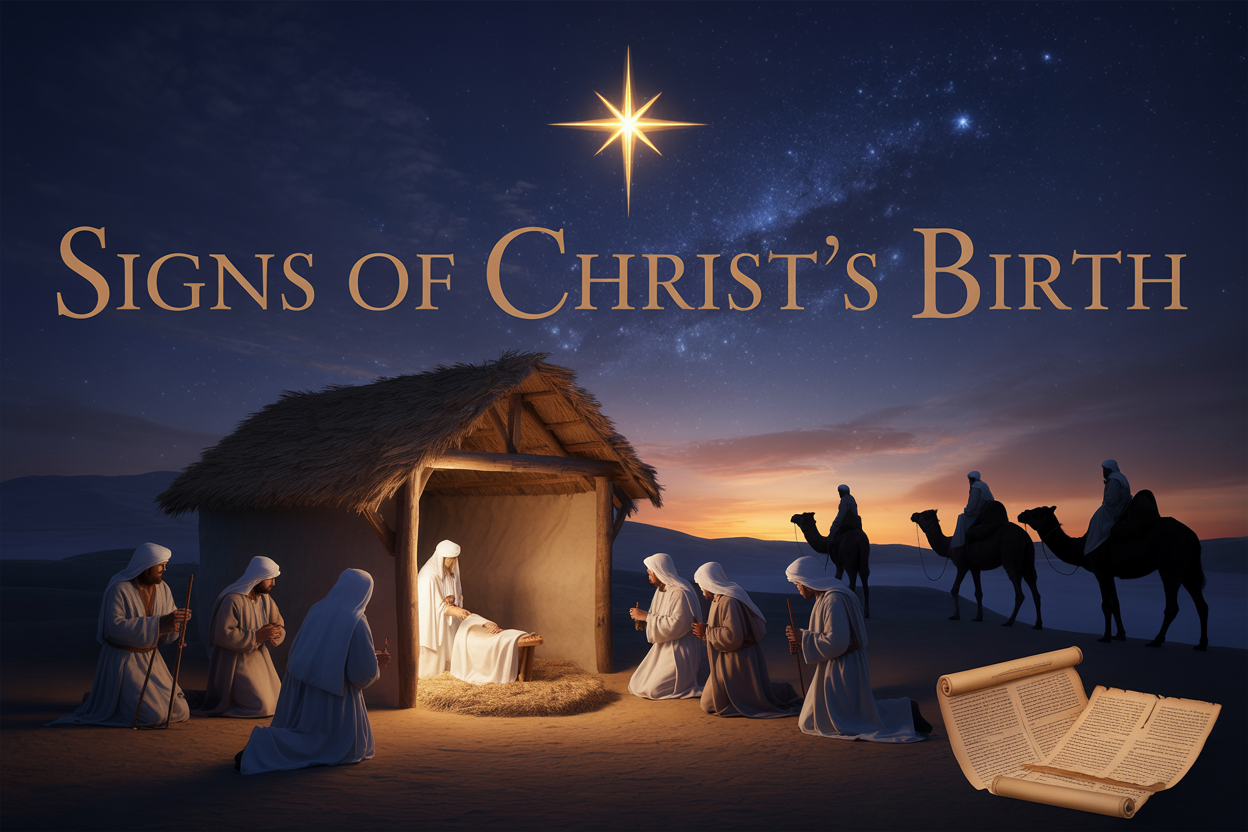
Understanding the Signs of the Birth of Christ
Christmas isn't just about gifts and holiday traditions – it's about recognizing the incredible signs of Christ's birth that changed the world forever. For believers seeking to deepen their Christmas worship and anyone curious about the biblical prophecies about Jesus birth, this exploration reveals how God announced His Son's arrival through unmistakable divine markers.
The nativity story biblical signs offer more than historical accounts – they provide a roadmap for recognizing God's work in our own lives. From the star of Bethlehem meaning to the shepherds angels Christmas story, each sign carries profound spiritual significance that speaks to us today.
We'll examine the prophetic foundation Christ birth was built upon, showing how Old Testament promises perfectly aligned with Jesus' arrival. You'll discover the supernatural signs Jesus birth brought – from celestial phenomena to angelic announcements that left no doubt about this baby's divine identity. Finally, we'll look at how the wise men following star and other witnesses responded to these biblical Christmas signs, and what their reactions teach us about recognizing God's presence in our own circumstances.
These faith lessons from Christ birth aren't just ancient history – they're practical insights for strengthening your relationship with God during the Christmas season and beyond.
Recognize the Prophetic Foundation for Christ's Birth
Discover Old Testament Prophecies That Foretold the Messiah's Coming
The prophetic foundation Christ birth rests on hundreds of years of Old Testament predictions that painted a detailed picture of the coming Messiah. These biblical prophecies about Jesus birth weren't vague hints—they were specific, measurable predictions that created a roadmap for identifying the true Messiah when He arrived.
Isaiah stands as perhaps the most prolific prophet regarding Christ's coming. His writings, penned around 700 BC, contain over 60 references to the Messiah. The famous passage in Isaiah 9:6 declares, "For unto us a child is born, unto us a son is given," while Isaiah 53 describes the suffering servant who would bear our sins. These prophecies established the dual nature of Christ's mission—both as conquering King and suffering Savior.
Daniel's prophecy provides precise timing for the Messiah's arrival. His "70 weeks" prophecy in Daniel 9:24-27 calculates the exact timeframe from the decree to rebuild Jerusalem to the coming of the "Anointed One." This mathematical precision left no doubt about when to expect the Messiah.
The Psalms contribute their own prophetic threads. Psalm 22 describes crucifixion details with startling accuracy, while Psalm 2 speaks of God's Son ruling the nations. These scattered prophecies across different books and centuries created an unmistakable pattern that only Jesus fulfilled completely.
Understand the Significance of the Virgin Birth Prophecy
Isaiah 7:14 contains one of the most remarkable prophecies about the signs of Christ's birth: "Therefore the Lord himself will give you a sign: The virgin will conceive and give birth to a son, and will call him Immanuel." This wasn't just a prediction—it was declared as a supernatural sign that would validate the Messiah's identity.
The Hebrew word "almah" used in this passage specifically refers to a young woman of marriageable age who has never been intimate with a man. This detail wasn't arbitrary—it pointed to the miraculous nature of the Messiah's conception. The virgin birth would serve as heaven's stamp of authenticity on the Christ child.
Mary's response to the angel Gabriel demonstrates her understanding of this prophecy's significance. When told she would conceive, her immediate question wasn't "if" but "how," since she knew no man. The angel's explanation that the Holy Spirit would overshadow her directly fulfilled Isaiah's ancient words.
The virgin birth prophecy solved a theological puzzle that had puzzled scholars for centuries. How could the Messiah be both fully human (to represent humanity) and fully divine (to conquer sin)? The miraculous conception provided the answer—Jesus would inherit human nature from Mary while receiving His divine nature from the Holy Spirit.
Learn About the Bethlehem Birth Location Prediction
Micah 5:2 provides one of the most geographically specific prophecies in Scripture: "But you, Bethlehem Ephrathah, though you are small among the clans of Judah, out of you will come for me one who will be ruler over Israel, whose origins are from of old, from ancient times." This prophecy, written around 700 BC, pinpointed the exact town where the Messiah would be born.
The specificity of this prophecy becomes even more remarkable when you consider the circumstances. Mary and Joseph lived in Nazareth, about 90 miles north of Bethlehem. Under normal circumstances, they would never have traveled to Bethlehem for Jesus' birth. Yet Caesar Augustus's census decree required Joseph to return to his ancestral home—Bethlehem—for registration.
The prophecy includes the qualifier "Ephrathah" to distinguish this Bethlehem from another town with the same name in Zebulun. This detail shows the precision of biblical prophecy and prevents any confusion about the location. Even the religious leaders of Jesus' day knew exactly where to direct the wise men when asked about the Christ child's birthplace.
Bethlehem's meaning—"house of bread"—adds another layer of prophetic significance. Jesus would later declare Himself the "bread of life," connecting His birthplace to His spiritual mission of providing eternal nourishment for humanity's souls.
Explore the Timing Prophecies That Aligned with Jesus' Birth
The timing of Christ's birth wasn't random—it fulfilled multiple prophetic timelines with mathematical precision. Daniel's "70 weeks" prophecy calculated the years from the decree to rebuild Jerusalem to the Messiah's appearance, landing squarely in the first century AD when Jesus was born.
Jacob's prophecy in Genesis 49:10 stated that the scepter would not depart from Judah until Shiloh (the Messiah) came. Historically, the Jewish Sanhedrin lost its authority to execute criminals in 30 AD, just before Jesus' crucifixion. This timing fulfilled Jacob's ancient words about the transfer of authority.
The prophet Haggai promised that the glory of the second temple would exceed that of Solomon's temple. While the second temple lacked the ark of the covenant and other treasures, it gained incomparable glory when Jesus—God incarnate—walked through its courts and taught within its walls.
Paul wrote that Christ came "in the fullness of time," recognizing that every prophetic timeline converged perfectly. The Roman road system enabled rapid travel for spreading the gospel, Greek culture provided a common language, and Jewish diaspora communities existed throughout the empire as launching points for Christian missions. The signs of Christ's birth weren't just supernatural events—they were the culmination of centuries of prophetic preparation that created the perfect moment in history for the Savior's arrival.
Identify the Supernatural Signs That Announced His Arrival
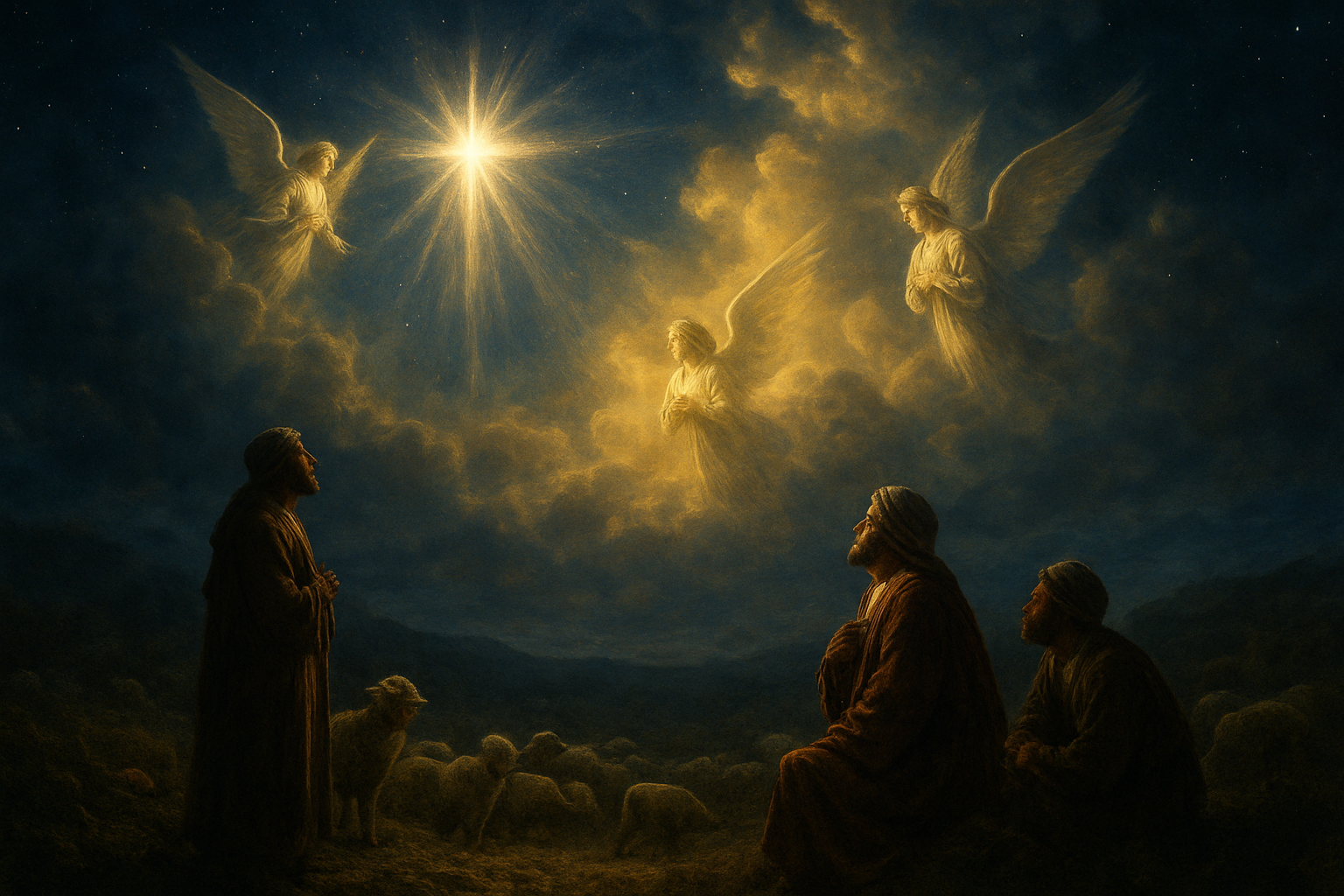
Understand the Significance of the Star of Bethlehem
The star of Bethlehem stands as one of history's most mysterious and powerful supernatural signs Jesus birth. This celestial phenomenon guided the wise men from the East on their journey to find the newborn King, marking a divine intersection between heaven and earth. Biblical scholars have debated the exact nature of this star - whether it was a supernova, planetary alignment, or miraculous celestial display created specifically for this moment.
What makes this star truly remarkable isn't just its brightness, but its behavior. Unlike ordinary stars, this one "went before them" and actually "stood over where the young child was" (Matthew 2:9). This supernatural movement suggests divine guidance rather than natural astronomy. The biblical Christmas signs here demonstrate God's ability to use creation itself to announce His Son's arrival.
The wise men, likely astrologers from Persia or Babylon, recognized this star's significance because they understood Old Testament prophecies. Numbers 24:17 speaks of a star coming out of Jacob, connecting this celestial sign to ancient Messianic expectations. Their expensive gifts of gold, frankincense, and myrrh weren't random choices - they acknowledged Jesus as King (gold), Priest (frankincense), and sacrifice (myrrh).
Recognize the Angelic Announcements to Shepherds
The shepherds angels Christmas story reveals God's heart for the humble and overlooked. While kings and scholars searched the skies, God chose to announce Christ's birth to working-class shepherds in the fields outside Bethlehem. This choice wasn't accidental - it reflected the accessibility of salvation and God's preference for revealing Himself to those with humble hearts.
The angel's appearance created immediate fear among the shepherds, but the message brought "good tidings of great joy which shall be to all people" (Luke 2:10). This announcement contained several crucial elements:
-
Identity: "A Savior, which is Christ the Lord"
-
Location: "The city of David"
-
Sign: "A babe wrapped in swaddling clothes, lying in a manger"
-
Scope: "To all people"
Suddenly, a heavenly host appeared, praising God and declaring "Glory to God in the highest, and on earth peace, good will toward men" (Luke 2:14). This multitude of angels created a worship service that bridged heaven and earth, celebrating the moment when God became flesh.
The shepherds' response shows authentic faith - they immediately left their flocks to find this child, then became the first evangelists, spreading the news everywhere they went.
Learn About the Angels' Message to Mary and Joseph
The nativity story biblical signs include intimate angelic encounters with both Mary and Joseph, revealing God's careful preparation for the Incarnation. Gabriel's visit to Mary represents one of the most significant angelic announcements in Scripture, fundamentally changing human history.
Gabriel's message to Mary contained revolutionary information:
-
She would conceive while remaining a virgin
-
Her son would be called Jesus (meaning "God saves")
-
He would inherit David's throne
-
His kingdom would have no end
Mary's response - "Let it be unto me according to your word" - demonstrates remarkable faith and submission to God's plan, even when it defied natural understanding.
Joseph's angelic encounter came through a dream, addressing his righteous concern about Mary's pregnancy. The angel revealed that Mary's child was conceived "of the Holy Ghost" and commanded Joseph to name Him Jesus "for he shall save his people from their sins" (Matthew 1:21). This message connected Jesus directly to the prophecy in Isaiah 7:14 about a virgin bearing a son called Immanuel.
Both Mary and Joseph received specific instructions and reassurance, showing God's care for those He calls into His purposes. These signs of Christ's birth weren't just announcements - they were divine commissions, calling ordinary people to participate in extraordinary events that would change the world forever.
Understand the Human Responses to Christ's Birth Signs
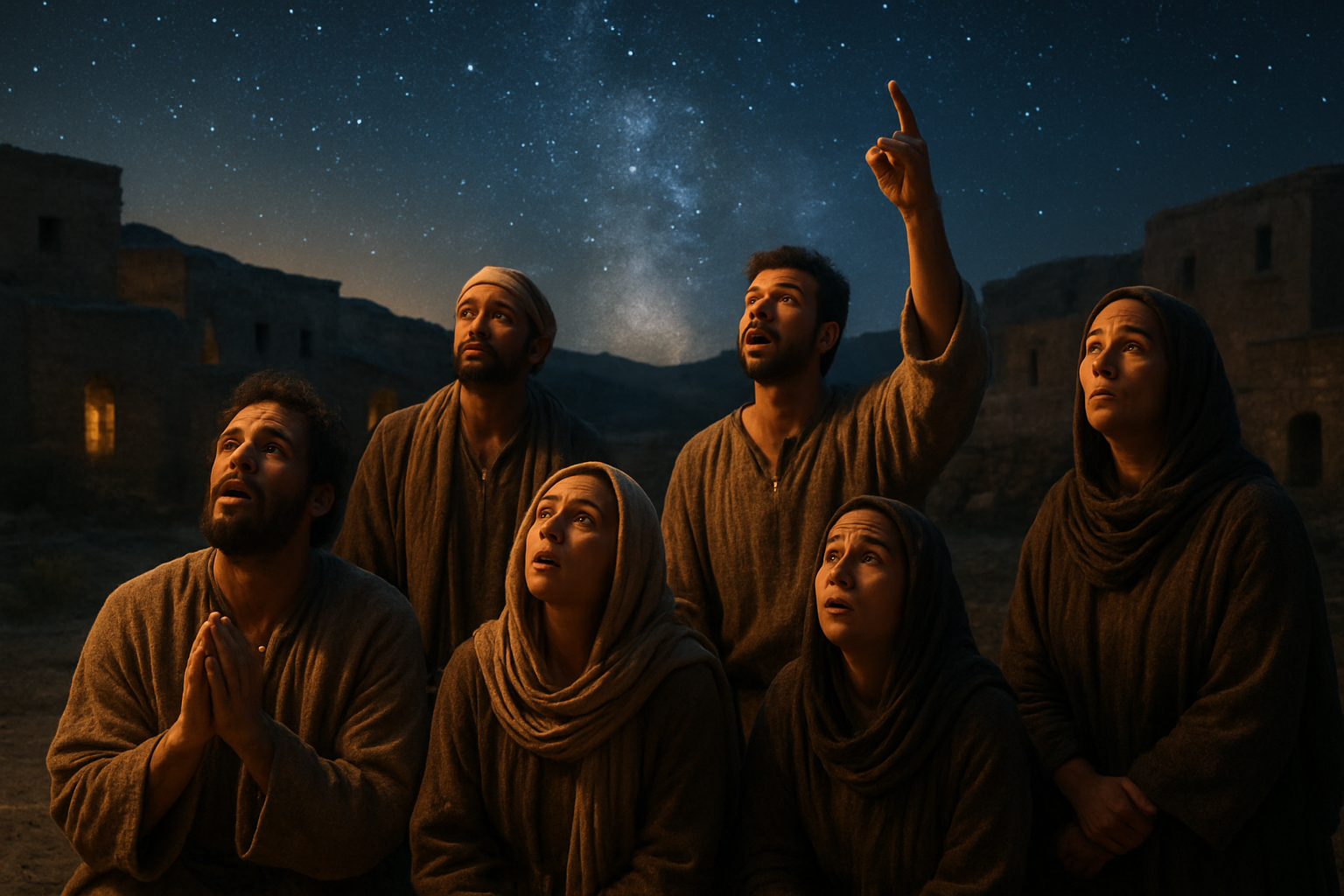
Discover How the Wise Men Followed the Star
The wise men's response to the star of Bethlehem remains one of the most compelling examples of faith-driven action in the nativity story. These learned scholars, likely from Persia or Babylon, recognized something extraordinary in the heavens that others missed entirely. When they spotted this unusual star, they didn't dismiss it as mere astronomical curiosity—they packed their belongings, gathered precious gifts, and embarked on a dangerous journey spanning hundreds of miles.
What makes their response remarkable is the depth of their commitment. They spent months traveling through hostile territories, following a celestial sign that led them to a humble town most people had never heard of. Their persistence paid off when the star guided them directly to the young Jesus. The wise men following star demonstrates how divine signs often require both spiritual discernment and practical action to reach their intended purpose.
Learn About the Shepherds' Immediate Journey to Bethlehem
The shepherds' reaction to the supernatural signs Jesus birth couldn't have been more different from the wise men's calculated journey. When angels suddenly filled the night sky with blazing glory, these working-class men experienced terror followed by overwhelming joy. The angel's announcement transformed their fear into urgent excitement, and they made an immediate decision that would change their lives forever.
"Let's go to Bethlehem right now and see what the Lord has told us about," they said to each other. Notice their response wasn't passive or hesitant—they dropped everything and ran to find the newborn Messiah. This spontaneous obedience shows how biblical Christmas signs can create instant, life-altering responses in those whose hearts are ready to receive divine revelation.
Their journey to Bethlehem wasn't just physical movement; it represented a spiritual leap from ordinary work to extraordinary witness. After finding Jesus exactly as the angels described, they became the first evangelists, spreading the news throughout the region with infectious enthusiasm.
Understand King Herod's Fearful Reaction
King Herod's response to news of Christ's birth reveals how signs of Christ's birth can trigger vastly different reactions depending on one's spiritual condition. When the wise men inquired about the newborn "King of the Jews," Herod's immediate reaction was fear and rage. The thought of a rival threatened his grip on power, causing him to respond with calculated violence rather than worship.
Herod's paranoia led him to consult the chief priests and scribes, who easily located the biblical prophecies about Jesus birth pointing to Bethlehem. The irony is striking—religious leaders knew exactly where the Messiah would be born, yet they felt no compulsion to seek Him themselves. Herod's deceptive conversation with the wise men, claiming he wanted to worship the child, masked his murderous intentions.
His eventual massacre of innocent children in Bethlehem demonstrates how hardened hearts can twist divine signs into opportunities for evil. Herod's response serves as a sobering reminder that recognizing supernatural signs doesn't guarantee a proper response to them.
Recognize How Mary Pondered These Signs in Her Heart
Mary's response to the unfolding nativity story biblical signs shows us a different kind of spiritual maturity. While shepherds ran with excitement and wise men traveled with determination, Mary processed these extraordinary events through quiet contemplation. The Gospel of Luke tells us twice that she "treasured these things in her heart" and "pondered them."
This young woman had already experienced her own supernatural encounter with the angel Gabriel, so she understood that God was orchestrating something beyond human comprehension. Rather than seeking immediate understanding or public recognition, Mary chose the path of patient reflection. She gathered each sign, each testimony, each miracle like precious jewels, storing them in her memory for deeper understanding later.
Mary's response teaches us that not every divine sign requires immediate action or public proclamation. Sometimes the most appropriate response is careful observation, prayer, and trust that God's timing for revelation is perfect.
See How Simeon and Anna Recognized the Messiah
Simeon and Anna's recognition of the infant Jesus demonstrates how a lifetime of faithful waiting can prepare hearts to recognize divine signs others might miss. These elderly temple servants had spent decades anticipating the Messiah's arrival, and when Mary and Joseph brought Jesus for dedication, both immediately recognized Him as the promised Savior.
Simeon's prophetic words reveal someone whose spiritual eyes had been sharpened by years of expectant hope. The Holy Spirit had promised him he wouldn't die until he saw the Lord's Christ, and when that moment arrived, he knew it instantly. Anna, a prophetess who had devoted herself to prayer and fasting for over sixty years, began praising God and speaking about Jesus to everyone looking for Jerusalem's redemption.
Their responses highlight how spiritual preparation and patient expectation position us to recognize God's signs when they appear. Both had cultivated the kind of faith that could perceive divine significance in ordinary circumstances—a baby's temple dedication became their moment of prophetic fulfillment.
Apply the Birth Signs to Strengthen Your Faith Today
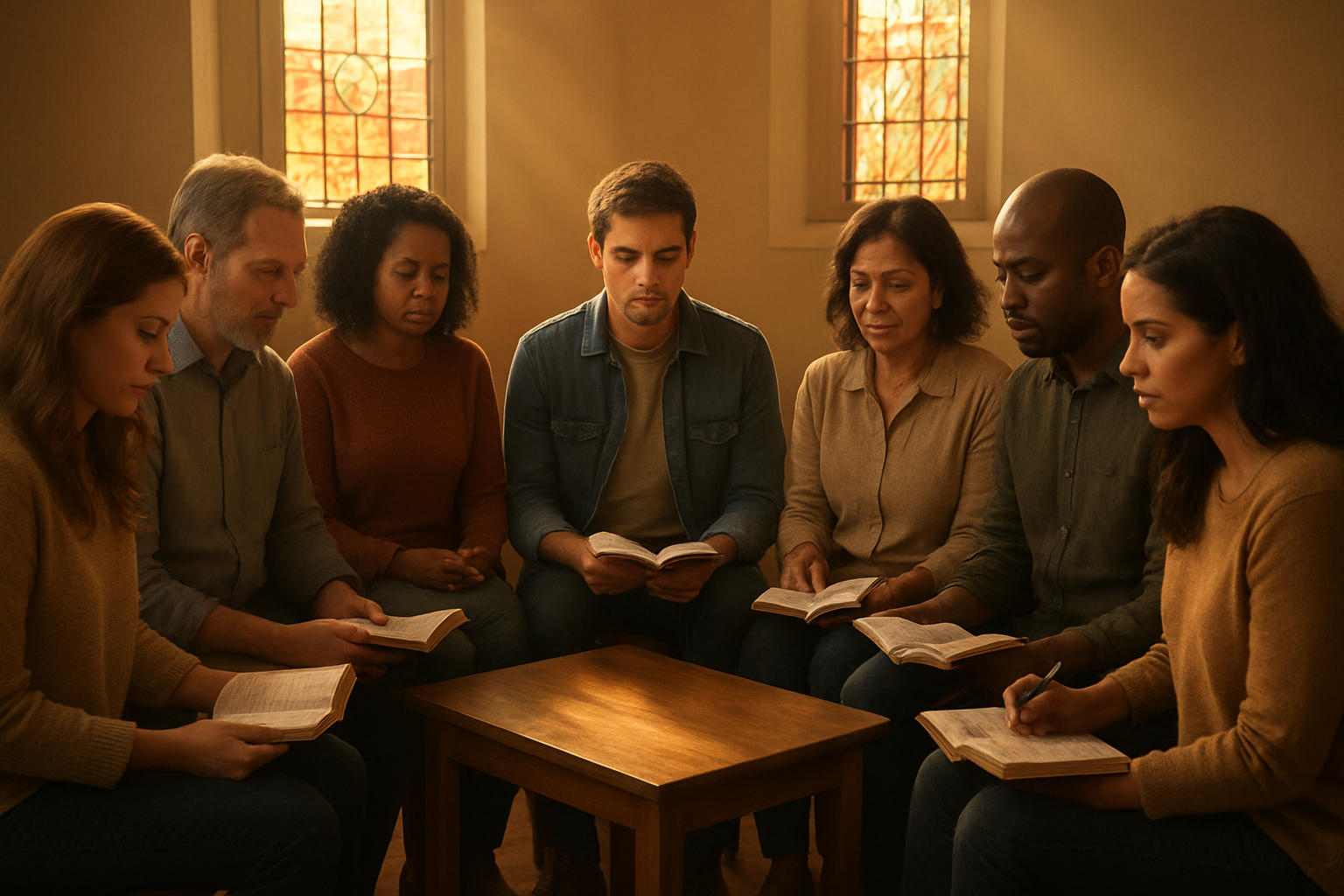
Learn to Recognize God's Signs in Your Own Life
The signs of Christ's birth weren't random events—they were deliberate communications from God to those who were watching and waiting. Just like the shepherds received angelic announcements and the wise men followed the star of Bethlehem, God continues to speak through signs in our daily lives. These modern signs might not involve angels appearing in the sky, but they often manifest as:
-
Unexpected opportunities that align perfectly with your prayers
-
Divine appointments with people who provide exactly what you need
-
Scripture verses that repeatedly catch your attention during difficult seasons
-
Peace that surpasses understanding during chaotic circumstances
-
Doors that open when you've been faithful in waiting
The key lies in developing spiritual sensitivity. When Mary received the angel Gabriel's announcement, she was already in a posture of worship and surrender. Similarly, we must cultivate hearts that are attentive to God's voice through prayer, Bible study, and quiet reflection. Start keeping a journal of moments when you sense God's guidance or provision—you'll be amazed at how frequently He's been speaking.
Develop Patience While Waiting for God's Promises
The biblical prophecies about Jesus birth spanned centuries before their fulfillment. Abraham waited 25 years for Isaac. Joseph endured years in prison before his dreams came true. Mary carried the Messiah for nine months, knowing her life would never be the same. Each person in the nativity story learned that God's timing rarely matches our human expectations.
Your waiting seasons serve specific purposes:
| Purpose of Waiting | Biblical Example | Modern Application |
|---|---|---|
| Character Development | Abraham's faith journey | Learning perseverance through delays |
| Preparation | Mary's heart preparation | God preparing you for His answer |
| God's Glory | Jesus born at "fullness of time" | Perfect timing brings maximum impact |
The shepherds angels Christmas story reminds us that God announces His breakthroughs when the time is right, not when we think it should happen. During your waiting periods, focus on becoming the person who can handle what you're asking for. Use this time for spiritual growth, skill development, and deepening your relationship with God.
Build Trust in God's Perfect Timing for Major Life Events
When the wise men following star began their journey, they didn't know exactly when they'd reach their destination. They simply trusted the sign God provided and took one step at a time. This same principle applies to major life decisions—career changes, relationships, family planning, ministry opportunities, and financial investments.
Building trust in God's timing requires shifting from human logic to divine perspective. The supernatural signs Jesus birth demonstrated that God orchestrates events far beyond our ability to control or predict. He coordinated a census to move Mary and Joseph to Bethlehem, aligned the stars to guide eastern kings, and prepared humble shepherds to be the first evangelists.
For major life events, practice these faith lessons from Christ birth:
-
Seek God's guidance before making decisions, not just His blessing afterward
-
Pay attention to patterns of confirmation from multiple sources
-
Be willing to take steps of obedience even when the full picture isn't clear
-
Remember that God's delays are not denials—they're divine orchestration
-
Trust that He sees connections and consequences you cannot
When facing big decisions, ask yourself: "Am I moving forward because I'm impatient, or because God is genuinely opening this door?" The peace that accompanied Mary's acceptance of her calling should mark your major life choices as well.

The birth of Christ wasn't a quiet, unnoticed event. God carefully laid the groundwork through centuries of prophecy, then announced His Son's arrival with supernatural signs that grabbed the attention of both humble shepherds and wise scholars. From the star that guided the Magi to the angelic choir that filled the night sky, each sign pointed to the same incredible truth: the Messiah had finally come. The varied responses we see - from Mary's faith to Herod's fear, from the shepherds' joy to the religious leaders' skepticism - show us that God's signs demand a response from every heart.
These same signs that announced Christ's birth two thousand years ago can strengthen your faith today. When you feel overwhelmed by life's challenges or question God's presence, remember that He's still the God who speaks through signs and keeps His promises. Look for His fingerprints in your own story, trust His timing even when it doesn't make sense, and let the wonder of Christmas remind you that God moves heaven and earth to reach you. The signs of Christ's birth weren't just historical events - they're an invitation to experience the same awe and faith that changed everything for those first witnesses.


Comments
Post a Comment