THE SIGNIFICANCE OF JOSEPH IN THE CHRISTMAS STORY
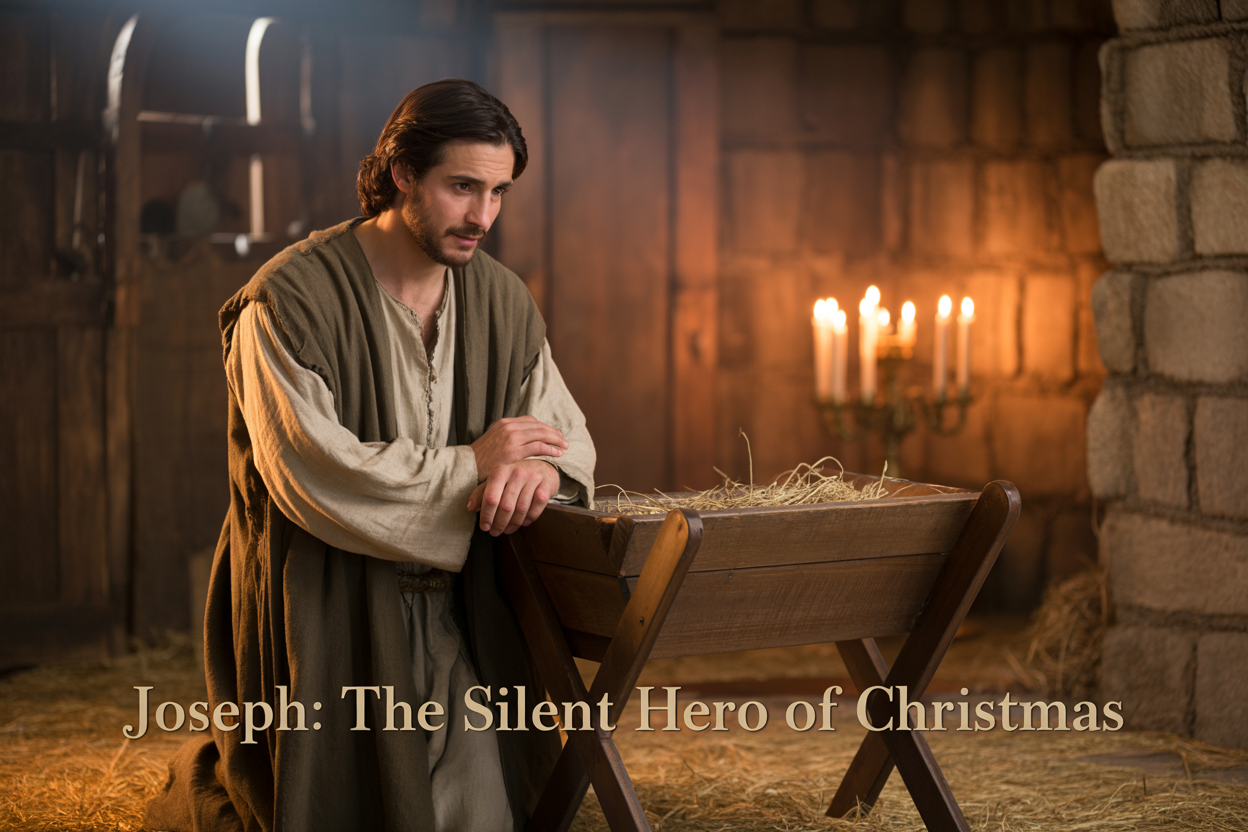
While Mary often takes center stage in Christmas nativity scenes, Joseph in Christmas story deserves recognition as an unsung hero whose faith shaped the foundation of Jesus' earthly life. This post is for Christians, Bible study groups, and anyone curious about the deeper meaning behind familiar Christmas characters who want to understand why Joseph biblical character matters so much to the nativity narrative.
Joseph Mary protector stepped up when most men would have walked away, showing us what real Joseph obedience faith looks like in action. We'll explore how Joseph answered God's calling through dreams and divine messages, then examine his protective role as Mary's husband and provider during their most vulnerable moments. You'll also discover how Joseph unknowingly fulfilled ancient Joseph Messianic prophecies and see how his Joseph silent strength guided his family through crisis after crisis—from Bethlehem's crowded streets to fleeing Herod's murderous plot.
Joseph's Divine Calling and Obedient Response
Receiving Angelic Visitation and Divine Revelation
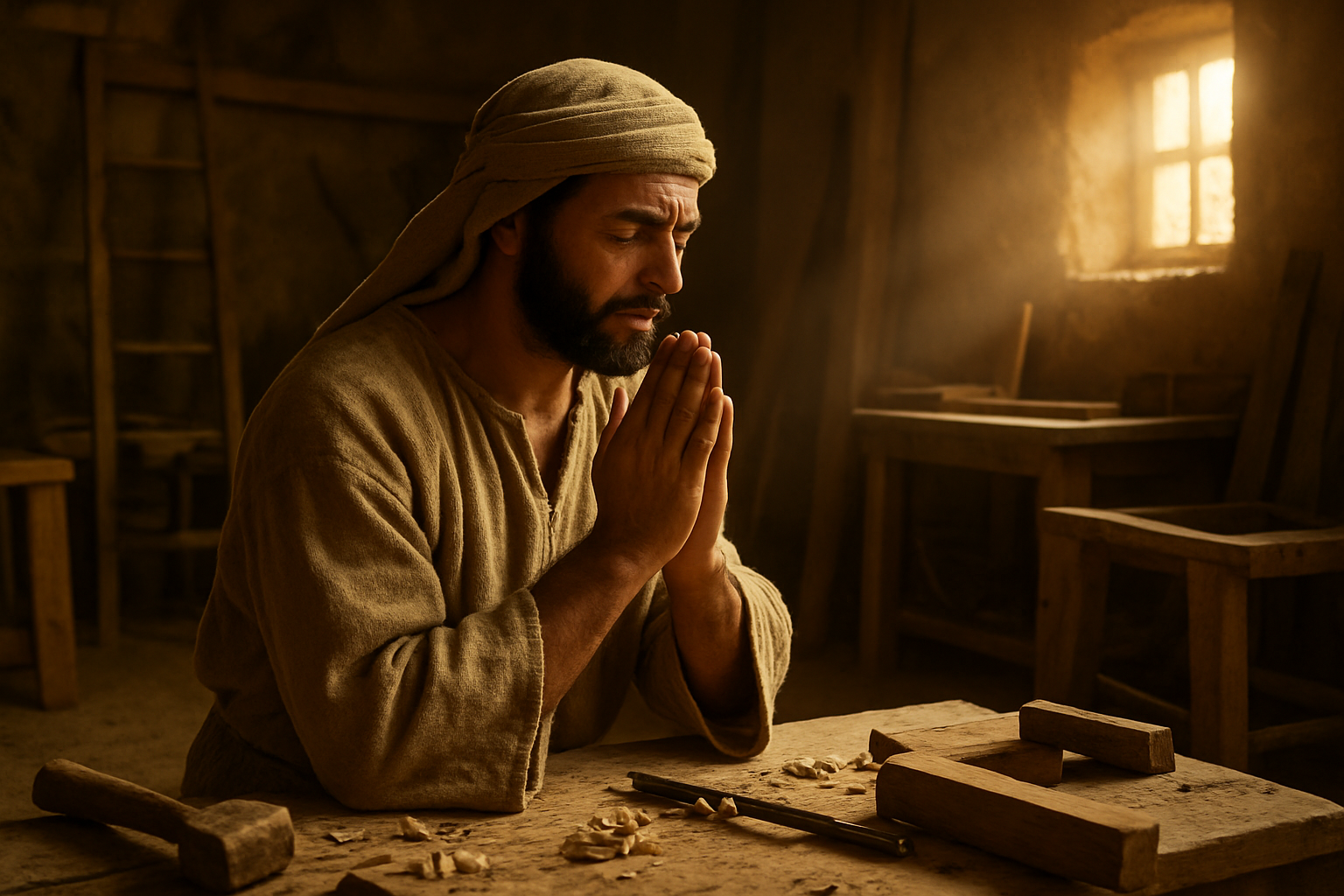
Joseph in the Christmas story experienced one of the most extraordinary moments in human history when an angel appeared to him in a dream. The Gospel of Matthew records this pivotal encounter where the angel of the Lord revealed God's miraculous plan for the virgin birth. This wasn't just any ordinary dream – it was a divine revelation that would change the course of history.
The angel's message was both shocking and reassuring: "Joseph son of David, do not be afraid to take Mary home as your wife, because what is conceived in her is from the Holy Spirit." This supernatural communication provided Joseph with crucial information about Mary's pregnancy and God's sovereign plan for redemption through their union.
Overcoming Initial Doubt and Fear
Before receiving this divine revelation, Joseph's obedience and faith were put to the ultimate test. When he discovered Mary was pregnant, his initial response was entirely human and understandable. As a righteous man, he faced an impossible situation that challenged everything he thought he knew.
The scriptures tell us Joseph planned to divorce Mary quietly, showing both his moral character and his desire to protect her from public shame. His internal struggle represents the natural tension between human understanding and divine mystery. The fear of being deceived, the confusion about Mary's condition, and the weight of social expectations all pressed upon his heart.
Yet when the angel spoke, Joseph's heart was prepared to receive truth. His willingness to listen and process this supernatural message reveals a man whose relationship with God was already established and genuine.
Accepting God's Plan Despite Social Consequences
Joseph's role as Mary's protector began with his decision to accept God's plan regardless of personal cost. Taking Mary as his wife while she carried another's child would subject him to gossip, suspicion, and social ostracism. In first-century Jewish culture, this decision carried enormous social and economic implications.
The courage required to move forward with the marriage cannot be overstated. Joseph knew people would count months and draw conclusions. He understood that his reputation, business relationships, and standing in the community would all be affected. Despite these inevitable consequences, he chose obedience over comfort, faith over reputation.
This acceptance wasn't passive resignation but active participation in God's redemptive plan. Joseph willingly became part of the greatest story ever told, knowing full well the personal sacrifice involved.
Demonstrating Unwavering Faith in Impossible Circumstances
Joseph's biblical character shines brightest in his response to impossible circumstances. The virgin birth defied natural law and human experience, yet Joseph embraced this miracle without recorded complaint or hesitation. His faith didn't require complete understanding – it required complete trust.
When the angel commanded him to name the child Jesus, Joseph accepted the responsibility of earthly fatherhood to the Son of God. This wasn't merely about providing shelter and food; it meant guiding, protecting, and nurturing the Messiah during His most vulnerable years.
Joseph's unwavering faith created the stable family environment necessary for Jesus' early development. His quiet strength and steady presence provided the security that allowed Mary to fulfill her calling as the mother of our Savior. Through his obedience, Joseph became an essential thread in the tapestry of God's redemptive plan.
Joseph's Role as Mary's Protector and Provider
Choosing to marry Mary despite pregnancy circumstances
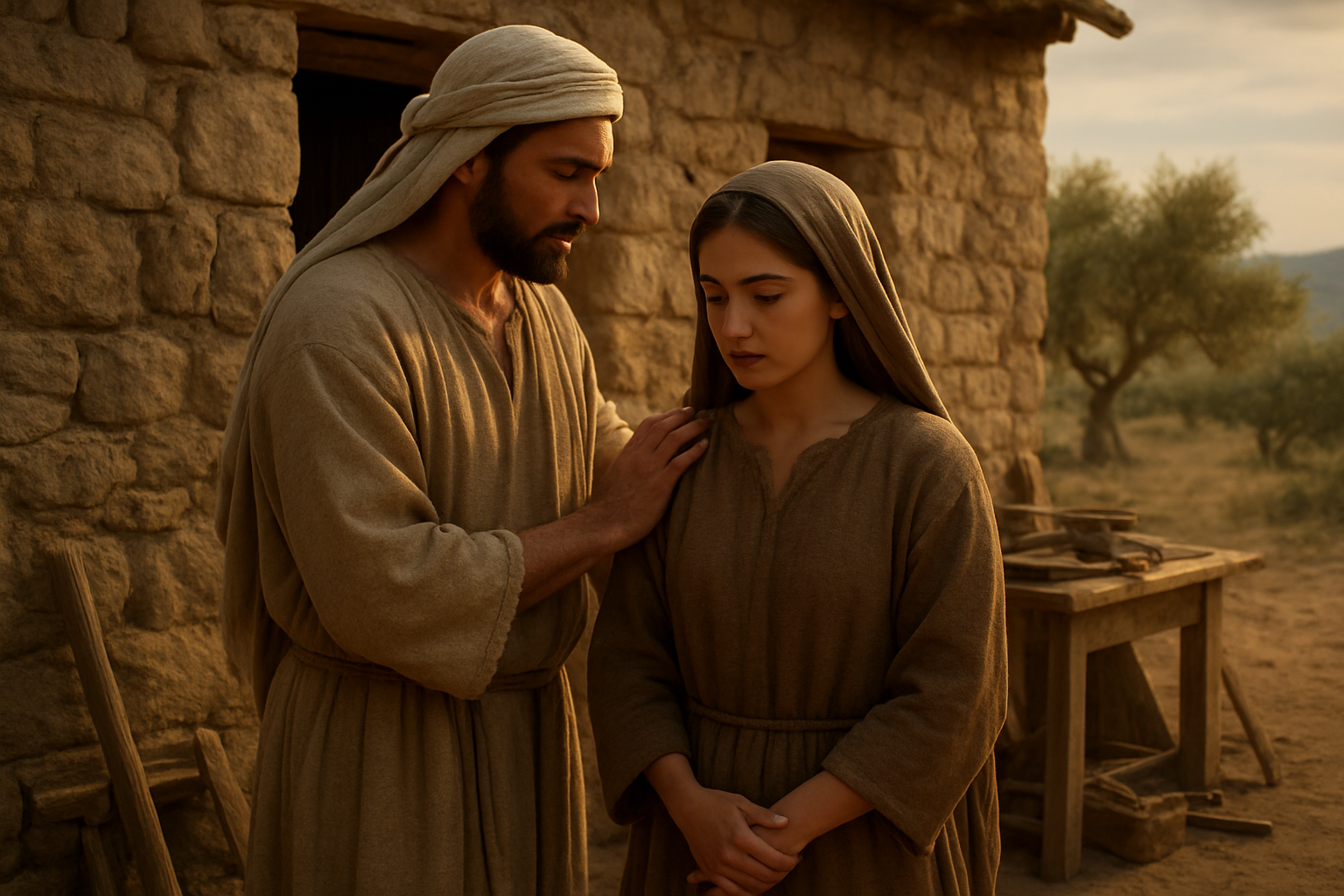
When Joseph discovered Mary's pregnancy, he faced a decision that would define his character and alter the course of history. According to Jewish law and custom, he had every right to divorce her quietly or expose her publicly. Instead, Joseph in Christmas story demonstrates remarkable compassion by choosing to protect Mary's reputation. Matthew's Gospel reveals that Joseph was "a just man and unwilling to put her to shame," showing his integrity even before the angel's revelation.
The significance of Joseph Christmas becomes clear in this moment of crisis. His initial plan to divorce Mary quietly reflected both his righteousness and his mercy. He wouldn't publicly disgrace her, yet he couldn't proceed with the marriage under these circumstances. This internal struggle shows Joseph wrestling with duty, love, and confusion - emotions any person would experience in such a situation.
After the angel's visitation, Joseph's response was immediate and decisive. He took Mary as his wife, publicly claiming responsibility for her and the child. This act required tremendous courage, as it meant accepting potential social stigma and questions about his own character. His willingness to move forward demonstrates the depth of his faith and his commitment to God's plan.
Shielding Mary from public shame and legal consequences
Joseph Mary protector role extended far beyond the initial decision to marry her. In first-century Jewish society, an unmarried pregnant woman faced severe consequences, potentially including death by stoning according to Deuteronomy 22:23-24. Joseph's protection literally saved Mary's life and reputation.
His protective actions included:
-
Legal protection: By taking Mary as his wife, Joseph provided legal covering for both Mary and Jesus
-
Social shielding: His public acceptance of Mary prevented community gossip and condemnation
-
Family honor: Joseph preserved Mary's family dignity by assuming responsibility
-
Economic security: Marriage ensured Mary wouldn't face destitution as a single mother
Joseph understood that his decision would affect not only Mary but also his own reputation and livelihood as a carpenter. Yet he chose to bear this burden willingly, showing the kind of sacrificial love that mirrors God's own character.
Providing emotional support during difficult journey to Bethlehem
The journey from Nazareth to Bethlehem tested every aspect of Joseph obedience faith. Traveling approximately 80-90 miles with a woman in late pregnancy required careful planning and constant attention to Mary's needs. Joseph had to navigate challenging terrain, find adequate rest stops, and ensure Mary's comfort throughout the arduous trip.
During this journey, Joseph served as:
-
Physical support: Helping Mary manage the difficult travel conditions
-
Emotional anchor: Providing reassurance and strength when Mary felt overwhelmed
-
Spiritual leader: Maintaining faith and trust in God's timing and provision
-
Practical guide: Managing logistics, supplies, and route planning
The timing of Caesar Augustus's census couldn't have been worse from a human perspective, yet Joseph didn't question or resist. He simply prepared for the journey and supported Mary through every challenging mile. His steady presence gave Mary the confidence she needed during this vulnerable time.
Securing shelter and safety for the birth
When they arrived in Bethlehem, Joseph faced another crisis: finding suitable accommodation for Mary's imminent delivery. The overcrowded town offered no room in the inn, yet Joseph didn't panic or give up. His resourcefulness and determination secured the best available shelter - a stable that provided privacy, protection, and safety for the birth of the Messiah.
Joseph biblical character shines through his practical problem-solving under pressure. He transformed a humble stable into a birthing room, ensuring Mary had:
| Joseph's Provisions | Description |
|---|---|
| Privacy | Away from crowds and prying eyes |
| Safety | Protected from weather and disturbances |
| Comfort | Best possible conditions given the circumstances |
| Security | A place where Mary could deliver safely |
His quick thinking and adaptability show a man who took his protective role seriously. Rather than complaining about the circumstances, Joseph focused on solutions. He made sure Mary felt secure and cared for during the most vulnerable moment of her life.
Joseph's actions during Jesus's birth reveal a man who could handle crisis with grace. He remained calm when everything seemed to go wrong, providing the stability and strength Mary needed. His quiet leadership created space for God's miracle to unfold naturally, without drama or unnecessary stress.
Joseph's Fulfillment of Messianic Prophecies
Establishing Jesus' Legal Lineage to King David
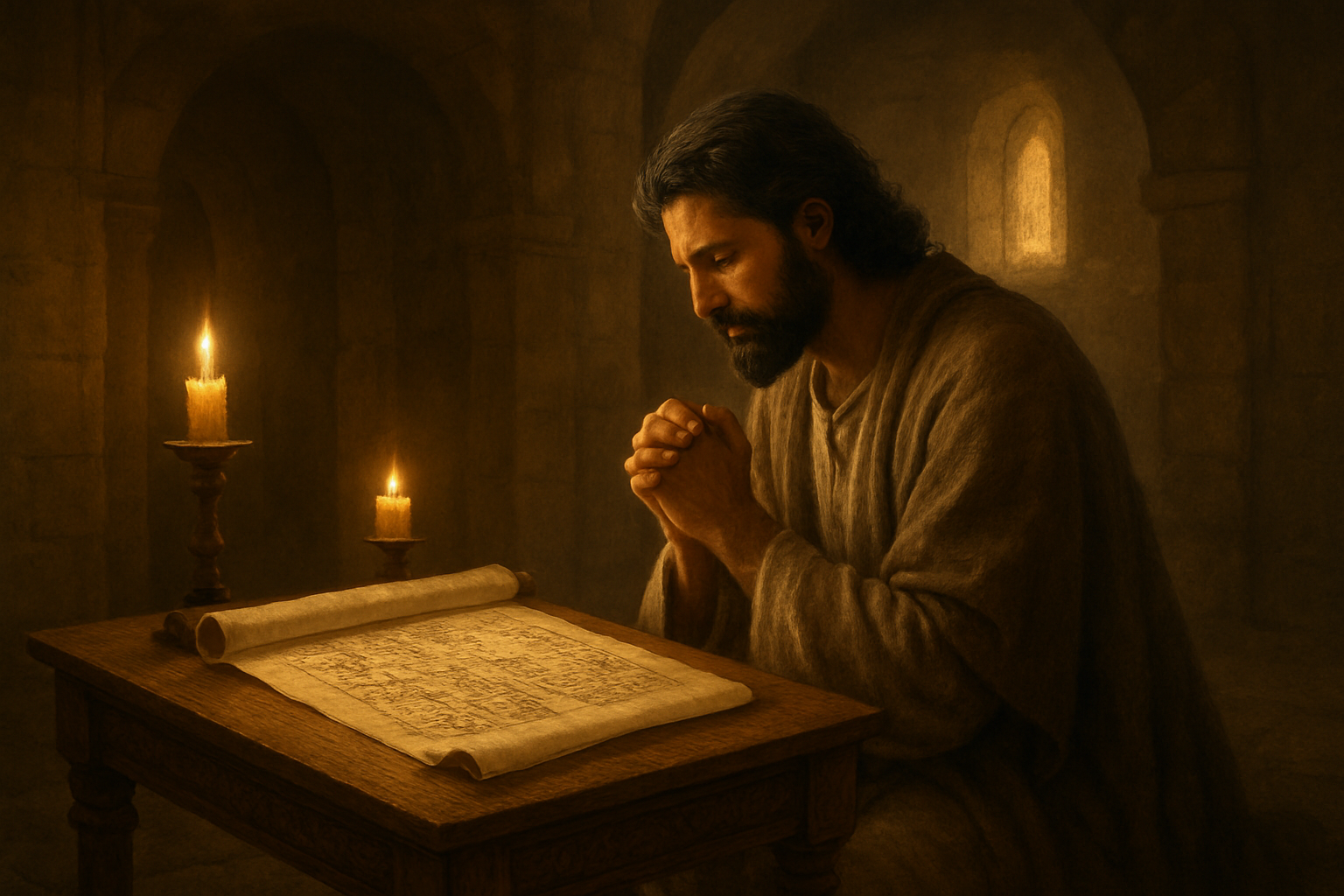
Joseph's genealogy creates the vital legal connection between Jesus and King David's royal bloodline. In ancient Jewish culture, lineage passed through the father's side, making Joseph's ancestry absolutely critical for Jesus' messianic credentials. Matthew's Gospel traces Joseph's lineage directly back to David through Solomon, while Luke's Gospel provides another genealogical line through Nathan, another son of David.
This dual genealogical record strengthens Jesus' claim to Davidic heritage through both royal and priestly lines. Without Joseph's adoption of Jesus as his legal son, this crucial prophetic requirement would remain unfulfilled. The angel's specific instruction to Joseph - "do not be afraid to take Mary as your wife" - carries profound prophetic weight beyond just marriage guidance.
Ensuring Jesus' Rightful Claim to the Throne of Israel
The promised Messiah needed legitimate claim to David's throne, and Joseph provides this essential qualification. Ancient Jewish law recognized adopted sons as full heirs with complete inheritance rights. When Joseph accepted Jesus as his son, he legally transferred his Davidic royal heritage to the child.
This adoption wasn't just social convention - it carried massive prophetic implications. Every prophecy declaring the Messiah would sit on David's throne depended on this legal transfer. Joseph's obedience literally enabled Jesus to fulfill the role of promised King of Israel according to Old Testament expectations.
Completing Old Testament Genealogical Requirements
Multiple Old Testament prophecies demanded specific genealogical qualifications for the coming Messiah. Isaiah, Jeremiah, and other prophets repeatedly emphasized the Messiah's Davidic ancestry. These weren't suggestions but absolute requirements that had to be met for authentic messianic identity.
Joseph's lineage satisfies these prophetic demands perfectly. His family tree includes:
-
King David - the foundational requirement
-
Solomon - connecting to the royal succession
-
Judah - fulfilling Jacob's blessing about the scepter
-
Abraham - completing the covenant promises
Each genealogical link represents centuries of God's faithful preservation of the messianic line through Joseph's family heritage.
Validating Jesus' Identity as Promised Messiah
Joseph's role in Messianic prophecies extends beyond mere genealogy into active validation of Jesus' identity. His dreams and divine encounters confirm God's orchestration of events. The angel's announcement to Joseph specifically addresses messianic prophecy fulfillment, particularly Isaiah's virgin birth prophecy.
Joseph's acceptance and protection of Mary validates the supernatural nature of Jesus' conception while maintaining the legal requirements for messianic qualification. His silent strength and faithful obedience become part of the prophetic narrative itself, demonstrating how God uses ordinary people to accomplish extraordinary prophetic purposes.
The Joseph Christmas narrative shows God's meticulous attention to prophetic detail, ensuring every requirement was met through one man's faithful response to divine calling.
Joseph's Leadership During Crisis Moments
Navigating the census journey to Bethlehem
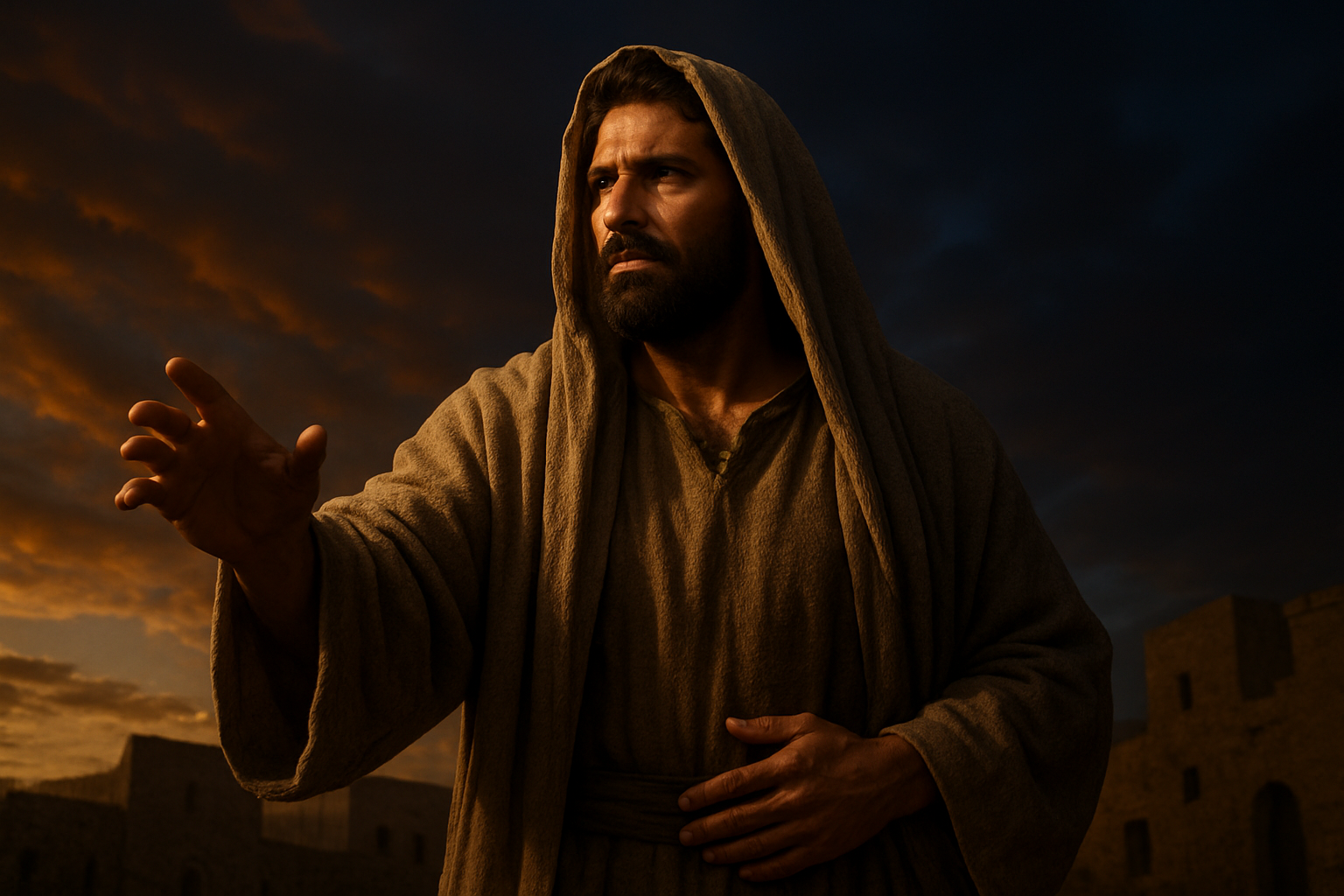
When Caesar Augustus ordered the census, Joseph in Christmas story faced his first major test as head of his household. Mary was heavily pregnant, and the 90-mile journey from Nazareth to Bethlehem presented enormous challenges. Joseph had to make difficult decisions about timing, route, and provisions while considering Mary's condition.
He couldn't simply ignore the imperial decree, yet traveling with his pregnant wife required careful planning. Joseph demonstrated remarkable leadership by balancing legal obligations with family safety. He likely arranged for a donkey to ease Mary's journey and selected the safest route possible. His Joseph leadership crisis skills showed through practical preparations - securing food, water, and shelter arrangements along the way.
The trek would have taken several days, with Joseph constantly monitoring Mary's well-being while managing travel logistics. His steady presence provided Mary with confidence during this vulnerable time, showing how Joseph Mary protector dynamics played out in real-time crisis management.
Making quick decisions during Jesus' birth
Arriving in overcrowded Bethlehem, Joseph faced an immediate housing crisis. Every inn was full, leaving his laboring wife without proper shelter. Instead of panicking or giving up, Joseph quickly assessed alternatives and secured the stable - not ideal, but safe and private.
His quick thinking during Jesus' birth reveals decisive leadership under extreme pressure. Joseph transformed a livestock shelter into a makeshift birthing room, ensuring Mary had the best possible conditions given the circumstances. He likely gathered clean straw, found water sources, and created privacy barriers.
When shepherds arrived with their extraordinary story, Joseph made split-second decisions about who to trust and allow near his vulnerable family. His Joseph biblical character traits of discernment and protective instincts guided these crucial moments that would become central to the Joseph Christmas narrative.
Responding to Herod's threat with immediate action
The wise men's visit brought both honor and danger. When they failed to return to Herod with Jesus' location, Joseph knew his family was in mortal peril. The angel's warning dream required immediate, life-altering decisions - abandon everything familiar and flee into foreign territory.
Joseph's response showcased extraordinary Joseph leadership crisis management. He didn't hesitate, debate, or seek second opinions. Understanding the gravity of Herod's infanticide threat, he woke Mary and baby Jesus in the middle of the night and began preparations for immediate departure. This wasn't a planned relocation - it was an emergency evacuation.
His decisive action likely saved Jesus' life, as Herod's soldiers soon arrived to slaughter Bethlehem's male infants. Joseph's ability to process divine warnings and translate them into swift protective action demonstrated the significance of Joseph Christmas story extends far beyond passive participation.
Leading the family's escape to Egypt
The flight to Egypt tested every aspect of Joseph's leadership capabilities. He had to navigate international borders, manage limited resources, and establish a new life in a foreign culture while protecting his family's identity and mission.
Joseph's expertise as a carpenter proved invaluable during their Egyptian exile. He quickly adapted his skills to local markets, providing stable income in an unfamiliar economy. His ability to learn new customs, possibly new languages, and build client relationships showed remarkable adaptability under pressure.
During their years in Egypt, Joseph maintained their Jewish identity while integrating enough to survive and thrive. He balanced assimilation with preservation, ensuring Jesus grew up understanding his heritage despite foreign surroundings. When the angel finally signaled Herod's death, Joseph again demonstrated Joseph obedience faith by promptly preparing for their return journey.
His Joseph silent strength during this extended crisis period established patterns of faithful leadership that would influence Jesus throughout his childhood and ministry preparation.
Joseph's Silent Strength and Character Lessons

Leading Through Actions Rather Than Words
Joseph's silent strength shines through his consistent pattern of acting rather than speaking throughout the Christmas narrative. While Mary's voice resonates through the Magnificat and the angel Gabriel delivers lengthy proclamations, Joseph communicates primarily through his deeds. When the angel appeared to him in a dream, he didn't question or negotiate—he simply took Mary as his wife. This pattern of quiet obedience demonstrates a profound leadership style that prioritizes doing over discussing.
His actions speak volumes about his character:
-
Immediate compliance with divine instructions despite personal cost
-
Protective measures during the journey to Bethlehem
-
Quick decision-making during the flight to Egypt
-
Steady provision for his family's needs
The significance of Joseph Christmas story lies partly in how he models servant leadership. He doesn't seek recognition or demand explanations from God. Instead, he channels his energy into fulfilling his responsibilities as protector and provider.
Prioritizing Family Welfare Over Personal Reputation
Joseph faced an impossible social situation that could have destroyed his standing in the community. Discovering Mary's pregnancy before their marriage put him at a crossroads between personal reputation and family welfare. The Joseph biblical character demonstrates remarkable maturity by choosing what was best for Mary and the unborn child over what would have been easiest for himself.
His options included:
-
Public divorce - legally permissible but socially devastating for Mary
-
Private dissolution - his initial plan showing mercy and wisdom
-
Acceptance and marriage - his final choice after divine revelation
Joseph's willingness to absorb potential shame and suspicion from neighbors shows his heart's true priorities. He understood that protecting the vulnerable trumps protecting one's image. This decision required enormous personal strength, as ancient Middle Eastern culture placed tremendous value on male honor and family reputation.
The Joseph Mary protector dynamic reveals a man who valued relationships over reputation, mercy over justice, and God's will over social expectations.
Trusting God's Timing in Uncertain Circumstances
Joseph's journey required navigating multiple seasons of uncertainty with remarkable faith. From the initial shock of Mary's pregnancy through the dangerous flight to Egypt, he consistently trusted divine timing even when circumstances seemed chaotic or threatening.
Key moments of trust include:
| Situation | Joseph's Response | Outcome |
|---|---|---|
| Mary's pregnancy revealed | Chose mercy over legal rights | Protected Mary and Jesus |
| Census requiring travel | Journeyed despite Mary's condition | Present for Jesus' birth |
| Herod's threat | Immediate flight to Egypt | Family's survival |
| Return timing | Waited for divine signal | Safe resettlement |
His Joseph obedience faith teaches us that trusting God's timing doesn't mean understanding it. Joseph rarely received complete information about upcoming events. He trusted incrementally, taking one step at a time based on limited revelation. This pattern shows mature faith that acts on partial knowledge while remaining open to further guidance.
The Joseph silent strength demonstrated throughout these trials offers a powerful model for handling life's uncertainties. Rather than demanding detailed explanations or guarantees, Joseph trusted the character of the God who called him, allowing divine timing to unfold naturally while fulfilling his role faithfully.

Joseph's story reminds us that God often chooses ordinary people to play extraordinary roles in His plans. From his immediate obedience to the angel's message to his protective care for Mary and Jesus, Joseph showed us what faithful service looks like. His willingness to step into uncertainty, provide for his family during difficult times, and lead with quiet strength made him the perfect earthly father for the Messiah. Even though he spoke no recorded words in the Gospels, his actions spoke volumes about character, integrity, and trust in God.
The Christmas story wouldn't be complete without Joseph's steady presence. His example challenges us to respond to God's calling with the same courage and faithfulness, even when we don't understand the full picture. This Christmas season, let Joseph's life inspire you to serve others with humility, protect those in your care, and trust God's plan for your life. Sometimes the most powerful testimonies come not from what we say, but from how we choose to live each day with faithful obedience.


Comments
Post a Comment