THE SIGNIFICANCE OF BETHLEHEM IN THE CHRISTMAS STORY
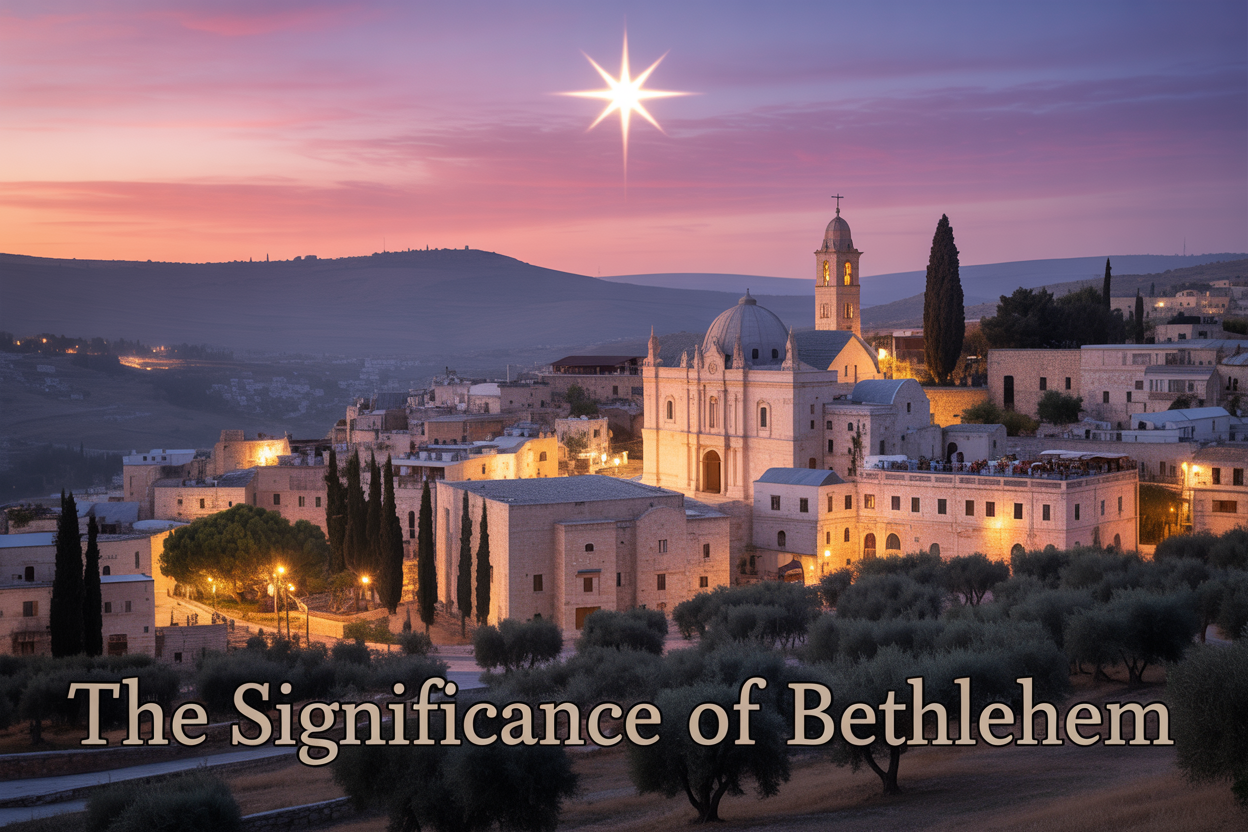
Bethlehem stands as more than just a location in the Christmas story—it's the carefully chosen stage where prophecy, history, and divine purpose came together. For Christians, Bible students, and anyone curious about the deeper meaning behind the nativity, understanding the significance of Bethlehem reveals why this small town was essential to Jesus's birth story.
This ancient city wasn't picked randomly. Every detail about Bethlehem Christmas story connects to centuries of biblical history and prophetic promises that pointed to this exact place as the birthplace of the Messiah.
We'll explore how Bethlehem's historical and prophetic foundation made it the perfect setting for the nativity, examine the geographic and cultural context that shaped this pivotal moment, and discover how the fulfillment of Messianic prophecies through Bethlehem continues to impact Christian faith today. You'll see why Bethlehem's role goes far beyond geography—it represents the heart of God's salvation plan unfolding exactly as promised.
Historical and Prophetic Foundation of Bethlehem's Selection
Ancient prophecies establishing Bethlehem as the Messiah's birthplace
The prophetic foundation Bethlehem rests on centuries-old prophecies that specifically identified this small town as the birthplace of the promised Messiah. Micah 5:2 stands as the most famous prophecy, declaring that from Bethlehem would come forth one who would rule over Israel, whose origins are from ancient times. This prophecy, written around 700 BC, created a clear expectation among Jewish scholars and religious leaders about where to look for their coming deliverer.
The Messianic prophecies Bethlehem weren't isolated predictions but part of a broader tapestry of Old Testament promises. These prophecies shaped Jewish understanding for centuries, creating anticipation that the Messiah would emerge from David's ancestral home. Religious teachers and scribes held this knowledge so firmly that when King Herod asked where the Christ would be born, they immediately pointed to Bethlehem without hesitation.
David's royal lineage connecting to the city of his birth
King David's connection to Bethlehem runs deeper than simple birthplace associations. The Bethlehem biblical history shows this was where Samuel anointed the shepherd boy who would become Israel's greatest king. David's transformation from a humble shepherd to the monarch who established Jerusalem as Israel's capital began in Bethlehem's fields.
The genealogical records trace both Mary and Joseph's lineages back to David, fulfilling the requirement that the Messiah come from David's royal line. This wasn't accidental - God orchestrated events so that Jesus would be born in the same city where David once tended sheep. The parallel between David the shepherd-king and Jesus the Good Shepherd creates powerful symbolic connections that resonate throughout the Bethlehem Christmas story.
Archaeological evidence supporting Bethlehem's biblical significance
Archaeological discoveries have uncovered layers of history that support Bethlehem's importance in biblical times. Excavations reveal continuous settlement dating back to the Bronze Age, confirming the town's ancient roots mentioned in scripture. Pottery shards, building foundations, and ancient water systems paint a picture of a thriving agricultural community during David's era.
The Church of the Nativity, built over what tradition holds as Jesus's birthplace, sits atop archaeological remains that date back to the Roman period. While specific locations can't be verified with absolute certainty, the archaeological evidence supports Bethlehem's existence as a significant settlement during the timeframe of Christ's birth, lending credibility to the biblical narrative.
God's deliberate choice of a humble town over major cities
The significance of Bethlehem becomes more profound when contrasted with the major cities God could have chosen. Jerusalem housed the temple and represented religious power. Rome symbolized political might. Alexandria boasted intellectual achievement. Yet God selected a small agricultural town known primarily for sheep and grain.
This choice reflects God's pattern of working through the humble and unexpected. Bethlehem's selection demonstrates divine values that prioritize faithfulness over fame, character over status. The town's pastoral setting provided the perfect backdrop for the birth of one who would call himself the Good Shepherd. Just as David emerged from obscurity to greatness, Jesus's birth in Bethlehem signals that God's kingdom operates by different rules than earthly kingdoms - where the last become first and the humble are exalted.
Geographic and Cultural Context That Shaped the Nativity
Bethlehem's strategic location on ancient trade routes
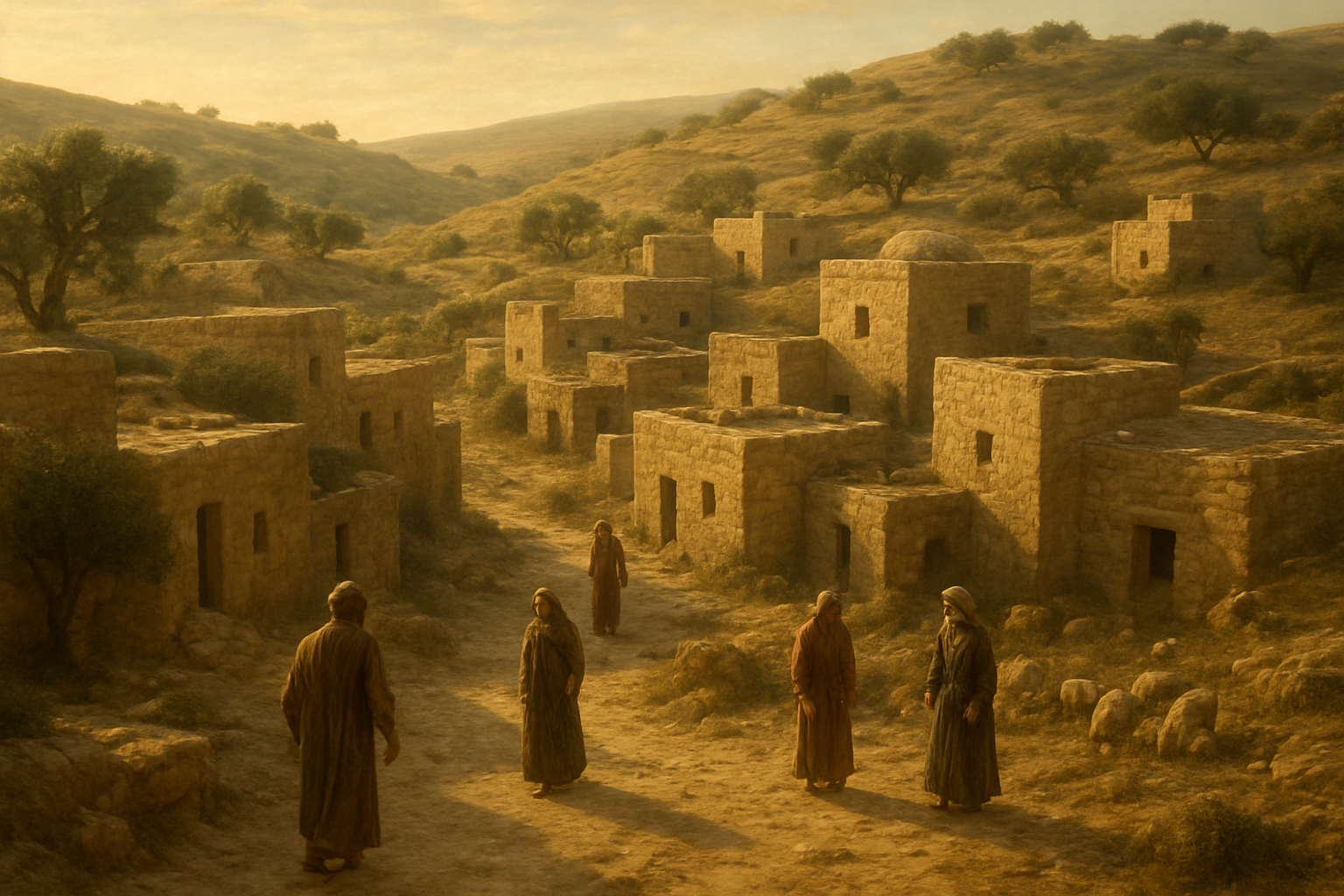
Bethlehem sat at the crossroads of several major ancient trade routes, making it far more significant than its small size might suggest. The town positioned itself along the ridge route that connected Egypt to Mesopotamia, serving as a vital stopping point for merchant caravans traveling between these powerful civilizations. This strategic placement meant that people from diverse cultures and backgrounds regularly passed through Bethlehem, creating a cosmopolitan atmosphere despite its modest population.
The proximity to Jerusalem, just six miles south, added another layer of importance to Bethlehem's location. Pilgrims and traders heading to the holy city often used Bethlehem as a resting place, bringing news, goods, and cultural exchanges from across the ancient world. This constant flow of travelers would have exposed the local population to different languages, customs, and religious practices, creating a dynamic environment where various traditions intersected.
The road network also facilitated Roman administrative control over the region. When Caesar Augustus ordered the census that brought Mary and Joseph to Bethlehem, the well-established routes made it practical for people to travel to their ancestral towns for registration. The very infrastructure that made Bethlehem accessible for trade and governance also made it the perfect setting for the nativity story to unfold according to divine providence.
The town's pastoral heritage and shepherding traditions
Bethlehem's name literally means "house of bread," reflecting its agricultural abundance and fertile surroundings. The rolling hills around the town provided excellent grazing land for sheep and goats, establishing a pastoral economy that had thrived for centuries before Christ's birth. This shepherding heritage created a culture where people understood the rhythms of caring for flocks, the vulnerability of sheep, and the dedication required of good shepherds.
The fields surrounding Bethlehem were particularly well-suited for raising the temple flocks - sheep designated specifically for sacrifice in Jerusalem's temple. These weren't ordinary farm animals but specially maintained flocks that had to meet strict religious requirements. The shepherds watching over these flocks were skilled professionals who understood both animal husbandry and religious law, making them knowledgeable observers of God's requirements for perfect sacrificial offerings.
Local shepherding traditions included the practice of night watches, where shepherds took turns staying alert throughout the darkness to protect their flocks from predators and thieves. This custom meant that shepherds were accustomed to receiving unexpected visitors and remaining vigilant during quiet hours - preparation that proved essential when angels appeared to announce Christ's birth. The pastoral lifestyle also fostered a deep appreciation for God's providence and protection, themes that would resonate powerfully with the Christmas message of divine care for humanity.
Political climate under Roman occupation during Christ's birth
The Roman occupation of Judea created a complex political environment that directly influenced the circumstances of the nativity. Herod the Great ruled as a client king under Roman authority, maintaining power through a careful balance of appeasing Rome while managing local Jewish expectations. This delicate political situation generated significant tension and uncertainty throughout the region, including Bethlehem.
Caesar Augustus's census decree, which required people to register in their ancestral hometowns, demonstrated Rome's administrative reach into every aspect of Jewish life. The census served multiple purposes: collecting taxes, assessing military resources, and asserting imperial control over the population. For ordinary people like Mary and Joseph, this decree meant displacement from their normal routines and compliance with foreign governmental demands, regardless of personal circumstances.
The Roman presence also influenced daily life through taxation, military patrols, and the constant reminder of foreign rule. Jewish communities lived with the hope of messianic deliverance from Roman oppression, making the political climate particularly receptive to news of a promised king. When the wise men arrived seeking "the one born king of the Jews," their inquiry triggered Herod's paranoid response precisely because political tensions were already high. The brutal massacre of Bethlehem's infants that followed Christ's birth reflected the violent reality of life under a ruler who would eliminate any perceived threat to his Roman-backed authority.
Fulfillment of Messianic Prophecies Through Bethlehem
Micah's Specific Prophecy About the Ruler from Bethlehem
The prophet Micah delivered one of the most precise Messianic prophecies Bethlehem in the Old Testament, writing around 700 BC that "out of you, Bethlehem Ephrathah, though you are small among the clans of Judah, out of you will come for me one who will be ruler over Israel, whose origins are from of old, from ancient times" (Micah 5:2). This remarkable prediction pinpointed the exact birthplace of the coming Messiah centuries before Jesus was born.
Micah's prophecy stands out for its specificity. While many prophecies spoke of a coming deliverer, few named the precise location where he would arrive. The prophet distinguished between Bethlehem Ephrathah and another Bethlehem in Zebulun, ensuring no confusion about which small town would host this monumental event. The phrase "whose origins are from of old" hints at the eternal nature of this ruler, suggesting someone far greater than an ordinary king.
Religious scholars recognize this prophecy as foundational to understanding why the Christmas story had to unfold in Bethlehem. When the wise men arrived in Jerusalem asking about the newborn king, even the chief priests and teachers of the law immediately knew where to direct them—Bethlehem—based on Micah's ancient words.
How Jesus's Birth Validated Old Testament Predictions
The birth of Jesus in Bethlehem created a perfect alignment between prophecy and fulfillment that validates the authenticity of both the Old Testament predictions and the New Testament accounts. Matthew's Gospel specifically references Micah's prophecy, demonstrating how the early Christian community understood Jesus's birth as the direct fulfillment of ancient promises.
The circumstances surrounding Jesus's birth show remarkable divine orchestration. Mary and Joseph lived in Nazareth, roughly 90 miles from Bethlehem. Yet Caesar Augustus's census decree required Joseph to return to his ancestral city for registration. This Roman governmental decision, made for taxation purposes, became the mechanism that placed Mary in Bethlehem precisely when Jesus was born.
This fulfillment pattern extends beyond location. The timing, the virgin birth, and even the humble circumstances all echoed prophetic themes found throughout Hebrew scripture. The convergence of these elements in one person, at one place, during one historical moment, created what believers see as unmistakable evidence of divine planning spanning centuries.
The Connection Between David's Kingdom and Christ's Eternal Reign
Bethlehem's connection to King David creates a direct lineage between Israel's greatest earthly king and the promised eternal ruler. David was born, raised, and anointed as king in Bethlehem, earning the town its designation as the "City of David." When prophecies spoke of a ruler from Bethlehem, Jewish audiences immediately understood the Davidic implications.
The genealogies in Matthew and Luke trace Jesus's lineage through David, establishing legal and bloodline connections to Israel's royal heritage. This wasn't merely symbolic—it fulfilled specific covenant promises God made to David about his descendants ruling forever. The angel Gabriel's announcement to Mary explicitly connected Jesus to "the throne of his father David."
This royal connection transforms the humble stable scene into something far more significant. The baby born in David's city wasn't just another child—he represented the fulfillment of God's promise to establish David's kingdom forever. The shepherds who received the first announcement were likely tending flocks in the same fields where young David once watched his father's sheep.
Divine Timing Aligning with Prophetic Requirements
The timing of Jesus's birth demonstrates precise coordination between human events and prophetic fulfillment. Daniel's prophecies about seventy weeks provided a timeframe that many scholars believe pointed to the first century as the period when Messiah would appear. Jesus's birth occurred during this prophetic window.
The Roman census that brought Mary and Joseph to Bethlehem happened at exactly the right moment in history. Roman record-keeping systems, travel conditions, and political stability all converged to make this journey possible. The Pax Romana provided safe passage for travelers, while Roman roads connected distant cities efficiently.
Even the broader historical context aligned perfectly. Israel was under foreign domination, creating the conditions of oppression that the Messianic prophecies addressed. The Jewish people were actively expecting their deliverer, making the cultural soil fertile for recognizing prophetic fulfillment. The presence of the temple, the functioning priesthood, and the widespread knowledge of Hebrew scriptures all contributed to a moment when prophecy and fulfillment could intersect meaningfully.
This divine timing reveals a God who works through human institutions and historical processes to accomplish his purposes, transforming ordinary events like census-taking into the stage for extraordinary fulfillment of ancient promises.
Symbolic Meaning Behind Bethlehem's Role in Salvation History
The House of Bread feeding spiritual hunger worldwide
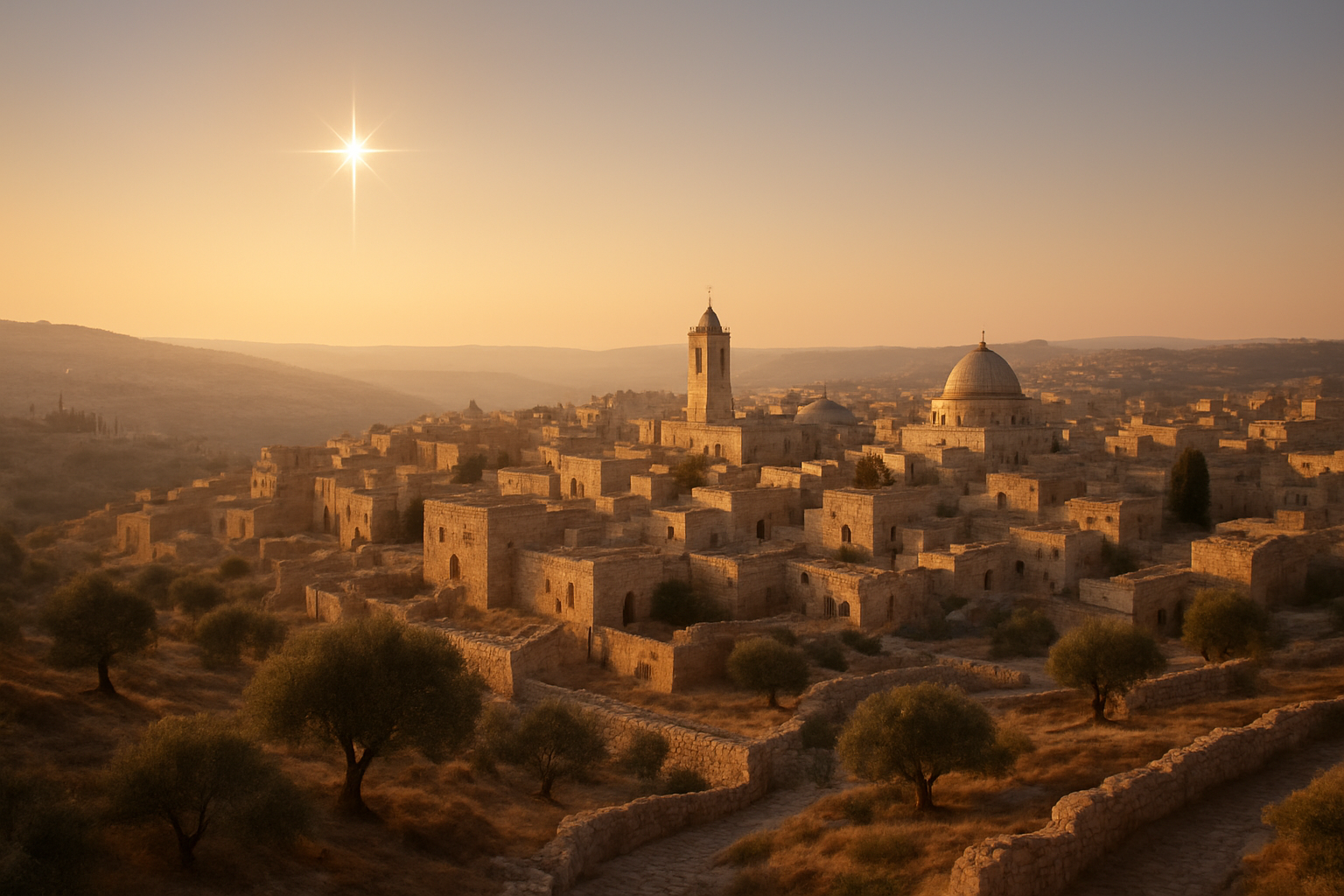
The name Bethlehem literally translates to "House of Bread" in Hebrew, creating a profound symbolic connection to Jesus's later declaration of being "the bread of life." This isn't mere coincidence—it represents divine orchestration that speaks to humanity's deepest spiritual hunger. Just as physical bread sustains our bodies, Christ, born in the House of Bread, offers eternal sustenance for souls yearning for meaning and connection with the divine.
The symbolism extends beyond individual salvation to encompass global spiritual nourishment. From this small town emerged the one who would feed five thousand with loaves and fishes, establish communion through bread and wine, and ultimately offer himself as spiritual bread for all nations. The Christmas story Bethlehem meaning resonates across cultures because hunger—both physical and spiritual—is a universal human experience.
Humility triumphing over worldly power and prestige
Bethlehem's selection for the nativity powerfully demonstrates how divine wisdom inverts earthly values. While King Herod occupied magnificent palaces in Jerusalem, the true King was born in a humble stable in an insignificant village. This stark contrast reveals God's preference for humility over ostentation, service over dominance.
The significance of Bethlehem lies not in its political importance or economic prosperity, but in its very ordinariness. God bypassed the centers of power, wealth, and religious authority to choose a place where shepherds—society's marginalized workers—would be among the first witnesses. This pattern of divine selection challenges every human assumption about worth, status, and significance.
God's pattern of choosing the small to accomplish the great
Throughout salvation history, God consistently selects the unlikely and overlooked to fulfill his greatest purposes. Bethlehem exemplifies this divine pattern perfectly—a small town that would birth the Savior of the world. This choice reflects how God often works through what appears insignificant by human standards to accomplish transformational change.
The biblical narrative repeatedly showcases this principle: David, a shepherd boy from Bethlehem, became Israel's greatest king; Moses, a stuttering fugitive, led the Exodus; Mary, a young village girl, bore the Messiah. Bethlehem's role in salvation history reinforces that God's power is made perfect in weakness, and his greatest works often begin in the most humble circumstances.
Universal accessibility of salvation starting from a small town
Starting salvation in Bethlehem rather than a major metropolis communicates that God's love isn't reserved for the elite, educated, or influential. Small towns and rural communities could identify with this humble beginning, understanding that divine favor isn't limited by geography, social status, or economic conditions.
The Bethlehem nativity story reaches every corner of the earth precisely because it began in an accessible place. A palace birth would have created barriers; a Bethlehem birth removes them. This strategic choice ensures that people from every background can approach the Christ child without intimidation, seeing in his humble origins a reflection of their own circumstances.
The contrast between earthly expectations and divine reality
Human expectations for a messianic king involved military might, political revolution, and royal splendor. The Bethlehem birth completely subverted these assumptions, introducing a kingdom built on love, sacrifice, and spiritual transformation rather than earthly conquest.
This contrast between expectation and reality continues challenging believers today. The Bethlehem Christmas story reminds us that God's ways are higher than human ways, his thoughts beyond our understanding. The stable birth teaches that true power lies not in force or intimidation, but in vulnerability, compassion, and self-sacrificial love.
The prophetic foundation Bethlehem established demonstrates how God's kingdom operates according to different principles than earthly governments. Where the world sees weakness, God displays strength; where humans expect grandeur, God chooses simplicity; where society demands credentials, God values faithfulness.
Lasting Impact of Bethlehem on Christian Faith and Tradition
Pilgrimage destination connecting believers to Christ's origins
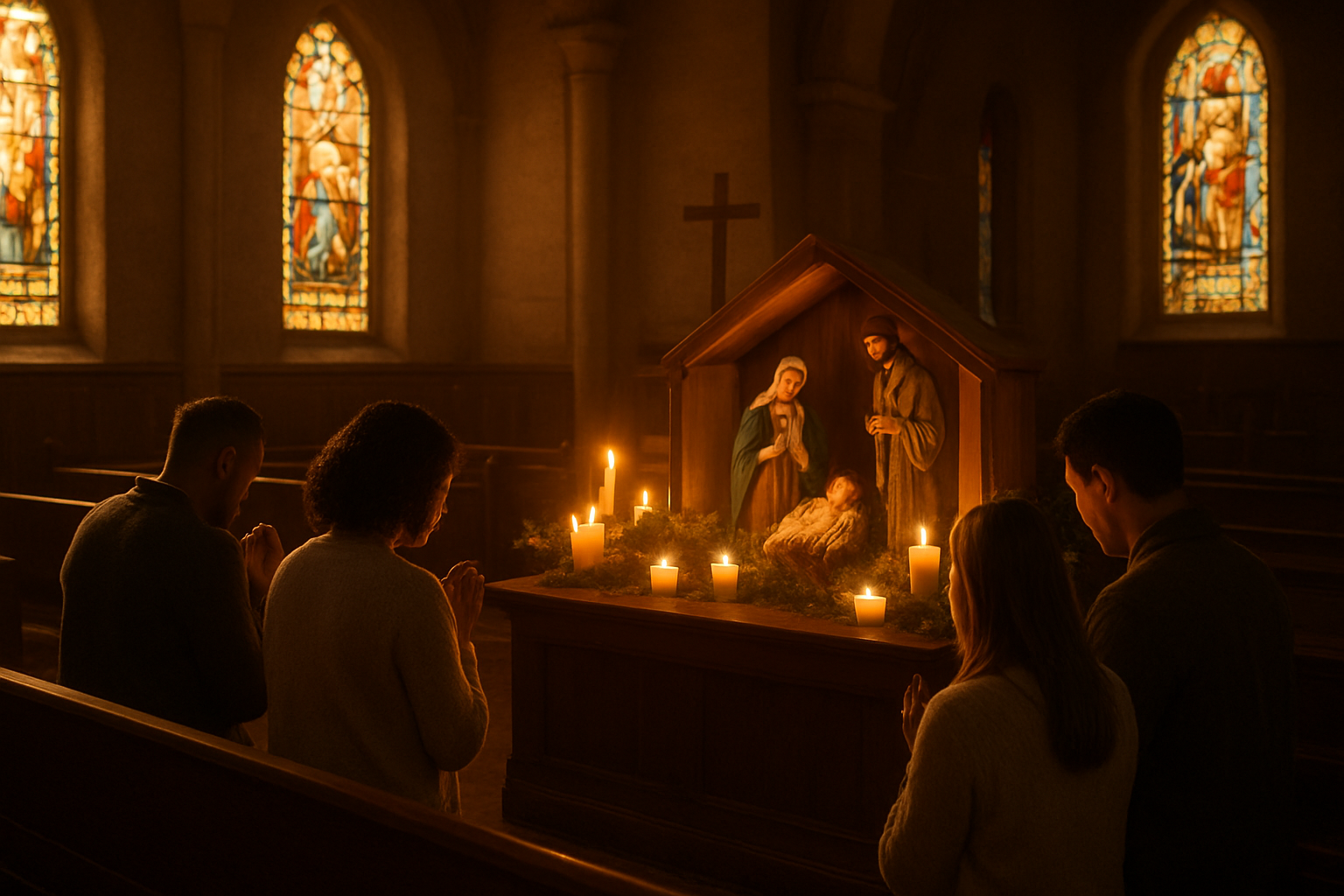
The Church of the Nativity in Bethlehem stands as one of Christianity's most sacred pilgrimage sites, drawing millions of believers annually who seek to connect with the birthplace of Jesus. This ancient basilica, built over the traditional site of Christ's birth, has welcomed pilgrims for over 1,600 years. Walking through its narrow entrance, known as the Door of Humility, visitors must bow their heads—a physical reminder of the humility required to approach the divine.
The grotto beneath the main altar marks the exact spot where tradition holds Jesus was born, creating a tangible link between modern believers and the Christmas Bethlehem meaning that shapes their faith. Pilgrims from every continent kneel here, touch the silver star embedded in the floor, and experience the profound reality that God chose this humble place for the Incarnation.
Modern pilgrimage to Bethlehem transforms the Christmas story from historical narrative into lived experience. Visitors walk the same streets where Mary and Joseph searched for lodging, stand in the fields where shepherds received the angelic announcement, and pray in the cave that became the first Christian sanctuary. This physical connection to Christ's origins strengthens faith in ways that reading scripture alone cannot achieve.
Christmas celebrations rooted in Bethlehem's narrative
Every Christmas celebration worldwide traces its roots back to that first night in Bethlehem, creating an unbroken chain of remembrance spanning two millennia. The traditional nativity scene, popularized by St. Francis of Assisi in 1223, recreates the Bethlehem setting in churches and homes across the globe. These displays don't simply tell a story—they invite believers to join Mary, Joseph, and the shepherds in witnessing the birth that changed history.
Christmas carols consistently return to Bethlehem's significance, with hymns like "O Come, All Ye Faithful" calling believers to "come and behold Him, born the King of Angels" in Bethlehem's stable. "Silent Night" captures the peace of that holy night when "all is calm, all is bright" around the newborn King. These musical traditions keep the Bethlehem Christmas story alive in Christian consciousness year after year.
The timing of Christmas itself connects believers to the historical moment when the Messianic prophecies Bethlehem fulfilled came to pass. Advent calendars count down to December 25th, building anticipation that mirrors the centuries of waiting for the Messiah's arrival. Christmas Eve services recreate the atmosphere of watching and waiting that characterized Bethlehem on that first Christmas night.
Theological significance for understanding the Incarnation
Bethlehem's role in salvation history provides the essential foundation for Christian understanding of the Incarnation—the belief that God became human in Jesus Christ. The city's humble status when Jesus was born illustrates God's consistent pattern of working through the small, the overlooked, and the unexpected. This wasn't Rome or Jerusalem, seats of earthly power, but a small town whose primary claim to fame was being David's birthplace.
The contrast between Bethlehem's simplicity and the magnitude of what occurred there reveals the nature of God's kingdom. The Creator of the universe chose to enter human history not in a palace but in a stable, not announced to rulers but to shepherds. This choice establishes the upside-down values of Christianity, where the last become first and the humble are exalted.
Bethlehem's Davidic connections also demonstrate how the Incarnation fulfills God's ancient promises while exceeding all expectations. David was Israel's greatest king, yet his greater Son born in David's city would establish an eternal kingdom. The Bethlehem nativity shows how God works through history's patterns while transcending human limitations. The significance of Bethlehem in Christian tradition continues to teach believers that God's greatest works often happen in the most unexpected places, through the most unlikely people, in ways that confound human wisdom while revealing divine love.
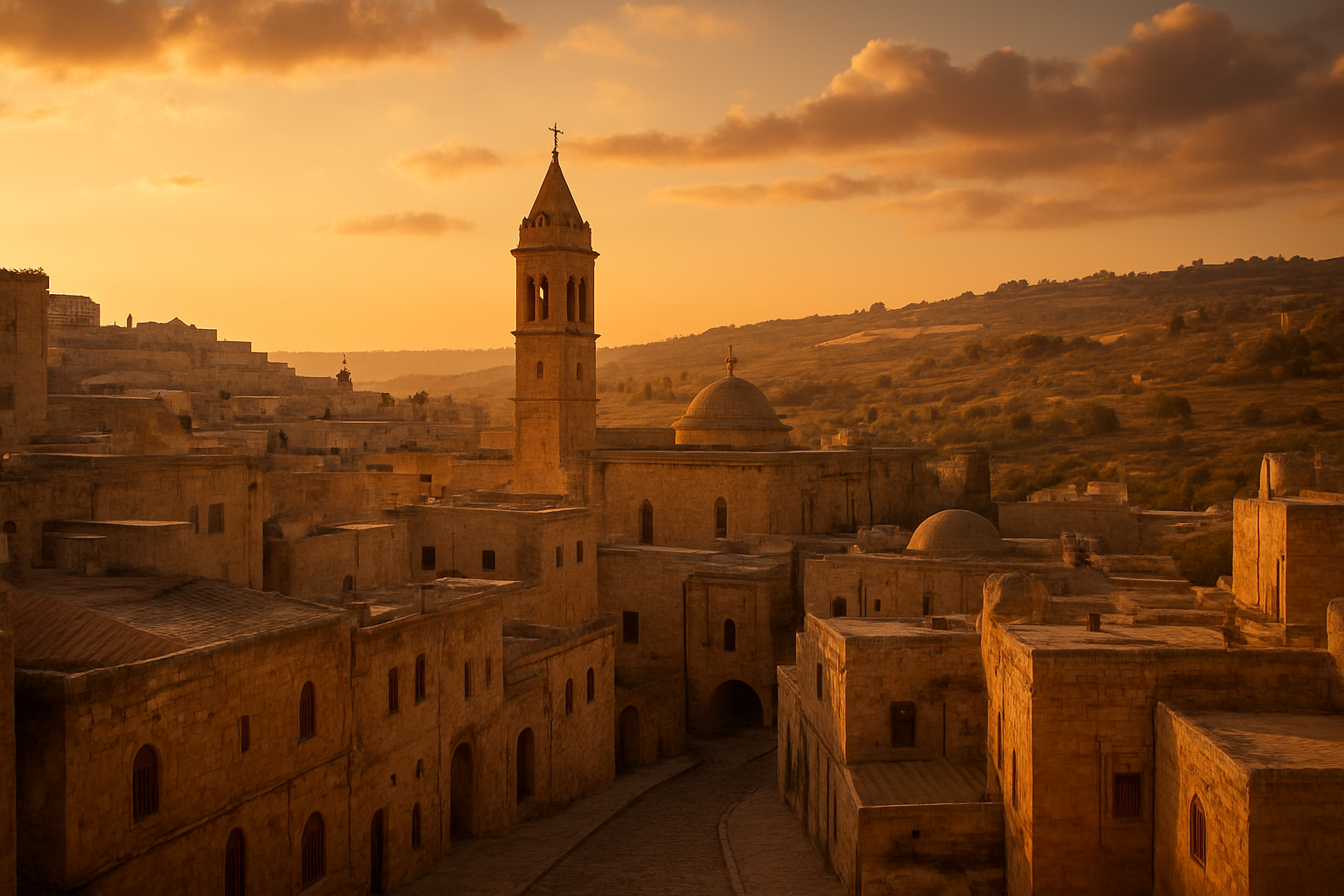
Bethlehem stands as more than just a geographical location in the Christmas story—it represents the perfect intersection of divine prophecy and human history. This small town fulfilled ancient predictions, provided the ideal cultural setting for Jesus' humble beginnings, and became forever linked with hope and salvation. The choice of Bethlehem wasn't random; it connected Jesus to King David's lineage while emphasizing that God often works through the smallest and most unexpected places.
The legacy of Bethlehem continues to shape Christian faith today, reminding believers that God's greatest gifts often come wrapped in simplicity. When you think about Christmas this year, remember that Bethlehem's significance goes beyond the nativity scene—it shows us that divine plans unfold in real places, with real people, creating a story that has touched millions of lives across centuries. The little town of Bethlehem proves that even the smallest places can change the world forever.


Comments
Post a Comment