THE HISTORY AND MEANING BEHIND CHRISTMAS CAROLS
Christmas carols fill our homes, shopping centers, and churches every December, but most of us sing along without knowing the fascinating stories behind these beloved songs. This guide explores Christmas carols history for music lovers, holiday enthusiasts, and anyone curious about the meaning of Christmas carols that have shaped our seasonal celebrations for centuries.
These traditional Christmas songs carry much more than catchy melodies. Each carol holds layers of religious devotion, cultural traditions, and historical events that reveal how different societies have celebrated Christmas across time and geography. From ancient winter festivals to medieval church hymns, Christmas carol origins span continents and centuries.
We'll trace how carols evolved from simple folk songs into the polished holiday standards we know today. You'll discover the deep religious and spiritual meanings woven into classic carols like "Silent Night" and "O Come, All Ye Faithful." Finally, we'll explore how different cultures around the world have created their own Christmas music traditions, showing how these songs both unite and reflect our diverse ways of celebrating the season.
Origins and Early Development of Christmas Carols
Medieval Church Traditions and Liturgical Songs
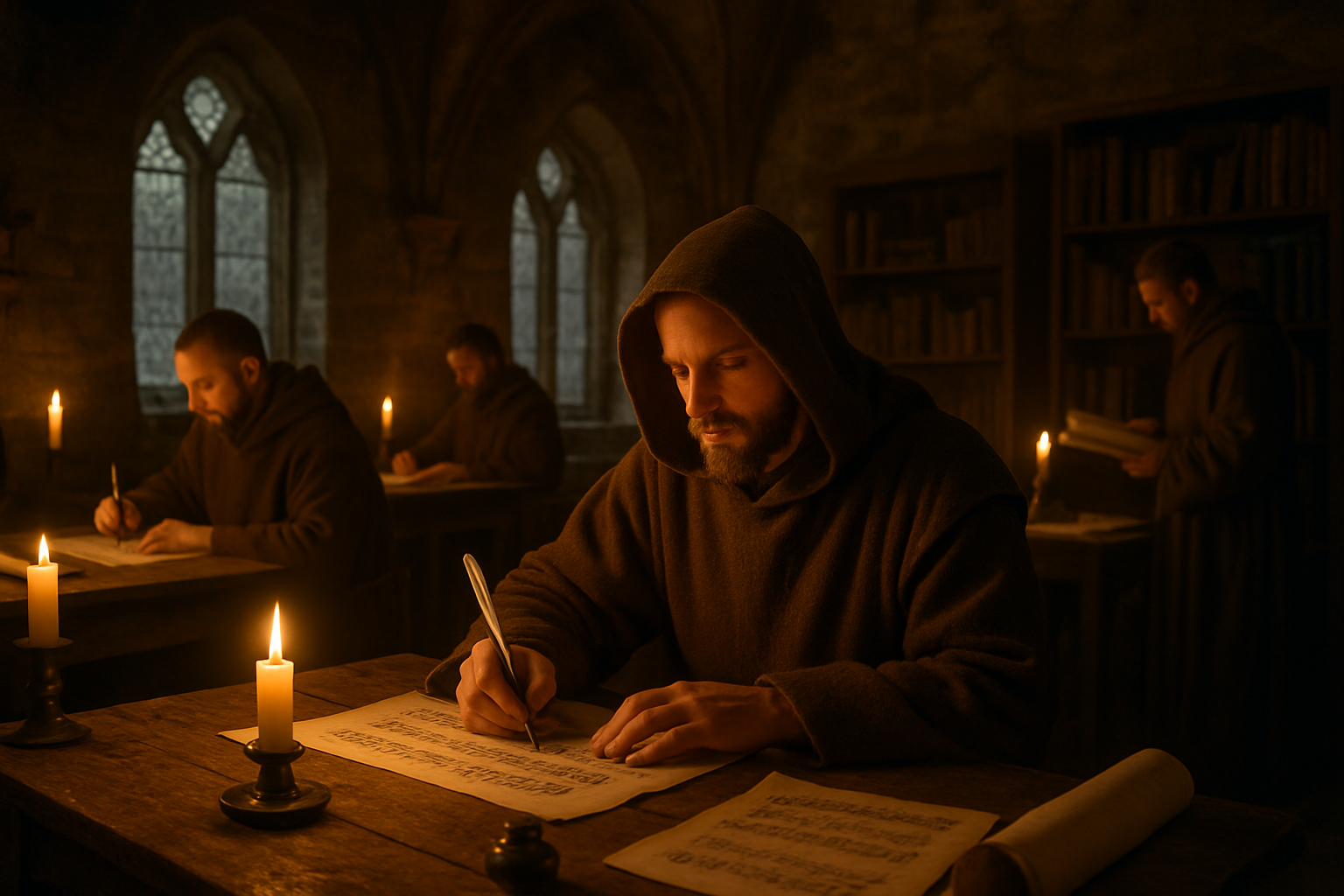
Christmas carols history traces back to the medieval church, where religious music served as the foundation for what would eventually become beloved holiday traditions. During the 4th and 5th centuries, the Catholic Church developed structured liturgical practices that included specific chants and hymns for Christmas celebrations. These early sacred songs, known as "canticles," were primarily sung by clergy during Mass and other religious ceremonies.
The word "carol" itself derives from the Greek "choros" and Latin "choraula," originally referring to a circle dance accompanied by singing. Medieval monasteries became centers for preserving and developing these musical traditions, with monks meticulously copying manuscripts that contained Christmas-themed chants. The Gregorian chant tradition, established in the 9th century, provided a standardized musical framework that influenced early Christmas carol compositions.
Prominent examples from this period include "Veni Redemptor Gentium" and "Pange Lingua," which celebrated Christ's birth through sophisticated musical arrangements. These pieces featured complex melodies designed for trained voices, reflecting the church's emphasis on formal worship practices. The meaning of Christmas carols during this era centered entirely on theological concepts, with texts focusing on the Incarnation, salvation, and divine mystery.
Transition from Latin Hymns to Vernacular Languages
The transformation of Christmas carol origins took a dramatic turn during the 13th and 14th centuries when religious music began incorporating local languages alongside traditional Latin. This shift represented a revolutionary change in how ordinary people connected with sacred music, making Christmas songs more accessible to broader audiences.
Saint Francis of Assisi played a crucial role in this transition by encouraging the use of Italian vernacular in religious songs around 1223. His approach emphasized emotional connection over formal liturgical structure, inspiring composers to create pieces that common people could understand and sing. This movement spread throughout Europe, with each region developing unique linguistic adaptations of traditional Christmas themes.
The Black Death pandemic of the 14th century paradoxically accelerated this linguistic evolution. As communities sought comfort through music, local languages became vehicles for expressing faith and hope during difficult times. English carols like "Adam Lay Ybounden" and German pieces such as "Es ist ein Ros entsprungen" emerged during this period, blending theological depth with regional musical characteristics.
Churches gradually accepted these vernacular compositions, recognizing their power to engage congregations more effectively than Latin-only services. The printing press invention in the 15th century further democratized carol distribution, allowing written versions to spread rapidly across different communities and social classes.
Folk Music Influences on Carol Composition
Traditional Christmas songs evolved significantly through their interaction with local folk music traditions, creating the distinctive sound patterns we recognize in iconic Christmas carols today. Rural communities contributed secular melodies, rhythmic structures, and storytelling techniques that enriched the purely religious foundations of early carols.
Folk musicians brought instruments like fiddles, pipes, and drums into Christmas celebrations, adding rhythmic complexity that contrasted sharply with the austere Gregorian chant tradition. These musical elements made carols more suitable for community gatherings, dancing, and informal worship outside formal church settings. The practice of wassailing, where groups traveled door-to-door singing for food and drink, exemplified this folk influence on Christmas music traditions.
Different regions developed distinctive carol styles based on local folk traditions:
-
English carols: Incorporated ballad structures and storytelling elements
-
French noëls: Featured dance rhythms and pastoral themes
-
German Weihnachtslieder: Combined folk melodies with Lutheran theology
-
Italian laude: Blended operatic influences with religious devotion
The cultural significance Christmas carols gained through folk influences extended beyond religious expression. These songs became vehicles for preserving historical events, local legends, and seasonal customs. Many carols incorporated agricultural imagery, winter symbolism, and community values that resonated with rural populations who formed the majority of medieval society.
This folk integration also introduced call-and-response patterns, simple harmonies, and memorable refrains that made carols easier to learn and remember. These characteristics proved essential for oral transmission, allowing Christmas music traditions to survive and flourish across generations without requiring formal musical education.
Evolution Through Different Historical Periods
Renaissance refinement and musical sophistication
During the Renaissance period, Christmas carols history took a dramatic turn toward artistic sophistication. Composers began treating these beloved songs as serious musical works, transforming simple folk melodies into intricate harmonized arrangements. The meaning of Christmas carols evolved beyond basic storytelling to include complex theological themes woven through elaborate musical structures.
Professional musicians and court composers started creating polyphonic versions of traditional Christmas songs, adding multiple vocal parts that intertwined beautifully. This period saw the birth of Christmas carols that required trained singers to perform properly, moving away from the purely communal nature of earlier folk traditions. Composers like John Dunstable and Guillaume Dufay elevated carol writing to an art form, incorporating sophisticated counterpoint and harmonic progressions.
The Renaissance also brought standardized musical notation to carol composition, allowing for more precise transmission of melodies and arrangements. Churches began commissioning elaborate carol arrangements for their choirs, creating a new category of religious Christmas carols designed specifically for formal liturgical settings.
Victorian era popularization and standardization
The Victorian era marked an explosion in Christmas music traditions that shaped how we celebrate today. This period witnessed the widespread collection and publication of traditional carols, many of which had been passed down orally for centuries. Victorian scholars and musicians worked tirelessly to preserve these songs before they disappeared entirely.
Publishers began producing affordable songbooks filled with Christmas carols, making them accessible to middle-class families for the first time. Piano arrangements became standard, allowing families to perform iconic Christmas carols in their parlors during holiday gatherings. This domestic music-making created new Christmas traditions that centered around shared singing.
The Victorian obsession with Christmas sentiment led to the composition of many carols we still sing today. "Silent Night" gained international recognition during this period, while "O Holy Night" became a concert hall favorite. Victorian composers crafted carols with memorable melodies and touching lyrics that perfectly captured the era's romantic view of Christmas.
Carol singers became a beloved Victorian tradition, with groups traveling door-to-door performing Christmas carol stories for neighbors. This practice helped spread both old and new carols throughout communities, creating a shared cultural experience that transcended social classes.
Modern adaptations and contemporary interpretations
The 20th and 21st centuries brought revolutionary changes to Christmas carol interpretation. Jazz musicians transformed traditional melodies into swing arrangements, while rock and pop artists created entirely new sonic landscapes for ancient lyrics. These modern adaptations prove the enduring appeal of religious Christmas carols and their ability to transcend musical genres.
Recording technology fundamentally changed how people experience Christmas music. Artists could now experiment with orchestration, vocal arrangements, and production techniques impossible during live performances. Bing Crosby's "White Christmas" became the best-selling single of all time, demonstrating how modern technology could create new Christmas classics.
Contemporary musicians continue reimagining traditional carols for new audiences. Hip-hop artists sample classical carol melodies, while indie folk musicians strip arrangements down to acoustic basics. Electronic producers create ambient versions of ancient songs, proving that the cultural significance Christmas carols maintains relevance across all musical styles.
World music influences have also enriched modern carol interpretations. Artists incorporate instruments and rhythms from various global traditions, creating fusion versions that celebrate Christmas across cultural boundaries.
Impact of printing press on carol distribution
The printing press revolutionized the spread of Christmas carols across Europe and beyond. Before printed songbooks, carols traveled slowly through oral tradition, often changing significantly as they passed from singer to singer. Printing technology allowed for accurate preservation and rapid distribution of both melodies and lyrics.
The first printed carol collections appeared in the late 15th century, making Christmas songs available to anyone who could read music. This democratization of musical knowledge meant that families could learn carols without relying on traveling musicians or church instruction. Printed carols helped standardize regional variations that had developed over centuries of oral transmission.
Publishers quickly recognized the commercial potential of Christmas music. Seasonal songbooks became profitable ventures, encouraging the creation of new carols and the careful documentation of traditional ones. This economic incentive led to the systematic collection of folk carols that might otherwise have been lost forever.
The printing revolution also enabled cross-cultural exchange of Christmas music traditions. Carols from different countries could be translated and shared internationally, leading to the global spread of songs like "Silent Night" and "The First Noel." Print technology created the foundation for our modern understanding of Christmas carols as a shared international heritage rather than isolated regional traditions.
Religious and Spiritual Meanings in Traditional Carols
Biblical Storytelling Through Song Lyrics
Religious Christmas carols serve as musical narratives that bring biblical stories to life through memorable melodies and vivid imagery. These traditional Christmas songs transform ancient scripture into accessible verses that tell the complete nativity story, from the angel's announcement to Mary through the journey to Bethlehem and the birth in a humble manger.
"The First Noel" exemplifies this storytelling tradition, recounting the entire Christmas narrative across multiple verses. The carol begins with shepherds in the fields, follows the star's guidance to the wise men, and concludes with their worship of the Christ child. Each verse builds upon the previous one, creating a complete musical retelling of Matthew and Luke's Gospel accounts.
"Angels We Have Heard on High" captures the heavenly announcement to the shepherds, with its famous "Gloria in excelsis Deo" refrain echoing the angels' praise recorded in Luke 2:14. The soaring melody mirrors the celestial nature of the message, while the Latin phrase preserves the traditional church language that has carried these stories for centuries.
"Mary Had a Baby" and similar spirituals focus on specific biblical characters, bringing personal dimensions to familiar stories. These carols often emphasize Mary's role as the chosen mother, Joseph's faithful obedience, or the shepherds' wonder, making abstract theological concepts tangible through relatable human experiences.
Theological Themes of Hope and Salvation
The meaning of Christmas carols extends far beyond simple storytelling to encompass profound theological concepts that form Christianity's foundation. These songs weave themes of redemption, divine love, and eternal hope throughout their verses, making complex spiritual truths accessible to believers across generations.
"O Come, O Come Emmanuel" stands as perhaps the most theologically rich of all Christmas carols. Based on ancient Advent antiphons, each verse addresses Christ using different Old Testament titles - Emmanuel (God with us), Rod of Jesse, Dayspring, and Key of David. The carol builds anticipation for the Messiah's arrival while acknowledging humanity's spiritual bondage and need for salvation.
Hope permeates every line of "Silent Night," where the "holy infant so tender and mild" brings "heavenly peace" to a troubled world. The carol's gentle melody reinforces themes of comfort and divine protection, while phrases like "radiant beams from thy holy face" connect Christ's birth to humanity's spiritual enlightenment.
"Hark! The Herald Angels Sing" boldly proclaims salvation theology with lines like "God and sinners reconciled" and "born to raise the sons of earth." The carol doesn't shy away from weighty concepts but presents them through triumphant music that celebrates rather than intimidates, making theological depth approachable for worshippers of all backgrounds.
Celebration of Christ's Birth and Divine Nature
Traditional Christmas carols uniquely balance the human and divine aspects of Christ's incarnation, celebrating both his humble earthly birth and his exalted heavenly nature. This dual focus reflects Christianity's central mystery - that God became human while remaining fully divine.
"What Child Is This?" poses questions that lie at Christianity's heart before answering with profound declarations about Christ's identity. The carol progresses from wondering about the sleeping child to proclaiming him as "the King of kings salvation brings" and calling believers to "hail the Word made flesh." The contrast between the vulnerable baby and the mighty savior creates powerful emotional resonance.
"Joy to the World" celebrates Christ's reign with cosmic scope, declaring that "the Lord is come" and calling all creation to rejoice. The carol's ascending melody mirrors its message of universal celebration, while lyrics about making "his blessings flow far as the curse is found" connect Christ's birth to restoration of the entire created order.
"Angels from the Realms of Glory" emphasizes the supernatural significance of Christ's birth by calling various groups to worship - angels, shepherds, sages, and all creation. Each verse adds another voice to the heavenly chorus, building to the refrain "O come, let us adore him" that invites human participation in divine worship. The carol transforms Christmas from a historical event into an ongoing invitation to recognize Christ's continuing presence and authority.
Cultural and Social Significance of Christmas Carols

Community Bonding Through Group Singing Traditions
Christmas carols serve as powerful social glue that brings people together during the holiday season. When neighbors gather on doorsteps for caroling, families crowd around the piano, or entire congregations lift their voices in unison, these traditional Christmas songs create instant connections that transcend age, background, and social differences.
The act of singing Christmas carols together taps into something deeply human. Whether it's the workplace holiday party where everyone awkwardly but enthusiastically belts out "Jingle Bells" or the more polished church choir performing "O Holy Night," these shared musical experiences forge memories and strengthen relationships. Community caroling groups often become tight-knit social circles that extend far beyond the holiday season.
Modern technology hasn't diminished this tradition – it's simply evolved. Virtual carol singing during recent global events proved that people still crave these communal musical moments. Social media platforms buzz with videos of families, friend groups, and even strangers coming together to share Christmas music traditions.
Preservation of Cultural Heritage and Values
Christmas carols function as time capsules, preserving centuries-old stories, beliefs, and cultural practices that might otherwise fade from collective memory. These songs carry forward the values and worldviews of previous generations, packaging complex theological concepts and historical narratives into memorable melodies.
Many religious Christmas carols contain archaic language and imagery that connects modern listeners to their ancestors' experiences. "The First Noel" preserves medieval English storytelling traditions, while "Los Peces en el Río" maintains Spanish folk customs. Through repetition and familiarity, these carols ensure that cultural knowledge passes naturally from one generation to the next.
The cultural significance of Christmas carols extends beyond religious content. They preserve linguistic traditions, musical styles, and social customs that reflect the communities where they originated. When families teach children the words to "Silent Night" or "We Wish You a Merry Christmas," they're participating in an unbroken chain of cultural transmission that spans centuries.
Bridge Between Sacred and Secular Celebrations
Christmas carols uniquely occupy the space between religious worship and secular entertainment, making them accessible to diverse audiences while maintaining their spiritual roots. This dual nature allows people with varying levels of religious commitment to participate in the same traditions without feeling excluded or compromised in their beliefs.
Songs like "White Christmas" and "Silver Bells" capture the festive spirit without explicit religious content, while carols such as "O Come, All Ye Faithful" center entirely on Christian worship. Many families blend both types seamlessly in their holiday celebrations, creating inclusive environments where everyone can find meaning.
This flexibility has allowed Christmas carols to survive and thrive in increasingly secular societies. Shopping centers play instrumental versions of religious Christmas carols alongside purely seasonal songs, creating a soundtrack that feels both festive and familiar to shoppers from all backgrounds.
Role in Family Traditions and Holiday Rituals
Christmas carols anchor family traditions and create the emotional atmosphere that defines holiday celebrations for millions of households. Many families develop elaborate rituals around carol singing – from the traditional post-dinner performance for grandparents to the chaotic but beloved car ride singalongs while looking at Christmas lights.
These musical traditions often become the most treasured aspects of family holiday celebrations. Parents carefully teach their children the harmony parts they learned from their own parents, creating multi-generational musical legacies. The Christmas carol stories behind family favorites often become as important as the songs themselves, with each family adding their own chapters of memories and meaning.
Holiday rituals built around carols provide structure and anticipation to the Christmas season. Whether it's the annual caroling expedition through the neighborhood or the quiet moment when someone starts humming "Silent Night" on Christmas Eve, these musical cues signal the shift into sacred time and create the emotional resonance that makes Christmas feel magical across generations.
Analysis of Iconic Christmas Carols and Their Stories
Silent Night's Wartime Origins and Global Spread
The beloved carol "Silent Night" emerged from humble circumstances in 1818 when Father Joseph Mohr and Franz Xaver Gruber created this masterpiece in Oberndorf, Austria. The story goes that their church organ had broken down, leaving them without accompaniment for Christmas Eve mass. Mohr penned the lyrics while Gruber composed a simple melody for guitar. What began as a practical solution became one of the most recognized Christmas carols history has ever produced.
The carol's peaceful message resonated powerfully during times of conflict. During World War I, the famous Christmas Truce of 1914 featured soldiers from opposing trenches singing "Silent Night" together in multiple languages. This moment highlighted how the song transcended national boundaries and spoke to shared humanity. The carol's emphasis on peace - "all is calm, all is bright" - offered comfort during humanity's darkest hours.
Today, "Silent Night" exists in over 300 languages and dialects worldwide. From remote Pacific islands to bustling urban centers, people sing this Austrian carol each December. UNESCO recognized its cultural significance by declaring it an intangible cultural heritage. The song's journey from a small Austrian village to global phenomenon demonstrates how Christmas music traditions can unite diverse cultures through shared melody and message.
Joy to the World's Triumphant Celebration Message
Isaac Watts penned "Joy to the World" in 1719 as a paraphrase of Psalm 98, though Lowell Mason later paired it with the familiar melody in 1839. Unlike many Christmas carols that focus on the nativity scene, this hymn celebrates Christ's anticipated second coming and eternal reign. The lyrics proclaim universal joy and nature's participation in divine celebration.
The carol's structure builds triumphant energy from its opening proclamation "Joy to the world, the Lord is come!" Each verse expands the scope of celebration - from personal joy to earthly nature joining the cosmic chorus. Lines like "let every heart prepare Him room" and "let heaven and nature sing" create an inclusive invitation for all creation to participate in this joyous occasion.
What makes this carol particularly powerful is its combination of personal invitation and cosmic scope. The meaning of Christmas carols often lies in their ability to make the divine accessible to ordinary people, and "Joy to the World" achieves this by connecting individual preparation ("prepare Him room") with universal celebration. Churches worldwide use this hymn to capture Christmas morning's exuberant spirit, making it perfect for processionals and congregational singing.
O Come, All Ye Faithful's Call to Worship
"O Come, All Ye Faithful" stands as Christianity's ultimate invitation to worship, though its origins remain mysteriously debated among music historians. Most scholars credit John Francis Wade with writing both text and tune in the 1740s, though the Latin version "O Come, All Ye Faithful" emerged through various translations and adaptations over decades.
The carol functions as a musical pilgrimage, inviting believers to journey to Bethlehem with the same urgency shepherds felt on that first Christmas night. Each verse builds anticipation through its repeated refrain "O come, let us adore Him," creating a communal call to worship that transcends individual devotion. The song's structure mirrors the Christian journey itself - recognition, invitation, and ultimately, adoration.
Religious Christmas carols like this one serve dual purposes in modern worship. They connect contemporary believers with centuries of Christian tradition while providing accessible entry points for newcomers. The repeated "O come" creates an inclusive atmosphere where everyone can participate regardless of theological knowledge. Churches often use this carol for Christmas Eve services because its processional nature encourages physical movement toward the altar, symbolically reenacting the journey to Bethlehem.
The carol's enduring appeal lies in its balance between reverent worship and joyful celebration, making it suitable for both solemn reflection and festive gathering.
Regional Variations and International Carol Traditions
European carol traditions and their unique characteristics
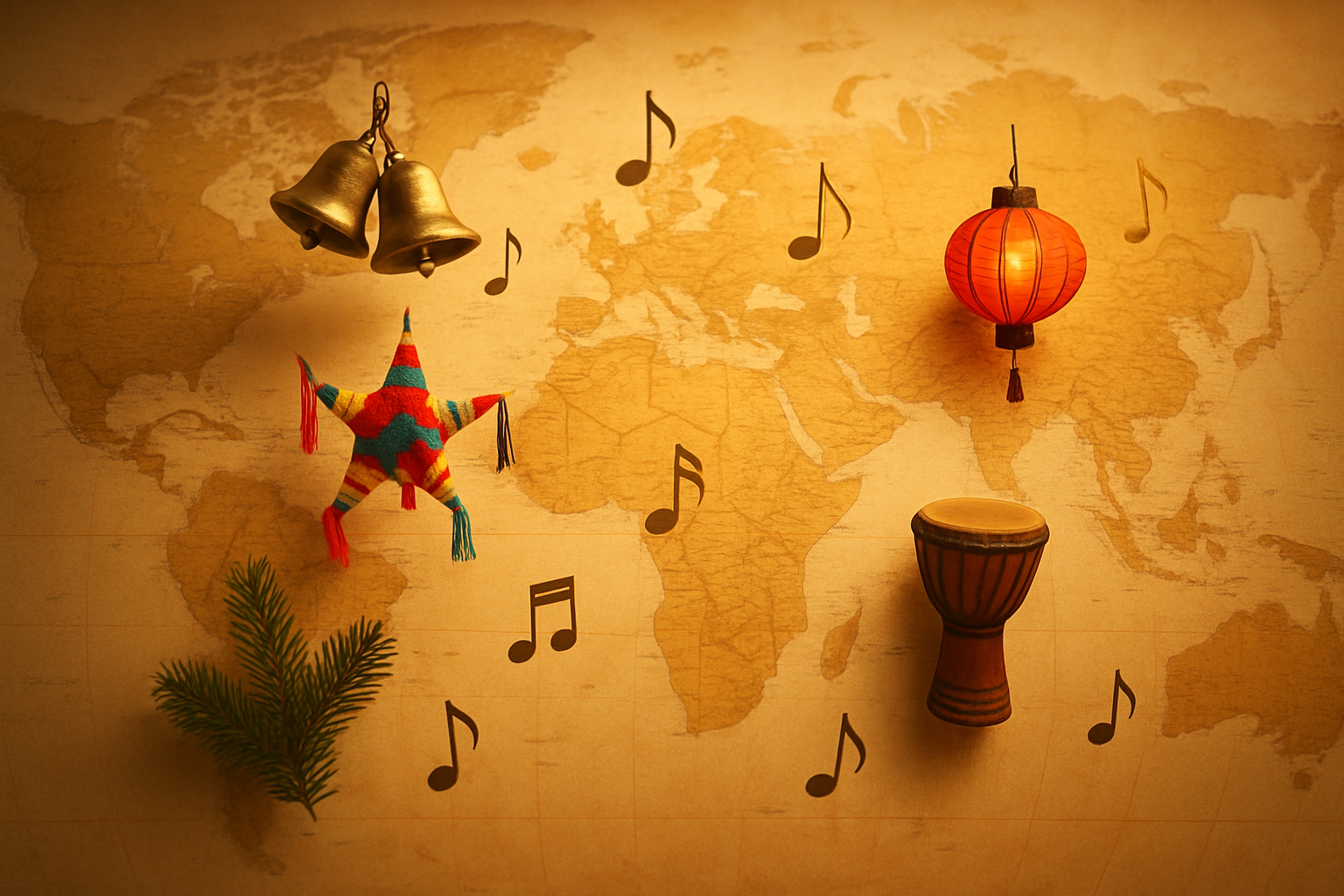
European Christmas music traditions showcase remarkable diversity across the continent, with each region developing distinct musical styles that reflect local languages, customs, and religious practices. German-speaking countries gave the world some of the most beloved Christmas carols history has recorded, including "O Tannenbaum" and "Silent Night," which originated in Austria in 1818. German carol traditions emphasize both religious devotion and folk elements, often featuring simple melodies that entire communities could easily learn and sing together.
French carols, known as "noëls," display sophisticated musical arrangements and poetic lyrics, with classics like "Il est né le divin enfant" demonstrating the French emphasis on elegant storytelling through song. These traditional Christmas songs often incorporate complex harmonies and showcase the French love for literary artistry in their verses.
English carol traditions blend ancient pagan winter celebrations with Christian themes, creating unique hybrid songs that reflect centuries of cultural evolution. Carols like "The Holly and the Ivy" and "God Rest Ye Merry, Gentlemen" exemplify this fusion, combining nature imagery with religious Christmas carols themes. The English wassailing tradition also influenced carol development, with songs originally used for house-to-house celebrations becoming permanent fixtures in Christmas music traditions.
Scandinavian countries developed their own distinctive approach, with Norwegian and Swedish carols often featuring minor keys that evoke the long, dark winters of the Nordic region. These songs frequently emphasize themes of light conquering darkness, reflecting both the winter solstice and Christian symbolism.
American contributions to the carol repertoire
America's contribution to the Christmas carol repertoire reflects the nation's cultural melting pot, blending immigrant traditions with uniquely American experiences and musical styles. The 19th and 20th centuries saw American composers creating entirely new categories of Christmas music that would eventually become global standards.
"Jingle Bells," composed by James Lord Pierpont in 1857, represents one of the first major American Christmas songs, though originally written as a Thanksgiving song about winter fun rather than religious celebration. This secular approach became a hallmark of American Christmas music, creating space for both religious Christmas carols and festive entertainment songs.
The Great Depression era sparked the creation of several iconic Christmas carols that emphasized hope and resilience. Irving Berlin's "White Christmas" (1942) became the best-selling single of all time, capturing American nostalgia for idealized holiday memories. This song perfectly demonstrates how American composers transformed Christmas music from primarily religious expression into broader cultural commentary.
African American spiritual traditions significantly influenced American Christmas music development, contributing call-and-response patterns and blues-influenced melodies to traditional carol structures. Songs like "Mary Had a Baby" showcase this unique fusion, creating distinctly American sounds that enriched the global Christmas music traditions landscape.
Gospel music also shaped American Christmas carols, with artists creating powerful renditions of traditional songs while developing new compositions that emphasized personal relationships with the divine. This approach influenced both religious and secular Christmas music, creating more emotionally expressive and individualistic interpretations of classic themes.
Global adaptations reflecting local customs
Christmas music traditions worldwide demonstrate remarkable creativity in adapting universal themes to local cultural contexts, languages, and musical styles. These international Christmas carols reveal how communities maintain their cultural identity while embracing shared holiday celebrations.
Latin American countries developed vibrant carol traditions that incorporate indigenous instruments and rhythms alongside Spanish colonial influences. Mexican "posadas" songs guide traditional processions, while Puerto Rican "aguinaldos" feature complex percussion patterns that reflect African musical heritage. These adaptations show how meaning of Christmas carols evolves when filtered through different cultural lenses.
Asian countries with Christian communities created fascinating fusions of Eastern and Western musical elements. Philippine Christmas carols blend traditional Filipino folk melodies with Catholic lyrics, creating unique musical expressions that honor both cultural heritage and religious faith. Japanese Christmas songs often emphasize seasonal beauty and family togetherness rather than strictly religious themes, reflecting Buddhist and Shinto influences on Christian celebrations.
African Christmas carols frequently feature polyrhythmic structures and call-and-response patterns that transform European melodies into entirely new musical experiences. South African Christmas songs like "Siyahamba" demonstrate how traditional African musical elements can completely reimagine familiar carol structures while maintaining the celebratory spirit of the season.
Modern globalization has created fascinating new hybrid forms, with contemporary artists blending traditional carol melodies with reggae, jazz, country, and rock influences. These adaptations continue the ancient tradition of making Christmas music relevant to contemporary audiences while preserving the core messages that have resonated across cultures for centuries.
Christmas carols carry centuries of human stories, faith, and celebration within their melodies. From their humble beginnings as simple folk songs to their transformation across different eras, these musical treasures have woven themselves into the fabric of our holiday traditions. Each carol tells its own story - whether it's the deep spiritual meaning behind "Silent Night" or the joyful community spirit found in "Deck the Halls." The religious themes remind us of the sacred roots of Christmas, while the cultural variations show how different societies have made these songs their own.
The next time you hear a familiar Christmas carol, take a moment to think about the journey it has traveled to reach you. These songs have survived wars, crossed oceans, and adapted to countless cultures while keeping their core message alive. Whether you're singing along at church, humming while decorating your tree, or sharing these melodies with loved ones, you're participating in a tradition that connects you to generations past and future. Let these carols be more than background music this holiday season - let them be bridges to the rich history and meaning they carry.


Comments
Post a Comment