OLD TESTAMENT PROPHECIES POINTING TO THE MESSIAH
The Hebrew Bible contains dozens of Old Testament Messianic prophecies that paint a detailed picture of a coming deliverer centuries before his arrival. These ancient texts reveal specific details about the Messiah's birth, lineage, ministry, and mission that many believe find their fulfillment in Jesus Christ.
This comprehensive guide is written for Bible students, seekers exploring Christianity, and anyone curious about the prophetic connections between the Old and New Testaments. You'll discover how these Messiah prophecies Bible scholars have studied for millennia create a cohesive portrait of the promised one.
We'll explore the foundational Messianic prophecies found in the Torah, including the first promise of a redeemer and the blessing of Judah. You'll also examine the powerful Isaiah Messianic prophecies that describe the suffering servant and the virgin birth. Finally, we'll uncover the rich Psalms about Messiah that reveal details about his royal nature, betrayal, and resurrection.
These Biblical prophecies Jesus fulfilled demonstrate the remarkable continuity between the Hebrew scriptures and Christian faith, offering compelling evidence for those seeking to understand the Messianic thread woven throughout the Old Testament.
Messianic Prophecies in the Torah

The Seed Promise in Genesis 3:15
The first glimpse of Messianic hope appears right after humanity's fall into sin. Genesis 3:15 contains what theologians call the "protoevangelium" - the first gospel promise. God declares to the serpent: "I will put enmity between you and the woman, and between your offspring and hers; he will crush your head, and you will strike his heel."
This cryptic verse introduces the concept of a coming deliverer from the woman's seed who would defeat Satan. The Hebrew word for "seed" (zera) is singular, pointing to a specific individual rather than collective humanity. The promise speaks of cosmic conflict - the serpent would wound the Messiah ("strike his heel"), but the Messiah would deliver a fatal blow ("crush your head").
Early Jewish interpretations recognized this verse's Messianic significance, and the New Testament identifies Jesus as the fulfillment of this ancient promise. The crucifixion represents the heel-striking wound, while Christ's victory over death and Satan constitutes the head-crushing defeat.
Abraham's Blessing to All Nations
God's covenant with Abraham contains profound Messianic implications woven throughout Genesis 12, 18, and 22. The promise that "in you all the families of the earth shall be blessed" (Genesis 12:3) establishes the universal scope of the coming Messiah's mission.
The Hebrew phrase "all families of the earth" emphasizes the global reach of this blessing, transcending ethnic and geographical boundaries. This promise is repeated and reinforced in Genesis 18:18 and 22:18, with the latter adding crucial detail: "in your offspring shall all the nations of the earth be blessed."
The word "offspring" (zera) again appears in singular form, pointing to one specific descendant of Abraham who would become the channel of blessing for all humanity. Paul's interpretation in Galatians 3:16 confirms that this singular seed refers to the Messiah. The Abrahamic covenant establishes that the coming deliverer would emerge from Abraham's lineage and extend God's redemptive plan beyond Israel to encompass all peoples.
Jacob's Prophecy of Shiloh
Among Jacob's final blessings to his twelve sons, his words concerning Judah in Genesis 49:10 contain remarkable Messianic prophecy: "The scepter shall not depart from Judah, nor the ruler's staff from between his feet, until Shiloh comes, and to him shall be the obedience of the peoples."
The name "Shiloh" has sparked extensive scholarly debate. Some interpret it as "peace-bringer" or "to whom it belongs," both pointing to Messianic themes. The prophecy establishes Judah as the tribe through which royal authority would flow until the ultimate ruler arrives.
This prediction proved remarkably accurate throughout Israel's history. Judah became the dominant tribe, producing King David and the royal line. The "scepter" represents governmental authority and royal power, while "ruler's staff" symbolizes the right to execute justice and maintain order.
The phrase "obedience of the peoples" extends beyond Israel to encompass all nations, echoing the universal scope of Abraham's blessing. Ancient Jewish sources, including the Targums, consistently interpreted Shiloh as referring to the Messiah, recognizing this as a foundational prophecy establishing both the tribal origin and the peaceful, ruling nature of the coming deliverer.
Moses' Promise of a Prophet Like Him
In Deuteronomy 18:15-19, Moses delivers a stunning prophecy about a future prophet who would surpass all others: "The Lord your God will raise up for you a prophet like me from among you, from your brothers—it is to him you shall listen."
This prophecy establishes several crucial characteristics of the coming Messiah. First, he would be "like Moses" - implying similar authority, miraculous power, and mediatorial role between God and humanity. Second, he would arise "from among you, from your brothers," indicating he would be an Israelite, not a foreign ruler.
The phrase "it is to him you shall listen" grants this prophet supreme authority, surpassing even Moses' own position. God reinforces this promise by declaring that anyone who refuses to listen to this prophet will be held accountable (Deuteronomy 18:19).
Moses' unique position in Israel's history makes this comparison extraordinary. He was the lawgiver, miracle-worker, and mediator of the old covenant. The promise of a prophet "like Moses" suggests someone who would establish a new covenant, perform greater miracles, and provide ultimate mediation between God and humanity.
| Prophet | Moses | The Prophet Like Moses |
|---|---|---|
| Role | Lawgiver | New Covenant Establisher |
| Power | Miraculous signs | Greater miracles |
| Authority | Mediator of old covenant | Ultimate mediator |
| Scope | Israel | All nations |
These Torah Messianic predictions form the foundation for understanding how Old Testament prophecies systematically point toward a coming deliverer, establishing his origin, nature, and mission centuries before his arrival.
Royal Lineage Prophecies in Historical Books

David's Eternal Throne Promise
The most significant royal lineage prophecies concerning the Messiah emerge from God's covenant with King David in 2 Samuel 7:12-16. When David expressed his desire to build a temple for the Lord, God responded through the prophet Nathan with an extraordinary promise that would echo throughout Hebrew Bible Messiah prophecies. God declared that David's throne would be established forever, with one of his descendants ruling eternally.
This covenant specifically states: "When your days are over and you rest with your ancestors, I will raise up your offspring to succeed you, your own flesh and blood, and I will establish his kingdom. He is the one who will build a house for my Name, and I will establish the throne of his kingdom forever." The language here transcends any earthly monarchy, pointing to a divine ruler whose reign would never end.
The Davidic covenant becomes the foundation for understanding Messianic lineage prophecies throughout the Old Testament. Psalm 89:3-4 reinforces this promise: "You said, 'I have made a covenant with my chosen one, I have sworn to David my servant, I will establish your line forever and make your throne firm through all generations.'" This eternal aspect distinguishes the Messianic promise from temporary earthly kingdoms.
Solomon's Temple Builder Prophecy
While Solomon fulfilled the immediate context of being David's son who built the temple, the prophecy in 2 Samuel 7:13-14 contains language that points beyond Solomon to the ultimate Messiah. The phrase "I will establish the throne of his kingdom forever" cannot apply to Solomon's finite reign, which lasted only forty years.
The dual nature of this prophecy demonstrates the biblical pattern of near and far fulfillment. Solomon served as a type of the coming Messiah - both were sons of David, both were builders, and both brought peace to Israel. However, Solomon's temple was destroyed, his kingdom divided, and his lineage faced exile. The true temple builder would construct something eternal.
Zechariah 6:12-13 later clarifies this temple-building role: "Here is the man whose name is the Branch, and he will branch out from his place and build the temple of the Lord. It is he who will build the temple of the Lord, and he will be clothed with majesty and will sit and rule on his throne."
Genealogical Requirements for the Messiah
The Historical Books establish specific genealogical requirements that the Messiah must fulfill. Beyond Davidic descent, these Torah Messianic predictions require the Messiah to trace his lineage through particular branches of David's family tree.
First Chronicles 17:11-14 reaffirms the Davidic covenant, while genealogical records throughout Chronicles preserve the royal line. The Messiah must be:
-
A descendant of Abraham (Genesis 12:3)
-
From the tribe of Judah (Genesis 49:10)
-
Of the house of David (2 Samuel 7:12-16)
-
Born of a virgin (Isaiah 7:14)
The genealogical requirements create both legitimacy and specificity for messianic claims. Jeremiah 23:5-6 speaks of a "righteous Branch" from David's line who will "reign wisely and do what is just and right in the land." This Branch will be called "The Lord Our Righteous Savior," indicating divine nature combined with human lineage.
These Biblical prophecies Jesus would later fulfill established a framework that any messianic claimant would need to satisfy. The preservation of genealogical records in the Historical Books wasn't merely historical documentation - it was prophetic preparation for identifying the promised Messiah when he appeared.
Detailed Messianic Portraits in the Psalms
The Suffering Servant in Psalm 22
Psalm 22 stands as one of the most vivid Messianic prophecies in the Hebrew Bible, painting a detailed portrait of the Messiah's suffering centuries before the crucifixion. King David's prophetic words capture the agony of abandonment, beginning with the haunting cry, "My God, my God, why have you forsaken me?" This exact phrase would later be spoken by Jesus on the cross, creating a direct connection between prophecy and fulfillment.
The psalm describes specific details that align remarkably with crucifixion practices: pierced hands and feet, bones out of joint, and the casting of lots for clothing. These elements were unknown to David's generation, as crucifixion was a Roman execution method developed centuries later. The psalm also captures the emotional torment of mockery and public shame that would characterize the Messiah's suffering.
David's prophetic vision reveals the Messiah as both human and divine - experiencing genuine human suffering while maintaining an eternal relationship with God. The psalm shows how the Suffering Servant would endure rejection not just from enemies but from God himself, bearing the weight of humanity's sin.
The Eternal King in Psalm 110
Psalm 110 presents the Messiah as both eternal ruler and divine priest, establishing his dual role in redemption. David declares, "The LORD said to my Lord, 'Sit at my right hand until I make your enemies your footstool.'" This verse reveals the Messiah's divine nature and eternal authority, placing him at the right hand of God the Father.
The psalm introduces the concept of the Messiah as priest "according to the order of Melchizedek." This priestly order predates and supersedes the Levitical priesthood, establishing the Messiah's unique role as both king and priest. Unlike earthly priests who served temporarily, this Messianic prophecy describes an eternal priesthood that transcends human limitations.
Jesus later used this psalm to challenge religious leaders about the Messiah's identity, asking how David could call his descendant "Lord" if the Messiah were merely human. This dialogue demonstrates how Old Testament Messianic prophecies contain layers of meaning that reveal the Messiah's divine nature.
The Rejected Stone in Psalm 118
Psalm 118 contains the powerful imagery of the rejected stone becoming the cornerstone, a metaphor that perfectly captures the Messiah's journey from rejection to exaltation. The psalm declares, "The stone the builders rejected has become the cornerstone; the LORD has done this, and it is marvelous in our eyes."
This prophecy reveals how the Messiah would be rejected by the very people he came to save - the religious establishment who should have recognized him. Yet their rejection would not defeat God's plan but rather fulfill it. The rejected stone becomes the most important element in God's spiritual building, supporting the entire structure of salvation.
The psalm also contains the messianic cry of "Hosanna" - "Save us now!" This celebration of the coming deliverer would echo through Jerusalem's streets as crowds welcomed the Messiah. The timing prophecy embedded in this psalm points to both immediate deliverance and ultimate victory over death itself.
The Triumphant Ruler in Psalm 2
Psalm 2 depicts the Messiah as God's anointed king who will rule the nations despite their rebellion. The psalm opens by describing the futile rage of earthly rulers who plot against the LORD and his Anointed One. Their defiance cannot thwart God's sovereign plan to establish his king on Zion's holy hill.
The Father's declaration, "You are my son; today I have become your father," establishes the Messiah's unique relationship with God. This divine sonship sets the Messiah apart from all other rulers and kings throughout history. The psalm reveals both the Messiah's divine nature and his role as God's appointed representative on earth.
The prophecy describes the Messiah's ultimate victory over rebellious nations, wielding an iron scepter and dashing his enemies like pottery. This imagery balances the suffering servant portrait with the triumphant king, showing how the Messiah's initial humiliation leads to complete vindication and universal dominion. The psalm warns rulers to submit to the Son or face judgment, establishing the Messiah's authority over all earthly powers.
Major Prophetic Revelations in Isaiah
The Virgin Birth Prophecy
Isaiah 7:14 contains one of the most debated and significant Isaiah Messianic prophecies in the Hebrew Bible: "Therefore the Lord himself will give you a sign: The virgin will conceive and give birth to a son, and will call him Immanuel." This prophecy emerged during a time of political crisis when King Ahaz faced threats from neighboring kingdoms. The Hebrew word "almah" used here sparked centuries of theological discussion about its precise meaning - young woman or virgin.
The sign promised transcends the immediate historical context. While some scholars argue for a dual fulfillment involving both Isaiah's contemporary situation and a future Messianic birth, the prophecy's ultimate significance lies in its Messianic implications. The name Immanuel, meaning "God with us," points to the divine nature of the promised child. This wasn't merely about royal succession but about God's direct intervention in human history through miraculous birth.
Early Jewish interpreters and later Christian scholars recognized the extraordinary nature of this sign. A normal birth wouldn't constitute the miraculous sign God promised. The prophecy suggests something unprecedented - a birth that defies natural processes while fulfilling God's redemptive plan.
The Wonderful Counselor Description
Isaiah 9:6-7 provides one of Scripture's most majestic Messianic portraits: "For to us a child is born, to us a son is given, and the government will be on his shoulders. And he will be called Wonderful Counselor, Mighty God, Everlasting Father, Prince of Peace." These titles reveal the multifaceted nature of the coming Messiah's identity and mission.
Each title carries profound theological weight. "Wonderful Counselor" suggests divine wisdom and guidance beyond human capacity. "Mighty God" explicitly attributes deity to this child, breaking conventional expectations about human rulers. "Everlasting Father" implies eternal care and protection, while "Prince of Peace" promises the end of conflict and establishment of lasting harmony.
The passage continues with promises of endless government growth and peace on David's throne. This governmental aspect connects the Messianic prophecies to Israel's royal expectations while transcending them. The Messiah wouldn't just restore Israel's kingdom but establish an eternal reign characterized by justice and righteousness.
These titles collectively paint a picture of someone who combines human and divine natures, possesses unlimited wisdom and power, and establishes an everlasting peaceful kingdom. The prophecy sets expectations that no ordinary human ruler could fulfill.
The Suffering Servant Songs
The Suffering Servant passages in Isaiah (particularly chapters 42, 49, 50, 52-53) present a startling contrast to triumphant Messianic expectations. These Old Testament Messianic prophecies introduce the concept of redemption through suffering, fundamentally reshaping understanding of the Messiah's mission.
Isaiah 53 stands as the centerpiece of these prophetic revelations Messiah. The chapter describes a servant "despised and rejected by mankind, a man of suffering, and familiar with pain." This figure bears others' griefs and sorrows, gets wounded for their transgressions, and through his stripes brings healing. The voluntary nature of this suffering emerges clearly: "he was oppressed and afflicted, yet he did not open his mouth."
The servant's death and burial among the wicked, despite his innocence, challenges conventional notions of divine justice. Yet the prophecy reveals God's redemptive purpose: "it was the Lord's will to crush him and cause him to suffer" for others' sins. The passage promises the servant's vindication through resurrection and his successful mission in justifying many.
These passages revolutionized Messianic understanding by introducing substitutionary suffering as the means of salvation. The servant achieves victory not through military conquest but through willing sacrifice. This radical concept prepared the way for recognizing a Messiah who saves through suffering rather than immediate triumph.
The Branch of Jesse Prophecy
Isaiah 11:1-10 presents the "Branch of Jesse" prophecy, connecting Messianic hope to David's royal lineage while describing the Messiah's character and reign. "A shoot will come up from the stump of Jesse; from his roots a Branch will bear fruit." This imagery suggests renewal and hope emerging from apparent defeat or dormancy.
The prophecy describes the Spirit's seven-fold endowment upon this Branch: wisdom, understanding, counsel, might, knowledge, fear of the Lord, and delight in the Lord's reverence. These spiritual gifts equip the Messiah for perfect judgment and righteous rule. Unlike human judges who rely on external evidence, this ruler judges by divine insight, ensuring perfect justice for the poor and oppressed.
The passage envisions dramatic transformation during the Messianic age. Natural enemies will coexist peacefully - wolves dwelling with lambs, leopards lying with goats. This supernatural peace extends throughout creation, with even dangerous animals becoming harmless. The earth fills with knowledge of the Lord as waters cover the sea.
The prophecy concludes with the promise that this Branch will become "a banner for the peoples" and that "the nations will rally to him." This international dimension shows the Messiah's role extending beyond Israel to encompass all humanity. The Branch of Jesse represents both the restoration of David's dynasty and the establishment of God's universal kingdom of peace and righteousness.
Specific Timing and Location Prophecies

Daniel's Seventy Weeks Timeline
The prophet Daniel provides one of the most precise Messianic prophecies found in Biblical prophecies Jesus fulfilled, outlining a detailed chronological framework in Daniel 9:24-27. This prophecy speaks of "seventy weeks" determined upon Daniel's people and the holy city, with specific events marking each phase.
The prophecy begins with a decree to restore and rebuild Jerusalem, followed by sixty-nine weeks until "Messiah the Prince" appears. Many scholars interpret these "weeks" as periods of seven years each, creating a timeline of 483 years from the rebuilding decree to the Messiah's arrival. This calculation aligns remarkably with the historical timeframe between Artaxerxes' decree in 445 BCE and Jesus' ministry.
Daniel's prophecy also describes the Messiah being "cut off" after the sixty-ninth week, referring to His death. The text specifies this happens "not for himself," indicating the sacrificial nature of His death for others. Additionally, the prophecy mentions the destruction of the city and sanctuary by "the people of the prince who is to come," which historically corresponds to the Roman destruction of Jerusalem in 70 CE.
The precision of these Old Testament Messianic prophecies demonstrates the supernatural nature of Biblical revelation, providing a verifiable timeline that spans centuries yet connects directly to the life and death of Jesus Christ.
Micah's Bethlehem Birth Prophecy
Micah 5:2 delivers one of the most specific geographical Messianic predictions in the Hebrew Bible Messiah prophecies, identifying Bethlehem Ephratah as the birthplace of the coming ruler. This prophecy stands out because it names not just any Bethlehem, but specifically Bethlehem Ephratah, distinguishing it from other towns with the same name.
The prophecy describes this future ruler's origins as "from of old, from everlasting," indicating His eternal nature despite His humble birthplace. Micah presents a fascinating contrast between Bethlehem's insignificance among Judah's clans and the greatness of the One who would emerge from there. This small town, with a population likely under 1,000 during David's time, would become the birthplace of both King David and the ultimate Davidic heir.
The prophet emphasizes that this ruler will "shepherd His people Israel," connecting to the pastoral imagery frequently associated with Messianic leadership throughout the Old Testament Jesus prophecies. The Hebrew word used for "ruler" here is "moshel," which implies not just governmental authority but the kind of leadership that brings order and peace.
When the Magi inquired about the newborn King's location, the chief priests and scribes immediately referenced Micah's prophecy, demonstrating how well-established this Messianic expectation had become by the first century. The fulfillment occurred exactly as predicted when Jesus was born in Bethlehem during the census ordered by Caesar Augustus.
Malachi's Messenger Preparation
Malachi 3:1 presents a dual-messenger prophecy that addresses both the forerunner and the Messiah Himself. The text declares, "Behold, I send My messenger, and he will prepare the way before Me. And the Lord, whom you seek, will suddenly come to His temple."
This prophetic revelation Messiah describes the first messenger as a preparer of the way, traditionally identified with John the Baptist. John's ministry of calling people to repentance and baptizing them in the Jordan River directly fulfilled this preparatory role. His message of making straight paths for the Lord echoed Isaiah's wilderness voice prophecy, creating a convergence of multiple Messianic predictions.
The second figure in Malachi's prophecy is "the Lord" Himself, who comes suddenly to His temple. This arrival suggests both divinity and unexpectedness. The Hebrew term "ha-Adon" (the Lord) carries connotations of divine authority and ownership, indicating that the Messiah possesses divine nature rather than merely human kingship.
Malachi also references "the Angel of the covenant" in this passage, a mysterious figure who appears throughout the Old Testament as a divine messenger bearing God's own authority and presence. Many scholars connect this Angel of the covenant with the pre-incarnate Christ, making Malachi's prophecy a declaration of the Messiah's divine identity.
The prophet emphasizes purification and judgment as central themes of the Messiah's work, describing Him as a refiner's fire and fuller's soap. This imagery suggests that the Messianic mission involves cleansing and transformation, not merely political deliverance.
Symbolic and Ceremonial Messianic Types
The Passover Lamb Sacrifice
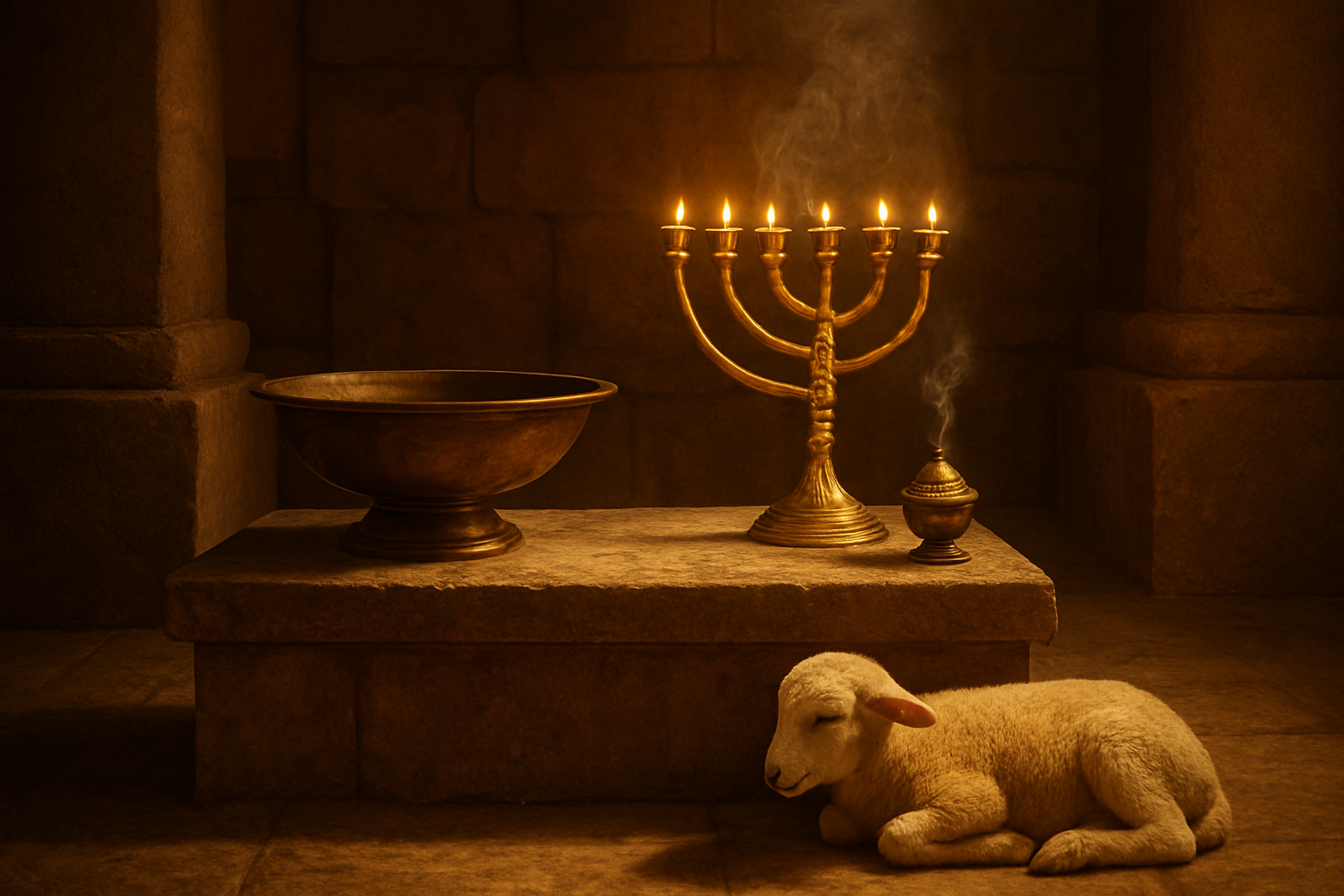
The Passover lamb stands as one of the most powerful Messianic prophecies embedded in Old Testament ritual. When God commanded the Israelites to sacrifice a perfect, unblemished lamb and apply its blood to their doorposts, He established a profound picture of redemption through substitutionary sacrifice. The lamb had to be without spot or blemish, examined for four days before slaughter, and its blood became the means of deliverance from death.
This ceremonial requirement mirrors the Messiah's role as the perfect sacrifice. Just as the Passover lamb's blood protected the firstborn from judgment, the Messianic sacrifice would provide protection from eternal judgment. The timing holds significance too - the lamb was killed at twilight, the same time period when the Messiah would die. Even the method of preparation carried meaning: no bones could be broken, pointing to the unbroken bones of the suffering Messiah.
The Scapegoat Ritual
The Day of Atonement ceremony included two goats with distinctly different destinies, both representing aspects of Messianic redemption. The first goat was sacrificed as a sin offering, its blood sprinkled on the mercy seat to make atonement. The second goat, the scapegoat, had all the people's sins confessed over it before being sent into the wilderness, symbolically carrying away their guilt.
This dual imagery captures two essential elements of Messianic work: the payment for sin through sacrifice and the complete removal of sin's consequences. The scapegoat didn't die but lived, banished to the wilderness, representing how the Messiah would bear sin's burden and carry it away forever. The Hebrew term "Azazel" used for the scapegoat suggests complete removal - sin taken so far away it could never return to condemn.
The Bronze Serpent Symbol
When poisonous serpents plagued the Israelites in the wilderness, God provided an unusual remedy: Moses crafted a bronze serpent and lifted it on a pole. Anyone bitten who looked upon this bronze serpent would live. This strange cure becomes a powerful Messianic type when understood correctly.
The bronze serpent took the form of the very thing causing death - the serpent - yet provided life instead of death. Similarly, the Messiah would take the form of sinful humanity while remaining sinless, becoming sin's remedy rather than its victim. The lifting up of the bronze serpent on a pole prefigures the Messiah's elevation on the cross. Just as the dying Israelites needed only to look and live, salvation through the Messiah requires looking in faith to His sacrificial work.
The High Priest Ministry
The Levitical priesthood created an elaborate system pointing toward ultimate Messianic mediation. The high priest alone could enter the Holy of Holies once yearly, carrying blood for atonement and wearing special garments bearing the names of Israel's tribes. This priestly role established the pattern for perfect mediation between God and humanity.
The high priest's garments carried deep symbolism: the breastplate with twelve stones represented constant intercession for all God's people, while the golden plate on his forehead declared "Holy to the Lord." These elements picture the Messiah as both perfect priest and perfect sacrifice, constantly interceding while maintaining absolute holiness. Unlike earthly priests who died and required replacement, the Messianic priesthood would be eternal, based on an unchanging life rather than temporary service.
The Old Testament weaves together an incredible tapestry of prophecies that all point toward the coming Messiah. From the earliest promises in the Torah to the detailed portraits painted by David in the Psalms, we see God's plan unfolding across centuries. The royal lineage prophecies establish the Messiah's kingly heritage, while Isaiah's revelations provide some of the most vivid descriptions of both His suffering and glory. The precision of timing and location prophecies shows God's sovereign control over history, and the symbolic ceremonies throughout the Hebrew Scriptures all find their fulfillment in Christ.
These prophecies weren't just ancient predictions—they're proof of God's faithfulness and His perfect timing. When we study these Old Testament passages, our faith grows stronger as we see how every detail was planned and fulfilled. Take time to explore these prophecies for yourself, and you'll discover that the entire Hebrew Bible points to Jesus Christ as the promised Messiah who would come to save His people.


Comments
Post a Comment