CHRISTIANS TRADITIONS TO INTRODUCE TO YOUR CHRISTMAS CELEBRATION

Many families want to add more spiritual meaning to their holiday season but don't know where to start with Christian Christmas traditions. If you're a parent, grandparent, or anyone hoping to bring faith-based Christmas celebrations into your home, you can create lasting memories that point your loved ones toward the true reason for the season.
This guide will show you how to weave Christian gift-giving ideas and religious Christmas customs into your family's December routine. You'll discover sacred Christmas decorations that tell the story of Jesus, learn Christmas Eve traditions for families that build anticipation for the big day, and find simple Advent practices for December that help everyone slow down and reflect. We'll also explore how celebrating the Twelve Days of Christmas properly can extend your joy well into the new year, plus practical Christmas devotions for families that work even with busy schedules.
These meaningful Christmas traditions don't require a complete holiday overhaul – just small, intentional changes that can transform how your family experiences this special season together.
Transform Your Home with Sacred Christmas Decorations

Create a meaningful nativity scene as your centerpiece
Your nativity scene serves as the heart of your sacred Christmas decorations, telling the complete story of Christ's birth through carefully arranged figures and settings. Position your nativity display in a central location where family and guests naturally gather, such as the mantelpiece, dining room sideboard, or entryway table.
Start with a simple stable structure - you can purchase wooden sets, craft your own from cardboard, or even arrange natural elements like driftwood and moss. Place Mary, Joseph, and baby Jesus at the center, with the wise men positioned at a distance to reflect their journey. Add shepherds, angels, and animals to create a complete biblical scene that captures the wonder of that holy night.
Consider using multiple nativity sets of different sizes throughout your home. A large family heirloom can anchor your main display, while smaller sets work beautifully on bedroom dressers or kitchen counters. Encourage children to handle and rearrange child-safe nativity figures, helping them internalize the Christmas story through tactile engagement.
Enhance your display with soft lighting using battery-operated candles or string lights to create a warm, reverent atmosphere. Some families add a backdrop depicting Bethlehem's landscape or incorporate natural elements like pine branches and river rocks to create an authentic Middle Eastern setting.
Display advent wreaths to mark the spiritual countdown
Advent wreaths transform the four weeks before Christmas into a meaningful spiritual journey, marking each Sunday with the lighting of progressively more candles. Traditional wreaths feature four candles arranged in a circle of evergreen branches - three purple candles representing hope, peace, and joy, plus one pink candle symbolizing the joy of approaching celebration.
Create your own advent wreath using fresh pine, cedar, or fir branches formed into a circle, or purchase a pre-made base from craft stores. Position four sturdy candle holders evenly around the wreath, ensuring they're secure enough for safe burning. Many families add a fifth white Christ candle in the center, lit on Christmas Day to represent Jesus as the light of the world.
Place your advent wreath on your dining table as a centerpiece, lighting the appropriate candles during evening meals while sharing brief devotions or prayers. This simple ritual helps families slow down during the busy holiday season and focus on the spiritual significance of Christmas preparation.
For homes with young children, consider using battery-operated LED candles for safety while maintaining the visual tradition. Some families create multiple smaller advent wreaths for children's bedrooms, allowing each child to participate in the daily lighting ritual and personal reflection.
Hang Christian ornaments that tell the Christmas story
Christian ornaments transform your Christmas tree into a visual storytelling experience, with each decoration representing different aspects of Christ's birth and life. Replace generic decorations with meaningful symbols like angels announcing glad tidings, stars representing the Star of Bethlehem, and shepherd figures honoring those who first received the good news.
Collect ornaments that depict biblical scenes - the annunciation to Mary, the journey to Bethlehem, the birth in the stable, and the visit from the wise men. Many Christian gift shops offer ornament sets that tell the complete nativity story, allowing you to add new pieces each year and build a comprehensive collection.
Incorporate traditional Christian symbols like crosses, doves representing the Holy Spirit, lambs symbolizing Jesus as the Lamb of God, and crowns representing Christ as King. Hand-crafted ornaments made by family members add personal significance and create lasting memories tied to faith traditions.
Consider assigning each family member specific ornaments to hang while sharing the biblical story or personal meaning behind each piece. This practice turns tree decorating into a devotional activity rather than simply a decorative task, reinforcing the spiritual foundation of your Christmas celebration.
Set up prayer corners with candles and scripture
Prayer corners create dedicated spaces for quiet reflection and spiritual connection during the Christmas season. Choose a peaceful spot in your home - perhaps a corner of the living room, a bedroom alcove, or even a hallway nook - and arrange it specifically for prayer and meditation.
Include essential elements that foster spiritual focus: a small table or shelf to hold your Bible, a cross or religious artwork, and battery-operated or real candles for gentle illumination. Add a comfortable cushion or small chair to encourage longer periods of prayer and scripture reading. Fresh flowers or a small potted plant can represent new life and God's creation.
Display Christmas-themed scripture verses on small cards or in picture frames, rotating them weekly throughout Advent. Popular verses include Luke 2:10-11, Isaiah 9:6, and John 3:16. Some families include a prayer journal where members can write personal prayers, gratitude, or spiritual insights during their quiet time.
Create multiple prayer corners if space allows - one in the master bedroom for parents, smaller versions in children's rooms, or even a family prayer space in the main living area. These sacred spaces provide retreat from holiday busyness and keep spiritual focus at the center of your Christmas celebration, reminding everyone that Christ remains the reason for the season.
Establish Meaningful Christmas Eve Traditions
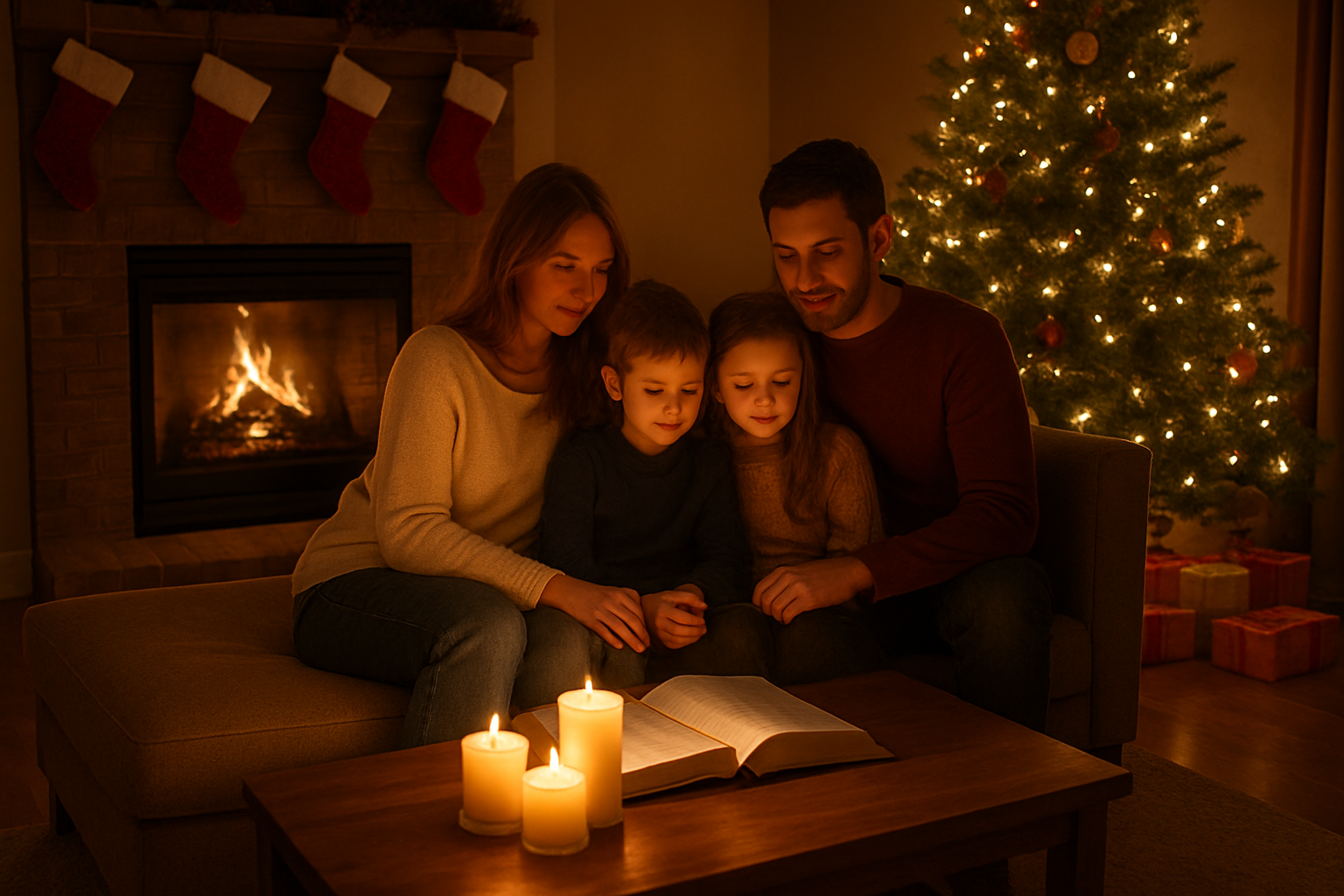
Attend Midnight Mass or Service for Spiritual Preparation
Christmas Eve services hold deep spiritual significance in Christian traditions for families, creating a sacred bridge between anticipation and celebration. Many churches offer candlelit midnight masses that recreate the atmosphere of Christ's birth night, complete with special music and readings that aren't heard during regular services. If midnight feels too late for young children, most congregations also host earlier Christmas Eve services around 7 or 9 PM that capture the same reverent spirit.
These services often include communion, special Christmas hymns, and sometimes even live nativity presentations. The experience of worshiping alongside your church community on this holy night creates lasting memories and reinforces the true meaning of Christmas. Children remember the soft glow of candlelight, the sound of familiar carols echoing through the sanctuary, and the peaceful feeling that comes from starting Christmas Day with prayer and reflection.
Read the Nativity Story Aloud as a Family
Gathering everyone together to read Luke 2:1-20 brings the Christmas story to life in your own living room. This simple yet powerful tradition connects your family directly to the biblical account of Jesus's birth, making it personal and immediate rather than just another story from long ago.
Consider taking turns reading different parts, with each family member voicing different characters like Mary, Joseph, the shepherds, or the angel. Younger children can participate by reading simpler verses or holding pictures that correspond to different parts of the story. Some families create their own illustrated versions of the nativity, with children drawing scenes to accompany each verse.
You might also incorporate different Bible translations or children's Bible storybooks to make the reading age-appropriate. The key is making this a special moment where phones are put away, distractions are minimized, and everyone focuses on the incredible story of God becoming human.
Light Candles While Singing Traditional Carols
Candlelight transforms any space into something sacred and Christmas Eve traditions for families often center around this simple yet profound ritual. Start with lighting advent candles if you have an advent wreath, then move to lighting additional candles throughout your home while singing beloved carols like "Silent Night," "O Come, O Come Emmanuel," or "Angels We Have Heard on High."
Each family member can light their own candle, creating individual moments of reflection and participation. As you move from room to room lighting candles, the warm glow builds anticipation and creates a sense of pilgrimage within your own home. The combination of flickering light and familiar melodies naturally draws hearts toward worship and wonder.
Consider creating a playlist of traditional carols mixed with more contemporary Christian Christmas songs. Some families sing a cappella, while others use instruments like piano or guitar. The goal isn't perfect performance but heartfelt expression of faith and joy.
Share Communion or Blessing Rituals at Home
Home communion or family blessing ceremonies provide intimate opportunities for spiritual connection on Christmas Eve. While formal communion requires proper training and church authorization, families can create meaningful blessing rituals that honor the sacredness of Christ's birth.
Simple bread-breaking ceremonies where family members share thoughts about God's gifts during the past year create powerful bonding moments. Parents can offer individual blessings over each child, speaking words of affirmation, hopes for the coming year, and prayers for protection and growth. These personal blessings often become treasured memories that children carry into adulthood.
Some families create prayer circles where each person shares one thing they're grateful for and one prayer request for the new year. Others incorporate foot washing, following Jesus's example of humble service, or create blessing ceremonies for family pets, homes, or special objects that hold spiritual significance.
The beauty of these meaningful Christmas traditions lies in their flexibility - they can be adapted to fit your family's specific needs, ages, and comfort levels while maintaining their sacred purpose.
Incorporate Daily Advent Practices into December

Use Advent Calendars with Scripture Verses
Traditional chocolate-filled advent calendars miss the deeper meaning of this sacred season. Instead of sugary treats, create meaningful Advent practices for December by filling each day's compartment with carefully chosen Bible verses that tell the story of Christ's coming. Start with Old Testament prophecies about the Messiah in early December, then progress through the nativity story as Christmas approaches.
You can purchase beautifully crafted wooden advent calendars with small drawers, or make your own using numbered envelopes hung on a string. Include verses like Isaiah 9:6 ("For unto us a child is born"), Luke 1:30-31 (the angel's announcement to Mary), and Matthew 2:10-11 (the wise men's worship). Consider adding brief reflections or questions for family discussion alongside each verse.
Many families discover that reading these scriptures together becomes their favorite part of morning coffee or bedtime routines. Children especially love the anticipation of opening each day's verse, and older kids can take turns reading aloud to younger siblings.
Practice Daily Family Prayers and Devotions
Christmas devotions for families transform busy December mornings into moments of spiritual connection. Set aside just ten minutes each day for focused prayer time, lighting your advent wreath candles while sharing gratitude and prayer requests.
Create a simple format that works for your family's schedule:
-
Monday: Pray for family members and friends
-
Tuesday: Thank God for His blessings
-
Wednesday: Pray for those less fortunate
-
Thursday: Ask for guidance and wisdom
-
Friday: Praise God for His love and mercy
-
Saturday: Pray for your church and community
-
Sunday: Focus on preparing hearts for worship
Consider using a family devotional book specifically designed for Advent, or rotate who leads prayer each day. Even toddlers can participate by saying "Amen" or sharing one thing they're thankful for. These quiet moments create lasting memories and help children understand that Christmas celebrations center on worship, not just presents.
Engage in Acts of Charity and Giving
Faith-based Christmas celebrations naturally include generous hearts and open hands. December offers countless opportunities to serve others and embody Christ's love through action. Choose one major service project for the month, plus smaller daily acts of kindness.
Popular family service projects include:
-
Adopting a family through local churches or charities
-
Volunteering at soup kitchens or food banks
-
Delivering meals to elderly neighbors
-
Making care packages for homeless shelters
-
Visiting nursing homes to sing carols
-
Donating toys to children's hospitals
Smaller daily acts might include leaving encouraging notes for mail carriers, paying for someone's coffee, or helping carry groceries for strangers. Create a "kindness advent calendar" where each day suggests a different way to show love to others.
These experiences teach children that true joy comes from giving rather than receiving. Many families report that their kids start suggesting their own acts of service, developing servant hearts that last long beyond the holiday season.
Fast or Practice Simplicity Leading to Christmas
Embracing spiritual disciplines like fasting or simplified living during Advent helps families focus on eternal rather than material things. This doesn't mean depriving children of joy, but rather choosing intentional practices that create space for God.
Consider these approaches to seasonal simplicity:
-
Media fasting: Limit television, video games, or social media usage
-
Meal simplicity: Choose simple, wholesome meals instead of elaborate cooking
-
Shopping restraint: Focus on needs rather than wants when making purchases
-
Activity reduction: Say no to some holiday parties to preserve family time
-
Sugar moderation: Limit holiday sweets to special occasions
Some families choose to fast from certain foods one day per week during Advent, using hunger pangs as reminders to pray. Others practice "reverse advent calendars" by placing one non-perishable food item in a box each day to donate on Christmas Eve.
These practices help both adults and children recognize how much they typically consume and appreciate simple pleasures. The goal isn't punishment but rather creating space for spiritual growth and deeper appreciation of Christ's sacrifice.
Celebrate the Twelve Days of Christmas Properly

Extend festivities beyond December 25th
Many families pack away their Christmas decorations on December 26th, but this approach misses the richness of the traditional Christmas season. The Twelve Days of Christmas actually begin on December 25th and continue until January 6th, creating nearly two weeks of celebration that honor the birth of Christ and the arrival of the Magi.
During this extended period, keep your sacred Christmas decorations displayed and maintain the festive atmosphere in your home. This practice allows families to savor the joy of Christ's birth rather than rushing into the new year. Consider planning special activities for each of the twelve days, such as reading specific Bible passages, sharing family stories, or preparing traditional foods that connect your family to Christian Christmas traditions.
Honor Epiphany with special meals and gifts
January 6th marks Epiphany, celebrating when the wise men presented their gifts to baby Jesus. This day deserves special recognition in your faith-based Christmas celebrations. Many Christian families prepare a feast featuring foods from different cultures, symbolizing how Christ came for all people.
Consider giving meaningful gifts on Epiphany that reflect the three gifts of the Magi: gold (something precious), frankincense (something spiritual), and myrrh (something that represents sacrifice or service). These Christian gift-giving ideas might include a family Bible, a donation made in someone's name, or handmade items that required time and effort to create.
Focus on different Bible characters and their stories
Each of the twelve days offers an opportunity to explore different figures from the nativity story and early Christian church. Dedicate time to learning about Mary's faith, Joseph's obedience, the shepherds' joy, and the wise men's journey. This approach transforms the season into an educational and spiritual experience.
Create simple activities around each character - act out scenes, draw pictures, or discuss how their examples apply to modern life. These Christmas devotions for families build deeper understanding of the Christmas story while maintaining engagement throughout the extended celebration period.
Maintain spiritual reflection throughout the season
The twelve days provide natural rhythm for continued spiritual growth after Christmas morning excitement fades. Establish daily prayer times, continue reading Advent devotions, or begin new spiritual practices for the coming year. This sustained focus prevents the post-Christmas letdown that many families experience.
Use this time for gratitude reflections, discussing how God worked in your family's life during the past year, and setting spiritual goals together. These meaningful Christmas traditions create lasting memories and strengthen family bonds while keeping Christ at the center of your celebration.
Build Faith-Centered Gift-Giving Traditions

Give gifts that reflect the three wise men's offerings
The Magi's gifts of gold, frankincense, and myrrh carry profound spiritual meaning that can transform your Christian gift-giving ideas into powerful expressions of faith. Gold represented Christ's kingship, frankincense his divinity, and myrrh his future sacrifice. You can mirror these symbolic offerings in your own gift-giving by choosing items that honor these themes.
Consider giving jewelry with Christian symbols, coins from significant places like Jerusalem, or items made from precious metals. For frankincense, share essential oils, incense, or aromatherapy items that create sacred spaces for prayer and meditation. Myrrh-themed gifts might include healing balms, natural remedies, or items that represent service and sacrifice to others.
Create a special tradition where family members explain the spiritual significance of their chosen gifts, connecting each present to the wise men's offerings. This practice transforms your Christmas morning into a meaningful Christmas tradition that teaches children about the first Christmas gifts.
Create handmade items with Christian significance
Handcrafted gifts carry the heart of the giver and reflect the Creator's own hands-on approach to blessing us. Faith-based Christmas celebrations become more personal when you invest time and creativity into making presents that speak to the recipient's spiritual journey.
Consider crafting prayer journals with personalized covers featuring favorite Bible verses. Create wooden crosses, painted stones with scripture, or hand-sewn bookmarks with Christian symbols. Knitted prayer shawls, homemade candles for devotional time, or painted ornaments with religious imagery all carry deep spiritual weight.
Children can participate by making salt dough nativity scenes, decorating picture frames with Bible verses for family photos, or creating coupon books offering acts of service. These projects become opportunities for family bonding while creating treasures that recipients will cherish for years.
The time invested in creating these gifts mirrors God's intentional care in crafting each of us, making the gift-giving experience a reflection of divine love.
Donate to charity in honor of loved ones
Transform your gift list into an opportunity for ministry by supporting causes that align with Christian values. This approach shifts focus from material accumulation to kingdom impact, teaching family members about stewardship and compassion.
Research charities that resonate with each family member's heart. Support organizations feeding the hungry, providing clean water, caring for orphans, or spreading the Gospel worldwide. Many charities offer meaningful cards or certificates that explain how donations help specific causes.
| Charity Focus | Gift Example | Impact |
|---|---|---|
| Hunger Relief | Meals for 50 people | Addresses Matthew 25:35 |
| Clean Water | Well drilling fund | Reflects Jesus as living water |
| Education | School supplies for children | Honors Jesus' teaching ministry |
| Medical Care | Surgery sponsorship | Mirrors Christ's healing work |
Create a family tradition where everyone chooses one charity to support together, then pray for the recipients throughout the year. This practice extends Christmas joy far beyond December while building compassionate hearts in children.
Exchange books, art, or items that strengthen faith
Religious Christmas customs can include exchanging materials that nurture spiritual growth throughout the coming year. Books, music, artwork, and devotional materials become gifts that keep giving as they deepen relationships with God.
Select devotional books, study Bibles, or Christian biographies that match each person's spiritual maturity and interests. Consider gifting beautiful art prints of biblical scenes, worship music collections, or subscriptions to Christian magazines. Prayer cards, scripture memory systems, or apps that support Christmas devotions for families extend the celebration's spiritual impact.
Create a family library of faith-building resources that everyone can access. Include classics like "Mere Christianity," contemporary works by trusted authors, and age-appropriate materials for children. These gifts demonstrate investment in each other's spiritual development while providing tools for growth.
Art pieces featuring scripture, crosses for bedroom walls, or beautiful nativity sets become daily reminders of faith throughout the year. Choose items that reflect each recipient's personal style while pointing their hearts toward Christ in everyday moments.

Christmas offers countless opportunities to weave faith into your family's celebrations, creating memories that go beyond presents and decorations. By adding sacred elements to your home décor, establishing special Christmas Eve rituals, practicing daily Advent traditions, extending your celebration through the full twelve days, and making gift-giving more meaningful, you'll discover a richer, more spiritually fulfilling holiday season. These traditions help shift the focus from commercial aspects to the true reason for the season.
Start small by choosing one or two traditions that resonate most with your family this year. You don't need to overhaul everything at once – even lighting an Advent wreath or reading the Christmas story together can make a significant difference. As these practices become natural parts of your celebration, you can gradually add more elements that deepen your family's connection to the Christmas story and create lasting spiritual traditions for generations to come.


Comments
Post a Comment