Lessons From Rahab in the Bible
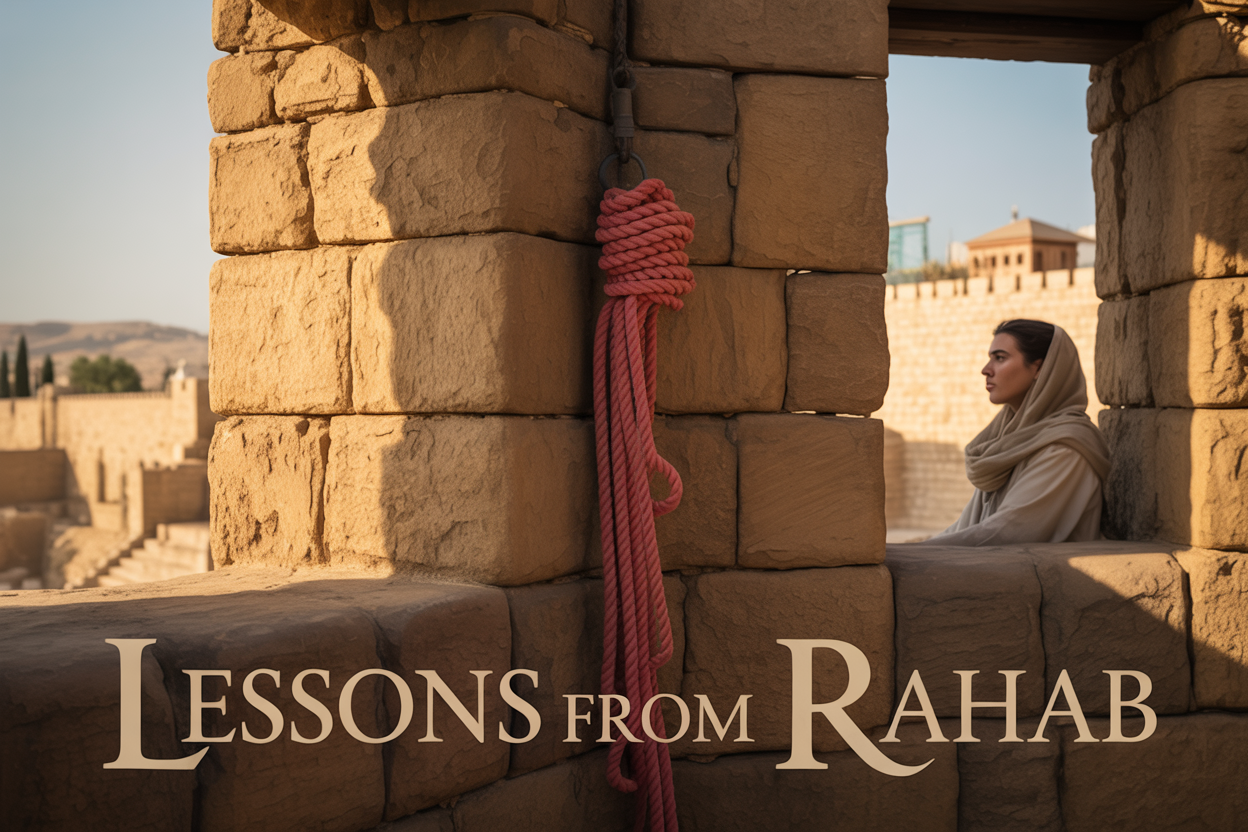
Discovering Life-Changing Lessons from Rahab's Remarkable Story
The Rahab Bible story lessons reveal one of the most powerful examples of transformation in Scripture. For Christians seeking to understand how God works through unlikely people and for anyone wrestling with their past, Rahab's journey from Jericho's walls to Jesus' family tree offers hope and practical wisdom.
This biblical woman of faith shows us that background doesn't determine destiny. Her story demonstrates how Rahab faith and courage changed not only her circumstances but also biblical history. We'll explore how she moved from fear to bold action, built crucial relationships during crisis, and experienced complete redemption that echoes through generations.
You'll discover how Rahab's strategic thinking and unwavering trust in God's promises created a legacy that still inspires believers today. Her example proves that God's grace reaches everyone, regardless of their starting point or past choices.
Understanding Rahab's Background and Circumstances

Recognizing How God Uses Unlikely People for His Purpose
Rahab's story perfectly shows how God works through people society would never expect. Here was a woman living in ancient Canaan, working as a prostitute in Jericho - about as far from religious respectability as you could get. Yet God chose her to play a crucial role in one of the most significant events in Old Testament history.
The biblical lessons from Rahab reveal that God doesn't operate by human standards when selecting His instruments. While people often look for the qualified, the pure, or the socially acceptable, God sees potential in the broken, the marginalized, and the forgotten. Rahab's profession made her an outcast, but her position also gave her unique access to information and opportunities that more "respectable" citizens wouldn't have had.
Her story teaches us that our past doesn't disqualify us from God's plans. The Rahab Bible story lessons show that divine purpose often comes disguised in unlikely packages. God used her knowledge of the city, her connections, and even her home's strategic location on the city wall. What seemed like disadvantages became divine advantages in His hands.
This pattern repeats throughout Scripture - God choosing shepherds to be kings, fishermen to be apostles, and persecutors to be missionaries. Rahab's example encourages anyone who feels too flawed or insignificant to be used by God.
Learning from Her Position as an Outsider in Israelite Society
Being a Canaanite woman in a culture that would later be at odds with Israel put Rahab in a unique position. She wasn't bound by the religious traditions or social expectations that might have prevented an Israelite from taking the risks she did. Sometimes being an outsider provides clarity that insiders lack.
Rahab's outsider status actually became her strength. She could see what the Israelites represented without the baggage of preconceived notions. Her position allowed her to make an objective assessment of Israel's God and choose faith based on evidence rather than tradition. The biblical women of faith often demonstrate this pattern - they see truth clearly because they're not clouded by religious familiarity.
Her foreign background also meant she had to actively choose faith rather than inherit it. This choice made her faith more intentional and powerful. She didn't have the luxury of passive belief; she had to act decisively on what she believed about Israel's God.
The outsider perspective often brings fresh insights that those too close to a situation might miss. Rahab's story shows that God values authentic seeking hearts over religious pedigree. Her willingness to risk everything for a God she had only heard about demonstrates faith that many insiders never achieve.
Finding Hope Despite Past Mistakes and Poor Choices
Rahab's profession represented a series of choices that led her down a difficult path, yet her story became one of the greatest examples of Rahab prostitute redemption in Scripture. Her past didn't have to define her future, and God's grace proved stronger than her previous decisions.
The power of her story lies not in denying her background but in showing how God transforms lives completely. She didn't have to clean herself up before approaching God - she came as she was and found acceptance. This demonstrates that shame from past choices doesn't have to prevent anyone from stepping into God's purposes.
Her transformation shows that redemption is always possible, no matter how far someone has strayed. The biblical courage and trust she displayed came from understanding that God offered her something better than her current circumstances. She grabbed hold of hope and refused to let her history limit her future.
Rahab's inclusion in the genealogy of Jesus proves that God doesn't just forgive and forget - He redeems and restores. Her story encourages anyone carrying guilt from past mistakes to believe in the possibility of complete transformation. The God who included a former prostitute in the lineage of the Messiah specializes in turning broken stories into beautiful testimonies.
Her example reminds us that where we've been matters less than where we're willing to go. Faith through adversity Bible stories like Rahab's demonstrate that God's grace is sufficient to overcome any past and create any future He chooses.
Demonstrating Faith Through Bold Action
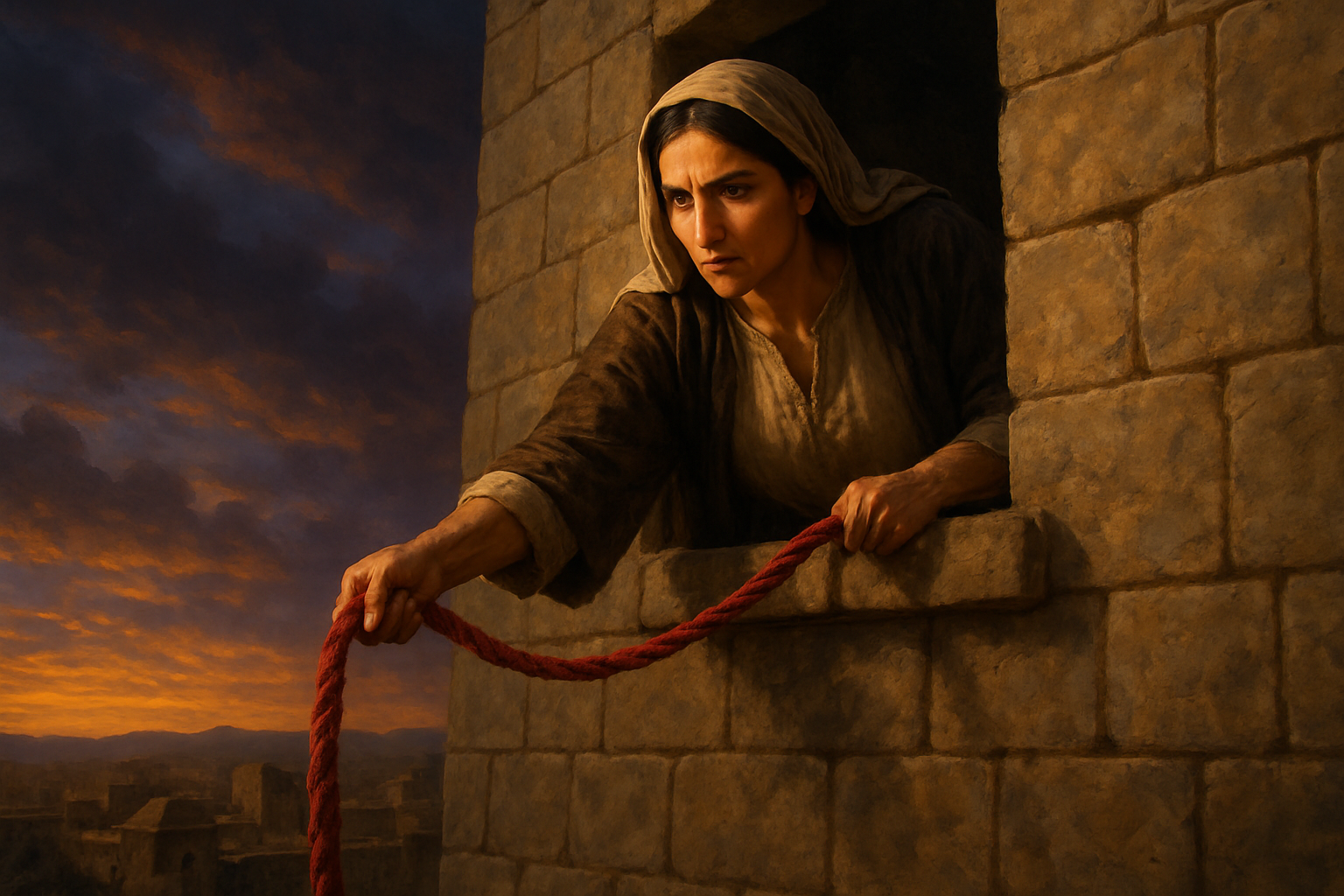
Taking Risks When You Believe in God's Plan
Rahab's decision to hide the Israelite spies represents one of the boldest acts of faith recorded in Scripture. She put everything on the line - her safety, her family's welfare, and her very life - based on what she believed about God's plan for Israel. This wasn't a small gamble; it was a complete leap of faith that required her to trust in a God she had only heard about through stories and rumors.
The beauty of Rahab's risk-taking lies in how she acted on incomplete information. She didn't have a detailed roadmap or divine revelation. Instead, she heard about the miraculous works of the God of Israel and chose to align herself with what she believed was the winning side. Her faith wasn't passive - it demanded immediate, decisive action that separated her from everything familiar.
Many believers today struggle with this same challenge. We want certainty before we step out in faith, but Rahab shows us that biblical courage often means moving forward when the path isn't crystal clear. She reminds us that faith without corresponding action remains powerless.
Protecting Others Even When It Costs You Personally
Rahab's protection of the Israelite spies came with enormous personal cost. By harboring enemy agents, she committed an act of treason against her own city and king. If discovered, she faced execution - not just for herself, but potentially for her entire household. Yet she chose to shield these strangers because she recognized they served the one true God.
Her sacrifice extended beyond immediate physical danger. She risked her reputation, her standing in the community, and her economic security. As someone already marginalized by her profession, she couldn't afford to make powerful enemies. But Rahab understood that some principles matter more than personal comfort or social acceptance.
This aspect of Rahab's faith and courage speaks directly to modern believers who face situations where doing right conflicts with personal interests. Whether it's standing up for justice in the workplace, protecting the vulnerable in our communities, or defending unpopular biblical truths, Rahab's example shows us that authentic faith sometimes requires personal sacrifice for the greater good.
Making Quick Decisions Based on Spiritual Conviction
When the king's messengers arrived at Rahab's door demanding the spies, she had mere moments to decide. There was no time for lengthy deliberation, prayer meetings, or seeking counsel from others. She had to act immediately based on her spiritual convictions, and her quick thinking saved both the spies and her own family.
Rahab's rapid response reveals the power of having settled convictions before crisis hits. She had already processed what she believed about God's character and plans, so when the moment of testing came, she could act decisively. Her improvised story about the spies leaving the city and her suggestion that the pursuers hurry after them shows remarkable presence of mind under extreme pressure.
The biblical lessons from Rahab here center on spiritual preparation. Like Rahab, we need to establish our core beliefs and values before we're thrust into situations demanding split-second decisions. Her example encourages us to develop spiritual reflexes that automatically align with God's heart, even when we don't have time to think through every angle.
Standing Against Popular Opinion for What's Right
Rahab's choice put her at odds with everyone around her. The entire city of Jericho was united in fear and hostility toward the approaching Israelites, yet she chose to help them. She went against the patriotic fervor, the religious traditions of her people, and the explicit commands of her king. Her stance was profoundly unpopular and politically dangerous.
What made her willing to stand alone? Rahab recognized truth when she encountered it, regardless of how many people disagreed with her. She valued God's approval over human acceptance, and this priority shaped her controversial decision. Her willingness to be the lone voice of dissent demonstrates the kind of moral courage that Old Testament faith examples consistently celebrate.
Her story challenges believers to examine our own relationship with popular opinion. Do we compromise biblical convictions to fit in with cultural expectations? Rahab shows us that sometimes faithfulness means standing alone, trusting that God's perspective matters more than social approval or political correctness. Her vindication came when Jericho fell and her family alone was spared - proof that choosing God's side, even when unpopular, always proves wise in the end.
Building Trust and Forming Strategic Alliances

Creating Relationships That Benefit Everyone Involved
Rahab's story shows us masterful relationship-building under pressure. When the Israelite spies arrived in Jericho, she didn't just hide them out of random kindness. She recognized an opportunity to create a mutually beneficial arrangement. The spies needed protection and safe passage, while Rahab needed assurance that her family would survive the coming destruction.
What makes Rahab's approach remarkable is how quickly she assessed the situation and identified common ground. She understood that helping the spies wasn't just about doing good - it was about building a bridge between two very different worlds. Her willingness to risk everything demonstrated genuine commitment to the relationship she was forming.
The biblical lessons from Rahab reveal how authentic relationships require vulnerability and shared risk. She didn't demand guarantees before helping the spies. Instead, she acted first, creating the foundation for trust that would follow. This pattern of leading with generosity while clearly communicating her needs shows sophisticated emotional intelligence.
Modern leaders can learn from Rahab's example by focusing on shared interests rather than differences. She didn't dwell on cultural barriers or past conflicts. Instead, she concentrated on what both parties needed and how they could help each other succeed.
Negotiating Win-Win Outcomes in Difficult Situations
Rahab's negotiation with the Israelite spies represents one of the most effective examples of crisis diplomacy in the Old Testament. Faced with an impossible situation - choosing between loyalty to her city and survival for her family - she crafted a solution that served everyone's interests.
Her negotiation strategy was brilliant in its simplicity. Rather than making complex demands, Rahab asked for one clear commitment: protection for her family when Jericho fell. She offered valuable intelligence about the city's defenses and the people's fear in exchange for this promise. Both sides walked away with exactly what they needed most.
The Rahab Bible story lessons show us that successful negotiation often happens when we focus on outcomes rather than positions. She didn't argue about whether Jericho deserved to fall or whether the Israelites were justified in their conquest. She accepted the reality of the situation and worked within those constraints to find a path forward.
Rahab also demonstrated the power of timing in negotiations. She didn't wait until the siege began to make her proposal. She acted while she still had something valuable to offer, giving her maximum leverage in the conversation.
Her approach teaches us that win-win outcomes are possible even in seemingly zero-sum situations. By expanding the conversation beyond immediate circumstances to include long-term consequences, she found solutions that others couldn't see.
Earning Respect Through Consistent Reliable Behavior
Trust doesn't happen overnight, but Rahab managed to earn it remarkably quickly through her actions. When she promised to hide the spies, she followed through completely. When she agreed to keep their mission secret, she maintained that confidence even under pressure. Her reliability became the foundation of everything that followed.
The biblical courage and trust demonstrated in Rahab's story shows how respect is earned through small, consistent actions rather than grand gestures. She didn't just talk about helping the spies - she actively protected them, provided them with accurate information, and helped them escape safely. Each action reinforced her credibility.
What's particularly impressive is how Rahab maintained her commitments despite the personal risk involved. If discovered, she would have faced severe punishment or death for treason. Yet she never wavered in her support, even when the situation became dangerous. This consistency under pressure proved her character more powerfully than any words could have.
Rahab's behavior also demonstrates the importance of clear communication in building trust. She didn't leave the spies guessing about her intentions or capabilities. She spelled out exactly what she could do, what she expected in return, and what the consequences would be if either party failed to keep their word.
Her example reminds us that respect must be earned repeatedly through our actions. One act of reliability isn't enough - it takes a pattern of trustworthy behavior to build the kind of relationships that can withstand serious challenges and create lasting partnerships.
Experiencing God's Redemption and Grace

Receiving Forgiveness Regardless of Your Past
Rahab's story powerfully illustrates that no background disqualifies someone from God's grace. Despite her profession as a prostitute in ancient Jericho, she received complete forgiveness and acceptance when she chose to trust in God's people and their mission. Her past didn't define her future, and the same truth applies to every person seeking redemption today.
The biblical account never sugar-coats Rahab's background, yet it also doesn't let her past overshadow her faith. When the Israelite spies arrived at her door, she made a decisive choice to align herself with God's plan rather than remain trapped by societal expectations or personal history. This moment demonstrates that divine forgiveness transcends human judgment and cultural barriers.
Modern believers often struggle with shame from their past, wondering if they're "too far gone" for God's love. Rahab's inclusion in biblical history - and later in the lineage of Jesus Christ - proves that God specializes in radical redemption. Her transformation from outsider to insider happened not through gradual moral improvement, but through a single act of faith that changed everything.
Becoming Part of God's Greater Story and Plan
Rahab didn't just receive personal salvation; she became an active participant in God's unfolding narrative for His people. By protecting the Israelite spies, she played a crucial role in the conquest of Jericho and the establishment of Israel in the Promised Land. Her actions had consequences far beyond her individual circumstances.
The beauty of Rahab's integration into God's story lies in how her unique position and skills served divine purposes. Her knowledge of Jericho's defenses, her strategic location near the city wall, and even her questionable reputation that allowed men to visit without suspicion - all became tools in God's hands. Nothing in her background was wasted when surrendered to divine purposes.
This principle encourages believers to see their own experiences, skills, and even past mistakes as potential components of God's greater plan. Rahab's story teaches that God doesn't just save people from their circumstances; He saves them for His purposes, weaving their transformed lives into His ongoing work in the world.
Discovering Your Value Beyond Society's Labels
Ancient Near Eastern culture would have labeled Rahab with terms that emphasized her shame and marginalized status. Yet God's perspective cut through these societal judgments to see her true worth and potential. Her value wasn't determined by public opinion, economic status, or moral reputation, but by her willingness to trust and act in faith.
The biblical narrative treats Rahab with dignity, referring to her by name and highlighting her wisdom, courage, and decisive action. While acknowledging her profession, the text focuses more on her character qualities that made her suitable for God's purposes. This shift in emphasis models how divine grace reframes human worth.
Society today still assigns labels that can trap people in limiting identities. Rahab's example shows that these external designations don't reflect true value in God's eyes. Her story encourages anyone feeling defined by past mistakes, current circumstances, or cultural prejudices to embrace their inherent worth as someone created for divine purposes.
Finding New Identity Through Divine Purpose
Rahab's encounter with God's people marked the beginning of a completely new identity. She transitioned from being known as "Rahab the prostitute" to becoming "Rahab who helped the spies" and eventually "Rahab, ancestor of King David and Jesus Christ." Her new identity was rooted in her relationship with God and her role in His redemptive plan.
This transformation didn't happen overnight, but it began with a single moment of choosing faith over fear. Rahab's new identity wasn't based on escaping her past but on embracing her divine calling. She discovered that God had purposes for her life that transcended anything she could have imagined while living within Jericho's walls.
The process of identity transformation through divine purpose remains available to every believer today. Like Rahab, modern Christians can move from being defined by their past or present circumstances to being identified with God's calling on their lives. This new identity provides security, meaning, and hope that no earthly circumstance can diminish or destroy.
Leaving a Lasting Legacy of Faith

Influencing Future Generations Through Your Choices
Rahab's decision to protect the Israelite spies created ripple effects that stretched far beyond her lifetime. Her choice to align herself with God's people didn't just save her family from destruction – it positioned her descendants to play crucial roles in biblical history. The biblical lessons from Rahab show us that our faith-driven decisions today shape the spiritual inheritance we leave behind.
When we examine Rahab's faith and courage, we see how one person's bold step of faith can redirect an entire family's destiny. Her son Boaz became a man of integrity and compassion, ultimately marrying Ruth and continuing the lineage that would lead to King David and eventually to Jesus Christ. This demonstrates how our faithful choices create a foundation for future generations to build upon.
Your decisions matter more than you might realize. The values you demonstrate, the risks you take for righteousness, and the faith you display in difficult circumstances all become part of the legacy you pass down. Just as Rahab's courage influenced her descendants to become biblical women of faith and men of character, your commitment to following God can inspire your children, grandchildren, and their children to live with purpose and conviction.
Being Remembered for Courage Rather Than Past Failures
The Rahab Bible story lessons teach us that our past doesn't determine our future reputation. While Rahab began as a prostitute in Jericho, she's remembered throughout Scripture as a woman of remarkable faith. The New Testament authors James and Paul both cite her as an example of faith in action, focusing entirely on her courageous decision rather than her previous profession.
This transformation from Rahab prostitute redemption to honored ancestor reveals God's incredible ability to rewrite our stories. When we choose to trust God and act courageously, our past mistakes become footnotes rather than headlines in our life story. Rahab's courage in protecting the spies and her bold declaration of faith in Israel's God overshadowed everything else about her background.
Your past failures, poor choices, or difficult circumstances don't have the final say in how you'll be remembered. Like Rahab, you can make decisions today that shift your narrative from one of regret to one of redemption. The faith through adversity Bible stories consistently show us that God specializes in taking broken people and creating beautiful legacies through their transformed lives.
Contributing to God's Plan in Unexpected Ways
Rahab's inclusion in Jesus' genealogy represents one of the most surprising elements of God's grace and redemption stories. A Canaanite woman working in the world's oldest profession became an essential link in the Messiah's family tree. This unexpected inclusion demonstrates how God uses unlikely people to accomplish His purposes.
The Old Testament faith examples consistently show us that God's plans often unfold through unconventional means. Rahab wasn't a priest's daughter, a queen, or a prophet's wife. She was an outsider, a foreigner, and someone society would have written off. Yet her strategic position in Jericho, her knowledge of the city's vulnerabilities, and her willingness to act on her faith made her the perfect instrument for God's purposes.
Your unique background, skills, and circumstances – even the parts you might consider disadvantages – could be exactly what God wants to use in His larger plan. Like Rahab, you might find yourself in the perfect position to make a difference you never imagined possible. The key is remaining open to God's leading and being willing to act courageously when the moment comes, trusting that He can use your story in ways that extend far beyond what you can see.

Rahab's story shows us that God can use anyone, no matter their past or current circumstances. Her bold faith led to decisive action when she protected the Israelite spies, proving that trust in God often requires courage and risk-taking. She didn't just believe privately – she acted on that belief and built relationships that changed the course of history. Through her story, we see how God's grace transforms lives and creates new possibilities for redemption.
The most powerful lesson from Rahab is that faith and action go hand in hand. When we trust God's promises like she did, we're called to step out boldly and make choices that align with His will. Rahab's legacy reminds us that our past doesn't define our future, and that God delights in using ordinary people to accomplish extraordinary things. Look for ways to demonstrate your faith through brave actions, just like this remarkable woman who became part of Jesus's family tree.


Comments
Post a Comment